How to Get Rid of Cat Dander: 10 Vet Approved Tips


In this article
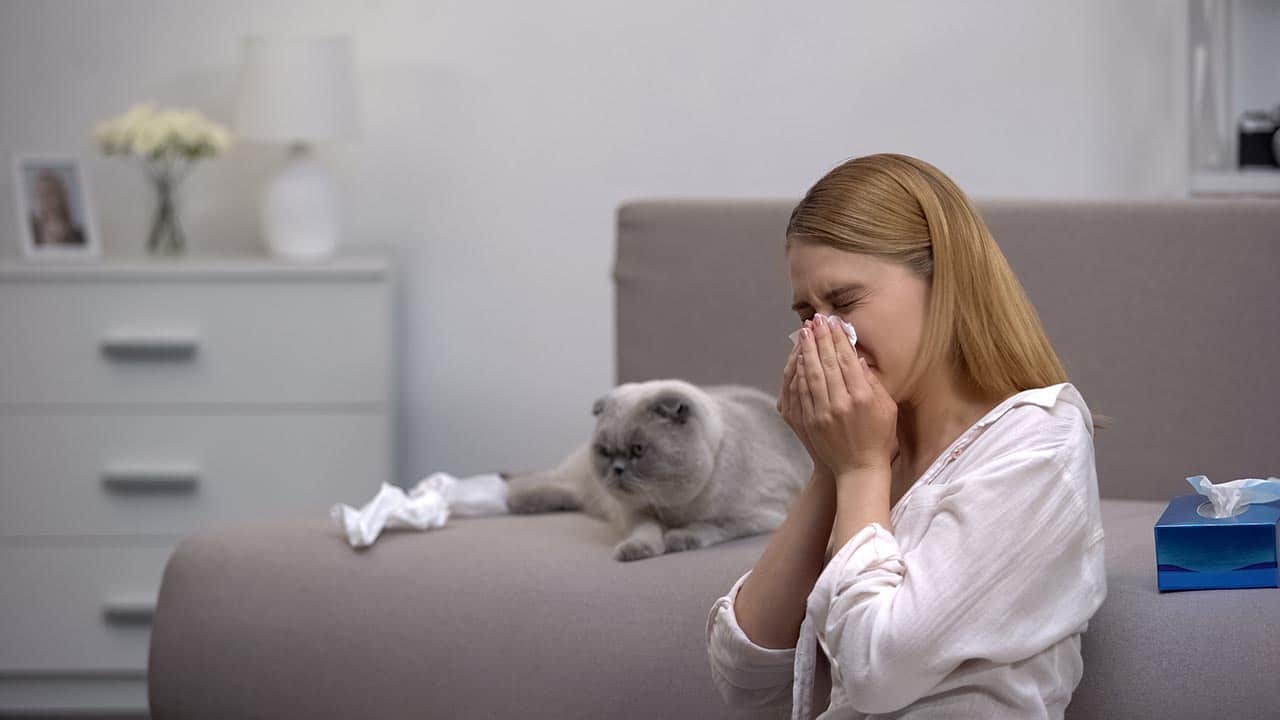
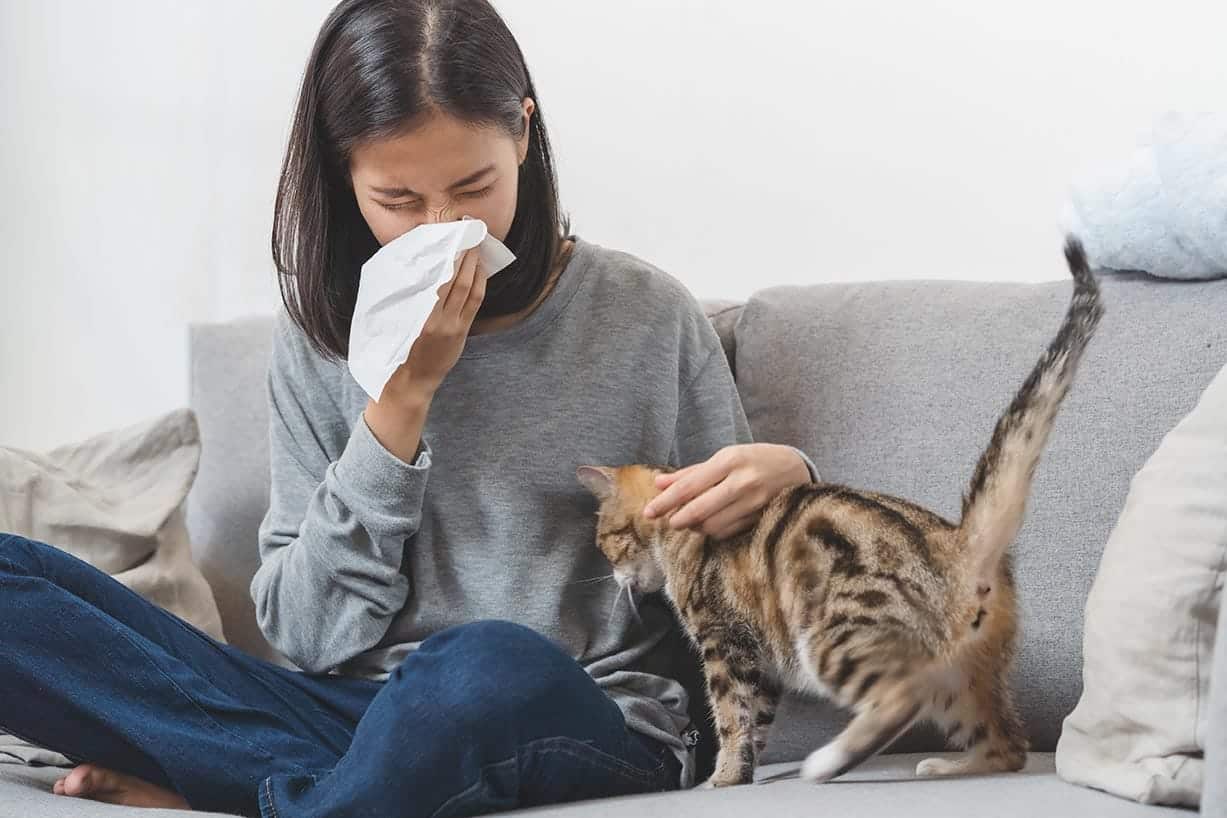
Did you know cats are the second most common cause of indoor respiratory allergies? Unfortunately, it’s true, and studies suggest that 10% to 20% of adults are allergic to cats.1 What’s more, cats are the second most prominent source of indoor respiratory allergens after dust mites.2
Many people believe that the cat’s fur causes tell-tale sniffling, sneezing, and runny nose allergy symptoms, but in reality, dead skin cells are the main source of allergens responsible for cat allergies. These dead skin cells are known as dander, and any animal with fur can produce them, even hairless cat breeds. Luckily, there are some steps you can take to reduce your exposure to dander.
Keep reading for our steps on removing dander from your home to make it a more inviting and allergy-friendly place for you and your guests.

What Is Cat Dander?
Dander is the microscopic pieces of dead skin that cats shed into their surroundings. Because dander is so tiny and lightweight, it can linger in the air for long periods, irritating the respiratory tract of allergy sufferers. It can easily latch onto any surface in your home, but it can especially cling to bedding, furniture, and clothing. So, you could be transporting your cat’s dander from your clothes into the public and not even know it.
One of the significant reasons dander causes allergies is due to a protein called Fel d1. Cats produce the protein in their sebaceous glands. It can also be found in skin cells, saliva, and urine. Since Fel d1 is found in cat saliva, it is easily transported onto their coat during daily grooming sessions. When you combine the Fel d1 from the sebaceous glands with what is produced in the saliva, you’re left with a double whammy for allergy sufferers.
Salivary levels of Fel d1 vary significantly between cats. For example, studies suggest that levels are higher in the morning than in the afternoon and that older cats have lower salivary levels of the protein.3
Now that you know the reason behind most cat allergies, let’s look at ways to remove cat dander from your home.

The 10 Easy Steps to Get Rid of Cat Dander
1. Regularly Groom Your Cat
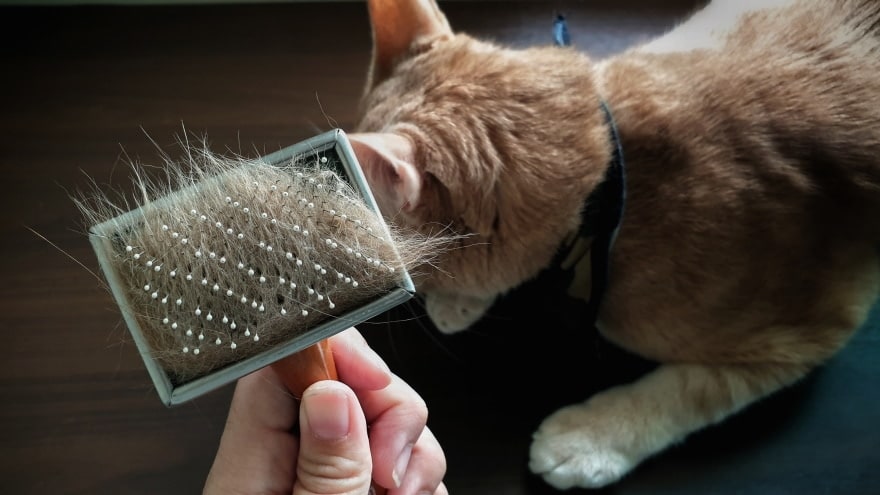
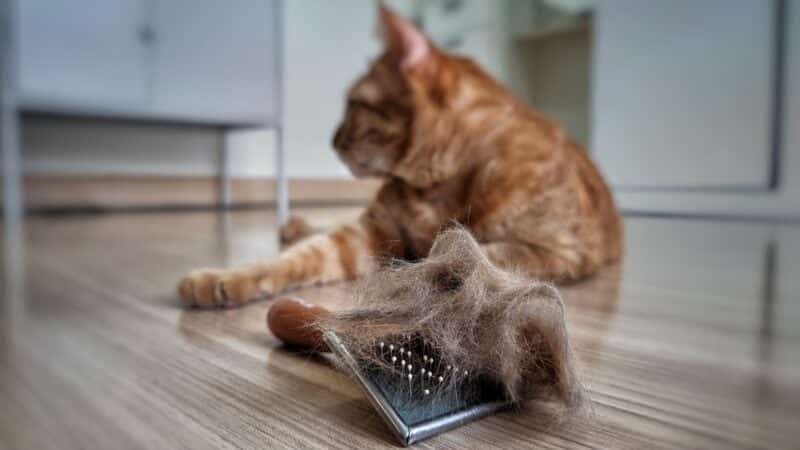
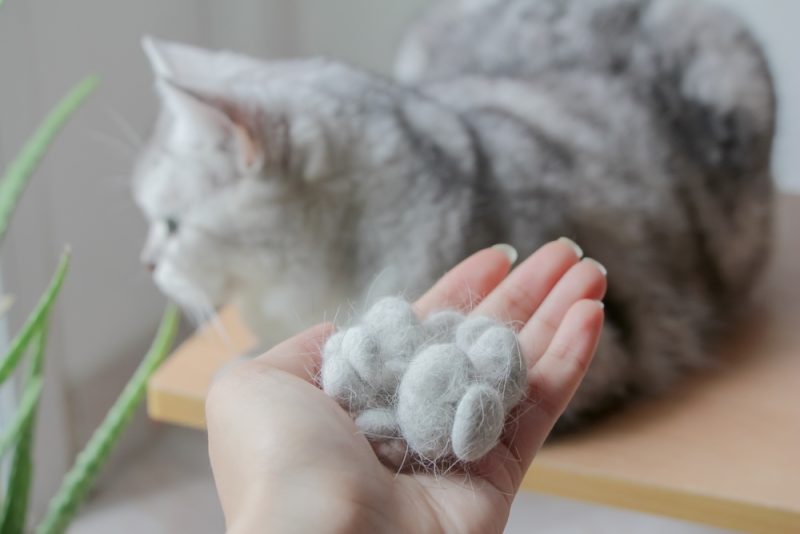
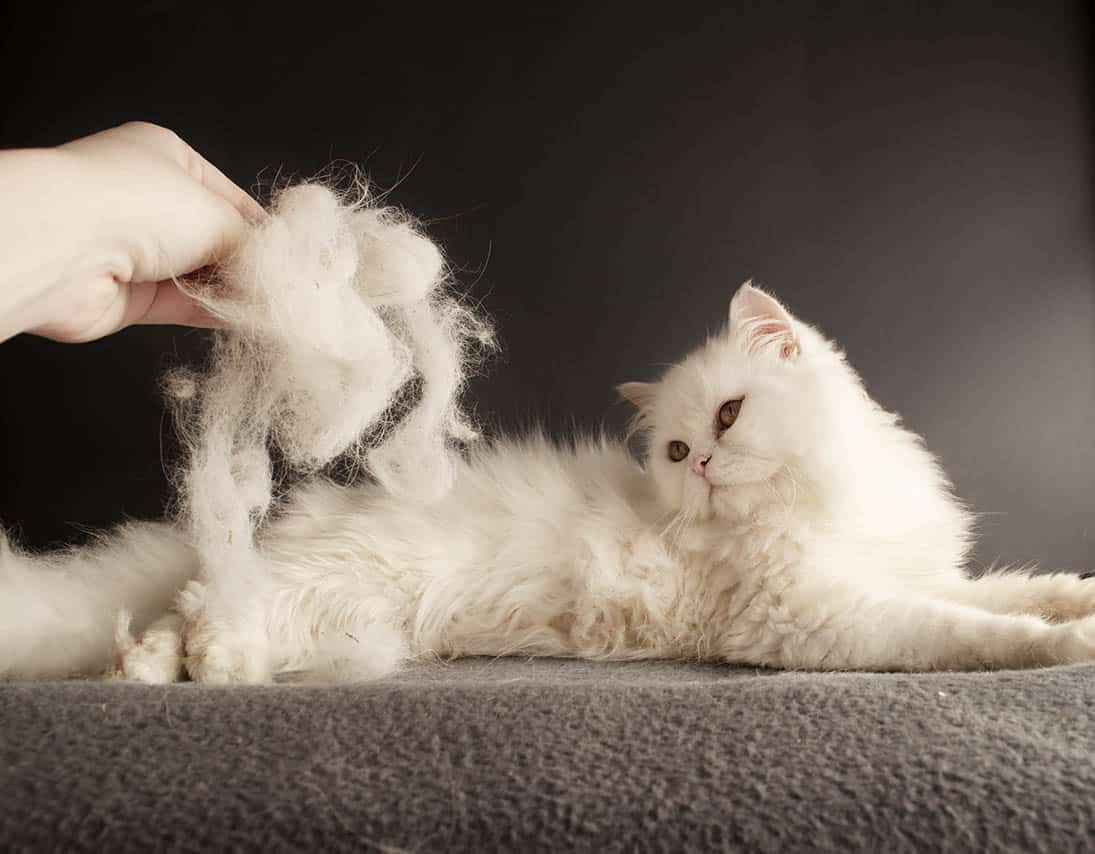
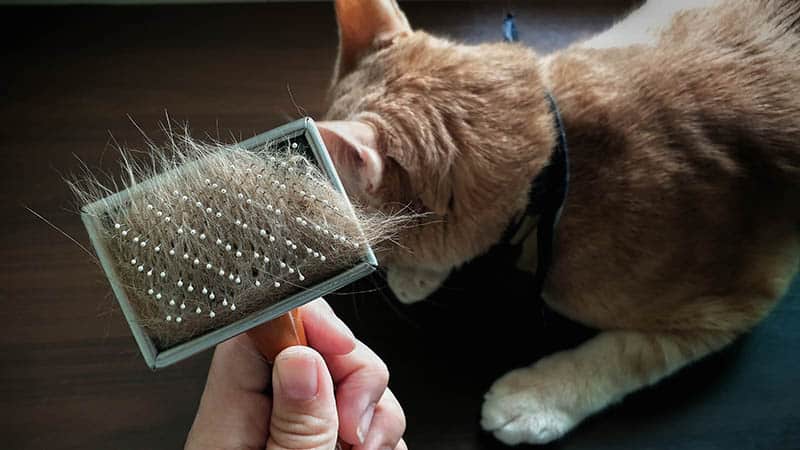
One of the best ways to decrease how much dander is in your home is to commit to regularly grooming your kitty. Bathing will remove saliva build-up from your pet’s fur while removing dead hairs so they can’t fall off in your home. Even though your cat is a grooming expert, you’ll need to step in to do the dirty work to remove the dander.
It won’t come as a surprise to most cat owners that kitties don’t love baths. Unfortunately, it is a necessary evil if you live with someone with pet allergies. A weekly bath should do the trick. You’ll need to use regular cat shampoos and not the dry versions.
2. Use Dander Reducing Products
You can try dander-reducing products if you don’t want to risk scratches to your entire body and breaking your cat’s trust by forcing them into a bath.
- This spray from Burt’s Bees contains colloidal oat flour and aloe vera to condition your pet’s dry skin and reduce flaking.
- Allerpet’s Cat Dander Remover is designed to be rubbed with a cloth on your cat’s coat. According to the manufacturer, it can reduce dander by 50% when used consistently.
3. Regularly Clean Your Home
Cleaning your home with a cat can feel futile. You can vacuum your entire space, and before you have even had a chance to put the vacuum away, your cat has lovingly deposited tufts of fur onto your no-longer-clean flooring. While it may feel like you’re fighting a losing battle, regularly cleaning your home can reduce the dander.
Clean your carpets, furniture, bedding, and curtains often, as dander can easily stick to these soft surfaces. You’ll also want to do a steam cleaning occasionally to remove the dander from deep down.
Decluttering can also do wonders for getting rid of pet allergens. But, of course, you already know that dander can stick to virtually any surface, so the fewer things you have in your interior, the fewer areas the dander can cling to.

4. Look Into Air Purifiers and Filters
Air purifiers and filters can remove any pollutant that affects your home’s indoor air quality. Air filters are attached to your home's HVAC system. Without an air filter, your HVAC system will distribute allergen-containing particles back into the air. Search for a filter with a MERV rating of 11 at the minimum. If your allergies are severe, don’t go any lower than a MERV 13-rated filter.
Air purifiers are standalone units that can remove most air particulates that trigger allergies. Unfortunately, they can’t take away pollutants that have already settled into your flooring or furnishings. Check out our list of the ten best air purifiers for cat allergies to find one that best suits your needs.
5. Invest in a HEPA Vacuum
High-efficiency particulate air (HEPA) vacuums are an invaluable investment for allergy sufferers. These powerful appliances have HEPA filtration systems to filter out fine dust and allergens. Vacuums without this type of filter allow debris to return to your home as you clean, effectively defeating the purpose of vacuuming in the first place.
We like Bissell’s MultiClean Allergen Pet Lift-Off as according to the company, it can trap up to 99.97% of dust and allergens.

6. Clean Your Cat’s Things
Since dander can stick to virtually any surface, it only makes sense that your cat’s favorite items are covered in it. Beds, blankets, litter boxes, and toys can hold a lot of dander and saliva. Your cat’s bedding can be tossed in your washing machine (though you should read the label to be sure).
Hand washing will be necessary for toys. If they’re made of plastic, use hot water and dish detergent to kill germs. Cloth toys or those containing catnip can’t be sanitized, so you’ll need to replace them often to prevent allergens from building up.
You should be completely emptying and sanitizing your cat’s litter box weekly.
7. Switch Up Your Cat’s Diet
Did you know some cat foods can reduce the amount of allergens in your cat’s hair and dander? Purina Pro Plan’s LiveClear line reduces allergens by 47% by the third week of feeding. The nutrition scientists at Purina found a way to reduce the active levels of Fel d1 in cat saliva, effectively reducing how much of the allergy-causing protein enters your home when your cat grooms.
Currently, seven LiveClear formulas are available, including options for cats with sensitive skin and stomachs, indoor cats, and those needing little help with weight management.

8. Make Your Room a No-Go Zone
You spend 8 hours a day in your bedroom when you sleep. If your cat shares the room with you, imagine how much dander you breathe in as you sleep. While keeping your kitty out of your bedroom won’t eliminate dander, it will reduce your exposure to the allergen. As hard as it might be to cut out the nighttime snuggles, it may be necessary if your allergies are severe.
9. Apply Flea or Tick Treatments
Parasites like fleas and ticks can make your cat’s skin very itchy. An itchy kitty will scratch incessantly at their skin, loosening the dander and depositing it throughout your home. A monthly spot treatment for parasites can help reduce how much dander your kitty produces.
Of course, if your kitty has fleas, ticks, or mites, you should take them to the vet for a complete evaluation or get guidance from a vet online.
10. Use an Elizabethan Collar
The Cone of Shame is the best friend of no animal, but it can be a line of defense against dander. If your kitty is dealing with a flea, tick, or mite infestation, you might consider using an Elizabethan collar. E-collars aren’t a permanent solution to your dander problem, but they can prevent your cat from scratching their skin when dealing with an infestation.

Final Thoughts
Allergies can be challenging to deal with, especially if you have recently been diagnosed and have always been a cat owner. However, we hope our tips above will help you and your beloved kitty live together harmoniously.
If your allergies are severe and you’re on the fence about adopting a cat, you may want to reconsider if a cat is the right pet for you. Adopting a cat when you have severe allergies will lower their quality of life since you’ll have to confine them to one room or force them to live a life without petting and snuggling so that you can live comfortably.
Sources
Featured Image Credit: RJ22, Shutterstock
Expert cat care, straight to your inbox
Vet-reviewed advice, behavior tips, and the best of Catster. Free, and you can unsubscribe anytime.
By signing up, you agree to our Terms & Conditions and Privacy & Cookies Policy.
For Chantelle, writing and animals are the two driving forces in her life. Growing up on the Canadian prairies surrounded by pets, she now shares her home with five cats, two guinea pigs, and a bearded dragon. Chantelle, her husband, and their child pride themselves on being dedicated pet parent, even spending a fortune on wall-mounted cat shelves to provide their cats with an indoor jungle gym. When she's not snuggling with her cats or photographing their humorous moments, Chantelle is exploring the Rocky Mountains, rewatching her favorite Netflix series, and reading up on various random subjects.
Join the conversation
Ask a question, share your story, or send private feedback.