Get

In Your Inbox

Catster is reader-supported. When you buy via links on our site, we may earn an affiliate commission at no cost to you. Learn more.

Can Cat Dander Travel Through Vents or Air Ducts? Facts & FAQ

pet hair brush with fur clump

Having cats can be rewarding but also a struggle for some people due to allergies. If you have cats and family members allergic to cat dander, you should know that this dander is traveling through your vents and air ducts. Dander is shed regularly from your cat and then becomes airborne, making it easy to get sucked into your ventilation system. Then every time your heat or air kicks on, this dander circulates.

You might be wondering if this dander affects your air quality and home (other than encouraging allergies). And you’re probably wondering if the situation can be remedied in any way. Continue reading to find out exactly that!

divider cats oct 2024

What Is Pet Dander?

What exactly is dander? Cat dander is made up of tiny flakes of skin shed by your cat. It’s so small you can’t see it, but it can have a large impact if you’re allergic. And dander is a pretty common allergy for people to have.

In fact, roughly 10%–20% of those with allergies are allergic to it, with people being more likely to be allergic to cats. Allergy sufferers may be less allergic to some breeds than others or be allergic to a pet’s saliva rather than dander, but pet allergies certainly aren’t uncommon.

That’s why having cat dander circulating in your air vents can be such a huge deal.

How Dander Affects Your Air and Home

Because cat dander is microscopic and lightweight, it easily becomes airborne and gets sucked into your ventilation system. It then can travel from room to room in your home, getting stuck to everything from bedding to clothing. That means more allergic reactions for those with allergies.

But cat dander in your vents can lower the quality of the air in your home in general, too, among other things. Besides dander being circulated throughout the home, making the allergen widespread, this dander can also clog up your air filter if you’re not cleaning it regularly. And that can cause several issues, such as pet odor also becoming trapped and spreading throughout the house, a stressed HVAC system (meaning more maintenance costs), and less energy efficiency (meaning higher bills).

As you can see, dander can cause quite a bit of trouble despite its small size!

man adjusting air vent
Image Credit: The Toidi, Shutterstock

Signs Dander Is Affecting Your Home

You’ll see several signs in the home if you’re having issues with cat dander in your vents.

The first noticeable sign will be more allergy symptoms, such as:
  • Itchy, watery eyes
  • Wheezing
  • Sneezing, congestion, or runny nose
  • Fatigue
  • Rashes
But you may also see signs that your air filter is clogged up. These include:
  • Your home not getting cool, even with the air on
  • An air conditioner evaporator coil that’s frozen
  • Higher than normal bills
  • HVAC system overheating
Electric bill paper on table
Image Credit: tommaso79, Shutterstock

Can I Keep Dander Out of My Vents and Air Ducts? (6 Tips to Reduce It)

Unfortunately, you’ll never be able to 100% get rid of dander in your home, vents, or air ducts. But there are ways to reduce how much dander is being spread around.

  • First and foremost, change your air filter each month. Usually, you’d want to change your filter every three months, but with cats and dander around, you’ll want to do it every month.
  • You can also install a HEPA filter into your air handling system. These filters are specifically designed to catch more dander particles, so less get through to circulate the house.
  • Remove dander from the home each week by starting a regular schedule of cleaning. This means dusting, vacuuming, sweeping, and mopping weekly, as well as washing bed sheets each week. Doing this will reduce the amount of dander build-up in your home.
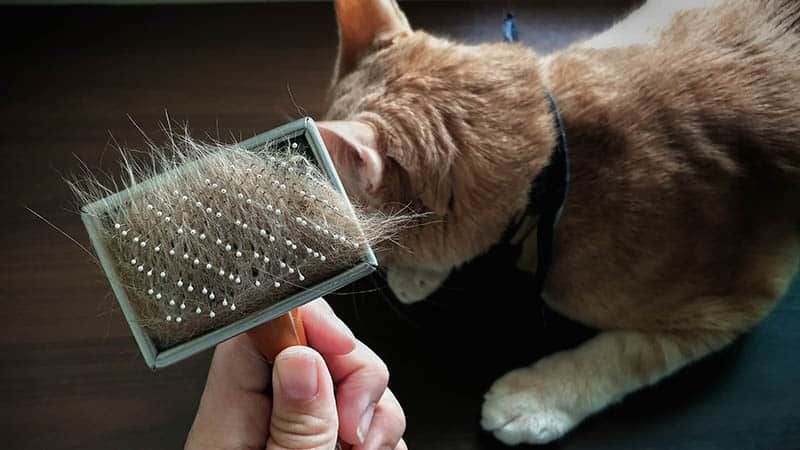
  • Groom your pets regularly to help get rid of dander. It may be too difficult to give your cat a weekly bath, but you can certainly brush them every week.
  • Try keeping your pet away from the vents (another difficult task, we know). Cats have a mind of their own, but encourage your pet to keep away from vents by setting toys and food and water bowls in places where there are not any.
  • Finally, have your air ducts cleaned regularly to help prevent too much dander from building up.

divider single cat paw oct 2024

Conclusion

Having cats means having cat dander in your home, and because dander is so tiny and lightweight, it can easily get into your air ducts and vents. While the issue cannot be 100% resolved, you can take steps to reduce the amount of dander both in your vents and your home in general. One big step is weekly cleaning of your home to reduce dander, but you can also take other steps, such as installing a HEPA filter and changing your regular air filter more often.

By doing things like this, the allergy sufferers in your home should have an easier time, and everyone can enjoy having their cat around!


Featured Image Credit: RJ22, Shutterstock

Want content like this delivered to you?

Sign Up For Our Newsletter

News, insights, expert advice, and everything cat

* By submitting, you agree to our Terms & Conditions and Privacy & Cookies Policy.


How useful was this post?

Click on a star to rate (you can leave written feedback after clicking submit)

Help us improve Catster for pet parents!

Your feedback really matters.

What did you like about this post? Also how can we improve it?

Join the conversation

Leave a Reply

You’re very welcome to leave a comment or question. Please know that all comments must meet our community guidelines, and your email address will NOT be published. Let’s have a positive and constructive conversation.


Talk With A Vet Online

Peace of mind,
anywhere, anytime

Affordable vet advice

Why Do Cats Roll in Dirt? 6 Vet-Verified Reasons for This Behavior

Have you ever looked into your backyard only to find your cat rolling and writhing around on the ground? If so, there should...

How to Boost Your Cat’s Immune System: 8 Vet-Reviewed Tips

Nobody wants to deal with a sick cat all the time, and the last thing your cat wants, is to be sick regularly....

When Cats Enjoy the Good Life: Olga’s Indoor Existence

Hi, I’m Christopher! Read my introduction to learn more about me and my silly Russian Blue cat, Olga. Although some of them were...

10 Types of Cat Collars and Their Uses (With Pictures)

When most people think about cats, leashes and collars are often the last things that come to mind. Neither indoor nor outdoor cats...

More related

How to Give Your Cat a Bath: Dr. Karyn’s Tips (With Video)

Hi, I’m Dr. Karyn! Read my introduction to learn more about me and meet my five hilarious cats: Clutch, Cyril, Alex, Zelda, and...

10 Thoughtful Ways to Memorialize Your Cat

Once adopted, a pet cat adapts to the household dynamic. It doesn’t take too long to create an initial bond, and the bond...

Can Cats Burp? Vet-Reviewed Myths & Facts

Burping after consuming carbonated beverages is a gross but common occurrence in humans. But what about cats? Do cats burp? Can your kitty...

Can Cats Eat Cranberry Sauce? Vet Reviewed Health Risks & Alternatives

Cranberry sauce is a tasty condiment or side dish that goes well with many kinds of meals. However, if you’re a cat owner,...

Keep reading

Why Do Cats Roll Around on Their Backs? 7 Vet-Reviewed Reasons (With Infographic)

Cats are peculiar creatures and usually march to the beat of their own drum. Unlike dogs, cats can be particular, especially regarding their bellies. When a dog rolls over on their back and exposes their belly, the dog likely wants...

Fluffy domestic cat stretching on the sofa

Can Cats Eat Mayo? Vet-Reviewed Nutrition Facts & Advice

Mayo is a condiment that can be found in many people’s pantries and refrigerators. But what about cats? Can cats have mayonnaise? While it may add some flavor to food, it’s not a good idea to add mayo to your...

Can Cats Eat Mayo

5 Best Cat Foods for Feral Cats in 2026 – Reviews & Top Picks

If you are used to feeding feral cats, you probably think of them as your own. After all, it takes a lot of responsibility and care to look after animals with nowhere to go and no reliable source of food....

feral calico cat

Can Cats Catch Colds From Humans? Vet Approved Facts & Advice

For most of us, our pets are our pride and joy, and we wouldn’t want to do anything to endanger them, which is why many people worry that when they catch a cold, they might pass it on to their...

man sick with cat beside him

Can Cats Eat Curry? Vet-Reviewed Facts & FAQ

Curry is a popular dish made with various spices, including turmeric, cumin, and coriander. While it is enjoyed by humans all over the world, can cats eat curry too? And is it healthy for them? While most people believe that...

Can Cats Eat Curry

Can Cats Eat Pine Nuts? Vet-Reviewed Facts & FAQ

There are many safe and unsafe human foods that you could feed your cat. For humans, nuts are famous for their health benefits. Pine nuts in particular are great for boosting energy levels and keeping skin healthy. But are they...

Can Cats Eat Pine Nuts

Why Is My Cat’s Meow Weak and Raspy? 6 Vet Verified Causes

A weak or raspy meow coming out of your cat can be alarming. If your cat’s meow sounds different, it may be due to a serious medical issue. While some reasons for the raspy meow may not be serious, and...

Ginger tabby young cat sitting on a wooden floor looks up, asks for food, meows

Why Is My Cat Suddenly a Picky Eater? 7 Vet-Reviewed Reasons

Cats are known to be relatively pickier than most animals out there. In a way, this helps them stay alive. They aren’t prone to eating things that they shouldn’t (usually), which would help them stay alive in a natural setting....

cat not eating

Love Cats? So Do We! Join the Catster Community

Stay informed with expert pet care insights delivered straight to your inbox! Discover professional guidance on animal behavior, feeding tips, trusted product picks, and much more.


Sign up for the Catster Email Newsletter

Stay informed with expert pet care insights delivered straight to your inbox! Discover professional guidance on animal behavior, feeding tips, trusted product picks, and much more.