A Hollywood Actor Chose Animals Over Acting 43 Years Ago to Found D.E.L.T.A. Rescue

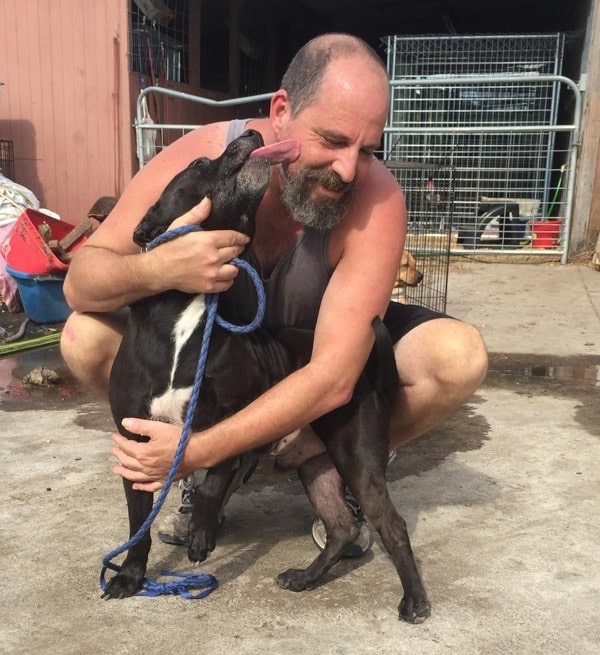
Over 4 decades at the helm of D.E.L.T.A. Rescue, Leo Grillo doesn't care if his viewpoints are controversial. He has been rescuing cats and dogs in and around his home of Glendale, California, since 1979, when he gave up a burgeoning career as an actor to pursue animal rescue full-time. D.E.L.T.A. -- which stand for Dedication and Everlasting Love to Animals -- has since become one of the largest animal sanctuaries in the world.
"I was an actor in Hollywood, and I was just starting to get places," Grillo recalls. "My agent called, and she said, 'You missed another audition. You can't keep doing this. You have to choose: your dogs or your career.' And I said, 'I've gotta go.'"

Since then, Grillo has been rescuing animals nonstop. He's developed a solid idea of what works and what doesn't for D.E.L.T.A., which provides permanent sanctuary to countless animals. Sometimes his rescue practices contradict what is widely accepted as the norm; for example, Grillo does not adopt out animals, and he will not perform abortion spays. Perhaps most surprisingly, he is not an advocate of trap-neuter-return (often referred to as TNR for short) practices, which return feral cats to the street after they have been spayed or neutered.
"I'm very controversial on this one; from the beginning, I've said this is absolutely the wrong thing to do," Grillo says. "That is not rescuing animals; that is not animal welfare. That's animal control."
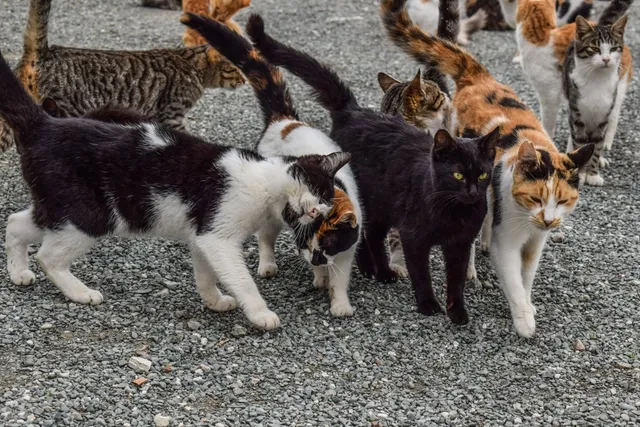
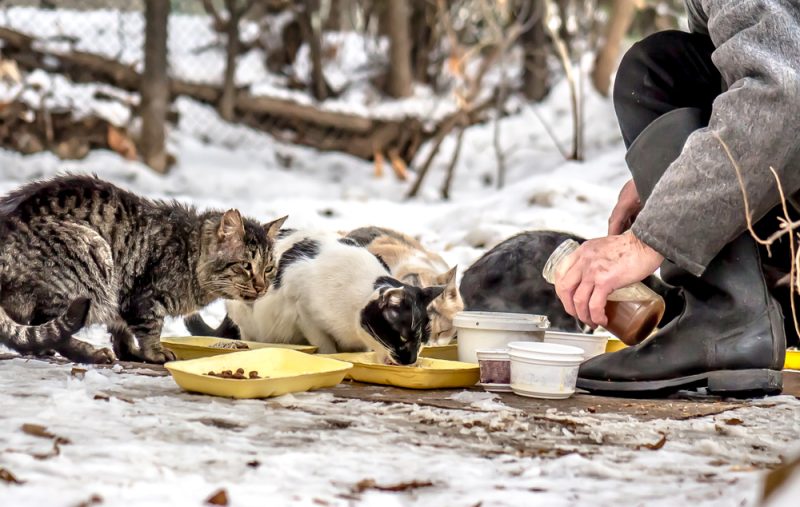
The reason for Grillo's stance on TNR can be illustrated by his experiences trying to catch a feral cat named Mama Bear, who has populated the area with more than 40 kittens in only a couple of years. During this time, Grillo has tried repeatedly and unsuccessfully to trap Mama Bear, who has been trapped before and is fearful and untrusting of humans. According to Grillo, his difficulty catching Mama Bear demonstrates the key problem with TNR: If you trap a feral cat, neuter him, and release him back into the wild, you're never going to catch him again. This becomes problematic if that cat becomes ill or requires additional assistance for some reason.
"You stop the number of cats, maybe - but you did not do anything for the cat that you trapped," Grillo says. "You let that poor cat go back out, suffer, and eventually die."

The main alternative Grillo offers to TNR is simply to take some cats home, which is obviously not a viable option for everyone. But Grillo asserts that if only a small percentage of people who are serious about animal rescue each took a few cats home, we could make a serious dent in the feral cat problem.
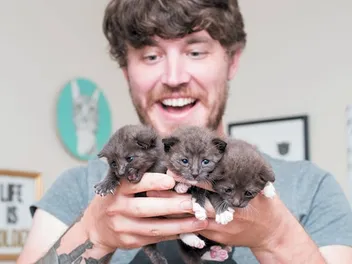
"Anybody can take a handful of cats home; it's not a chore," Grillo says. "My daughter and I have raised four orphan litters in the last three months. Cats live three years outside or 15 inside - you choose."

Grillo also has his reasons for not adopting out pets. When he first opened D.E.L.T.A. three decades ago, there was little to no research on how to screen potential adopters. He came up with his own system for interviewing people and determining whether they would provide a good home, and in the process he became something of an authority on animal adoption. So Grillo was shocked when he encountered statistics suggesting that most Americans keep their pets for an average of two-and-a-half years.
"I discovered slowly that adoption doesn't work, at least not for us," he said. "People who were the best-screened people were not keeping their pets for life."

The last straw for Grillo came when he adopted a 10-year-old dog named Bonnie out to "the best people in the world," a young couple who had aced his screening process. Bonnie resembled the wife's childhood dog, and at Christmas time, they sent Grillo pictures of Bonnie sitting on the couch with the other dogs, surrounded by presents. By all accounts, Grillo considered the adoption a success.
But when Grillo called the following summer to check on Bonnie, what he heard shocked him: Apparently a misguided vet told the couple to euthanize Bonnie because the dog was "developing kidney problems." Grillo was floored; he had promised to keep Bonnie safe, and he felt he'd failed her.

"Our animals have been damaged," Grillo says. "They're abandoned to begin with. I promised them when I rescued them that they're safe and this will never happen again. I found that when I was adopting, I lied. Some of them did not end up well."
The good news, of course, is that when an animal ends up at D.E.L.T.A. today, he or she is guaranteed a safe, caring home for life, and Grillo doesn't plan to slow down his rescue operation any time soon. He encourages everyone who is able to lend a hand as well.
"How can you not be surrounded by cats?" Grillo asks. "Each cat is like a bouquet; how many bouquets do you want? Fill your house with flowers."
Visit D.E.L.T.A.'s website and Facebook page.
See Also:
Expert cat care, straight to your inbox
News, insights, and useful advice, delivered to you.

No spam — unsubscribe anytime.
By signing up, you agree to our Terms & Conditions and Privacy & Cookies Policy.
How useful was this post?
Click a star to rate. You can leave written feedback afterwards. (We read all feedback.)

Catster is a cat magazine and cat website where cat lovers come together and get expert advice about cat behavior, cat health and cat news.