Do Cats Purr When They Are Stressed or Nervous? Vet-Reviewed Facts & FAQ


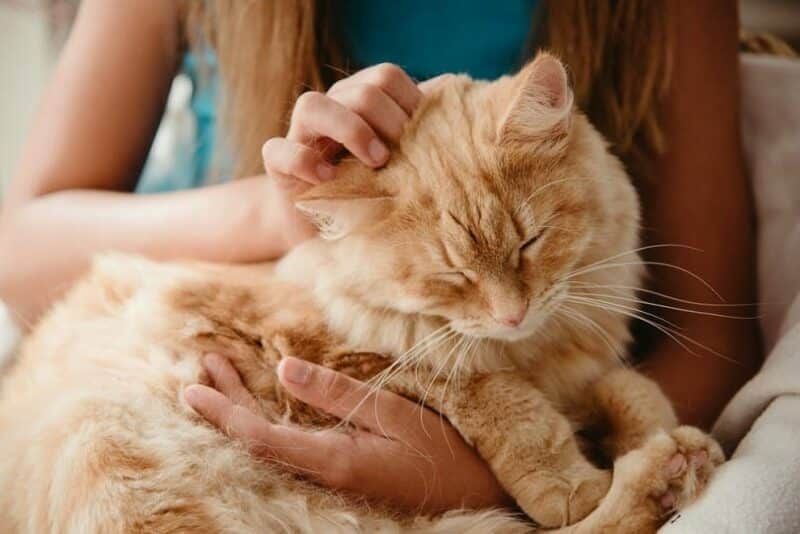
Almost nothing is more relaxing than having a cat curled up on your lap, purring gently. But have you ever wondered why cats purr? It seems like they purr when they’re happy, but do cats purr when they aren’t so happy?
While it isn’t as common as happy purring, cats do purr when they are nervous or stressed.
Here, we go over why cats purr when stressed, as well as all the other reasons that they purr.

How Does Purring Work?
Purring is just one of the many things that we love about cats. There’s nothing quite like hearing your cat purring just because they’re happy to see you. But how exactly do cats purr?
Purring relates to how cats are wired. Since the brain controls everything in a cat’s body, it also controls purring. The brain sends information to the muscles located in the cat’s voice box. This signal vibrates the muscles, so when the cat breathes out and in, the air flows over those vibrating muscles, making a purr!
The vibrating muscles keep going when your cat inhales and exhales, which is why the purr sounds continuous. But if you listen carefully, you should be able to hear a slight difference in the purr as your cat breathes in and out.

Why Do Cats Purr When Stressed?
It isn’t too difficult to stress out a cat. Cats can show their stress in many ways, which does sometimes include purring. It’s a form of self-soothing that can help a cat calm down and put them more at ease. It’s similar to any technique that you might use when stressed, like squeezing a stress ball or meditating.
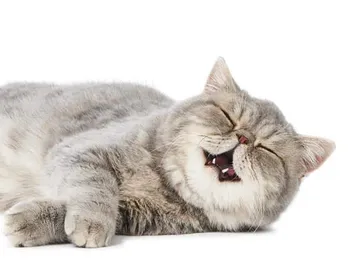
There are a few ways that you can tell if your cat is stress purring, such as if your cat is purring but showing their teeth or panting. Another way is the pitch of the purr. When cats are purring out of happiness, the purr tends to be lower pitched, while a stressed-out cat might have a higher-pitched purr.
It’s thought that when cats purr because they are anxious, it is done intentionally, whereas when cats purr out of contentment, it seems to be an almost automatic response.

What Are Other Reasons for Cats Purring?
There are several reasons that cats purr, including the following common ones.
Happy Cat
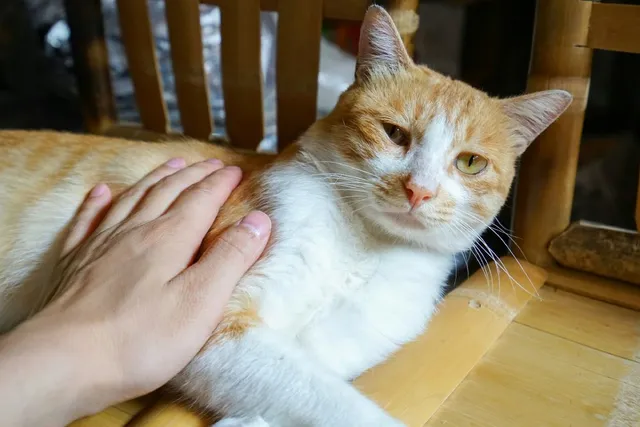
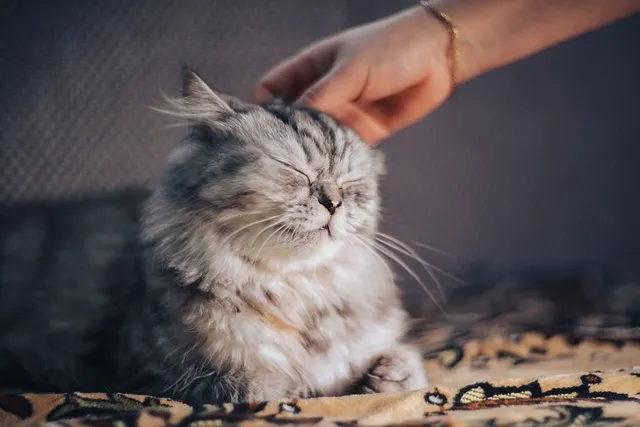
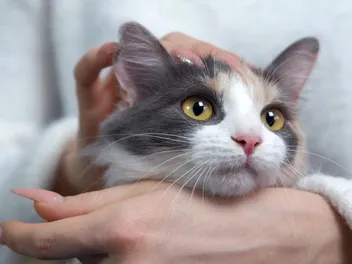
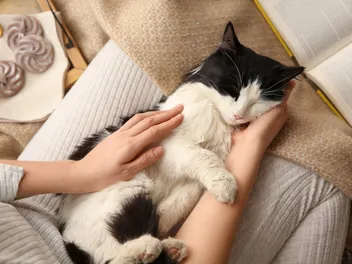
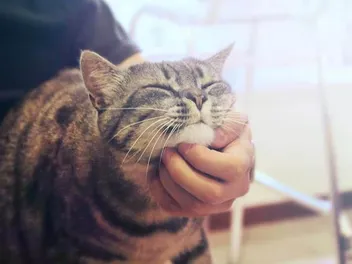
Happiness is one of the main reasons that cats purr. Sometimes they purr because they're enjoying those cheek scratches or even eating. Being curled up on your lap or stretched out in the sun makes them feel content, and purring is a natural reaction.
When in Pain
Sometimes cats will purr when they’re injured or in some kind of pain. Mother cats often purr while in labor, and it’s believed that it’s a form of self-medication.
Purring evens out and regulates the breathing, and it also produces a low-frequency vibration, which is believed to stimulate healing.
Some applications can be used on humans that use a similar low-frequency vibration to help stimulate muscle strength and bone growth.
Communication Between Mother and Kittens
When kittens are just a few days old, they start purring, which is how they communicate and form a bond with their mothers.
The mother purrs for her kittens because they are born blind and deaf, which helps them find their mother for nursing.

Cat Wants Something
You may have noticed your cat purring when it’s mealtime. But if your cat is waiting for you to get up to feed them, the purring frequency starts to become higher pitched. We tend to be more likely to respond to a more urgent-sounding purr.
A study played different purrs from different cats, both low-frequency, contented purrs and high-frequency purrs, when a cat needed something (like food). The human subjects found that the purr asking for something was less pleasant, and they recognized that there was an urgency behind it.
Greeting Other Cats
Sometimes, cats will purr when they recognize another cat that they are familiar with. It’s not known what this purr means exactly, but it’s thought that this kind of greeting is intended to let the other cat know that they mean no harm and that they are friendly.
Cats are also known to purr while grooming each other, which could be seen as a sign of trust, as well as the usual contentment.

How to Judge Why Your Cat Is Purring
You now know much more about purring, so it should be easier to figure out why your cat is purring.
Just remember that it’s partly in the pitch of the purr and partly the situation. If you’re at the groomer or vet clinic, the purr is likely because your cat is stressed, especially if it sounds higher pitched than normal.
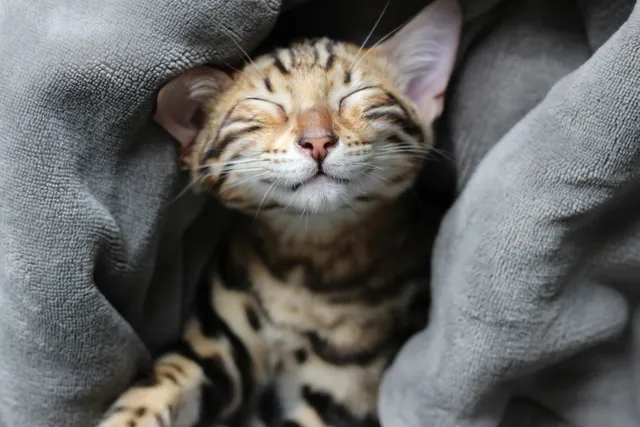
If your cat looks comfortable or is sleeping on or next to you, you know that this is a normal contended purr.
If your cat seems to be behaving differently and also purring, you should get in touch with a vet, just to be on the safe side.
Do Any Other Animals Purr?
Beyond domesticated cats, many animals do indeed make a purr-like sound.
- American badger: They purr when digging a burrow.
- Arctic fox: They sometimes greet each other with short purrs.
- Black bear: Mothers purr to soothe their cubs.
- Bobcats: They purr for many of the same reasons as cats.
- Fennec fox: They purr when they are happy.
- Guinea pigs: Like cats, they purr when happy, communicating, and injured or sick.
- Polar bear: They make a low-frequency purr as communication.
- Rabbits: They purr when happy.
- Mountain gorilla: They usually purr when happy or nervous or while eating.
- Hyena: Not enough is known why they purr, but it might be for communication or dominance.
- Raccoons: They make many different noises, including purring.
- Squirrel: They purr as a warning to other squirrels about danger.

Conclusion
Cats use their purrs for many reasons, including showing contentment, for self-medication, and when they are nervous or stressed. If the purr sounds higher than usual, it might be a demand for food or something might be wrong, particularly if they are also behaving unusually.
Understanding your cat’s body language in addition to their little quirks, such as purrs and meows, are all ways that you can get to know your cat much better. This will strengthen the bond between you and your cat.
Featured Image Credit: Karpova, Shutterstock
Expert cat care, straight to your inbox
News, insights, and useful advice, delivered to you.

No spam — unsubscribe anytime.
By signing up, you agree to our Terms & Conditions and Privacy & Cookies Policy.
How useful was this post?
Click a star to rate. You can leave written feedback afterwards. (We read all feedback.)
Kathryn was a librarian in a previous lifetime and is currently a pet writer. When she was a child, she hoped to work in ZOOs or with wildlife in some way, thanks to her all-consuming love for animals. Sadly, she's not strong in the sciences, so she fills her days with researching and writing about all kinds of animals and spends time playing with her adorable but very naughty tabby cat, Bella. Kathryn is hoping to add to her family in the near future – maybe another cat and a dog.