Miliary Dermatitis in Cats: Causes, Signs & Treatments (Vet Answer)

In this article
Miliary dermatitis, also called feline miliary dermatitis, may sound like an unusual name for a medical condition, but it is a common malady that affects our feline friends. Surprisingly, it is not a specific diagnosis or disease but rather a descriptive term used to characterize a distinct skin reaction pattern seen in cats. In this article, we’ll discuss what miliary dermatitis looks like, the various causes that could bring this lesion about, and the respective treatments that could be an option for your cat should they exhibit this condition.

What Is Miliary Dermatitis?
Other names for miliary dermatitis could include scabby cat disease, papulo crusting dermatitis, or miliary eczema. To break down the terminology of the full medical term, feline miliary dermatitis means:
- “Feline” is another name for a cat.
- “Miliary” is from the Latin word “milium” which translates to “millet.” This references millet seeds, which resemble the small, tiny bumps that describe what the skin reaction pattern can look like.
- “Dermatitis” means inflammation of the skin.
Together, these terms describe not a diagnosis, but rather, a secondary skin reaction pattern that can be observed in cats. Feline miliary dermatitis is an inflammatory reaction pattern on the skin that can be present due to many different causes which will be discussed shortly.
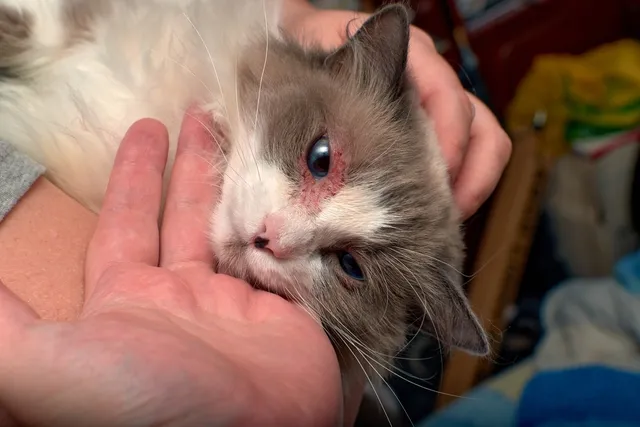
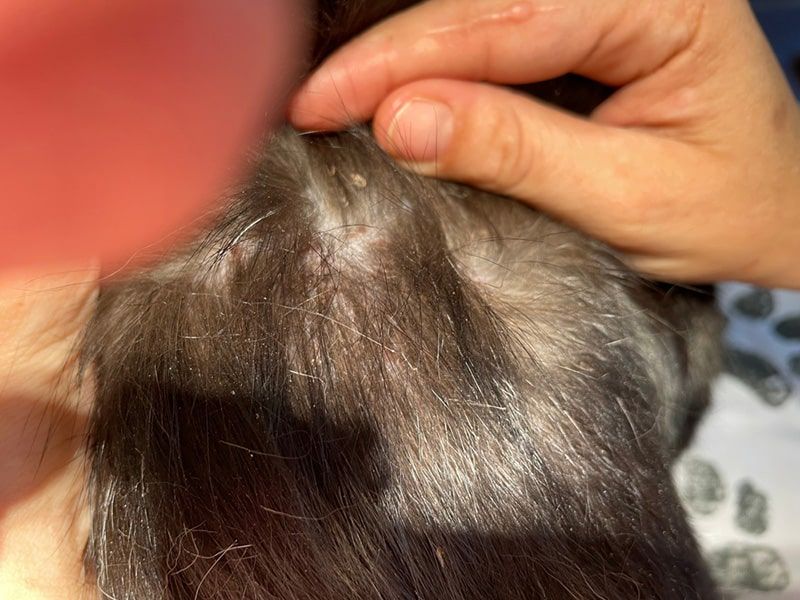
The best way to describe it physically would be a pimply rash, often with crusts and variable degrees of redness and hair loss. Depending on the cause, it can occur in specific areas or throughout the body but is most commonly found on the lower back or sides of the abdomen, at the base of the tail, or on the head, neck, or ears.

What Are the Signs of Miliary Dermatitis?
- Small, pimple-like bumps called papules, usually around 1–2 mm in size
- Papules may ooze or have a crust
- Crusting on or around the lesion
- Usually present in a cluster or as a large group
- Itching often present
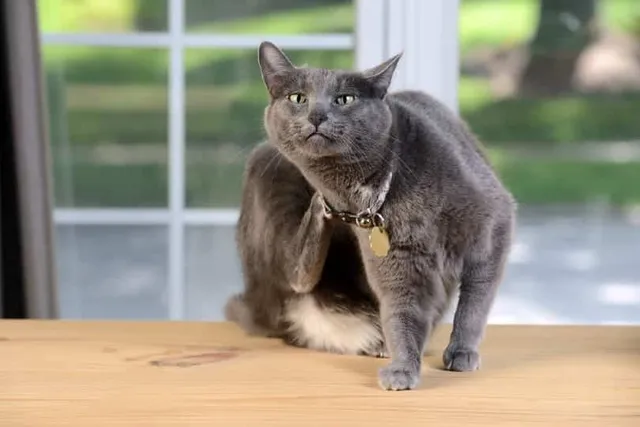
- Affected cat may exhibit licking, gnawing, or scratching
- Redness of the lesion and the skin around it
- Hair loss (alopecia) may be present
- Sometimes, papule lesions are felt rather than seen (unless closely inspecting skin), or they may be more visible in areas with less hair present
What Are the Causes of Miliary Dermatitis?
Because miliary dermatitis is a secondary skin reaction in response to a primary medical condition, when miliary dermatitis is seen, it is always in response to a primary cause. This reaction pattern most often manifests in the case of a reaction to an allergy, infestation by parasites, or an infection. But with that being said, there is a long laundry list of possible causes for feline miliary dermatitis. Some of these include:
- Flea bite hypersensitivity (flea allergy)—this is the most common cause of miliary dermatitis cases
- Reaction to other external parasites may include ear mites, skin mites, lice, ticks, mosquitoes, etc.
- Adverse food reaction
- Environmental allergies (such as pollen, molds, dust mites, etc.)
- Bacterial infection of the skin
- Fungal disease
- Intestinal parasite hypersensitivity
- Autoimmune skin condition such as pemphigus foliaceus
- Adverse reaction to a drug
- Cat affected by FIV (feline immunodeficiency virus)

How Do I Care for a Cat With Miliary Dermatitis?
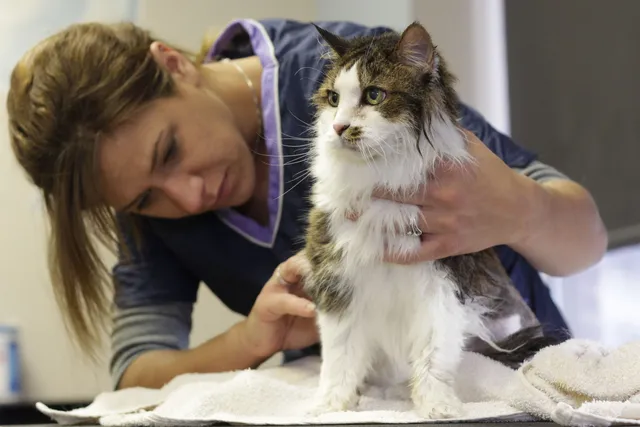
If your cat appears to exhibit miliary dermatitis, it’s a clue that there is an underlying medical condition going on that is affecting your cat. Having them seen by a veterinarian will help get to the primary cause, which will then enable you to treat the problem (which subsequently will resolve the lesions). A veterinary visit will start with a thorough history and a complete physical exam.
Next, some common actions or tests that may be needed to get to the cause of the lesion could include insect control trial, cytology and skin scrapings for analysis under the microscope, fungal culture, a food trial or elimination diet, fecal analysis, bloodwork, as well as a skin biopsy or even allergy testing. Lab work may be implemented in a stepwise fashion, ruling one or two causes out at a time before moving on to the next, if need be. It’s important to know that patience and vigilance will pay off as you seek the needed answers to help your feline friend.
The specific treatment will be tailored to treating the primary cause of the miliary dermatitis. Removing the allergen or problem causing the signs will allow healing of the lesions and eventually cure the miliary dermatitis. Once the cause has been determined, following the recommended long-term treatment protocols the veterinarian recommends is important to help the recovery process happen as quickly as possible and prevent relapses.
For example, if your cat has or is suspected to have flea allergy dermatitis, comprehensive flea control and preventatives will need to be implemented. This may include topical and/or oral medical control, as well as treating other animal members of the household and the environment at home. Bacterial infections are treated with antibiotics while fungal infections are treated with antifungals.
For a cat with a food allergy (or to rule one out), a strict food trial will be discussed in detail by the veterinarian. Corticosteroids or other medications to help reduce severe itching may be needed in some cases to help your cat be more comfortable as they heal with the primary treatment taking effect. Additionally, depending on the specific cause, other medications that may be utilized could include antihistamines, cyclosporine (Atopica), topical sprays, medicated shampoos, and fatty acid supplements, among others.


Frequently Asked Questions (FAQs)
Is Miliary Dermatitis Contagious?
Because this is a skin condition that results from a primary cause, the miliary dermatitis itself is not contagious, but the cause for the skin condition in the first place could be. For example, causes like food or environmental allergies are not contagious, but parasites such as a fungal infection could be. Fleas, another common underlying cause of miliary dermatitis, can very easily travel and readily spread from one animal to another.
What Is Flea Allergy Dermatitis and How Is It Related to Miliary Dermatitis?
As mentioned, this is the most common cause of miliary dermatitis in cats. Even if you don’t ever actually see a flea or flea dirt on your cat, this can still be the cause. Our feline friends can be very attentive and meticulous groomers, which can provide the evidence we are looking for. In some cats, all that is needed to cause a flare-up is one flea bite due to the irritating substances in the flea’s saliva. Cats with flea allergy dermatitis are often very itchy and can have lesions, such as military dermatitis, in specific areas, such as the top back region just above their tail.
Even without direct evidence, a trial treatment may be implemented to ensure and rule out that the most common cause for miliary dermatitis is not coming into play. Flea control may also be helpful for other pets in the household, and the environment should be treated to help stop the cycle from propagating. The veterinarian will be able to discuss their recommendations for this in more detail, as well as the safety precautions that come with ensuring the correct flea treatment is used on the correct size and species type.
What’s My Cat’s Long-Term Prognosis?
Good news: This is a treatable condition and tends to have a great prognosis if the inciting factor is removed! So, if your cat’s cause of the miliary dermatitis is treated/removed, the miliary dermatitis should also resolve.


Conclusion
Feline miliary dermatitis is an inflammatory skin reaction pattern that could be due to many things. When seen, it often signifies an allergy, most commonly due to flea bites, but there are many other possible causes. With proper treatment of the underlying cause, these lesions will resolve and be but a distant memory in your and your cat’s memory!
See also:
Cat Yeast Infection vs. Ear Mites: Vet Reviewed Differences (With Pictures)
Osteosarcoma in Cats: Signs, Causes & Treatment (Vet Answer)
Sources
Featured Image Credit: MeowDr, Shutterstock
Expert cat care, straight to your inbox
News, insights, and useful advice, delivered to you.

No spam — unsubscribe anytime.
By signing up, you agree to our Terms & Conditions and Privacy & Cookies Policy.
How useful was this post?
Click a star to rate. You can leave written feedback afterwards. (We read all feedback.)
Dr. Rachel Ellison DVM (Veterinarian)
Dr. Rachel Ellison lives on a mountain in Utah with her husband, daughter, and son, as well as their animal menagerie— a Bernese Mountain Dog, a Bengal/Siamese mix, and an orange tabby cat, as well as numerous chickens. During her free time, she enjoys being with those she loves, cooking and baking, reading, hiking, sharing her knowledge about cats, and exploring nature and the world around her.