Can Cats Have Allergies? Vet-Approved Signs, Treatment & Prevention Tips



In this article
Yes, cats can most definitely get allergies. Just like humans, cats can develop seasonal, environmental, and food allergies, and they can develop allergies to flea saliva too. Some allergies in cats are mild, but they can get severe, usually due to self mutilation through overgrooming and developing secondary skin lesions and infections. Knowing what allergies can affect cats can help you reduce and treat them before they become serious.
In this article, we look at the different types of allergies that can occur in cats, how to diagnose them, and how to treat them. If you think your cat may be suffering with an allergy, consult with a veterinarian. Let’s get started!

What Causes Allergies in Cats?
There are four main types of allergies found in cats: environmental allergies or atopic dermatitis (now referred to as feline atopic skin syndrome), food allergies, flea allergies, and contact allergies, which are far less common, and are a reaction to various irritants cats may come in contact with, such as shampoos, bedding, collars and other.1 All of them produce the same result: an immune response. Please note that a food allergy should not be confused with food intolerance (which does not have an immune response). Many cats are food intolerant, though some may have a true food allergy. Consult with a veterinarian if you’re not sure about your cat’s reaction to their food.
Your cat’s immune system will react to a substance by producing antibodies, even if it’s not harmful. Irritating substances like pollen can be perceived as a threat by your cat’s immune system, triggering a defensive response and causing inflammation, or an allergic response. This reaction is your cat’s body’s way of protecting themselves from harm — even when there is none — and this causes their allergies. Essentially, it’s an exaggerated response from the animal’s immune system towards a certain protein, also called an allergen.
Because there are so many things that can cause an allergic response in your cat, it can be difficult to pinpoint the exact cause.
Common causes of allergic reactions include:
Seasonal allergies to pollen and grasses are the easiest to diagnose, as they will come and go with the seasons. Flea allergies are also fairly easy to spot, because a flea bite will only cause an excessive itch if your cat is allergic to the flea (enzymes in a flea’s saliva trigger the reaction).

What Are the Signs of Allergies in Cats?
There are various signs that your cat may be suffering from allergies, and the signs will vary depending on the severity of the allergy.
Common signs are:
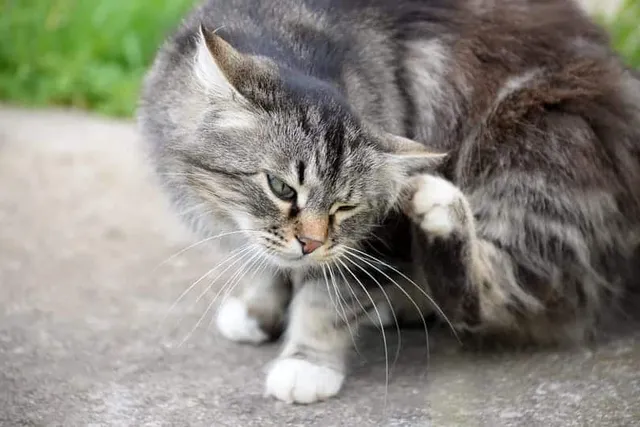
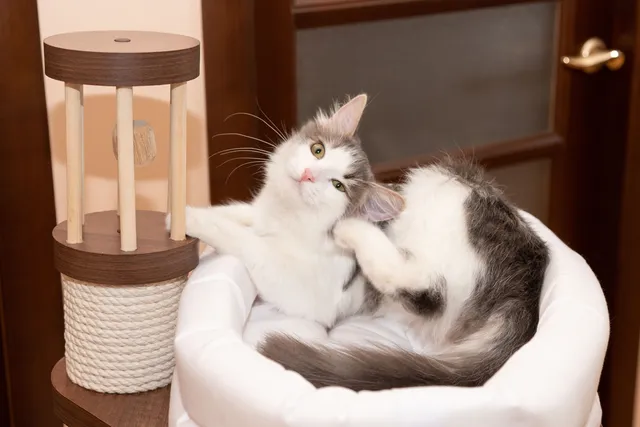
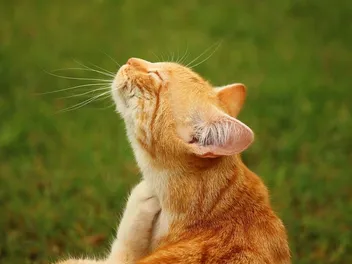
If your cat has itchy or reddened skin, scabs or crusts, loss of hair around their face or neck, or elsewhere on the body, and other signs of overgrooming, this may indicate an allergy. Some cats may experience upper respiratory signs, such as sneezing and coughing, or gastrointestinal signs, like vomiting, diarrhea, or flatulence. If they are scratching their back or the tail base area, or they have scabs around their head and neck, they may have a flea allergy. Food allergies may lead to signs of itchiness, digestive or respiratory signs, while excessive itching is a common sign of environmental allergies, unlike in people who experience sneezing, snuffliness, and eye issues.

How Are Cat Allergies Diagnosed and Treated?
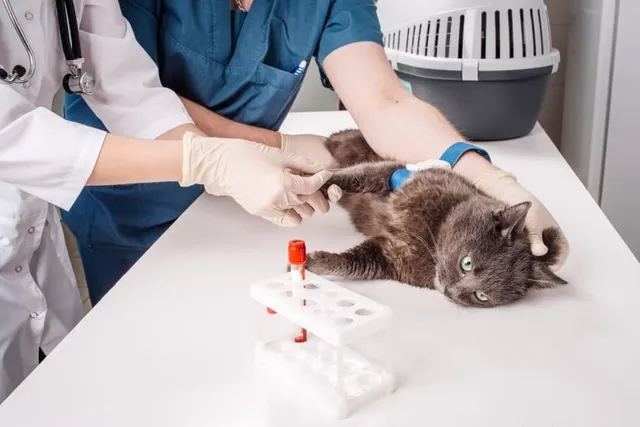
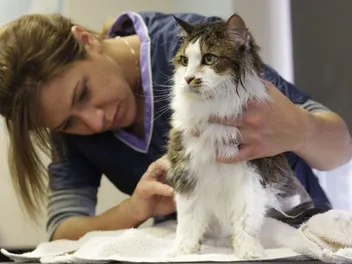
Because the signs of an allergic response are somewhat vague and not unique to any specific ailment (for example, other health issues may elicit the same signs), you shouldn’t try to self-diagnose your cat with an allergy. Instead, you should always consult with a veterinarian to confirm a suspected allergy. Attempting to self-diagnose your cat can be very detrimental to your cat’s health and can do more harm than good. A veterinarian can diagnose an allergy, determine the extent of its severity, and prescribe a treatment plan for your cat. This process may also involve some tests, such as blood tests involving injecting your cat’s skin, or the discussion of a dietary change.
The best treatment for a true allergy is avoiding the allergen. However, if this isn’t possible, a vet will likely discuss options involving medication, other supplements, or supportive therapies for your cat. The investigations are focused on ruling out other common causes of itchy skin disease in cats, or gastrointestinal and respiratory signs, and sometimes an allergy is established as a diagnosis of exclusion, after other conditions have been ruled out. This process may also involve certain tests, such as skin scrapes and microscopic exams, blood tests, tests involving injecting your cat’s skin with small doses of allergens performed by a veterinary dermatologist, or the discussion of a dietary change.
The best treatment for a true allergy is avoiding the allergen. However, if this isn’t possible, a vet will discuss treatment options involving medication, hypoallergenic diet, other supplements, or supportive therapies for your cat.
Flea allergy dermatitis usually resolves quickly once your cat’s flea problem is addressed. This involves both medication and proper environmental control to eliminate fleas from your house. In many instances, a veterinarian will likely recommend keeping your cat indoors as this makes environmental control much more easier and practical. It is best to follow a veterinarian’s prescribed treatment and prevention protocol if your cat has fleas.


Final Thoughts
Unfortunately, there is no surefire way to prevent your cat from getting allergies, but feeding them a healthy diet that supports their immune system, keeping their environment clean and dust-free, using natural cat litters, using ceramic or metal feeding bowls, keeping up with regular flea control, and keeping them away from detergents and perfumes will all help reduce allergies in your cat.
Lastly, while these precautions can help eliminate any potential causes that may reduce your cat’s allergy signs, a consultation with your vet is always recommended.
Featured Image Credit: Susan Santa Maria, Shutterstock
Expert cat care, straight to your inbox
News, insights, and useful advice, delivered to you.

No spam — unsubscribe anytime.
By signing up, you agree to our Terms & Conditions and Privacy & Cookies Policy.
How useful was this post?
Click a star to rate. You can leave written feedback afterwards. (We read all feedback.)
Christian started writing for a local newspaper as a teenager, and he's been involved in the publishing industry for most of his adult life. Combining his love of writing with a passion for animals, he is currently the Director of Editorial at Pangolia and the Editor-in-Chief at Catster.
Christian lives in the Philippines with his wife, son, and four rescue cats: Trixie, Chloe, Sparky, and Chopper.