Osteosarcoma in Cats: Signs, Causes & Treatment (Vet Answer)


In this article
Osteosarcoma is a type of bone tumor that occurs in cats, and it can occur in any bone in a cat's body. It is a very aggressive type of cancer and can spread to other parts of the body rapidly. Osteosarcoma is the most common type of bone tumor in cats, however, it is relatively rare compared to other cancers. Tumors can be primary, meaning cancer has started in one of the bones, or secondary where it has spread from a distant site.
Osteosarcoma causes a considerable amount of pain for cats, so it is important to have it identified and treated as soon as possible. They are usually found in the limbs of cats, or in the bones that connect to the spine such as the rib cage bones, the skull, and the pelvis. There are some treatment options for cats with osteosarcomas, however, the prognosis is generally poor.

What Is Osteosarcoma in Cats?
Osteosarcoma is an extremely aggressive cancer that affects the bones of cats. It is a malignant tumor that can spread rapidly and have devastating effects.
Osteosarcoma arises from the bone itself. It starts with an abnormal production of the cells in bones that make and break down the bone. The overproduction of bone-making cells and bone-destroying cells causes proliferative and destructive patterns in the bone. The tumor penetrates and then begins to destroy the cortex of the bone. It is also capable of moving into the surrounding tissues. In cats, there are two types, grouped depending on their location.
Axial osteosarcoma affects the spine, neck, and head. Appendicular osteosarcoma affects the pelvis, limbs, paws, and shoulders. The long bones in the legs of the cat are the most commonly affected, however, the tumor can affect any bone in the body. Over time, due to the malignant nature of the tumor, a phenomenon in cats called extraskeletal osteosarcoma can occur.1 This is where the tumor invades non-bony tissue such as the liver, kidneys, spleen, and mammary glands.
Osteosarcoma causes severe pain, inflammation, and can even cause pathological fractures. This is where the bone breaks despite no force or impact being applied. Instead, the underlying disease process of the tumor leaves the bones brittle and weak, so they often snap on their own. Osteosarcoma affects cats of all ages, although it is relatively rare in cats and is not quite as aggressive in cats as it is in dogs. Metastatic lesions are less common.

What Are the Signs of Osteosarcoma in Cats?
Often the first clinical signs owners notice is a swelling over one of the bones. Osteosarcoma is an extremely painful condition, so another early sign is lameness (if the osteosarcoma is affecting one of the limbs) or other signs of pain if the location is elsewhere. Depending on what stage the tumor is at and how fast it is progressing, other systemic signs may be witnessed as well.
Common clinical signs seen can include:
- Lameness
- Reluctance to be stroked
- Behavioral changes such as increased aggression
- Swelling present on limbs or over bones
- Lethargy
- Loss of appetite
- Drinking more than usual
- Coughing
- Fractures
A lot of the signs will depend on the exact location of the primary tumor, and where it has spread to. For example, if the tumor has spread to the lungs your cat may have a cough. Some tumors spread to the bones of the jaw. This causes excessive swelling and leads to difficulty eating and swallowing.
Seek veterinary advice if you’re concerned about your pet’s well-being.
What Are the Causes of Osteosarcoma in Cats?
The causes of osteosarcoma are thought to be a complex mixture of different factors. These can include:
- Genetics
- DNA mutations
- Hereditary traits
- Environmental risk factors
- Lifestyle of cats
- Age
- Toxin exposure
- Trauma
Cancers can occur for many reasons and the truth is currently they are not very well understood. There are usually a few different factors that trigger the development of cancer. This is the same for osteosarcoma.


Diagnosis of Osteosarcoma in Cats
Your vet will start by examining your cat and taking a full clinical history of their health. If they are suspicious of an osteosarcoma, they will be paying special attention to your cat's bones. They will feel along your cat's spine and up and down their legs and over their skull. They will be looking for any lumps or masses over or around the bones.
Your vet is likely to take some blood tests and a urine test to assess the health of your cat and check if there are any issues with blood cell counts and organ function. Your vet will attempt to take some X-rays of your cat to look at the bones. Normally on X-rays, bone tumors have a classic “moth-eaten” appearance as some of the bone tissue is lost due to the action of the bone-destroying cells. Fractures may be obvious near the tumor too.
Your vet is also likely to take samples of any masses present and swollen or enlarged lymph nodes. This can be done by cytology using a small needle and biopsy using a larger needle or scalpel blade. If osteosarcoma is diagnosed your vet will assess the spread to local and distant lymph nodes and organs in the chest and abdomen.
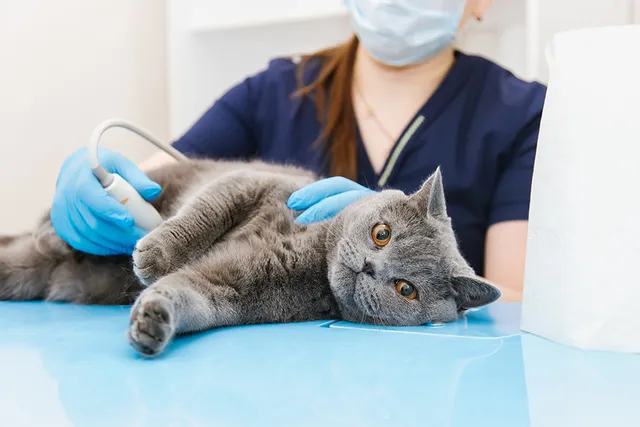
Further imaging may be used such as CT, MRI, ultrasound, and nuclear scintigraphy depending on the lesions noted and the location. Because the tumor has the potential to be aggressive, it is important to check for metastatic disease in other areas of the body.

How Do I Care for a Cat with Osteosarcoma?
If the tumor has spread from the bone to other places in the body, this carries a very poor prognosis. If there is no sign of metastatic disease, your vet will attempt to control the primary tumor and prevent it from growing and spreading.
If the tumor involves one of the bones of the limbs, this often requires amputation of the affected limb. This sounds very dramatic and lots of owners are extremely upset by this suggestion when discussing options with their vet. However, cats cope very well with three limbs. If the tumor is in the bones of the jaw, mandibulectomy or maxillectomy are performed—these operations involve removing parts of the jaw.
Depending on whether metastatic disease is present, chemotherapy and/or radiotherapy can also be used. Radiation can help improve a patient's quality of life. Chemotherapy is often used if surgery is not an option, for example, if the cat is not a suitable candidate for a general anesthetic.
Your vet will also always use pain relief when an osteosarcoma has been diagnosed. It is a very uncomfortable condition and strong pain relief is required. Your vet will often refer you to a specialist veterinary oncologist to tailor a treatment plan for your cat.
Frequently Asked Questions (FAQ)
How common is bone cancer in cats?
Bone cancer is not particularly common in cats. Although osteosarcoma is by far the most common type of bone cancer witnessed in cats.
How long do cats live with osteosarcoma?
Once the diagnosis has been made, the prognosis is generally poor. Cats that have the primary tumor amputated seem to do slightly better, with average survival rates of 4 years reported. Cats with appendicular osteosarcomas have an average survival rate of around 12 months. Cats with axial osteosarcomas have an average survival rate of only 6 months.
Are osteosarcoma tumors painful in cats?
Similar to any other species, osteosarcoma tumors are extremely painful for cats. This is partly due to the nature of the tumor and the way the structure of the bone is destroyed at the location of the tumor. Pathological fractures are commonly seen with osteosarcomas, and they are excruciatingly painful.

Conclusion
Osteosarcomas are a relatively rare occurrence in cats. They can be aggressive and destructive and can cause your cat a great deal of pain. Diagnosis is straightforward, usually based on clinical signs, findings on X-rays, and biopsies. Treatment options can vary depending on the owner and their pet’s situation.
Whether or not treatment is given, prognosis is fairly poor with life expectancy ranging from 6 months to 4 years depending on the progression of the disease and treatment given. If you see any clinical signs or have any suspicions your cat may be suffering from osteosarcoma, it is important you get in contact with your vet as soon as possible.
See also:
Sources
Featured Image Credit: Olesya Alexandrova, Shutterstock
Expert cat care, straight to your inbox
News, insights, and useful advice, delivered to you.

No spam — unsubscribe anytime.
By signing up, you agree to our Terms & Conditions and Privacy & Cookies Policy.
How useful was this post?
Click a star to rate. You can leave written feedback afterwards. (We read all feedback.)
Dr. Emma Chandley, BVM MRCVS (Veterinarian)
Dr. Emma is an experienced vet who is happy to share her expertise and knowledge about cats with readers. Her passion is surgery but she will happily talk about anything animal-related. Dr. Chandley graduated from The Royal Vet College and since then she has worked in general practice in Great Britain. Dr Chandley has completed a postgraduate certificate in Small Animal Surgery and has also gained Advanced Practitioner status in the same discipline. She enjoys developing her skills in animal behavior, nutrition, and clinical pathology as well.