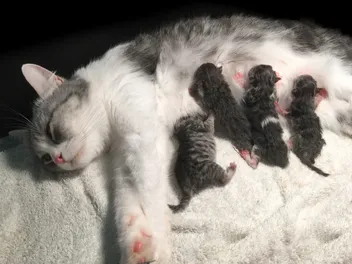
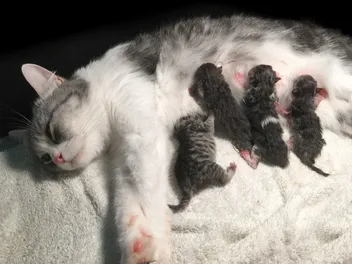
Why Is My Cat Purring After Giving Birth? 7 Vet-Reviewed Reasons


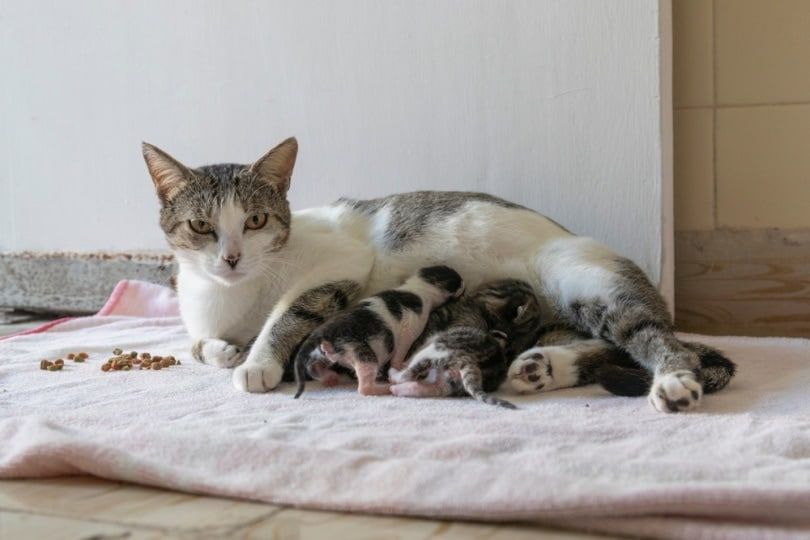
Cats are interesting creatures. They have a lot of quirks that make them unique. One of the most curious behaviors that cats exhibit is purring after giving birth. This can be puzzling for cat owners, so we're going to explore the possible reasons why your cat might be doing this.

Before We Begin - What Is Purring Exactly?
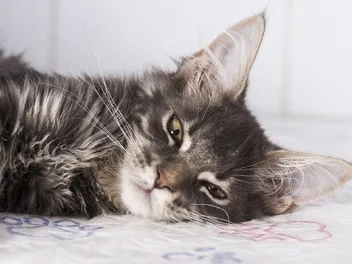
Most people are familiar with the sound of a cat purring, but many don't know what it actually is. Purring is a sign of contentment in cats, and it's a way for them to communicate that they're happy and comfortable. When a cat purrs, they vibrate their vocal cords at a frequency that is usually between 25 and 150 Hertz.
This low-frequency sound is soothing and calming, and it has been shown to have health benefits for both cats and humans. In fact, some studies have shown that the vibrations produced by purring can help to heal bones, reduce stress, and lower blood pressure. So, the next time you hear your cat purring, take a moment to appreciate the calming effect it has on both you and your feline friend.
The 7 Reasons Why Cats Purr After Giving Birth
1. Relief
Relief is probably the most common reason why cats purr after giving birth. The birthing process is exhausting, both physically and emotionally, so it's natural for your cat to feel a sense of relief once it's over. She may also be feeling proud of herself for successfully bringing new life into the world.
2. To Bond With Her Kittens
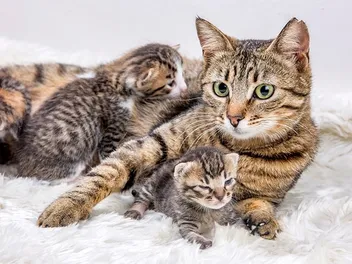
Cats are natural caregivers, so it's instinctive for them to want to take care of their kittens. They're happy to do it! Purring is one way they can show their affection and contentment. That means your cat might also be purring as a way to bond with her kittens.
3. To Calm Her Babies

Additionally, purring can have a calming effect on both mother and kittens. The low-frequency vibrations produced by purring can help to soothe and relax them. This is especially beneficial for kittens, who are often born into a chaotic and stressful environment. Kittens are also born deaf and blind, so they rely heavily on touch and smell to communicate with their mothers. Purring is a form of tactile communication that lets them know they're safe and loved.
4. To Heal Her Body
Purring is also thought to have healing properties. The low-frequency vibrations produced by purring can help to reduce inflammation and promote tissue regeneration. This is why many cats will purr when they're injured or sick.
5. To Keep Her Kittens or Herself Warm

Purring can also help to keep your cat's kittens warm. The vibrations produced by purring create heat, which can help to keep her babies warm and comfortable. Purring can also help to keep your cat warm. If your cat is feeling cold, she might start purring to generate heat.
6. To Communicate With Other Cats
Purring is also a way for cats to communicate with other cats. If your cat is purring loudly, it might be because she's trying to let other cats know that she's nearby.
7. To Communicate With You

Cats are very good at communicating with their owners. If your cat is purring, it might be because she's trying to tell you something. For example, she might be hungry or thirsty. Or she might just want some attention. There's also a chance she's happy to see you and share her kitten with you! This is a good sign that your cat trusts you and feels safe in your care.
FAQs
Now that we've explored some of the reasons why cats purr after giving birth, let's answer some frequently asked questions about this behavior.
Is it normal for my cat to purr after giving birth?
Yes, it's perfectly normal for your cat to purr after giving birth. In fact, it's quite common!
Should I be worried if my cat is purring after giving birth?
No, you shouldn't be worried if your cat is purring after giving birth. This is a perfectly normal behavior and is often seen as a sign of contentment. However, if your cat is also showing other signs of distress, such as crying or panting, then you should take her to see a veterinarian as soon as possible.
If you are unable to get to a clinic and need urgent veterinary advice, consult a vet online.
What does it mean if my cat starts purring after I pet her?
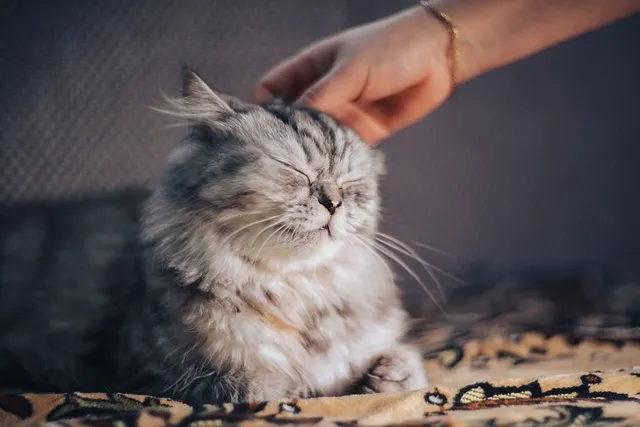
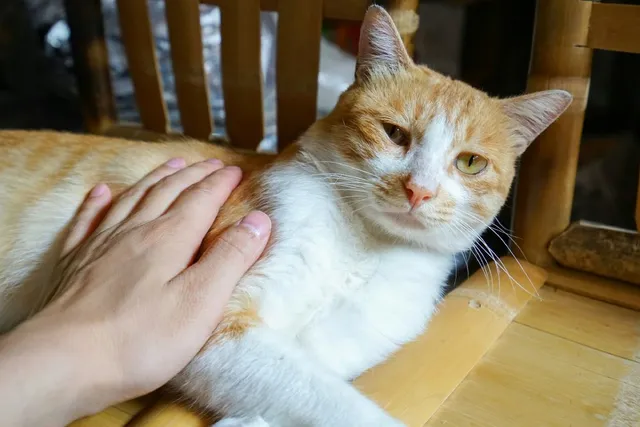
If your cat starts purring after you pet her, it's a sign that she's enjoying the attention and affection you're giving her. Cats love to be petted, so this is a great way to show your cat that you care about her.
Do kittens purr?
Yes, kittens do purr! In fact, they often start purring soon after they're born. Kittens learn to purr from their mothers, and it's thought to be a way for them to bond with each other.
When should I be worried about my cat's purring?
You should be worried about your cat's purring if she's also showing other signs of distress, such as crying or panting. If your cat is purring and seems to be in pain, then you should take her to see a veterinarian as soon as possible.
Conclusion
There are several reasons why your cat might be purring after giving birth. Relief, bonding, calmness, healing, and warmth are all possible explanations. Additionally, purring can be a way for cats to communicate with other cats. So, if you see your cat purring after giving birth, don't be alarmed! It's actually a very normal behavior that can serve many purposes. Your cat is probably just happy, content, and proud of her new babies! If you're ever curious about your cat's behavior, be sure to ask your veterinarian.
Featured Image Credit: Karen Hogan, Shutterstock
Expert cat care, straight to your inbox
News, insights, and useful advice, delivered to you.

No spam — unsubscribe anytime.
By signing up, you agree to our Terms & Conditions and Privacy & Cookies Policy.
How useful was this post?
Click a star to rate. You can leave written feedback afterwards. (We read all feedback.)
Christian started writing for a local newspaper as a teenager, and he's been involved in the publishing industry for most of his adult life. Combining his love of writing with a passion for animals, he is currently the Director of Editorial at Pangolia and the Editor-in-Chief at Catster.
Christian lives in the Philippines with his wife, son, and four rescue cats: Trixie, Chloe, Sparky, and Chopper.