How to Deal With Cat Hair in Your Home: 10 Helpful Ways
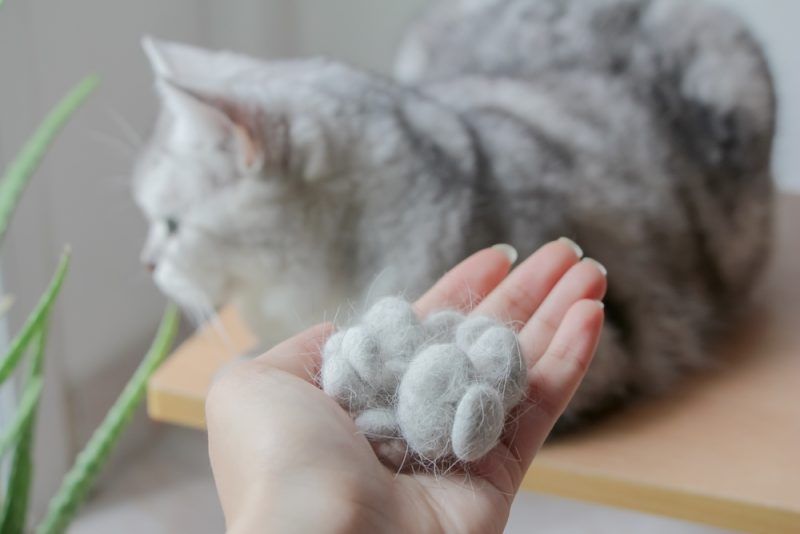
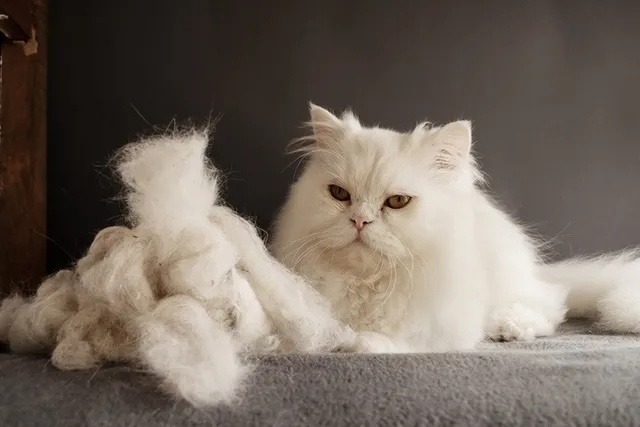
When you commit to caring for a cat, you also commit to dealing with their stubborn hair in your home. Many cat owners know the struggle of maintaining a clean home when every surface seems covered in cat hair.
Not only does their hair cling to furniture and linen, but it can quickly ruin our clothing or end up in our food. It doesn’t help that most breeds shed year-round, so dealing with their hair becomes a daily problem. Although it is expected that you will need to clean your home more often with a cat, there are various ways to make it less tedious.

The 10 Ways on How to Deal With Cat Hair in Your Home
1. Invest in a Pet-Friendly Vacuum Cleaner
Cat hair has a reputation for clogging standard household vacuum cleaners. You might find yourself emptying your vacuum more often or replacing damaged filters that no amount of cleaning can fix. A solution is to invest in a high-quality vacuum cleaner designed to remove pet hair.
These vacuums have powerful suction, high-quality filters, cleaning attachments, and self-emptying features. They remove the hair and dander better than most standard vacuums and have features to make cleaning and emptying it a breeze.
Furthermore, pet-friendly vacuum cleaners are helpful if you want to remove stubborn cat hair from your carpets. Although pricey, they are a worthy investment if you want to maintain a hair-free home.

2. Use De-Shedding Tools
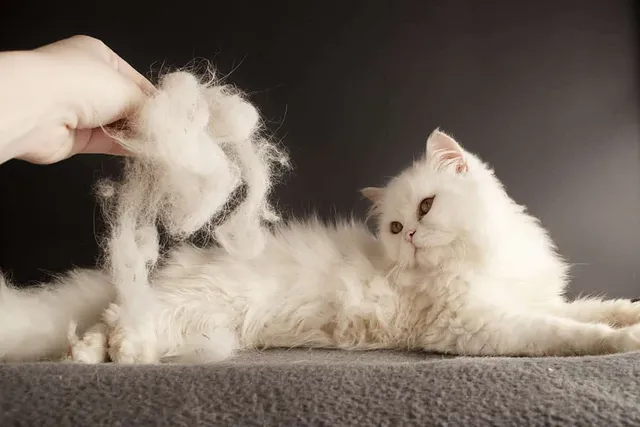
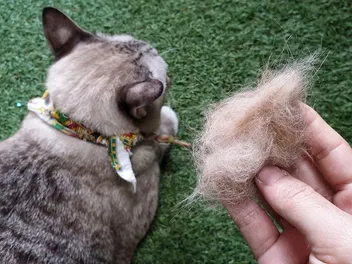
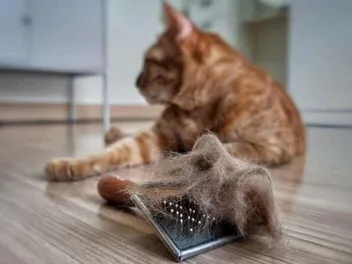
The best way to limit the amount of cat hair shed around your home is to focus on the source: your cat. Likely, your cat's regular grooming tools are not doing a good job removing loose clumps of hair. These clumps will eventually fall out around your house or transfer to your clothes when you pick them up.
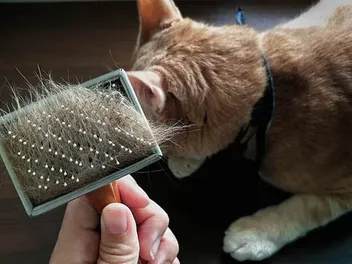
That is why proper de-shedding tools should be used when grooming your cat, especially for long-haired breeds. However, you can use de-shedding tools, such as the Furminator de-shedding tool, for long and short-haired cats. Alternatively, you can use an undercoat rake to remove loose hair and reduce shedding.
3. Lint Rollers
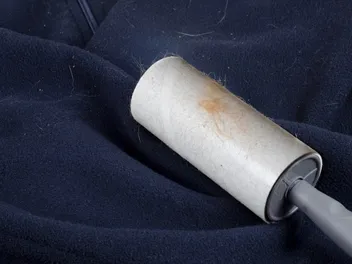
If you use regular sticky tape to remove cat hair from your clothes and furniture, a lint roller might be your new best friend. Lint rollers effortlessly remove stubborn cat hair from various surfaces while being easy to clean, use, and store.
There are different types of lint rollers, but the pet-friendly ones are recommended to remove cat hair. They have an extra-sticky adhesive that generally removes cat hair better than conventional ones. Plus, lint rollers are portable, so you can carry them around in your bag or store them around the house for when you need to remove cat hair quickly.
4. Run an Air Purifier
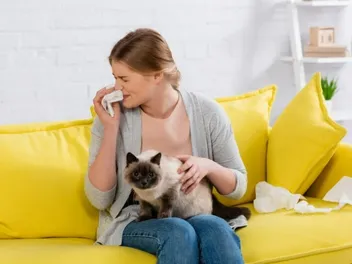
Cat hair and dander don’t only settle on surfaces but are also suspended in the air. Air purifiers with HEPA filters are recommended for homes with cats since they work well in reducing the amount of cat hair and dander floating around.
An air purifier can help tremendously in maintaining cleaner air quality with a shedding cat in your home. You need to clean the filters when necessary since the cat hair can clog them easily and possibly reduce how well the air purifier functions.

5. Wash Your Cats Bedding Regularly
Your cat's bedding or sleeping area has likely accumulated the most cat hair in your home. It would be best if you regularly wash your cat's bedding using pet-safe detergent on a cold cycle. It’s a good idea to vacuum or use a lint roller on the bedding first to remove most of the hair.
The amount of time you should wash your cat's bedding depends on how quickly it gets dirty and how many cats sleep on it. You could stick to washing your cat's bedding once a week and vacuum or lint roll to remove excess hair daily. It keeps your cat's sleeping area hygienic and helps keep it somewhat hair-free.
6. Establish a Proper Grooming Routine
Good grooming habits can do wonders for your cat's coat and help minimize shedding. Each breed has different grooming requirements. Long-haired cats typically need to be groomed more frequently with different grooming tools than a short-haired breed.
Ideally, you should brush out their coat using a de-shedding tool a few times a week. Long-haired cats may need to be groomed daily since their coats require more maintenance. Brushing will help prevent matting and remove loose hair that would otherwise fall around your home.
7. Give Slipcovers a Try
If you have delicate fabrics or furniture in your home that are difficult to clean regularly, slipcovers are worth a try. Slipcovers are a type of protective cover that fits over furniture like beds, couches, and chairs. They provide a layer of protection from cat hair while being easy to clean and remove when necessary.
Furthermore, slipcovers can easily be removed from your furniture when guests are over so that you do not have to worry about cleaning up all the cat hair. You can throw the slipcover in the wash or shake it outside to remove the accumulated cat hair.

8. Use Pet Hair Removal Tools With Your Laundry
Cat hair can be stubborn and does not always come off your laundry during a wash. You might be vacuuming and lint-rolling your laundry before each wash, which is time-consuming. Fortunately, there are pet hair removal tools that combat this problem, such as the FurZapper hair removal tool.
They help to loosen pet hair, which clings to the hair removal tools' silicone surface or gets caught by the machine's lint trap. Although they do need to be washed in between uses, it might make a difference in the amount of cat hair left on your laundry after each wash.
9. Dry Your Laundry With Dryer Sheets
Dryer sheets have anti-static properties that dislodge stubborn cat fur from your laundry. Place one to two dryer sheets into your tumble dryer with your dry laundry to loosen stubborn cat hair. You want to use pet-safe dryer sheets on any laundry that your cat will be using. So, ensure that it is non-toxic and fragrance-free.
The excess cat hair is caught in the lint trap since the anti-static properties of the dryer sheet may prevent it from clinging to your laundry. You can either use a low heat setting or no heat at all. Once the cycle is complete, you can place your laundry into the washing machine.
If your laundry is covered with cat hair, you can dry your freshly washed laundry with dryer sheets again.
10. Try Anti-Static Spray for Wooden Surfaces
If you have wooden surfaces in your home, whether flooring or furniture, you know how easily cat hair clings to it. Using an anti-static spray on wooden surfaces in your home can prevent cat hair from clinging to it.
This can make the cat hair easier to vacuum or wipe off. Alternatively, you can rub a non-toxic dryer sheet on wooden surfaces for its anti-static properties. This works well for wooden baseboards, tables, and cupboards.


Conclusion
As much as we love our cats, their hair seems to cling to everything and can be difficult to remove. Fortunately, there are various ways you can effectively deal with their hair around the home.
The best way to remove cat hair in your home is to vacuum and clean your home regularly using pet hair removal tools. You can use lint rollers and pet-friendly vacuums to remove stubborn cat hair from your clothes, flooring, and furniture.
De-shedding tools are also useful when grooming your cat, and slipcovers are handy for protecting your furniture. The methods we mentioned in this article can help you maintain a clean home, even with a shedding cat.
See also:
Featured Image Credit: jajam_e, Shutterstock
Expert cat care, straight to your inbox
News, insights, and useful advice, delivered to you.

No spam — unsubscribe anytime.
By signing up, you agree to our Terms & Conditions and Privacy & Cookies Policy.
How useful was this post?
Click a star to rate. You can leave written feedback afterwards. (We read all feedback.)

Sarah Psaradelis is an avid young writer with dual passions for literature and animals. She enjoys sharing knowledge of animal care and helping others. Sarah has over 8 years of writing experience and is currently studying veterinary science. She resides in South Africa where she takes care of fish, aquarium snails, dogs, and rodents. Sarah is a passionate vegan activist and animal rescuer pursuing her path to make the world a better place for humans and animals alike.