Get

In Your Inbox

Catster is reader-supported. When you buy via links on our site, we may earn an affiliate commission at no cost to you. Learn more.

How to Care for a Deaf Cat: 7 Vet-Approved Tips

Share

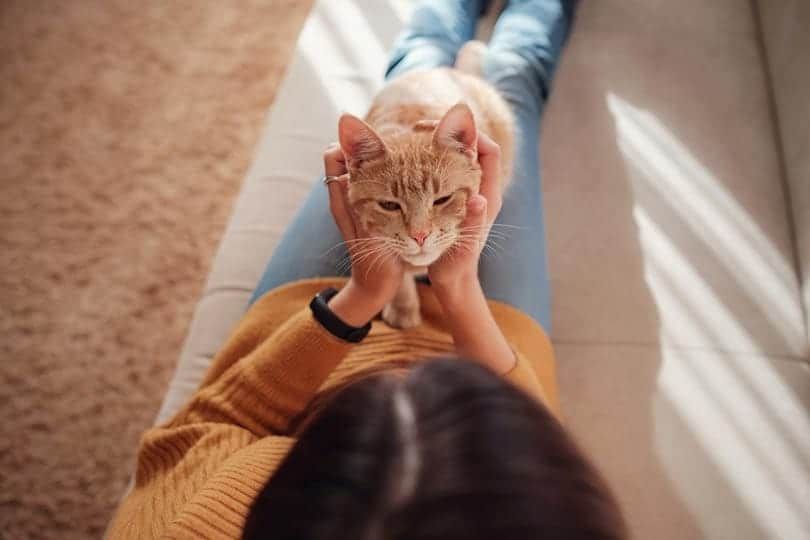
cat resting with owner on sofa at home

It’s challenging to be hard of hearing, whether you walk on two legs or four. If you have a furry friend born without hearing or your senior kitty is beginning to struggle, you’ll need to help them adapt to your home and lifestyle. Luckily, cats have excellent senses of touch, sight, and smell. They can often use their other senses to get around hearing loss so well that you might not realize it at first.

However, there are a few tips and tricks that can help your cat be safe and loved.

divider cat faces oct 2024

The 7 Tips for Taking Care of a Deaf Cat

1. Keep Regular Routines

cat owner feeding her pet cat
Image Credit: Milles Studio, Shutterstock

One of the hardest parts of deafness in cats is that it can be hard to communicate with your cat when they’re not around. If your cat is deaf, regular routines are a must. This is especially important around mealtimes. Feeding your cat at the same time each day will help them to know when to show up for food, even if they can’t hear you filling their bowl or calling them.


2. Explore High Pitches

abyssinian-cat-meowing-at-the-sofa
Image Credit: New Africa, Shutterstock

Not all deafness occurs equally. Cats have a different hearing range than humans, and some cats may only lose hearing at specific parts of their range. It is common for cats to be unable to hear the lower-pitched sounds of human footsteps and voices but still retain some hearing. Consider trying a dog whistle or similar high-pitched tone to get your cat’s attention.


3. Consider a Collar Locator

cat with a collar bell_flo_info, Pixabay
Image Credit: flo_info, Pixabay

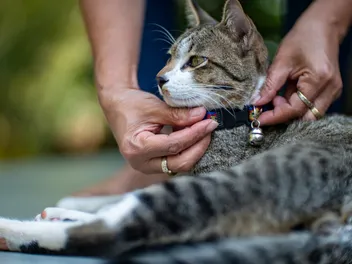
An electronic locator can also be a lifesaver if you have deaf cats. Although there aren’t many cat-specific locators on the market, products marketed as key finders or trackers can often be clipped to your cat’s collar. These usually connect to your phone so that you can trigger the locator to make a noise or even see the location of your cat on a map. This is important with deaf cats because you can’t call them to find them. If your cat ever gets outdoors or accidentally escapes, it’s even more important to be able to find them quickly.


4. Signal With Lights and Lasers

Cat staring on laser
Image Credit: Laurav1984, Shutterstock

You can sometimes wave or beckon if you need to get your cat’s attention from a distance. But if your cat isn’t looking at you, it gets tricky. Many pet owners use a bright flashing light to signal to their cats and get their attention. Lasers are another option; simply shine the laser in your cat’s line of sight and then move the dot so that they turn around. However, it’s important to be careful with lasers—a powerful light reflecting into your cat’s eye could cause damage, plus it can lead to frustration if they try to catch the laser and never succeed.


5. Respond Quickly to Meows

close up cat meowing
Image Credit: Oscar Wiedemeijer, Shutterstock

Deaf cats aren’t always silent cats. They might meow just like normal, and sometimes they’ll meow louder to compensate. However, deaf cats might quickly grow frustrated because they can’t hear you coming, and they don’t know how loud they’re meowing. Because of that, it’ll help your cat if you’re extra prompt when responding to meows. That way, they’ll know you can hear them if they can’t hear themselves.


6. Keep Up With Quality Time

grey cat getting a belly rub
Image Credit: Anna Hoychuk, Shutterstock

Cats tend to be seen as loners, but they appreciate company too. Many cats take a lot of comfort from the sounds of household activities throughout the day, putting deaf cats at a higher risk for loneliness. It’s important to spend some quality time with your cat every day. Make some time for active interaction—playing, petting, and cuddling—but also for just “hanging out.” Just spending time in your cat’s line of sight can help them feel safe and connected.


7. Monitor Outdoor Activities

man playing cat outdoor
Image By: Karpova, Shutterstock

Although most cats can get around by sight at home, outdoors is another matter. Without hearing, cats are at risk from predators, other pets, passing cars, and other dangers. Because of that, we recommend keeping your deaf cat indoors or creating an outdoor safe and enclosed area, such as a catio, where your cat can play safely. Depending on your cat’s previous habits and routines, you could consider leash-training your cat or letting them have 100% supervised and controlled outdoor time.

divider cat faces oct 2024

How to Tell if Your Cat Is Deaf

It can be tricky to tell if your cat is deaf, especially if it comes on gradually or if they are partially or unilaterally deaf. It is important to speak to your vet whenever you detect hearing loss in your cat or if you suspect your kitten was born deaf. If necessary, some vets perform a BAER (brainstem auditory evoked response) test on cats to assess deafness. This test is not widely available, though.

You can also consult a vet online if you need quick and easy access to an expert’s opinion.

If you need to speak with a vet but can't get to one, head over to PangoVet. It's an online service where you can talk to a vet online and get the advice you need for your pet — all at an affordable price!

Preventative wellness PGV mention keep cat healthy Preventative wellness PGV mention keep cat healthy mobile

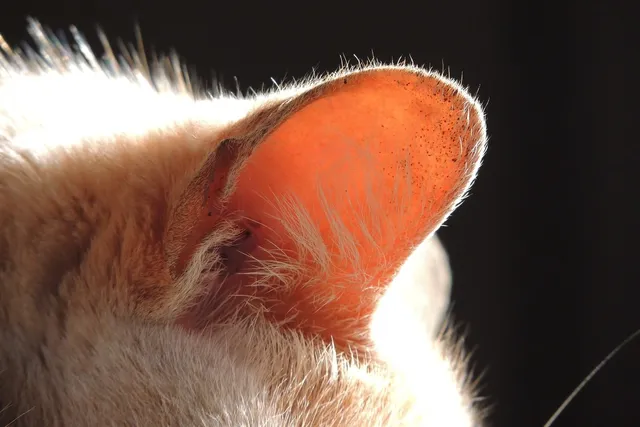
At home, there are a few cues that can make you suspect deafness. Deaf cats might appear more visually attentive to humans and often sleep through loud noises, startle easily, and meow more loudly than hearing cats. However, they can often use visual cues and even vibrations from voices and footsteps to “fake” hearing. A good way to test if your cat is deaf is to play a loud noise from somewhere behind your cat. If your cat is awake and has healthy hearing, their ears should swivel backward to take in the noise, even if your cat doesn’t otherwise react. If your cat constantly misses these cues, it likely is a sign of hearing loss.

Causes of Deafness in Cats

There are many causes of deafness in cats. The most common form of deafness occurs from birth because of genetic reasons, and it is associated with the white pigmentation gene (W) seen in cats with white coats and blue eyes.

Nerve damage, infection, use of ototoxic products, and inflammation can cause temporary or permanent hearing loss. Hearing can also degrade as your cat ages; however, this does not appear to be a common occurrence in cats. This type of deafness is technically called presbycusis. Most of the time, being deaf isn’t a sign of any other diseases or threats to your cat’s health other than a heightened risk of injury due to not hearing a danger.

divider cat faces oct 2024

Conclusion

Deafness is not easy, but it’s also not as scary as it seems. Even though your cat might struggle with some things, most cats can adapt quite well to deafness. A few simple changes to your habits and home will make it way easier for your cat to stay happy, healthy, and safe.


Featured Image Credit: U__Photo, Shutterstock

Want content like this delivered to you?

Sign Up For Our Newsletter

News, insights, expert advice, and everything cat

* By submitting, you agree to our Terms & Conditions and Privacy & Cookies Policy.


How useful was this post?

Click on a star to rate (you can leave written feedback after clicking submit)

Help us improve Catster for pet parents!

Your feedback really matters.

What did you like about this post? Also how can we improve it?

Join the conversation

2 Responses

  1. My Maine coon more than 'mature' male (some 12 years old ) has had his coat trimmed recently, and was sedated for the treatment. He came beck to me, very wobbly, semi conscious, loss of balance and unable to move for more than 24 hours post fur trimming.
    Now, it is 5 days since, and he is profoundly deaf. He has more than regained his appetite, but YOWLS loudly when wanting attention. he is slowly regaining strength, but very VERY unsteady. Will this condition be permanent ?
    I believe that this might have been caused by when a nurse cleaned his ears out, the washing of the ear opening might have been compromised by whatever was used. I didn't request this treatment, just a de-tatting' of his coat, so I am very distressed by this event!

    1. Hi Blue Peter, sorry to hear about your Maine Coon. If you think the eardrum was perforated, please get him checked by a vet. We recommend asking the groomers what sedatives and ear cleaning products they have used.

Leave a Reply

You’re very welcome to leave a comment or question. Please know that all comments must meet our community guidelines, and your email address will NOT be published. Let’s have a positive and constructive conversation.


Talk With A Vet Online

Peace of mind,
anywhere, anytime

Affordable vet advice

Do Cats Cause Schizophrenia? Scientists Find a Link – Here’s What It Means

Being a fierce advocate (and occasional recipient of) mental health support and awareness, the term ‘crazy’ is not one I like to fling...

One in 100 Cats Gets Diabetes – Here’s How to Catch It Early

One in every 100 cats develops diabetes.1 That’s not a rare, unlucky condition reserved for cats with obvious health problems. It’s common enough...

Dramatic Rescue Turns Into Dramatic Reunion

What started as a routine call for the RSPCA became a heroic, five-hour rescue featuring one trapped and traumatized cat, an emotional family...

Ask Dr. Paola – Help! How Do I Know if it’s Ear Mites! (May 4, 2026)

Welcome to our “Ask Dr. Paola” series, where every Monday we bring expert advice straight from Dr. Paola Cuevas (MVZ) to help our...

More related

Why is My Cat Throwing Up Clear Liquid? 10 Vet-Reviewed Reasons

Although cats descended from wild felines that survived by consuming small mammals, fish, and reptiles, they have sensitive stomachs that do not always...

10 Top Cat Cafes in the US in 2026

Cat cafes are wonderful establishments that promote cat adoption and animal advocacy. They host and house adoptable cats and provide a safe environment...

Can Cats Eat Blackberries? Vet-Reviewed Facts & Safety Information

Unlike dogs, cats are extremely fussy eaters, so you don’t often have to worry about them chowing down on something they are not...

10 Best Cat Twitter Accounts to Follow for Cat Lovers Everywhere

When you’re having a bad day, sometimes the only thing that can cheer you up is a cat. The internet has proven time...

Keep reading

Can Cats Eat Raw Fish? Vet Approved Nutritional Facts & FAQ

While cats are often associated with eating fish, fish may not actually be a major part of their diets. Domestic cats descended from African wildcats, meaning their natural diets would mostly consist of small birds and mammals including small livestock...

Can Cats Eat Raw Fish

Cat Person Wet Cat Food Review 2026: Our Expert’s Opinion

Cat Person Food is a subscription-based cat food company that delivers high-protein, minimally processed food to your door. They utilize only human-grade ingredients and have several recipes to choose from. Their wet food is made with either real, shredded meat...

Cat Person Wet Cat Food Review

Can Cats Eat Vanilla Pudding? Vet Approved Facts & FAQ

Cats are independent creatures, but they rely on us humans to take care of their nutritional needs. Commercial cat food is the easiest way to feed a cat, but sometimes, felines get into other types of food due to curiosity...

Catster_Can Cats Eat Vanilla Pudding_v1_Dec 4 2024

My Cat Ate a Lily: Is It Dangerous? Vet Reviewed Signs & Treatments

Lilies are beautiful and fragrant flowers, seen in plenty of vases, bouquets, gardens, and displays around the world. Behind their beauty and grandeur, however, is a deadly toxin. Lilies are toxic to cats and must be avoided. This currently still...

My Cat Ate a Lily

Feline Upper Respiratory Infection: Vet Reviewed Causes, Signs & Care

Respiratory infections are unfortunately pretty common in cats, but are they something your cat will get over, or do you need to take them in to see the vet? And what about secondary illnesses? We’ll take a closer look at...

A cat having a check-up at a small animal vet clinic

Why Do Cats Groom Humans? 8 Vet Reviewed Reasons

You can be sitting on the couch and scrolling on your phone when, all of a sudden, you start to feel an unusual feeling on the top of your head or arm. Your cat is licking you a lot lately,...

cat sitting behind the man licking his head

Does My Cat Have Asthma Or a Hairball? Vet-Approved Main Differrences

If your cat has been coughing and gagging, you may wonder about the possible causes, including asthma and hairballs, and if there’s a way to figure out the difference. While asthma and hairballs can cause cats to cough, the two...

vet giving medicine to a cat

Are Calla Lilies Poisonous to Cats? Vet-Verified Facts & Safety Guide

Are calla lilies poisonous to cats? This is a question that has come up many times and one that many people are unsure of the answer to. Calla lilies do contain a substance that causes harmful effects in cats. However,...

Catster_Are Calla Lilies Poisonous to Cats

Love Cats? So Do We! Join the Catster Community

Stay informed with expert pet care insights delivered straight to your inbox! Discover professional guidance on animal behavior, feeding tips, trusted product picks, and much more.


Sign up for the Catster Email Newsletter

Stay informed with expert pet care insights delivered straight to your inbox! Discover professional guidance on animal behavior, feeding tips, trusted product picks, and much more.