Get

In Your Inbox

Catster is reader-supported. When you buy via links on our site, we may earn an affiliate commission at no cost to you. Learn more.

How Often Should I Change Cat Litter? 5 Things to Consider (Vet-Reviewed)

man-cleaning-litter-box

Cats are fastidious animals that greatly appreciate fresh, clean litter. If the litter isn’t up to their standards, they may just do their business somewhere else—like your floor, which is why it’s important to keep up with litter box maintenance. That said, just how often should cat litter be changed?

As a general rule, you’ll want to scoopy daily, then change the litter and thoroughly clean the box about once per week, but this can vary based on multiple factors like the type of litter, how many cats you have, and your cat’s bathroom habits. We’ll take a closer look at these factors to help you gauge how often a litter change may be necessary.

divider single cat paw oct 2024

The 5 Things to Consider When Changing Your Cat’s Litter

1. Type of Litter

Some types of litter—like non-clumping clay-based litter—tend to get stinky pretty quickly, whereas others stay fresh for longer. High-quality clumping litter and silicone (crystal) litter tend to fare well because they’re more absorbent. Clumping litter is especially convenient because you simply scoop out the clumps, leaving the clean litter behind, meaning it’s easier to keep the box fresh.

In addition, some litters are formulated to contain odor-neutralizing agents like baking soda, and this can also contribute to the litter’s longevity. With these kinds of litters, you might get away with changing it out only once a week or even less frequently if you maintain it well with regular scooping and cat litter deodorizers, which may help it last longer. Other, less absorbent types may need to be changed every other day.

wheat-cat-litter-in-box
Image Credit: Andriy Blokhin, Shutterstock

2. Number of Cats

Naturally, the more cats you have, the quicker the litter box is going to get smelly and the more often it will need to be changed. You can help combat this by providing multiple litter boxes so everything doesn’t accumulate in one single box. The general rule of thumb is to have one litter box for every cat, plus one extra. There are also cat litter types specially designed for multiple-cat households, so you might want to give these a try.


3. Your Cat’s Bathroom Habits

A healthy adult cat on a high-quality food formula should only head for the litter box a few times per day (though individual needs can vary somewhat). However, if your cat has a health condition that causes them to pee more often (like a UTI, for example) or experiences issues like diarrhea, being diligent about litter maintenance is even more important than usual.

Certain medications may also affect your cat’s frequency, as could their age. Kittens go to the bathroom more often than healthy adult cats.

Cat looking in the litter box
Image Credit: Oleg Opryshko, Shutterstock

4. Intact vs Neutered

There is no getting around it. Intact male cats’ pee smells worse than a neutered cat’s pee does. If you live in a house containing even one unneutered male, the smell can quickly become overpowering. You can speak to a vet for more information on neutering.

If you need to speak with a vet but can't get to one, head over to PangoVet. It's an online service where you can talk to a vet online and get the advice you need for your pet — all at an affordable price!

PangoVet_Mention-in-Content for PangoVet2 save money

5. How Much Litter There Is

The litter should be deep enough for your cat to dig in and cover their poop. If it is too shallow, the absorbency will be affected, and it will start to smell in no time.

divider cats oct 2024

How to Clean a Litter Box

Spot cleaning your cat’s litter box every day (removing clumps or feces) goes a long way to making sure it stays fresh smelling for longer. However, it’s important to give the box a good clean when you change out the litter, whether that be once per week or more.

Simply emptying the litter box isn’t enough to keep smells at bay because the odor compounds linger. Luckily, cleaning a litter box is really easy. All you need to do is empty out the old litter, then wash the box out with water and a mild soap. Avoid using bleach or cleaning products containing strong chemicals as these can be risky for cats.

You can let the box soak for a while if it is especially smelly. Then, empty out the water, rinse to get rid of all the soap, and wipe the box down with a dry cloth. Replace the litter in the clean, dry box. If you like, you can sprinkle some litter deodorizer or a little baking soda on the bottom of the box before putting the litter in—this may help it last longer.

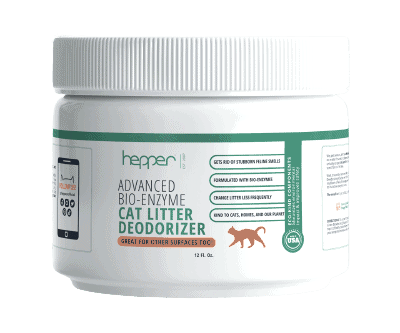
Cleaning up after our pets is not the most enjoyable part of owning them. Despite keeping a clean litterbox, cat odors and stains may still exist around the house. Sometimes, even the best litter box setup needs extra help. If you're tired of dealing with bad smells from litter boxes, Hepper Advanced Bio-Enzyme Pet Stain & Odor Eliminator Spray can help with the worst pet stains and smells. Additionally, the Advanced Bio-Enzyme Cat Litter Deodorizer neutralizes odors upon contact.

Our Favorite Products

Image Product Details
Best Enzyme Cleaner Hepper Advanced Bio-Enzyme Pet Stain & Odor Eliminator Spray Hepper Advanced Bio-Enzyme Pet Stain & Odor Eliminator Spray
  • Works on multiple surfaces
  • Gentle yet effective
  • Lifts stains & set-in odors
  • Best Litter Additive Advanced Bio-Enzyme Cat Litter Deodorizer Advanced Bio-Enzyme Cat Litter Deodorizer
  • Neutralizes odor within cat litter
  • Cat-safe
  • Unscented
  • At Catster, we’ve admired Hepper for many years and decided to take a controlling ownership interest so that we could benefit from the outstanding designs of this cool cat company!

    divider cat faces oct 2024

    Conclusion

    Some litter needs to be changed every other day whereas other types can last for a week or more with proper maintenance routines. If you’re concerned because your cat’s “deposits” are smellier than usual or they seem to be going to the bathroom more regularly, please check this out with a vet.


    Featured Image Credit: New Africa, Shutterstock

    Want content like this delivered to you?

    Sign Up For Our Newsletter

    News, insights, expert advice, and everything cat

    * By submitting, you agree to our Terms & Conditions and Privacy & Cookies Policy.


    How useful was this post?

    Click on a star to rate (you can leave written feedback after clicking submit)

    Help us improve Catster for pet parents!

    Your feedback really matters.

    What did you like about this post? Also how can we improve it?

    Join the conversation

    Leave a Reply

    You’re very welcome to leave a comment or question. Please know that all comments must meet our community guidelines, and your email address will NOT be published. Let’s have a positive and constructive conversation.


    Talk With A Vet Online

    Peace of mind,
    anywhere, anytime

    Affordable vet advice

    How to Harness Train a Cat: 10 Vet-Verified Tips & Tricks

    Most cats enjoy being outside as it gives them fresh air and allows them to practice the hunting sequence they were born to...

    Can Cats Eat Imitation Crab? Vet-Approved Facts & FAQ

    You’ve most likely seen an old cartoon where someone tosses a bit of seafood out to a cat. Typically, this seafood is a...

    How to Tell if Your Cat Has Diabetes: 7 Vet-Reviewed Signs to Look For

    As cat owners, we want our cats to be healthy and safe. However, a cat owner must know what signs to watch out...

    How to Keep Cats Off Furniture Using Vinegar: 4 Vet Approved Steps

    Cats are very persistent, and it can be challenging to keep them from doing what they want. Several commercial deterrents use dangerous chemicals...

    More related

    Do Cats Need Sweaters & Do They Like Wearing Them? Vet-Approved Care Facts

    Seeing a cat in a sweater may be an adorable sight, and you can find countless memes and photos of cats wearing sweaters...

    Chimera Cat: Vet-Verified Facts, Info, Pictures & History

    A chimera cat has two distinct coat colorings on their body. Many have a divide along their faces, where each half of the...

    Why Are Cats More Popular Pets in Japan Than Dogs? (Japanese Cat Lore)

    When it comes to pet ownership in America, 70% of households are pet owners, with 69 million homes owning dogs and 45.3 million...

    8 Types of Cat Meows and What They Mean (With Videos)

    Cats can’t speak to us in our language, which means we need to learn their language if we want to have any hope...

    Keep reading

    Cat Dingleberries: Vet Reviewed Causes & Prevention Tips

    Dingleberries (singular dingleberry) is a slang term for dried feces stuck onto a cat’s fur around the anal area and back end. While it’s not a pleasant topic, and many cat parents may wish to leave that area alone, it’s...

    cat licking its butt

    Reintroducing Cats After the Vet: Feline Non-Recognition Aggression Explained

    Feline non-recognition aggression is a phenomenon that occurs when one cat has been away from the house and, on their return, the home cat acts aggressively towards them. The returning cat will usually become defensive, and the two may end...

    two-cats-armwrestling-fight-battle

    Cat Pheromone Sprays: Differences, Comparisons & Top Picks in 2026

    Cats receive information and respond to other cats and species through natural pheromones that they release. Pheromones can have a big impact on your cat’s emotions and behaviors and are a powerful tool that can help anxious or stressed cats....

    spraying on cat

    When to Euthanize a Cat With Feline Leukemia: Vet-Reviewed Advice

    Feline leukemia is a serious disease that can cause a wide range of signs in cats, including anemia, weight loss, and infections. Unfortunately, there is no cure for feline leukemia, and it can be fatal. As such, euthanasia may be...

    sick siberian cat

    Can Cats Eat Jalapeños? Vet-Reviewed Facts & FAQ

    Jalapeños are tasty, spicy peppers that people enjoy in a variety of dishes and are prepared in lots of different ways, such as raw, sauteed, and pickled. These peppers may be an enjoyable food item for people, but what about...

    Can Cats Eat Jalapeños

    Sudden Death in Cats: 10 Vet-Verified Causes

    Sudden death in cats is a tragic event that often occurs without any warning. There are many possible causes of sudden death in cats, although some preventative steps can be taken to help avert this tragedy. One of the most...

    sick siberian cat

    Does Dry Cat Food Cause Urinary Problems? Vet-Reviewed Precautions & Prevention Tips

    You may have read conflicting information about whether or not dry cat food causes urinary problems. The truth is, urinary problems are the result of a combination of things, potentially including the diet. In this post, we’ll address how a...

    vet holding sick cat

    Can You Use Human Shampoo on Cats? Vet-Reviewed Risks & Alternatives

    While most cats rarely need a bath, there could be the odd occasion that your cat does need to get clean. Maybe your cat came home after rolling around on the neighbor’s driveway that happened to be coated in oil....

    Orange-Maine-coon-in-the-bathtub-shampoo

    Love Cats? So Do We! Join the Catster Community

    Stay informed with expert pet care insights delivered straight to your inbox! Discover professional guidance on animal behavior, feeding tips, trusted product picks, and much more.


    Sign up for the Catster Email Newsletter

    Stay informed with expert pet care insights delivered straight to your inbox! Discover professional guidance on animal behavior, feeding tips, trusted product picks, and much more.