Do Cats Eat Rats or Just Kill Them? Vet-Verified Biological Reasons & Risks


In this article
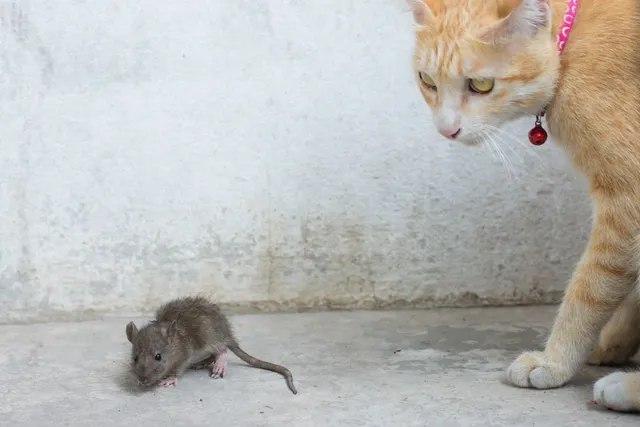
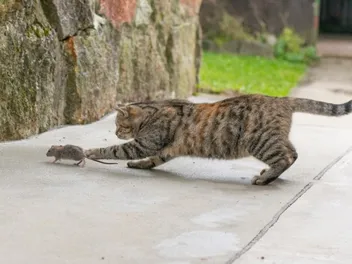
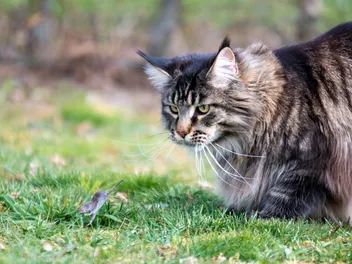
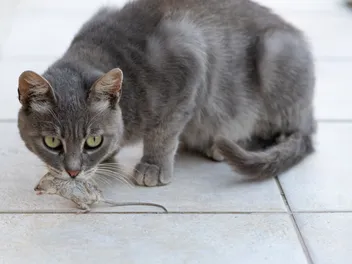
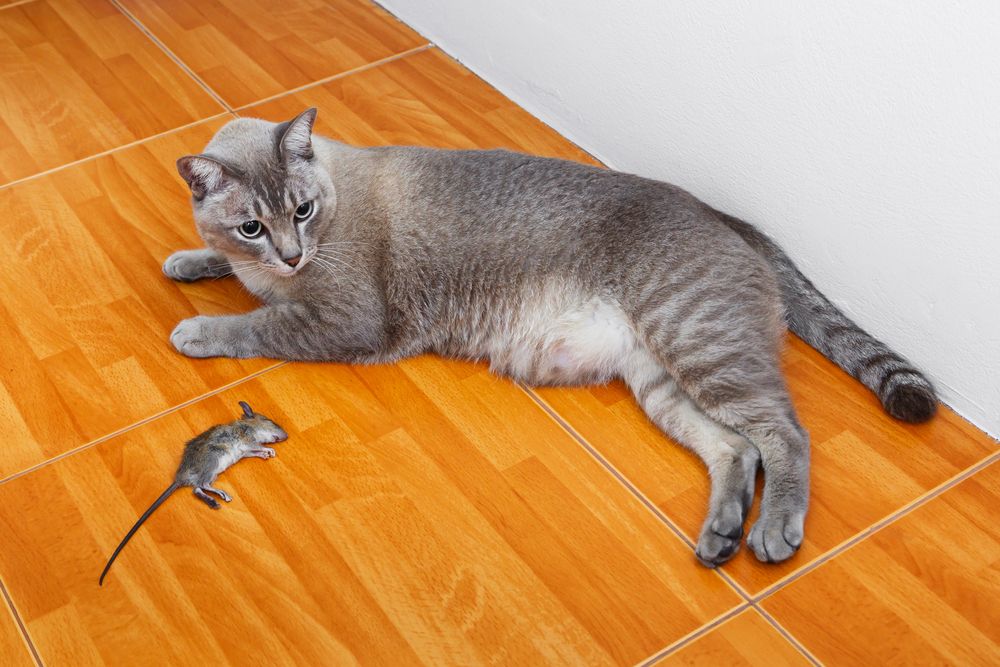
In the wild, cats are skilled hunters and would naturally eat small prey such as rats or mice when hungry. However, hunting isn’t only about food; it’s an instinctive behavior for felines. This means that domestic cats may still stalk, catch, kill, and even eat a rat even if they have a full bowl of food at home.
So, while it’s natural for cats to hunt rats, it’s best to prevent them from eating their catch due to the health risks involved.

Can Cats Eat Rats? Is it Safe?
No, it’s very risky for cats to eat wild rats they’ve killed. Wild rats can carry parasites, bacteria, and viruses that may make cats sick. They are common hosts for several types of intestinal worms and can be exposed to many pathogens while scavenging for food. Rats may also transmit serious diseases such as leptospirosis, tularemia, or, in rare cases, plague.

Risks Associated with Cats Eating Rats
Let’s take a quick look at all the potential problems that can occur when your cat consumes a rat:
1. Toxoplasmosis
Toxoplasmosis is caused by the parasite Toxoplasma gondii, a microscopic parasite that can infect many warm-blooded animals. Rodents often carry the parasite in tissue cysts, and cats may become infected when they eat an infected rat. In most healthy cats, the infection causes no visible signs of illness. After initial exposure, cats typically shed the parasite’s oocysts in their feces for one to three weeks and then develop immunity, meaning they usually don’t shed again.
While toxoplasmosis rarely harms healthy cats, it can cause illness in kittens or immunocompromised cats. The main concern is that infected cats can pass the parasite’s eggs through their stool, which can infect other animals or humans. The infection is usually harmless to people with healthy immune systems, but it can be dangerous to unborn babies, so pregnant women should take measures to reduce the risk of infection, such as handling cat litter without proper hygiene measures.
2. Secondary Poisoning
Secondary poisoning occurs when a cat eats a rat that has ingested rat poison. This is one of the most serious risks associated with rodent hunting. Many rodenticides (such as anticoagulants, bromethalin, or cholecalciferol) remain toxic in a rodent’s tissues for several days, meaning even a partially decomposed rat can be dangerous if consumed by a cat.
Depending on the type and amount of poison, signs in cats can include weakness, pale gums, bleeding, tremors, seizures, or vomiting. If you think your cat might have eaten a poisoned rat, contact your veterinarian or an emergency clinic immediately—prompt treatment can save their life.
3. Intestinal Parasites
Intestinal parasites are common in wild animals, including rodents. Rats and mice can act as intermediate hosts for parasites such as Toxocara cati (roundworms) and Taenia taeniaeformis (tapeworms). If your cat eats an infected rodent, they may become infected, too. Cats can be easily dewormed using tablets or certain spot-on treatments. If your cat has outdoor access or hunts regularly, talk to your veterinarian about a suitable deworming schedule, as they’re at higher risk of picking up parasites.

Do Cats Naturally Kill Rats?

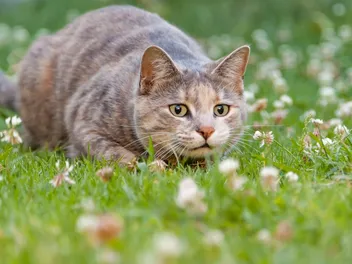
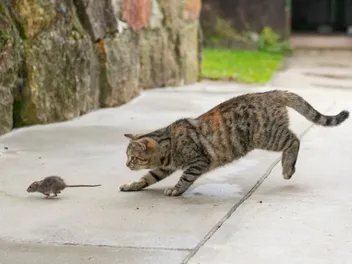
Cats are instinctive hunters triggered by movement, sound, and size. Certain signals help tell a cat that an animal is prey. Firstly, most cats won’t try to attack anything bigger or similar in size to them. Instead, felines only choose small animals. Secondly, the high-pitched noise rats and other small animals make can turn on a cat’s hunting instincts. Many cat toys simulate these noises for a reason.
Finally, the erratic movements of a rat can make a cat pounce and stalk. This behavior is instinctual. However, practice does make perfect. Felines may learn where rats live and how to catch them. Usually, mother cats show their young prey animals, but many cats will hunt even without this early training.
Domestic cats will instinctually hunt for rats, though they may not be very good at it. Some breeds are more skilled hunters, while others are not. All cats will have a level of hunting instincts, so you can expect all felines to hunt to some extent.
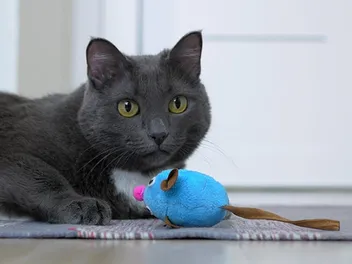
Fur-covered toys are great options that allow cats to exercise their natural prey-instincts by mimicking small animals. The Hepper Furball Set comes with two 2-inch faux fur toys each featuring a hidden bell inside. The gentle jingling enhances playtime and will keep your cat, no matter their age, engaged and ready for action! Learn more here!

- Multisensory Marvel - Indulge your cat in diverse play with long plush faux fur and a bell with these cat fuzzy balls. Just like other soft cat toys, it's softness but coupled with a satisfying jingle.
- Double the Fun in Every Pack - Each cat pom pom balls measure 5 cm in diameter and each pack comes with two fluffy cat toy balls in light & dark brown, to ensure playtime spectacle for all cat breeds.
- Ideal for Rough Play - Tightly stitched for durability, these pom pom balls for cats can withstand even the roughest play & prevent plush fallout, making it one of the best fuzzy balls for cats.
At Catster, we've admired Hepper for many years, and decided to take a controlling ownership interest so that we could benefit from the outstanding designs of this cool cat company!
Frequently Asked Questions (FAQ)
Do Cats Eat Dead Rats They Find?
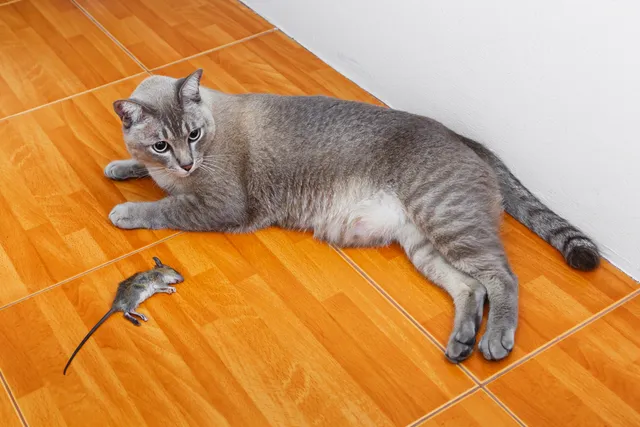
On rare occasions, cats may eat an already dead rat if they are hungry enough. House cats do not always eat their prey, as they aren’t often hungry. However, a feral cat may consume a dead rodent if they don’t have any other source of food.
However, cats have a very sensitive sense of smell and won’t typically consume a rat that has been dead for very long.
Will Rats Enter a House with Cats?
Yes. Rats may be able to smell the cat, but most rats living near people come near cats. If your cat is a mouser, they may find and kill the rat rather quickly. However, the rat will likely still enter the house, to begin with.
Just having a cat around won’t keep rats from entering your property.


Conclusion
Cats are natural hunters and may kill rats out of instinct, but eating them isn’t safe. Well-fed domestic cats are unlikely to eat rats, as commercial diets are far more appealing. However, feral or outdoor cats may consume them when food is scarce.
Rats can carry parasites, diseases, and toxic substances that can seriously harm cats. For that reason, it’s best to discourage your cat from hunting or eating rodents. Providing stimulating toys and plenty of playtime can satisfy their hunting instincts in a much safer way.
See also:
Featured Image Credit: 7th Son Studio, Shutterstock
Expert cat care, straight to your inbox
News, insights, and useful advice, delivered to you.

No spam — unsubscribe anytime.
By signing up, you agree to our Terms & Conditions and Privacy & Cookies Policy.
How useful was this post?
Click a star to rate. You can leave written feedback afterwards. (We read all feedback.)
Kristin is passionate about helping pet parents create a fulfilling life with their pets by informing them on the latest scientific research and helping them choose the best products for their pets. She currently resides in Tennessee with four dogs, three cats, two fish, and a lizard, though she has dreams of owning chickens one-day!