Can Cats Eat Mums? Vet-Approved Risks & FAQ


In this article
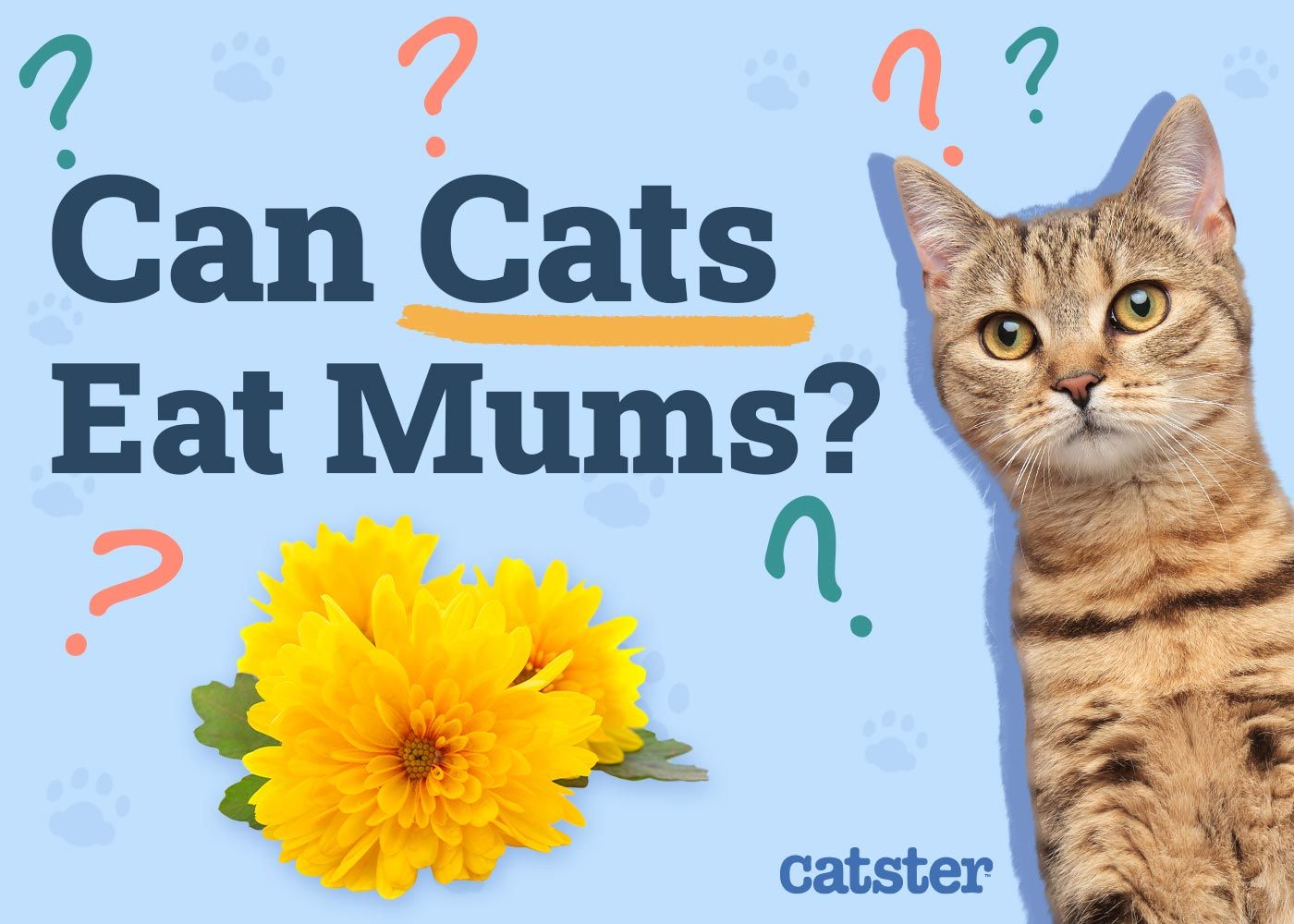
Chrysanthemums are popular flowers that make dynamic and colorful additions in your garden or in a vase. Due to their long and challenging-to-spell name, they are also affectionately known as “mums.” If your cat seems to be interested in your mums, you might wonder if they are safe for your cat to munch on.
So, are mums poisonous to cats? Yes, mums are toxic to cats, so they need to be kept away from all parts of these plants.
Here, we give you more detail about chrysanthemums and what makes them toxic to cats.

About Chrysanthemums
Chrysanthemums are typically easy to distinguish in the flower world, and they are commonly used in funerals, particularly in Europe, where they are symbolic of death. But if you were born in November, mums are your birth flower.
Mums have their origins in ancient China as far back as the 15th century, but their appearance then resembled a daisy more than the chrysanthemum that we are familiar with today.
They come in 13 classifications, so not every mum looks the same.1 They can come in quite a wide variety of colors, including red, yellow, white, lavender, pink, orange, purple, and bronze. Mums are perennials that can grow from 1 to 3 feet and bloom in the early fall.
However, mums are toxic to cats, so let’s look at the symptoms of chrysanthemum poisoning.

Are Mums Toxic to Cats?
Both the ASPCA and the Pet Poison Helpline list chrysanthemums as toxic to cats, as well as dogs and horses. Mums contain several different substances that are responsible for their toxicity. These include sesquiterpene lactones, which are known to be irritants to the eyes, nose, and gastrointestinal tract, and pyrethrin, which can be used as a natural pesticide and has been used in tick and flea medications.
These substances can be found in both the leaves and the flowers, so no part of the plant is safe for animals. Symptoms that a cat might exhibit after eating a part of a chrysanthemum will appear within about 2 hours and will start out mild. This depends on how much your cat ate, however.
The following are symptoms associated with mum poisoning:
If you notice your cat exhibiting any of these symptoms, you should take them to the vet. Cats don’t typically eat enough of a mum to experience severe poisoning, but they will be uncomfortable nonetheless.
Diagnosis of Mum Poisoning
Before you take your cat to the clinic, check their teeth, mouth, and fur for any plant matter and remove it. If your cat isn’t showing any worrisome symptoms, you could call the ASPCA’s Animal Poison Control at 888-426-4435 or the Pet Poison Helpline at 855-764-7661 for advice. They are always there to answer the phone 24/7 and can advise you on whether you should bring your cat to the clinic or how to treat them at home. But be aware that there is usually a fee to pay for this advice.
If you end up taking your cat to the vet, you should bring along part of the plant that your cat ingested. This way, the vet can know for certain what your cat ate to give them the best treatment options. The diagnosis of mum poisoning may involve blood and urinalysis tests, which van help confirm the poisoning.

Treatment of Mum Poisoning
Treatment will attempt to relieve the mum poisoning symptoms. The veterinarian can stop diarrhea and vomiting with medication and will likely provide IV fluids. If your cat is suffering from an allergic reaction, antihistamines could be provided.
If you weren’t able to remove all the plant matter from your cat’s mouth, your vet will do so.
If your cat ate a large amount of the mum, your veterinarian might need to induce vomiting to get as much of the plant out as possible. Activated charcoal is also commonly used to safely absorb any toxins.
Your vet might keep your cat overnight for observation, and when your cat is ready to go home, you’ll be given instructions on how to take care of your pet.
Avoiding Mum Poisoning
If you own a cat or more than one, you should remove all chrysanthemums from your house so your cat won’t have access to them. If you have a mum plant inside, either place it in a room that your cat doesn’t have access to or hang it high enough that your cat can't reach it. This does not ensure that your cat still won’t find a way to get to it, though — they are wily and acrobatic creatures!
If you have an outside cat, either remove all your mums or place netting over them so your cat can’t reach them. You can also sprinkle coffee grounds, paprika, or lemon and orange peels around the plant so your cat won’t want to go near it.
Consider setting up a cat-friendly space in your garden, where you can grow catnip and cat grass and place a fountain and litter box in a snug corner. Your cat might ignore other plants in favor of these.
Here are flowers that are considered safe for cats:
Conclusion
Mums are poisonous to cats, it's as simple as that. Your best bet is to get rid of mums or any other toxic plants for your cat’s safety. Check out the ASPCA’s toxic and non-toxic plants list when you’re thinking of adding to your garden or cutting flowers and plants for indoors.
Don’t hesitate to take your cat to the clinic immediately if you’re worried about something that your cat ate, particularly if they have troubling symptoms. Once your cat has been treated, peace and quiet at home are in order so your cat can recuperate and get back to their normal cat self.
Featured Image Credit: Couleur, Pixabay
Expert cat care, straight to your inbox
News, insights, and useful advice, delivered to you.

No spam — unsubscribe anytime.
By signing up, you agree to our Terms & Conditions and Privacy & Cookies Policy.
How useful was this post?
Click a star to rate. You can leave written feedback afterwards. (We read all feedback.)
Kathryn was a librarian in a previous lifetime and is currently a pet writer. When she was a child, she hoped to work in ZOOs or with wildlife in some way, thanks to her all-consuming love for animals. Sadly, she's not strong in the sciences, so she fills her days with researching and writing about all kinds of animals and spends time playing with her adorable but very naughty tabby cat, Bella. Kathryn is hoping to add to her family in the near future – maybe another cat and a dog.