Can Cats Eat Clams? Vet-Approved Nutritional Facts & FAQ

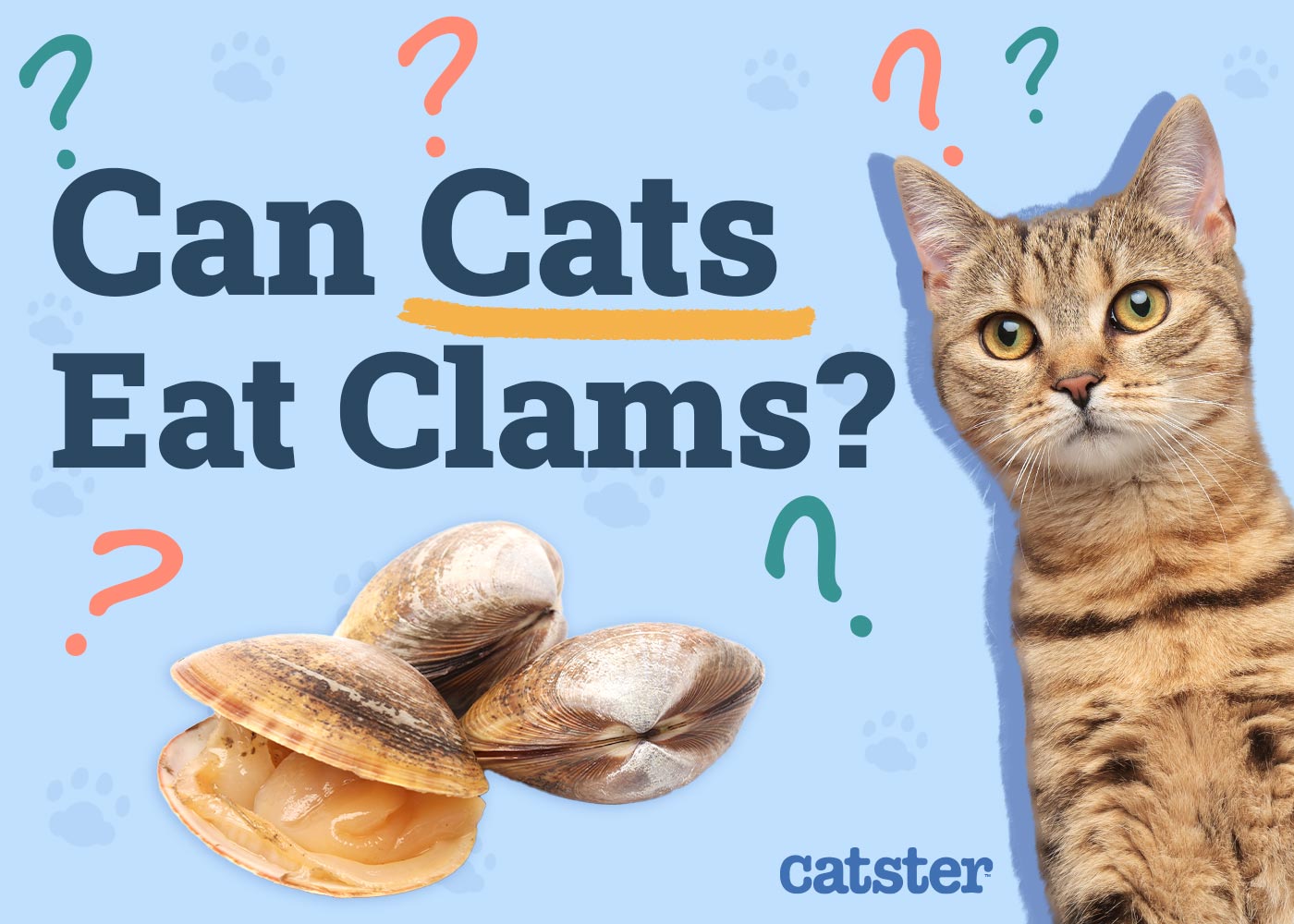
If you've ever been enjoying a fancy surf and turf dinner only to look up and spot your cat eyeing you hungrily from a nearby counter, you might wonder if it's safe to share some of your refined meal selection with your feline. Is it okay for cats to eat seafood? For example, can cats eat clams?
Yes, clams are a safe food for your cat to enjoy in moderation, so long as they are properly prepared. We’ll discuss some of the health benefits that eating clams could provide for your cat. Additionally, we’ll talk about how to feed your cat clams and how they might fit into a balanced diet.

Why Clams Can Be Healthy for Cats
Clams are one of the foods highest in the amino acid taurine, an essential cat nutrient. If cats don’t get enough taurine in their diet, they can develop heart and eye problems.
Shellfish, like clams, are high in vitamins and minerals and are especially good sources of antioxidants, which can decrease overall inflammation. Antioxidants are often recommended to help treat chronic conditions, such as arthritis, in cats.
Clams are also high in protein and low in fat and calories. Cats are true carnivores who require not only a protein-packed diet but one in which that protein comes from animal sources, including clams. Because you want most of your cat's daily calories to come from their cat food, it's helpful to pick treats or human foods that offer more nutritional value with a smaller caloric footprint.

How to Feed Clams to Your Cat
If you want to include the nutrition of clams in your cat's diet, there are a couple of different ways to do so.
First, you can feed your cat clams as a treat or mixed in with their regular food. Make sure the clams are cooked thoroughly, and never offer them raw. Raw fish, meat, or shellfish can be contaminated with dangerous bacteria that could make your cat sick or be passed on to vulnerable humans.
When cooking clams for your cat, avoid using any fat like butter or oil. Also, don't add salt or other seasonings.
Another option to add some clam to your cat’s diet is to offer clam juice. Clam juice is often suggested as a way to encourage cats to drink more water. Add a few drops of clam juice to your cat’s water bowl or freeze clam juice ice cubes for them.
When offering any new food to your cat, double-check with a veterinarian that it's okay. In addition, monitor your cat for any signs of digestive trouble like vomiting or diarrhea. Every cat's digestive tract is different, and not every cat may be able to tolerate foods like clams.

Can Cats Eat Clam Chowder?
This is a common question, probably because creamy, fragrant clam chowder seems like it would be appealing to cats. However, most clam chowder recipes contain ingredients that aren’t safe for cats, including onion and garlic. Many cats are also lactose-intolerant, and the milk and cream in many clam chowders could upset their stomach.
Keep the clam chowder to yourself and save your cat some plain clams as a treat instead.

How Clams Fit Into Your Cat’s Balanced Diet
As we mentioned earlier, the bulk of your cat’s diet should be made up of nutritionally balanced food formulated for the special needs of the feline body.
The easiest way to ensure your cat gets all essential nutrients and amino acids (including taurine) is by feeding them a high-quality, commercially prepared diet. Homemade diets are an option, but you'll need to enlist the knowledge of a veterinarian to make sure your meal plans aren’t lacking any vital nutrition.
Any treats—whether they be clams or commercial options for cats—should only make up a small portion of your cat’s diet. A good rule of thumb is to keep treats to 10% of total daily calories. Unlike cat food, treats are not required to be nutritionally balanced and are often high in fat.
Other than clams, here are some safe human foods you could offer your cat:
Your cat should always have access to fresh water. If you spike one of your cat’s water bowls with flavoring like clam juice, provide a plain water option as well.

- NO MESS - The 360° tray on this cat food and water bowl set has a raised design to catch and contain stray crumbs and drips. Protect your indoors and floors from wet and messy meals!
- WHISKER FRIENDLY - Shallow and wide metal containers with flat bottoms ensure your kitty can enjoy mealtime free from whisker fatigue!
- CHEW-SAFE MATERIALS - Kittens and cats love chewing on silicone and soft rubber - but it's a choking hazard. Our cat feeding station materials are anti-chew for a 100% safe feeding frenzy!
Learning about what your cat can and cannot eat is a crucial part of keeping them happy and healthy! Choosing a bowl to serve cat-friendly foods in is another important decision pet owners face. Satisfy the specific needs of your cat with the innovative design of the Hepper NomNom Cat Bowl. Learn why it’s our (and our cats!) favorite food and water dish here.
At Catster, we’ve admired Hepper for many years and decided to take a controlling ownership interest so that we could benefit from the outstanding designs of this cool cat company!

Conclusion
While dogs often seem to serve as canine garbage disposals, cats have a reputation for being picky eaters and uninterested in human food. However, many cats will gladly snatch as much food off your plate as a dog. Before letting your cat clean up your leftovers, it's important to educate yourself about what they can and can't eat. In this case, clams are a safe food for your cat. If you're ever worried your cat has eaten toxic food, contact a veterinarian for advice as soon as possible.
See also:

Expert cat care, straight to your inbox
Vet-reviewed advice, behavior tips, and the best of Catster. Free, and you can unsubscribe anytime.
By signing up, you agree to our Terms & Conditions and Privacy & Cookies Policy.
Elizabeth Gray is a lifelong lover of all creatures great and small. She got her first cat at 5 years old and at 14, she started working for her local veterinarian. Elizabeth spent more than 20 years working as a veterinary nurse before stepping away to become a stay-at-home mom to her daughter. Now, she is excited to share her hard-earned knowledge (literally--she has scars) with our readers. Elizabeth lives in Iowa with her family, including her two fur kids, Linnard, a husky mix and Algernon, the worldʻs most patient cat. When not writing, she enjoys reading, watching all sports, and spending time outdoors with her family.
Join the conversation
Ask a question, share your story, or send private feedback.