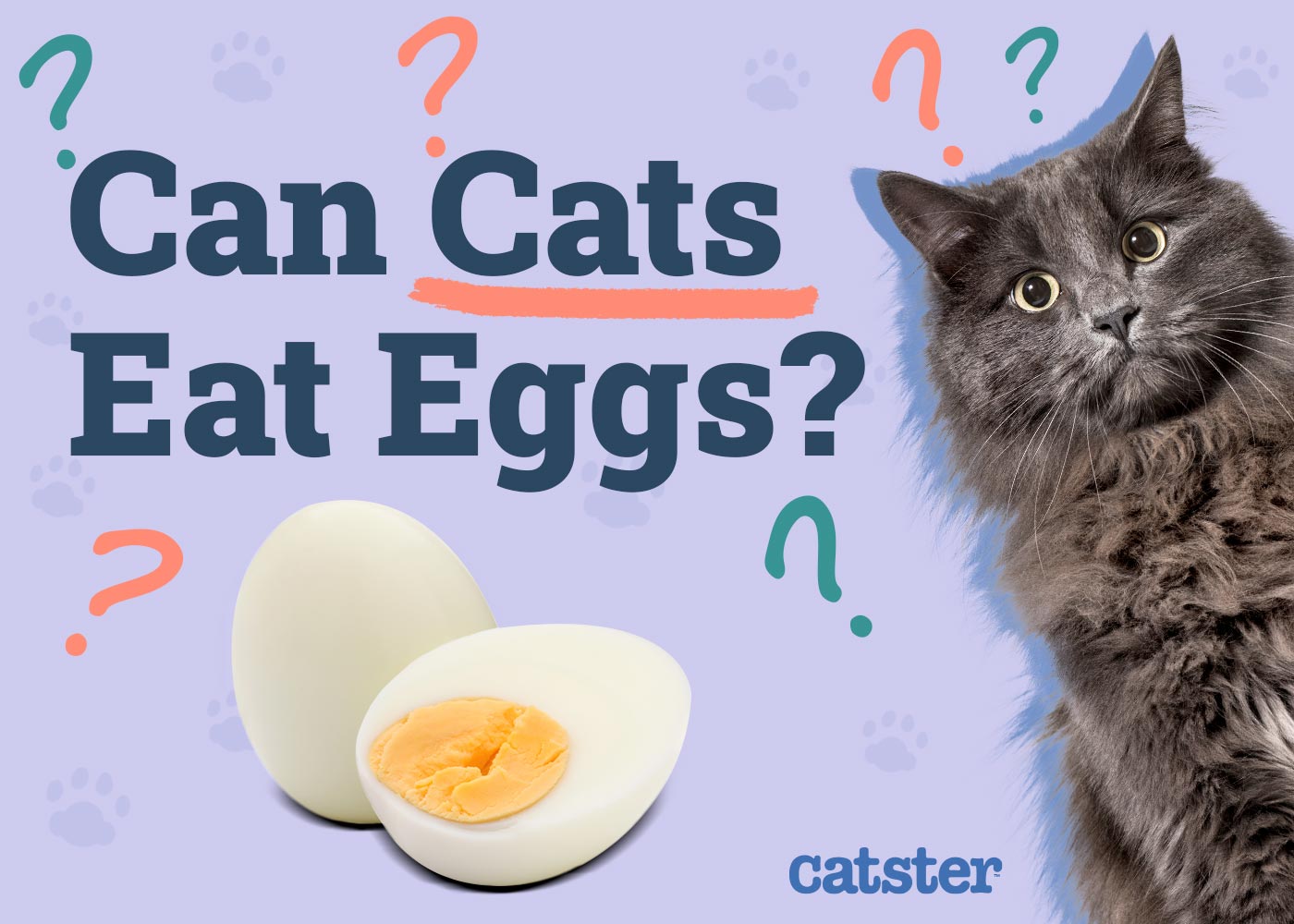
Can Cats Eat Eggs? Vet-Verified Nutrition Facts

In this article
Cats can eat many human foods safely and gain some benefits, while other foods can be hazardous for cats to consume. Like most cats, yours is probably more interested in human food and table scraps than their own cat food at times! If you find your cat staring at you while eating, and you’re wondering if cats can eat eggs, the answer is usually yes. It is perfectly fine to offer your cat eggs if they are boiled or scrambled without salt, oil, or other additives. Keep reading to learn more information and if eggs are good for cats.

Can Cats Eat Eggs?
Eggs are an excellent source of minerals, vitamins, proteins, and essential amino acids, but how safe are they for cats to consume? Well, not only are they entirely safe but carry many excellent nutritional benefits making eggs good for cats. Many cats adore the taste of eggs and will enjoy it as a treat. Eggs are affordable, easily available, nutritious, and easily digestible by cats, so occasionally giving your cat eggs is fine.
The Benefits of Eggs for Cats
There are several reasons why you can offer your cat eggs as a healthy treat. Eggs are packed with proteins that are easy for our cats to digest.
Other benefits of giving your cat eggs include:
The Risks of Eggs for Cats
One of the most significant risks of feeding your cat eggs is cooking them poorly. If you are wondering if cats can eat raw eggs, it’s not a good idea as it can lead to them contracting bacteria like Salmonella. This can be very dangerous for a cat, so before you offer them eggs, you must ensure they are properly and thoroughly cooked. Raw eggs also contain a protein called avidin, which can prevent your cat from absorbing biotin, which is crucial for maintaining healthy skin and coat.
Another thing to remember is that while boiled egg whites are entirely safe for cats to consume, egg yolks contain primarily fat and some protein. While this kind of fat is healthy for cats in general, feeding egg yolks to cats with weight issues is not recommended.

How Much Egg Can Cats Eat?
While eggs benefit a cat's diet, they cannot replace a complete and adequate meal. Eggs should only be considered a treat for your cat, in addition to their regular meals. All treats should account for no more than 10% of your cat’s daily calories. An average 10-pound neutered cat needs around 260 calories per day and a medium egg contains approximately 66 calories, so you should only offer your cat a small piece of egg.
Can Kittens Eat Eggs?
Since kittens need a special, formalized diet to help their bodies develop correctly, eggs shouldn't be a replacement for their meals. However, it is entirely safe to offer your kitten some boiled eggs from time to time in small portions. You should always consult a veterinarian before doing so to make sure your kitten can use this type of supplement in their regular diet.
How to Prepare Eggs for Your Cats
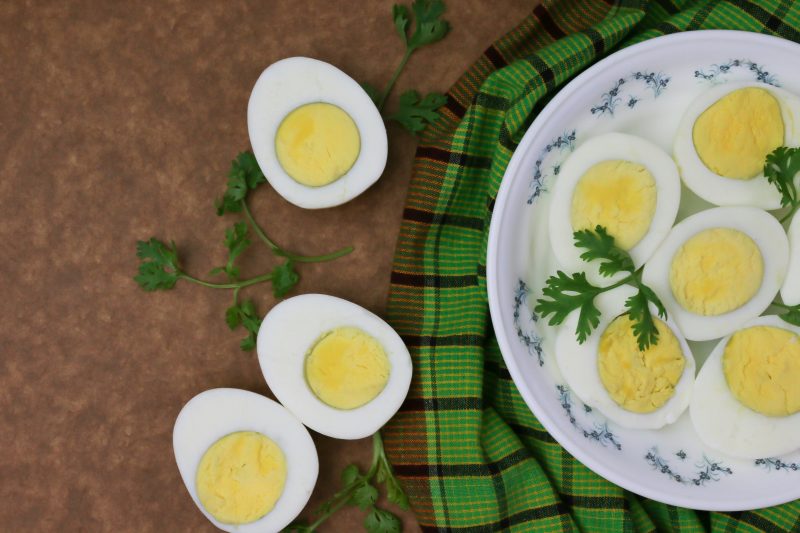
The most critical part of feeding your cat eggs is ensuring you do it properly. Not cooking an egg enough can be a severe health risk for your kitten, so always prepare this treat properly. Cats can eat cooked eggs, either boiled or scrambled, and most importantly—without any added salts, seasonings, or oils. It is best to boil the egg to cook it thoroughly. Once the egg cools, you can split it into several pieces and top your cat's meal with it.
Final Thoughts
After learning about the benefits and risks of feeding your cat eggs, you may be happy to know that you can safely offer your feline this delicious treat. Always cook them properly and offer them without any salts, seasonings, or oils. Eggs are best offered as an occasional treat to your cat as an addition to their balanced meals. They are not a proper substitute for a full meal, but they have many benefits for a cat's health when offered as a supplement.
See also:
Can Cats Eat Scrambled Eggs? Vet-Reviewed Nutrition Facts & FAQ
Can Cats Eat Quail Eggs? Vet-Approved Nutritional Benefits & Facts
Sources
Featured Image Credit: Sea Wave, Shutterstock

Expert cat care, straight to your inbox
Vet-reviewed advice, behavior tips, and the best of Catster. Free, and you can unsubscribe anytime.
By signing up, you agree to our Terms & Conditions and Privacy & Cookies Policy.
Upon completing my degree from the College of Fine Arts, I embarked on a quest to find a platform to manifest my wild imagination. It was then that I discovered my passion for content writing, which swept me off my feet. As a freelance writer, I am always on the move, with an adventurous and restless spirit that propels me forward. When I am not typing away in my cozy writing nook, I spend my time honing my skills as a sculptor, painter, and woodworker in my workshop. Writing has become my primary medium of expression, and I plan to nurture this passion further, using it as a conduit for my never-ending creativity.
Join the conversation
Ask a question, share your story, or send private feedback.