Sleep Shaming or Bio-Hacking: The Science of Feline Polyphasic Sleep

Hi, I’m Dr. Lauren! Read my introduction to learn more about me and my two adventurous cats, Pancake and Tiller.
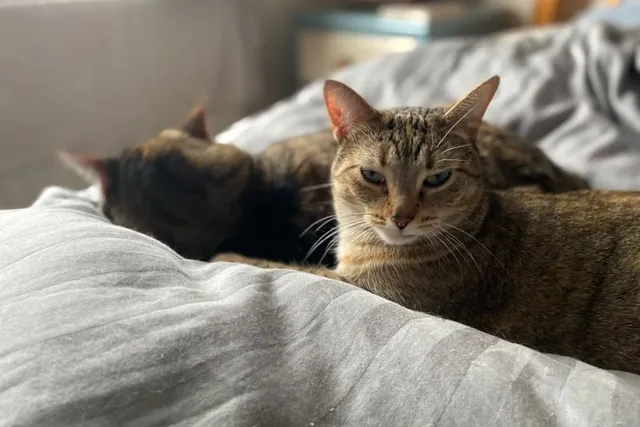
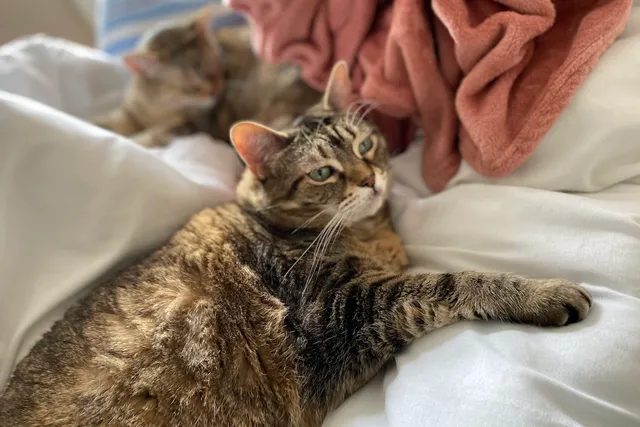
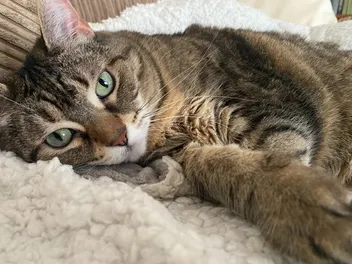
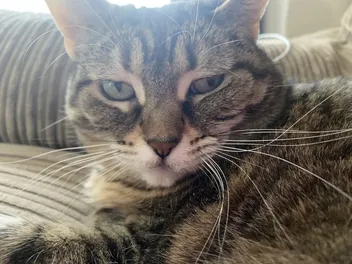
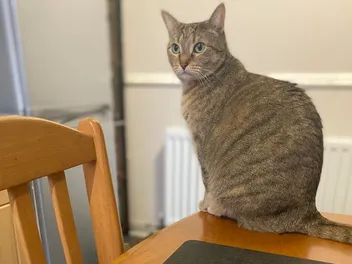
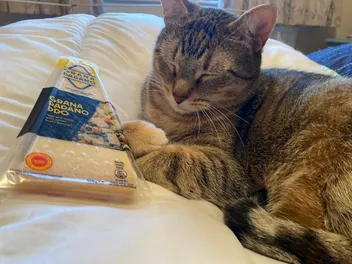
OK, I admit it. I sleep shame Pancake. If you’ve read my previous articles, you’ve likely seen multiple comments about how often she can be found… sleeping. To the point that some days I actually wonder if she does ever leave the sofa during the day, while I’m at work.
A recent podcast by the Huberman Lab, however, made me question if I needed to rethink her hours of time whiled away sleeping.
When we are born, as babies we enter the world as polyphasic sleepers. So what happens, and what is polyphasic sleep?
According to the sleep foundation, polyphasic sleep is sleeping marked by multiple intervals of sleep and wakefulness throughout the 24-hour day.1 Apparently there are even further schedules such as the Uberman, the Everyman, and the Triphasic, if you want to get really nitty gritty.

The Benefits of Polyphasic Sleep
In newborns, our brains lack the capability to discern day and night signals that indicate sleep and wakefulness patterns in adulthood. But adult cats don’t; they are diurnal creatures, so they obviously understand such signals. So why do animals such as cats retain this sleep pattern as they age? In fact, even fire ants participate in polyphasic sleep. So, what are we humans missing?
Some initial studies theorized that predation risk may have meant an evolutionary tendency towards polyphasic sleep. Basically, you were probably less likely to be a larger someone’s snack if you weren’t caught snoozing for 8 hours straight.
But a more recent study refuted this idea, suggesting that predation risk did not correlate with polyphasic sleep; instead they theorized that small animals may simply need more frequent feeding and therefore their sleep schedule evolved to mimic their appetite and energy needs. (No one has yet done a study on whether, given the option of a memory foam mattress and endlessly take-out deliveries, cats might elect to change to a monophasic sleep schedule!)

The Drawbacks of Polyphasic Sleep
When done in a human context of using polyphasic sleep to limit non-waking periods to two hours today, at least one review study found no benefits, and actually detrimental effects in physical and mental wellbeing, as well as productivity levels.
But cats aren’t limiting their sleep to two hours, attempting to squeeze every last drop of productivity into their day. Perhaps, a smarter approach would be to take a page from their book: relax more, sleep more, schedule less, and slow down. Unless it’s a red dot, or a feather toy, or a particularly tasty bug, in which case, all bets are off!
This article is a part of Dr. Lauren, Pancake, and Tiller's series.
Expert cat care, straight to your inbox
News, insights, and useful advice, delivered to you.

No spam — unsubscribe anytime.
By signing up, you agree to our Terms & Conditions and Privacy & Cookies Policy.
How useful was this post?
Click a star to rate. You can leave written feedback afterwards. (We read all feedback.)
Dr. Lauren Demos DVM (Veterinarian)
As a veterinarian, Lauren is eager to share her experience in emergency medicine and cats, with our readers. She loves sharing helpful, real life tips for having cats as part of your life, and what to do in critical situations with your pets.
Lauren is a vet with over a ten years of experience in cats and dogs, along with infectious diseases. She enjoys teaching, and lectures for students, pet owners, and clinicians, on various topics.
Lauren received her degrees from Murdoch University, in Perth.