11 Long Nosed Cat Breeds (With Info & Pictures)
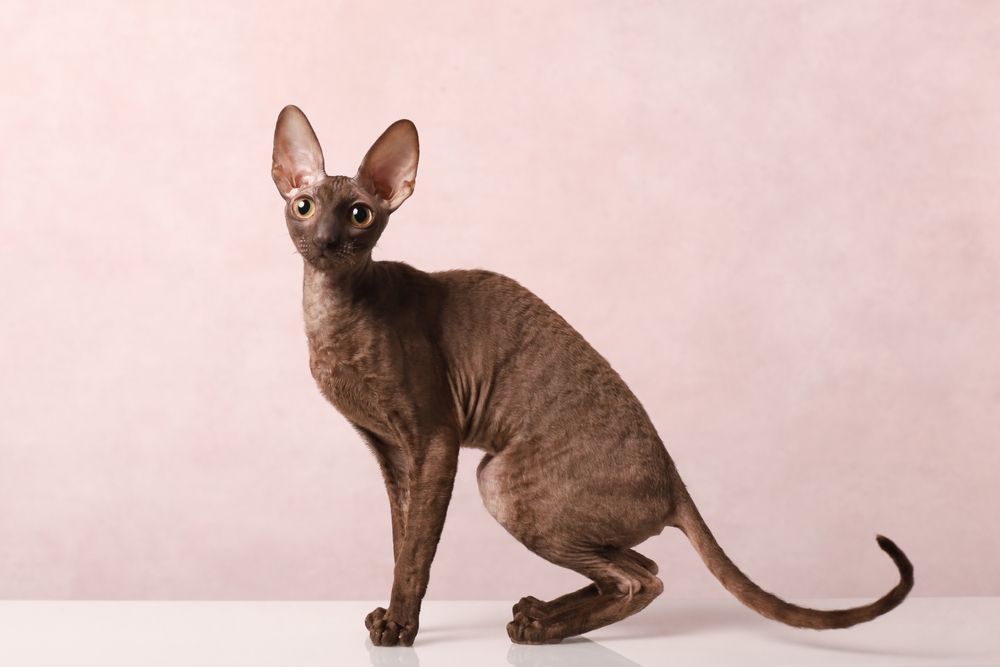
According to The International Cat Association (TICA), there are over 70 standardized cat breeds.1 Each of these breeds brings something unique to the table, whether it’s a quirky personality trait or a distinctive physical characteristic. Today, we’re going to take a deep dive into one particular physical feature that you might not think about often unless you see a cat with an odd-shaped one: noses.
A cat’s nose mostly looks the same from breed to breed, but there are a handful of kitties with longer-than-usual noses, so let’s take a deep dive into 11 of the most adorable long-nosed cat breeds!

Classification of Long Noses
Breeds with long noses certainly stand out from those with “normal” sized ones simply because of the physical space their nose takes up on their face. While there is no exact measurement that makes one cat’s nose “long” and another’s “normal”, you can tell by looking at the breeds below that their noses have a little something extra.
The 11 Long-Nosed Cat Breeds
1. Oriental Shorthair

Breed Overview
Origin:
Lifespan:
Height:
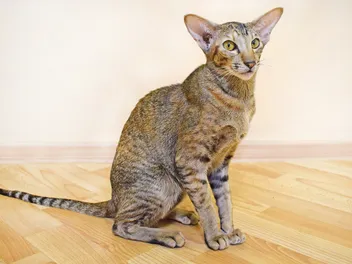
The Oriental Shorthair is perhaps one of the best-known long-nosed cat breeds. These instantly recognizable kitties have wedge-shaped heads and long, tubular bodies with slender legs and tails. Their coats are very short and glossy, coming in a wide variety of colors and patterns.
The svelte Oriental Shorthair belongs to the Siamese family of cat breeds and is known for their intelligence, vocalizations, and athleticism.
2. Chausie

Breed Overview
Origin:
Lifespan:
Height:
This rare cat breed is a long-legged and statuesque specimen built for running and jumping. Their bodies are limber and graceful, like an Olympic athlete. Their deep chests allow them to breathe deeply, adding to their seemingly infinite source of energy. Their noses are medium to wide, becoming slightly broader between the eyes.
The Chausie is the first hybrid between the jungle and domestic cat. They’re known for their intelligence, curiosity, and high energy levels.
3. Oriental Longhair

Breed Overview
Origin:
Lifespan:
Height:
The Oriental Longhair, like its Shorthair counterpart, belongs to the Siamese breed group. They have the same body type, except they come in various colors with a semi-long, silky coat on their elegant and graceful bodies. They have the same trademark wedge-shaped heads that their shorter-haired counterparts are known for.
The Oriental Longhair is an expressive cat with loud voices they use often. They are highly active, intelligent, and loyal.
4. Highlander

Breed Overview
Origin:
Lifespan:
Height:
The Highlander is a relatively new cat breed, having begun refinement in 2004. These big, powerful cats are easy to spot thanks to their loosely curled ears and long, sloping foreheads. Their noses are wide and long, with a larger nose leather than most cats. The muzzle, chin, and nose give the Highlander a boxy muzzle look.
These cats love to play and thrive on human company. They’re relatively quiet but have a lot of energy, especially in chasing and hunting games.
5. Siamese

Breed Overview
Origin:
Lifespan:
Height:
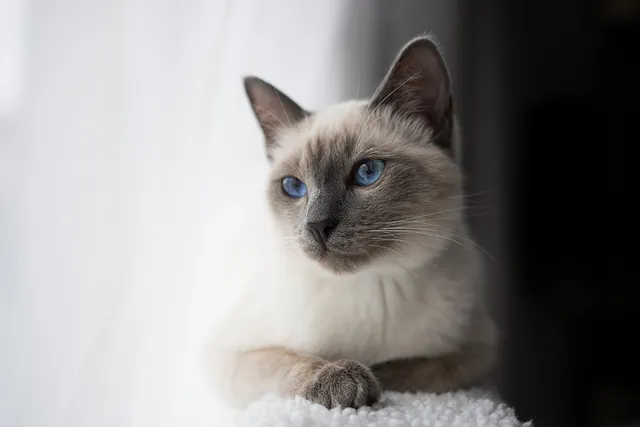
Siamese cats are another almost instantly recognizable breed. These medium-sized cats are svelte and refined with long, tapering lines. Their heads, like the Oriental breeds we spoke about above, are wedge-shaped. The breed standard requires the Siamese to have a long and straight nose that continues from the forehead without a break.
Siamese cats are known for their incredible intelligence, affectionate temperament, and strong opinions. They’re highly extroverted and likely to bond strongly with one particular person in their family.
6. Turkish Van

Breed Overview
Origin:
Lifespan:
Height:
The Turkish Van is a beautiful breed known for its unique and distinctive patterning. All Turkish Vans are white cats with colored tails and head markings. This breed is a solidly built and semi-long-haired specimen with a broad, wedge-shaped head and pink leather on their long noses.
The Turkish Van is a friendly, outgoing, and energetic family companion. They thrive on companionship and need a lot of attention.
7. Ragdoll

Breed Overview
Origin:
Lifespan:
Height:
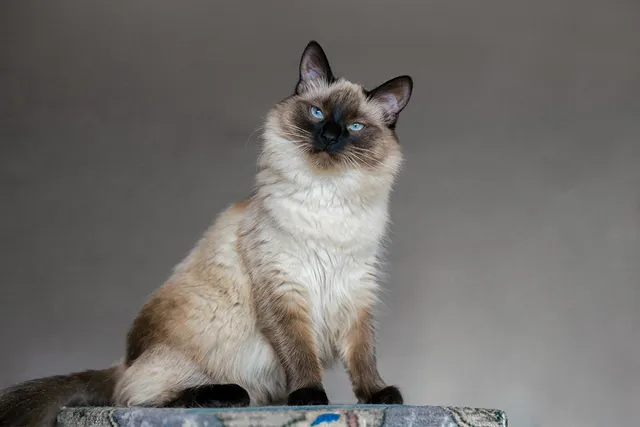
The Ragdoll is one of the biggest cat breeds and one of the slowest to mature. They can take as long as four years to reach full maturity. These moderately long-haired, blue-eyed cats have pointed markings. While their noses aren’t as long as others on our list, they’re certainly longer than other cat breeds, so we had to include them.
Ragdolls are very laidback cats. They’re known for their gentle, calm, and friendly personalities. While less demanding than a Turkish Van, Ragdolls can sometimes develop a dog-like devotion to their humans.
8. Savannah

Breed Overview
Origin:
Lifespan:
Height:
The Savannah cat has a short to medium-length coat with coarse guard hairs covering a much softer undercoat. They are tall, lean, and graceful, with dark spots and bold markings. These striking cats result from crossbreeding African Servals and domestic cats, hence their “wild” look.
Savannahs are playful, friendly, and loyal. They love to play in water and forge strong bonds with their owners. However, they are not the right breed for everyone as they require a fair amount of space and stimulation compared to other domestic cats.
9. Cornish Rex

Breed Overview
Origin:
Lifespan:
Height:
The Cornish Rex is incredibly unique, standing out from others thanks to their soft, wavy coat. Their heads are small compared to the size of their bodies and egg-shaped. Their noses are often described as “Roman noses” as when they are viewed in profile, the noses’ prominent bridge appears to be curved.
Cornish Rex cats are curious and bubbly companions that get along great with everyone. They’re highly affectionate and people-oriented, so they need quite a bit of attention to stay happy.
10. Abyssinian

Breed Overview
Origin:
Lifespan:
Height:
The Abyssinian is a medium-sized cat with a regal appearance. They’re lithe, hard, and muscular, with a slightly rounded wedge-shaped head. These exotic-looking, slender cats have long noses that should ideally form a straight line with the chine when viewed in profile.
Abyssinians are very friendly, curious, and active cats with outgoing personalities. They love to play but can become easily bored, requiring a fair amount of interaction and constant access to toys to stay happy and healthy.
11. Russian Blue

Breed Overview
Origin:
Lifespan:
Height:
Russian Blues have a smooth, wedge-shaped head and large ears with a wide base. They have long tails and slender legs. These cats vary in colors from a light, shimmery silver to a dark, slate gray. Their coats are short and dense and stand out from their body.
Russian Blues are typically quiet and can be quite reserved around strangers. They are curious, calm, and affectionate, though they are not as clingy as other breeds we’ve discussed today.

Final Thoughts
Though the cat breeds above have large-than-typical noses, that doesn’t mean they’re the only breeds sporting longer schnozzes. Every individual cat will have a nose size that’s unique to them, so even if your cat’s breed isn’t on our list above, that doesn’t mean they can’t grow a longer nose.
Featured Image Credit: VIS DE ANIMALIS, Shutterstock
Expert cat care, straight to your inbox
News, insights, and useful advice, delivered to you.

No spam — unsubscribe anytime.
By signing up, you agree to our Terms & Conditions and Privacy & Cookies Policy.
How useful was this post?
Click a star to rate. You can leave written feedback afterwards. (We read all feedback.)

For Chantelle, writing and animals are the two driving forces in her life. Growing up on the Canadian prairies surrounded by pets, she now shares her home with five cats, two guinea pigs, and a bearded dragon. Chantelle, her husband, and their child pride themselves on being dedicated pet parent, even spending a fortune on wall-mounted cat shelves to provide their cats with an indoor jungle gym. When she's not snuggling with her cats or photographing their humorous moments, Chantelle is exploring the Rocky Mountains, rewatching her favorite Netflix series, and reading up on various random subjects.