Why Is My Cat Biting Me All of a Sudden? 8 Possible Reasons (Vet Verified)


In this article
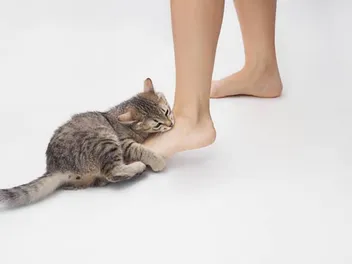
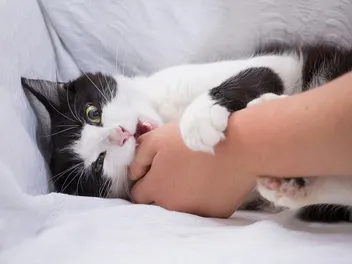
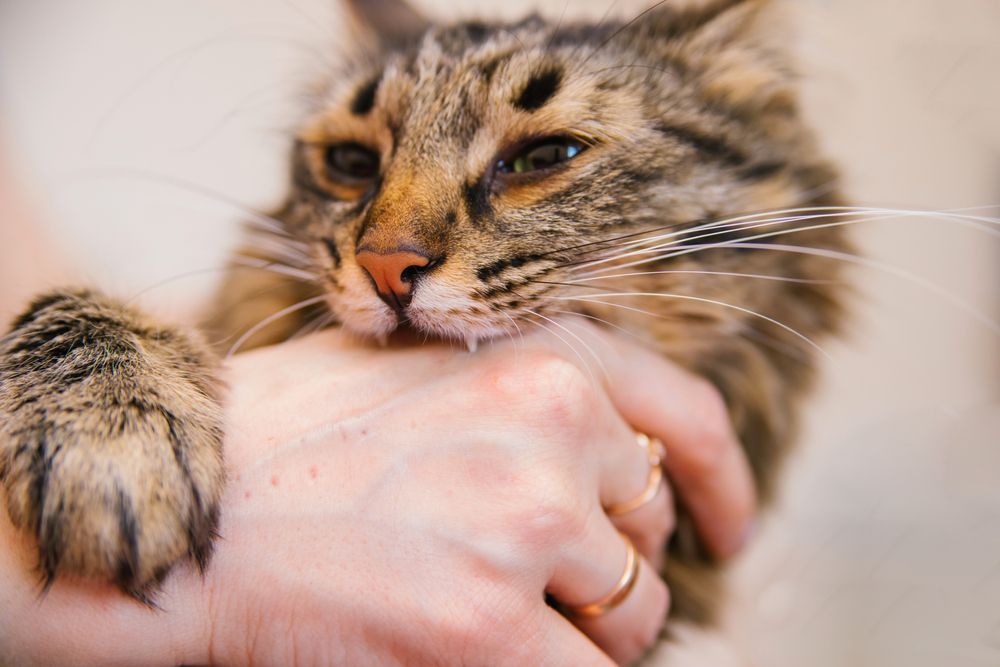
If you’ve spent any amount of time around cats, you’ve probably experienced how fast they can go from purring in delight to digging their teeth into your unsuspecting hand. But why does my cat randomly bite me? While biting doesn’t always mean your cat is being aggressive, if your cat suddenly starts biting you, it can be startling and concerning.
Cats bite for several reasons. They could be telling you to leave them alone, seeking attention, or even showing affection. Without knowing why cats bite or how to tell when your cat is about to turn on you, it can be difficult to avoid getting bitten or figure out what provoked it.
To help you understand — and to protect your fingers from painful nips — we put together this list of common reasons that cats bite.

The 8 Reasons That Your Cat Bites You
1. Attention Seeking
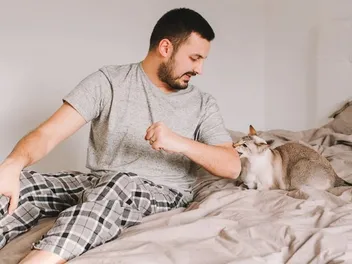
They might not be able to speak like we can, but cats can be quite expressive when they want or need to be. This includes if they’ve been feeling neglected and are seeking affection from their favorite humans.
Biting is just one of their methods of communication. While it can be painful for us, your cat usually doesn’t mean anything by it. It’s just their way of getting your attention when they think that you’re not giving them enough of your time.
You can counteract this by setting aside time every day to play with your cat. Regular grooming sessions can be a good way to spend time together too. However if your cat bites, just move away, do not give them any kind of attention after a bite otherwise, they will learn that that method works and the behavior will likely be repeated.

2. Don’t Touch
Cats can be particular about who touches them, when they are touched, and even where they like to be petted. Your neighbor’s cat might not let you touch them at all and race off with a hiss every time you try, while your own cat might be more accepting but still wary.
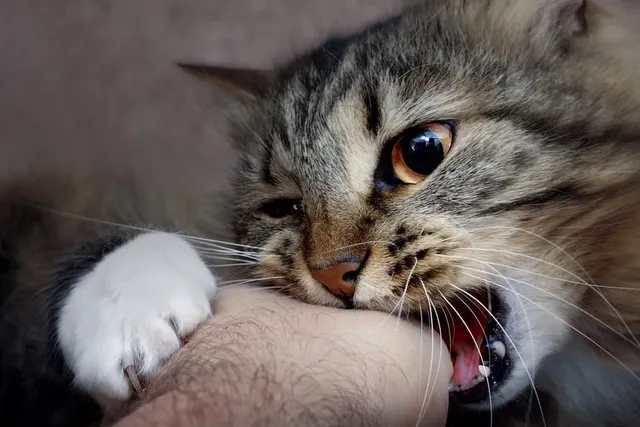
Contrary to attention-seeking bites, biting can also be how your cat tells you that they don’t want to be touched. Maybe they’re too tired, or they’re irritable about the new kitten at home and just want to be left alone for a bit.
Regardless of their reasons, these bites are often accompanied by warning signs like hissing or growling. These are both signs that you should leave them alone for a while.
3. Fear Induced
More often than not, if your cat is scared by something, they’ll dart for cover and won’t appreciate being held. If you try to restrain them, it can lead to deep scratches and nasty nips as your cat tries to escape.
This type of bite doesn’t mean your cat hates you or is aggressive. It’s just their way of getting out of a situation that they think is dangerous or scary. If something scares your cat — whether it’s your dog, the vacuum cleaner, or something outside — it’s best to let them hide if they need to.

4. Love Bites
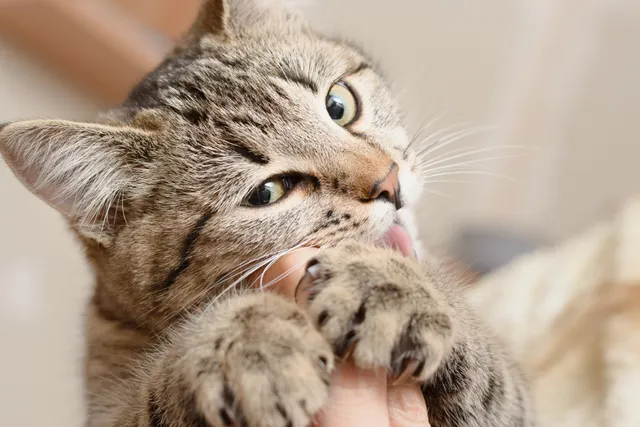
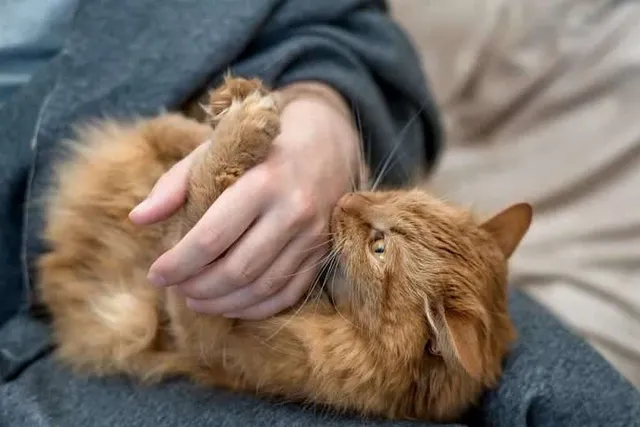
Although being bitten is never fun, especially when those teeth are sharp, cats will sometimes bite each other and you to show their affection. These are usually quick nips or nibbles that often don’t hurt at all. It’s usually how mother cats groom their kittens, and as a result, it is a behavior most often seen in cats that have had kittens.
While this type of biting is not aggressive and your cat is just giving you affection, they can get a little too enthusiastic sometimes. It is best to be black and white with the biting and deter the behavior by carefully removing your hand from their reach.
5. Pain
Well-known for their stoic nature around all sorts of situations, cats are also renowned for hiding when they’re in pain. This can be concerning for two reasons. One, you need to pay close attention to your cat’s behavior to know when they have a health issue and need to see a veterinarian. Two, if you accidentally pet them in a spot that hurts, it can lead to a few teeth marks on your unsuspecting hand.
This isn’t a bite born out of aggression or hatred for you. It’s simply your cat’s way of saying: “Ow!”
Unfortunately, it can be difficult to know if they are in pain or not, though you can look for signs of open wounds or swelling. If the behavior keeps happening when you touch the same spot, you should check in with a veterinarian.
6. Overstimulation
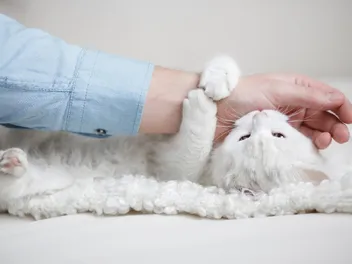
One thing that many people dislike about cats is their way of loving attention one minute and then ducking for cover the next. This behavior depends on the cat. Some are more than happy to be petted for longer periods, while others barely like to be touched at all.
Petting or grooming your cat can be the cause of bites too, especially when you have a cat that’s particularly finicky about their space. Most cats also have limits as to how much attention they’ll allow, overstimulation is a survival mechanism for them. Their brain enters a paradox and triggers them not to get too distracted by the pleasure that they make themselves susceptible to a "predator".
If you’re happily petting your cat one minute and then get a prickly ball of claws and teeth the next, it's a sign that your cat has had enough.
7. Playing
Housebound or not, cats are hunters and use their teeth to capture their prey. Playtime is how they hone their skills, which means their teeth often make an appearance when they’re playing with other cats or you.
Kittens are often the biggest culprits when it comes to bites during playtime, and they’ll often teach each other how much biting is too much. Adult cats will playfully bite each other too, even if they don’t play as often. Either way, ensuring that your cat gets plenty of time to play with toys will let them hone their skills without letting your hands get scratched and bitten.
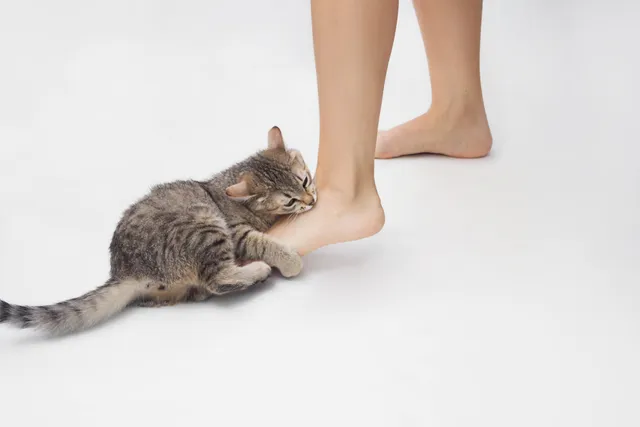
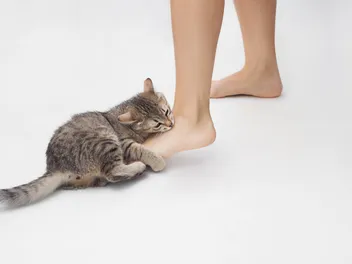
You have to pay attention to how excited your cat is getting during playtime, though. If they get too overstimulated, they might mistake your wiggling toes for toys in their enthusiasm. Remember not to allow your cat to bite you is rule number one, therefore, you need to read their behavior and body language to prevent bites.

8. Teething
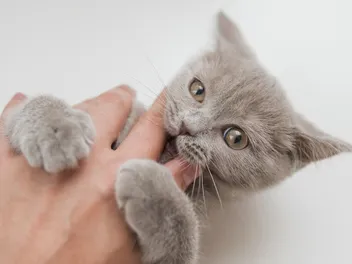
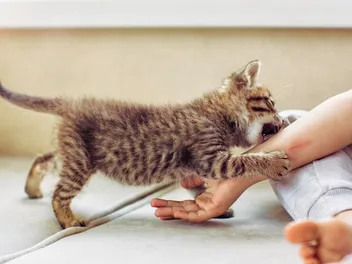
Any animal with teeth will go through a teething period and will seek to relieve the pain by chewing on things. Kittens, like puppies, will chew on anything that they can reach, such as shoelaces, toys, or even your hand.
This behavior is unavoidable and not aggressive but should be redirected to more suitable targets. It might be cute to have a kitten gnawing on your fingers, but it's best if you don’t encourage the behavior.
Gently encourage your teething kitten to chew on their favorite toys or specially designed kitten teething toys to save your hands and toes from painful chewing. You can do this by carefully replacing your hand with the toy in question and enticing them to play with that instead.
Why Are Cat Bites Dangerous?
Even if your cat isn’t being aggressive and doesn’t intend to hurt you at all, being bitten with their needle-like teeth can be painful and have serious consequences. Cat bites are often mistakenly considered to be not serious due to how minor the injuries often appear.
Unlike dogs, which use their teeth to hold and tear into their prey, cats make puncture wounds with their bites. These wounds are small but deep. This is where the danger comes in. The smaller the wound, the faster it scabs over, but that doesn’t mean the wound is healed. Bacteria can get trapped under the skin in the deeper part of the bite.
Since cat bites don’t usually cause much damage, many people don’t bother treating them at all. This means the bacteria is still present when the wound seals over, and this is why cat bites are more likely to get infected than dog bites.

How to Avoid Cat Bites
Most cats aren’t aggressive, and many of their bites are the result of people misreading their body language. Most of the time, bites can be avoided by redirecting your cat’s attention to toys and keeping your hands out of the way when you’re playing with them.
Learning about your cat’s body language can help you out too. Cats will often announce their displeasure before biting, and it’s these warning signs that you should take note of if you don’t want to get bitten. Ignoring these signs and continuing to pet your cat often results in your cat responding with their claws or teeth.
If your cat wants to be left alone, they’ll typically show one or all of these signs:
- Arched back
- Ears back
- Dilated pupils
- Hissing
- Flicking tail
- Fluffed tail
- Spitting
- Stiff posture
Conclusion
It isn’t pleasant being bitten by our favorite felines, but they don’t always bite to show their displeasure. While biting can be a sign of frustration or a disgruntled, “Leave me alone!”, it can also be your cat’s way of seeking attention, playing, or showing affection.
No matter the reason that your cat is biting you, the best idea is to teach your cat that biting isn’t appropriate behavior. You can do this by redirecting their biting habit onto more acceptable targets, like their favorite mouse toy.
Sources
Featured Image Credit: Alie04, Shutterstock
Expert cat care, straight to your inbox
News, insights, and useful advice, delivered to you.

No spam — unsubscribe anytime.
By signing up, you agree to our Terms & Conditions and Privacy & Cookies Policy.
How useful was this post?
Click a star to rate. You can leave written feedback afterwards. (We read all feedback.)
Christian started writing for a local newspaper as a teenager, and he's been involved in the publishing industry for most of his adult life. Combining his love of writing with a passion for animals, he is currently the Director of Editorial at Pangolia and the Editor-in-Chief at Catster.
Christian lives in the Philippines with his wife, son, and four rescue cats: Trixie, Chloe, Sparky, and Chopper.