7 Reasons Why Cats Bite and How to Stop It (Vet Answer)

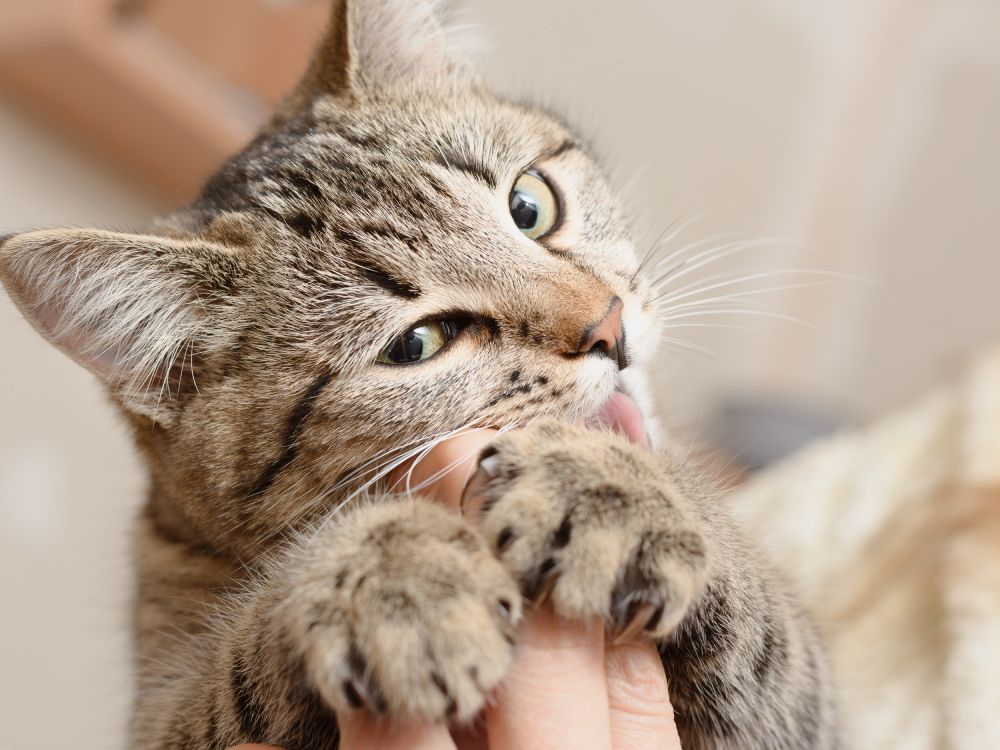
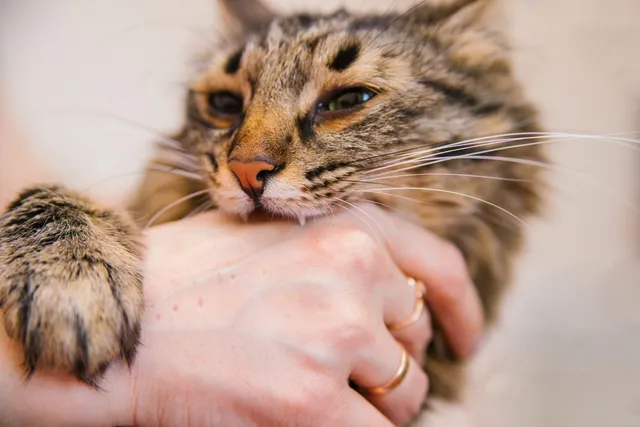
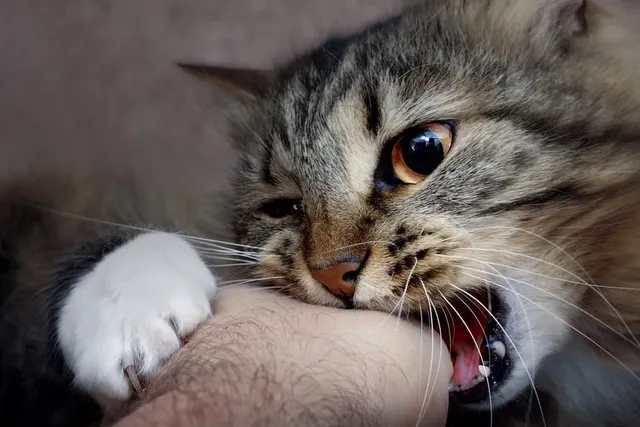
Cats express themselves and communicate with their owners through body language cues and vocalizations. These may include a flickering tail, a crouched posture, purring, or meowing. Biting is another way that cats communicate.
There are a few reasons that a cat may bite, so let’s delve further into this behavior and learn ways to prevent it from happening as much as possible.

The 7 Reasons That Cats Bite
1. Playing
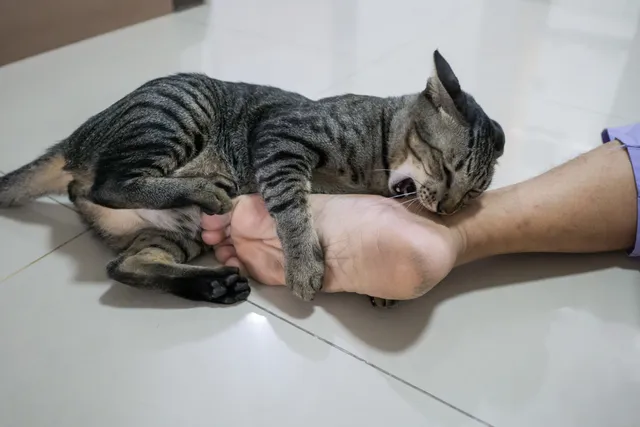
Cats and kittens may nip each other when playing. While this can be normal behavior to them, it can be undesirable and painful if they are nipping you!

2. Attention
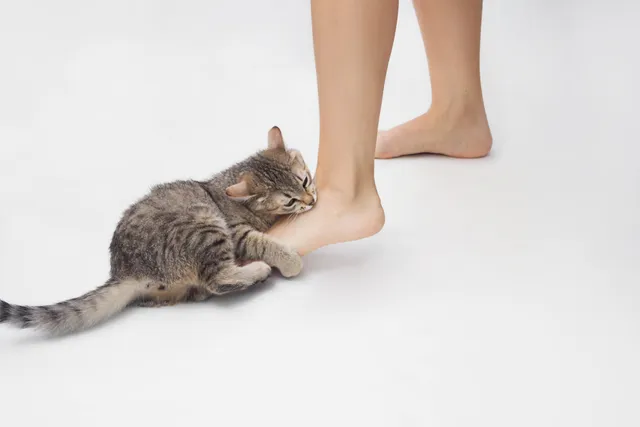
As much as we love our cats, they sometimes do strange things. One of these is biting you for attention! They may stalk your feet around the house, then pounce and bite them. This behavior will surely get your attention, and cats know that! Bored cats tend to get themselves into trouble, which may result in scratched furniture, walls, and of course, ankle biting when they are seeking attention or entertainment.
3. Overstimulation
While cats may enjoy petting sessions, they can also become overreactive, overexcited or simply have had enough petting for the time being. If you do not pay attention to your cat’s body language telling you to stop and you continue, your cat may bite you as a final way to say, “Please stop. I’ve had enough for now.” Cats may also bite when petting is unwanted or you’re petting sensitive areas.

4. Fear
While cats are stealthy little hunters in their own right, they are at risk of being preyed upon by other animals, such as coyotes and dogs. A cat that feels cornered with no escape can resort to biting as an attempt to get away from the threat. This threat can be you or other people if you force your cat to do something, such as be restrained for nail trimming.
A common example is the trap-neuter-release programs for feral cats. When a cat is cornered in a cat trap, they will hiss, scratch, crouch, growl, flatten their ears, and nervously twitch their tail in an attempt to scare you, the predator, away. This may then resort to biting a gloved hand if you reach into the trap. Fearful cats may bite if they feel they cannot get out of a situation and have no room for escape.
5. Territorial Aggression
Some cats may bite unfamiliar people, such as a neighbor or friend entering your home for a visit. Your cat may think of your home as their territory and try to protect their turf from intruders. In some instances, cats may attack familiar people and even prevent them from accessing rooms in your home as a form of dominance. If your indoor cat sees a threatening stimulus outside your home, such as another cat through the window, it may provoke aggression, which is then redirected onto you or others inside the home. They may bite you because they can’t get to the real source of their frustration, and you are closer in proximity to them.

6. Motherhood
A mother cat may bite you or other people after having kittens as a way of protecting them. This behavior should subside as the kittens grow and become less dependent on their mother. On a similar note, a mother cat may bite her kittens as a way of disciplining them as well.
7. Pain
Cats that do not feel well or that are in pain or discomfort may bite. If biting is a new behavior that you have noticed from your cat, pay attention to any other signs, such as hiding, lack of appetite, increased vocalizations, hunched posture, or sensitivity to certain areas on their body, as these may indicate that your cat is in pain or uncomfortable.
If you are concerned about the health and well-being of your pet, seek veterinary advice for the best course of action.

How to Stop Your Cat From Biting You
Biting is part of a cat’s natural instincts, and while you cannot completely stop your cat from biting you, there are a few ways that you can minimize or redirect this behavior. One of these is to offer a cat-friendly toy when your feline friend begins biting. Be sure to give them plenty of praise when your cat redirects this behavior onto an appropriate object or exhibits desirable behavior around you and others (i.e., has a quiet, calm demeanor).
If you do not have a toy to redirect behavior in the moment, remove your hand, stay calm, and ignore your cat’s attempts for attention through biting or scratching. Reward calm and quiet behavior.
It is always a wise idea to have different toys, ledges, cat trees, and scratching posts around your home for them to enjoy, thus preventing boredom. Schedule daily play sessions with your cat to provide them with much-needed exercise, especially indoor cats. Enrichment activities can also improve your bond and strengthen your relationship with your cat.
Never punish your cat, as it is ineffective and may lead to undesirable behaviors instigated by fear. Become familiar with your cat’s body language, and know when to give them space. Learn the undesirable petting areas on their body that may lead to a bite. Some cats might enjoy a scratch under the chin, but may swat or bite you if you get too close to their chest or belly.
Cats that have given birth should be provided with a calm, quiet, and distraction-free environment to raise their kittens. Keep human and other pet visits to a minimum if your cat has aggressive tendencies. If your cat begins biting you suddenly or reacting negatively to touch, this abnormal behavior should be evaluated by a veterinarian to determine the cause.
Cats may respond favorably to calming cat pheromone sprays. In other instances, they may need prescription medication(s) to help control anxiety, stress, and aggression.
Our Favorite Catnip Toy
Great cat toys are crucial to keeping your cat happy and healthy. We love Hepper's Catnip Stick Toy because it's handmade in the USA, available in a cool range of colors, and sturdy enough to withstand your cat's sharp claws. Best of all, you won't find any filler here – just 100% organic catnip!

- No Filler - Like all the best cat toys our is stuffed with 100% organic catnip. Cheap cat toys with filler leave your cat bored and disinterested. Our pets deserve to be excited and engaged.
- Flexible Play - Simple plush shape is great for biting, scratching and pawing. It can start life as a teething toys for kittens then soon your furry friend will be using it as a cat kick stick. Play for any mood
- Durably Designed - Our cat safe toys are hand-stitched with a double-lined exterior construction for hours of playtime, perfect cat kicker toys for cats indoors and even outdoors. Your cat will tire out before the toy does!
At Catster, we’ve admired Hepper for many years and decided to take a controlling ownership interest so that we could benefit from the outstanding designs of this cool cat company!
- Our Recommendations: Best Interactive Cat Toys – Catster’s Reviews & Top Picks

Conclusion
Cats may bite for various reasons to communicate with their owners. Biting may result during play or when seeking attention. Cats can bite if they are fearful, overstimulated, or just want to be left alone. Protecting their territory and kittens can also provoke a bite. Cats that do not feel well due to illness, pain, or injury may bite in an attempt to get you away from them.
Biting is an instinct for cats, but you can minimize injury to yourself and others by being aware of your cat’s body language and knowing when to redirect this behavior or back off before your cat is compelled to bite.
See Also:
Featured Image Credit: SerPhoto, Shutterstock
Expert cat care, straight to your inbox
News, insights, and useful advice, delivered to you.

No spam — unsubscribe anytime.
By signing up, you agree to our Terms & Conditions and Privacy & Cookies Policy.
How useful was this post?
Click a star to rate. You can leave written feedback afterwards. (We read all feedback.)
Dr. Stacie Grannum DVM (Veterinarian)
Dr. Stacie Grannum was born and raised in Arizona. When she was five, an encounter with a tiny animal changed her life forever. A baby bird fell high from its nest, and Dr. Grannum diligently cared for it. Sadly, despite her attempts to save the little birds life, the little bird did not survive. From this heartbreaking loss came a new ambition, carving the path that Dr. Grannum followed. She knew that she wanted to pursue a career in veterinary medicine. She worked hard toward that goal and dedicated her time to pursuing her dream.
Today, her focus is on pet health, particularly wellness and preventive medicine. She also enjoys writing about pet health and is eager to share her knowledge with other pet lovers.
In 2014, Dr. Grannum earned her Doctor of Veterinary Medicine Degree from Colorado State University.