Why Does My Cat Bite My Ear? 10 Vet-Verified Reasons



In this article
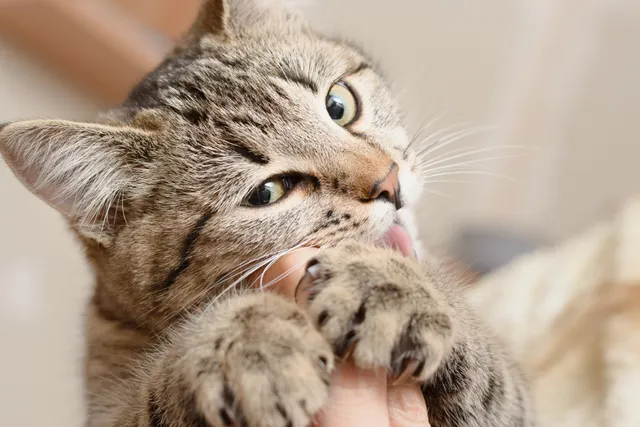
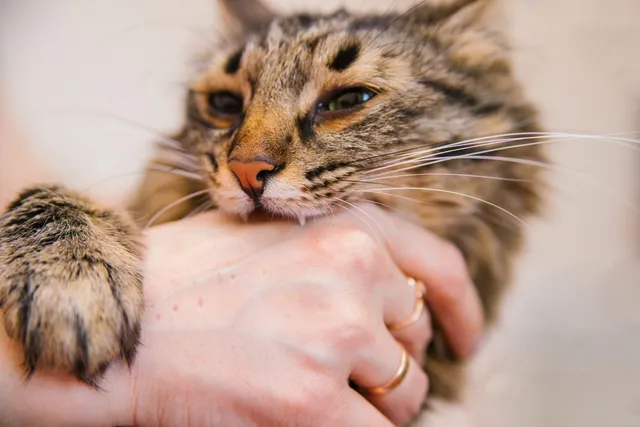
Cats have long intrigued us with strange behaviors. One of the more unusual and often perplexing behaviors that some cats exhibit is the act of biting their owner's ears. While cats are known for their enigmatic nature and instinctive habits, ear-biting can leave many wondering about the underlying reasons behind this particular behavior.
To feed your curiosity, we will look into the possible reasons that can drive a cat to nibble or bite an owner's ears! Understanding the motivations behind ear-biting not only helps foster a deeper connection between cats and their human companions but also ensures the well-being and harmony of the feline-human relationship!

Is This Considered Normal Behavior?
Ear-biting behavior in cats is not typically considered normal, everyday behavior, but it's also not inherently abnormal in all cases. The behavior can vary depending on the context, the cat's personality, and the relationship between the cat and their owner.
It's essential to evaluate the behavior in the context of the situation and your specific cat's overall health and well-being and, if necessary, seek guidance from a veterinarian or animal behaviorist to address any potential problems.

The 10 Possible Reasons Why Cats Might Bite Your Ear
1. They Are Seeking Attention
Cats are incredibly skilled at getting our attention, and ear-biting might just be one of their tricks. It can be seen as a way of saying, "Hey, I'm here, and I need some love!" Whether it's a gentle nip or a more persistent bite, this behavior can be their means of ensuring they're the center of your world.
It may become more prevalent when they feel ignored, and it's their way of pulling you back into their orbit, seeking the affection and interaction they crave. Cats can be quite vocal about their need for attention, and ear-biting might serve as a communication method for conveying it. If they've associated ear-nibbling with getting your attention, even the negative type, or receiving treats in the past, they may try this tactic to prompt you to provide them with attention.
2. Playtime!

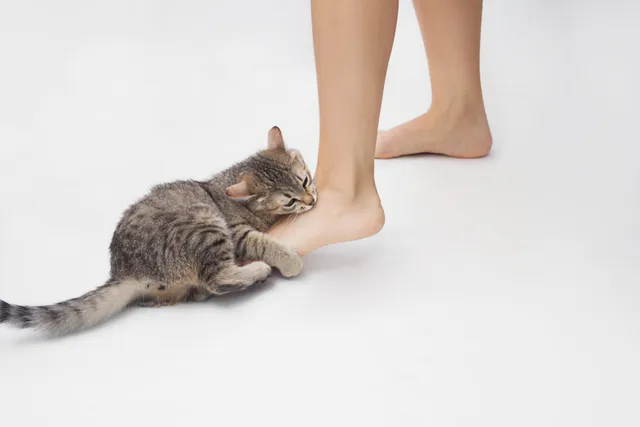
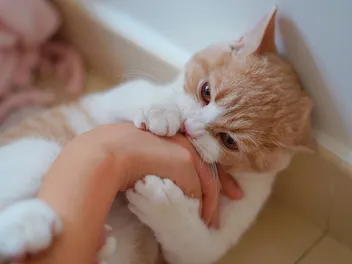
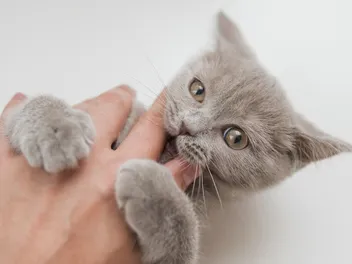
Cats are natural hunters, and their play behavior often involves stalking, pouncing, and yes, a bit of biting. Your ears can be an attractive target, especially when you're moving or fidgeting, mimicking the movement of prey. This is especially true if you’re asleep or in bed, and your cat is having a play session on top of the bed.
It's essential to distinguish between playful bites and more aggressive behavior, as understanding their play signals can help maintain a positive and enjoyable playtime experience for both you and your feline friend.
3. Show of Affection
Believe it or not, some cats exhibit their love by gently nibbling on their owner's ears. This is a sign of trust and comfort, where your cat might see you as an extension of their family. Though it may be an unusual display of affection, it's their unique way of bonding with you and showing that they feel secure in your presence.
4. They Like the Smell of Earwax

Cats have an incredibly keen sense of smell, and they're naturally drawn to scents and odors. The scent of earwax might be intriguing to them, and they may nibble your ears simply out of curiosity. It's not necessarily a sign of affection or anything deeper; it's just your cat's way of exploring the world through their sense of smell.
5. Grooming Behavior
Cats are meticulous self-groomers, and they may extend this behavior to their human companions. Biting your ears could be their way of mimicking their grooming routine or showing affection by 'grooming' you. This behavior is more common when they feel particularly comfortable and secure in your presence.
6. Overstimulation

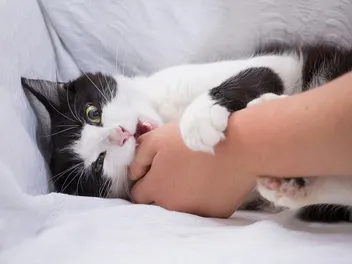
Not all cats enjoy petting or prefer to keep it short. The same goes for being picked up or carried. If your cat is trying to tell you that they’ve had enough, trying to move away, swishing their tail, or keeping their ears low, it’s time to give them some space. If you disregard these signs and continue whatever it is you’re doing despite their displeasure, the next thing may be a nibble, and if your face is close, it could certainly be your ear.
7. Establishing Social Hierarchy
Cats are territorial animals, and some may use biting as a way to establish dominance or ownership over you. This is especially common in multi-cat households, where they may be asserting their dominance over you and other cats, marking you as their territory.
8. Stress and Anxiety

Believe it or not, cats are very susceptible to stress especially when there is change in their immediate environment. Like humans, cats can sometimes act out when they're stressed, scared, or anxious. Biting, including ear-biting, can be an outlet for their anxiety, or it might be a way of expressing their discomfort or fear, especially if they’re feeling trapped.
9. They Were Separated from Their Mother Too Early
Kittens learn crucial social behaviors from their mother and siblings, including bite inhibition. If a kitten is separated from their mother too early, they may not have learned how to control their bite. Consequently, they might exhibit inappropriate biting behaviors later in life, which can include ear-nibbling, especially if they learned that human body parts, such as fingers, toes, and ears, are great for practicing biting. This is why it’s important not to teach your kitten to play with your fingers and hands, as cute as it may seem at first, it becomes a painful practice later in life.
10. Underlying Medical Issues

When a cat exhibits unusual biting behavior, especially if they seem painful or unlike themselves, it's essential to consider the possibility of underlying medical issues.
Pain or discomfort in their mouth due to dental problems, wounds, leg injuries, and various medical conditions could lead to this behavior as they attempt to alleviate their discomfort or communicate their pain. They may react similarly if you pick them up by a painful part or touch an area that hurts. If your cat's biting behavior is concerning or you think they may have an injury, it's advisable to consult a veterinarian to rule out any medical issues.

When Should I Be Concerned?
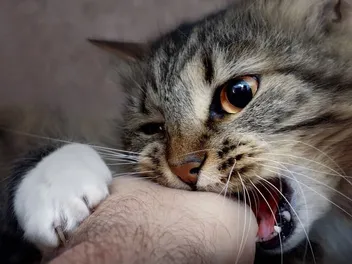
You should be concerned about your cat's ear-biting behavior when it becomes frequent, painful, sudden or aggressive, or if it's accompanied by other concerning signs. Frequent ear-biting, especially if it results in injury or pain that will require a visit to your doctor, can indicate serious underlying health issues such as stress, anxiety, pain, or various medical conditions.
If your cat becomes increasingly aggressive during ear-biting, it's important to address the behavior promptly to ensure the safety of both you and your cat. If this behavior is a new development or is accompanied by other unusual or distressing behaviors, it may indicate an underlying problem that requires attention.
When in doubt, consulting with a veterinarian or a professional animal behaviorist can help identify the cause and provide guidance on how to address the issue, ensuring the well-being of your feline companion.
Conclusion
We've explored the 10 possible reasons behind the peculiar behavior of cats biting your ear. It becomes evident that cats, much like humans, express themselves in a multitude of ways. As responsible cat parents, it’s crucial to familiarize ourselves with our cat’s unique personalities and typical behaviors.
While some gentle ear-nibbling is an endearing sign of affection or a playful gesture, it's essential not to reinforce it by giving your cat attention and to recognize when this behavior becomes excessive, painful, or aggressive, as it may signal underlying concerns such as stress, pain or health issues.
Understanding the motivations behind ear-biting further strengthens the bond between humans and their furry friends. By being attuned to the subtleties of feline communication, we can ensure a harmonious and happy coexistence with these extraordinary animals!
Sources
Featured Image Credit: lenina11only, Shutterstock
Expert cat care, straight to your inbox
News, insights, and useful advice, delivered to you.

No spam — unsubscribe anytime.
By signing up, you agree to our Terms & Conditions and Privacy & Cookies Policy.
How useful was this post?
Click a star to rate. You can leave written feedback afterwards. (We read all feedback.)
Catster is a cat magazine and cat website where cat lovers come together and get expert advice about cat behavior, cat health and cat news.