Get

In Your Inbox

Catster is reader-supported. When you buy via links on our site, we may earn an affiliate commission at no cost to you. Learn more.

Why Do Cats Bite Each Other’s Necks? The Interesting Reasons

Share

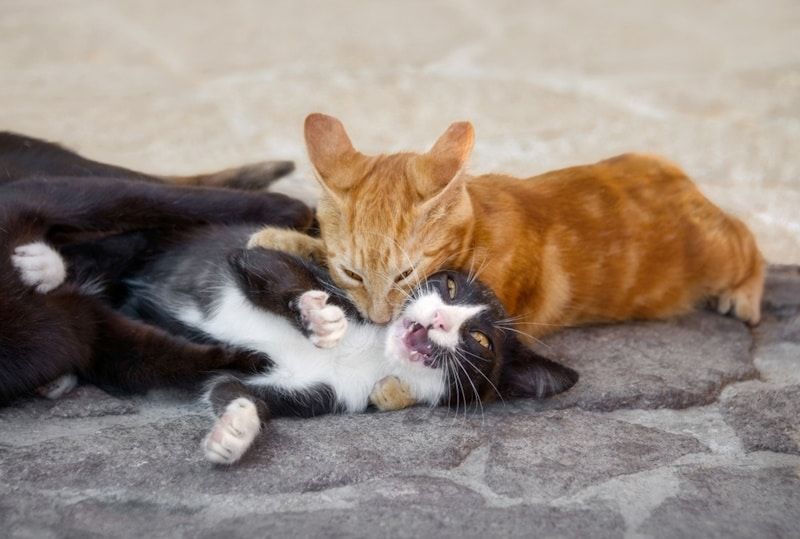
Orange cat biting black cat on the neck

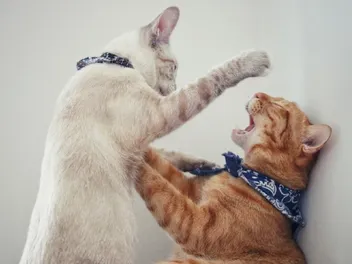
If you have more than one cat, you may have noticed that cats have a tendency to bite each other on the neck. Sometimes these bites are on the scruff of the neck, while other times they happen in the throat area. There are actually a few reasons that your cats might be biting each other on the neck, so let’s jump into a few of the reasons for this feline behavior.

divider 3 paws

The 5 Reasons Why Cats Bite Each Other’s Necks

1. Social Assertion & Territoriality

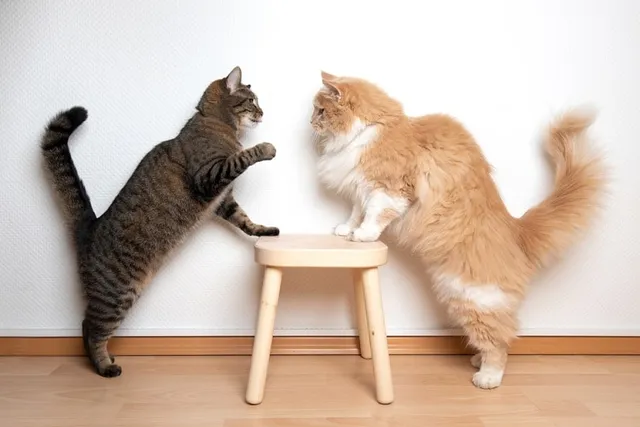
In nature, cats are usually solitary animals, but domestic cats living in households might compete for territory or resources in the home if there are multiple cats. When first establishing territories and the structures of their social relationship1, aggression including hissing, chasing, swatting, and biting is often seen. Biting other cats, particularly on the back of the neck, is part of this social assertion. After the relationship is solidified, noticeable aggression is rare, provided the environment remains stable and there are no physical disruptions. Occasionally, a cat might bite the other cat’s neck without breaking its skin as a reminder of their place in this territory and to reassert the nature of their social structure.

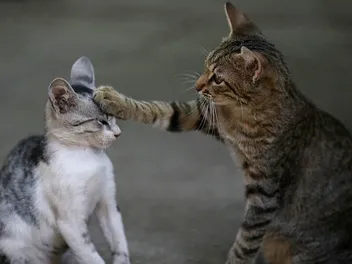
Black and white cat playing with orange cat
Image Credit: Magui RF, Shutterstock

2. Mating

If you’ve ever seen cats mating, then you know that it’s not something that appears gentle. Part of the mating ritual involves the male cat biting the female cat on the back of the neck. It’s likely that this is done to show dominance and to help keep the female in place. This biting is usually not done aggressively enough to break the skin.


3. Play

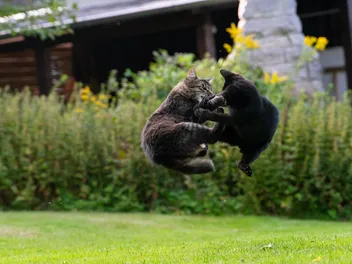
Some cats love to roughhouse, and biting and scratching are simply part of the game. You may see one of your cats pounce on the other’s back and bite them on the back of the neck, but during play, cats are more likely to bite the front part of the neck.

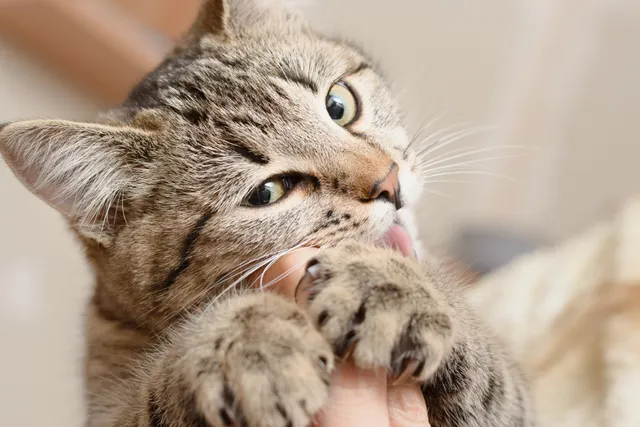
For kittens, playing is a form of practicing their hunting skills, and adult cats bite their prey on the throat to kill them. If done during play, this biting should not hurt the cat that is being bitten and shouldn’t break the skin, although an over-exuberant cat may unintentionally bite the other cat too hard.

Russian blue cat biting a calico cat on the back
Image Credit: Isabel Eve, Shutterstock

4. Aggression

Biting the neck as a form of aggression is a step above using biting to assert a social relationship. If a cat is showing aggression, they are unlikely to only bite the neck, and there is a good chance that they’ll break the skin with both teeth and claws. If your cats are being rough with each other and either of them is hissing, yowling, or showing signs of fear, then it’s time to break things up so everyone can cool off.


5. Maternal Care

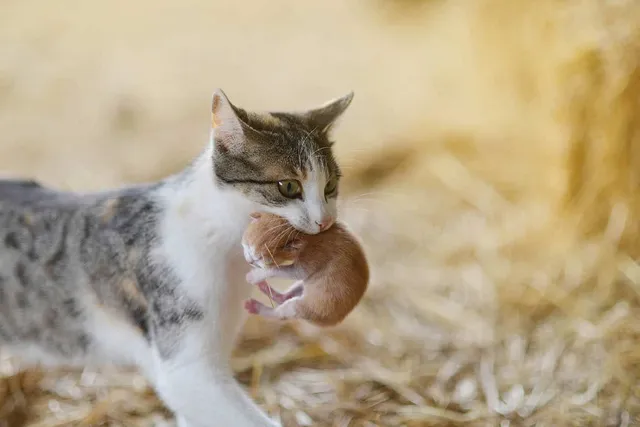
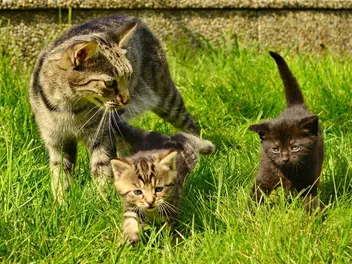
Mother cats bite the backs of their kittens’ necks to carry them, and you may also spot a queen biting the back of the neck of a kitten that isn’t cooperating for a grooming session or is simply misbehaving. This is one of the ways a mother will discipline the kittens and teach them how to survive, and how to behave. This type of biting is typically gentle so as not to hurt or injure the kitten, more like a warning, placing a limit, or telling.

divider 3 paws

In Conclusion

Cats naturally bite each other on the neck for multiple reasons, and this is a natural behavior. It’s important for you to keep an eye on your cats if you see biting occurring, though. Sometimes, games can get out of hand and turn aggressive. In some cases, you may need to help your cats as they establish their social relationships and territoriality if there’s a new cat in the home. This establishment of relationships can take time and should be monitored closely to make sure your cats aren’t hurting each other.


Featured Image Credit: Katho Menden, Shutterstock

Want content like this delivered to you?

Sign Up For Our Newsletter

News, insights, expert advice, and everything cat

* By submitting, you agree to our Terms & Conditions and Privacy & Cookies Policy.


How useful was this post?

Click on a star to rate (you can leave written feedback after clicking submit)

Help us improve Catster for pet parents!

Your feedback really matters.

What did you like about this post? Also how can we improve it?

Join the conversation

6 Responses

  1. Hi, my name is Theresa. I have rescued a kitten. It has been a little over a year now. She just got fixed, but I do have an older female cat that is fixed in an older male cat that is fixed when I brought new cat in her name is Hope she is constantly biting on their neck and the two older ones cry out because she’s hurting them. What can I do to stop her from doing this

    1. Hi Teresa, thank you for reading us. For a personalized behavior consultation for your cats, we recommend you book a video call with one of our vets at www.pangovet.com

  2. Thank you for the advice. I do intervene often because she sticks to me, her safety zone, and I am retired. The older cat is improving, but I am also increasing the loudnes of voice, and I am chasing him with spray every time he tries. She is also doing her part. She screeches when he gets near. It's difficult because sometimes they do get along. Anyway, I have devised a few hidey-holes where she can go, and he won't fit. It's sad because they are both very affectionate cats. It is getting better.

    1. Hey Carol! Thanks for sharing the update. Great idea about the narrow entrance hideaway spaces, surely she will feel better having some safe spaces and having a chance to heal now.

  3. I have a male cat who is neutered but bites my neutered little female cat constantly on the neck. She now has a scab that he is breaking open. I yell, spray him, etc. He knows better but won't stop. What can I do? This started after my husband died, and the older, larger cat started being jealous.

    1. Hi Carol. We are sorry to hear about your husband's passing and also to hear bout your struggles with your cat’s behavior. This sounds like something habitual, so for now, your best bet is to separate the cats so she gets time to heal. Also, keep a close eye on the wound; bites can easily get infected. In the wild, she would be able to run away but in your home, that is not possible, and given the size difference, it is your responsibility to intervene. After some time apart, you can try to socialize with them. Please don’t hesitate to contact www.pangovet.com for tips on how to socialize your cats. We hope this helps!

Leave a Reply

You’re very welcome to leave a comment or question. Please know that all comments must meet our community guidelines, and your email address will NOT be published. Let’s have a positive and constructive conversation.


Catster's Digital Magazine is Back!

Vet-approved health & behavior advice

Real cat stories & community features

Weird Cat Behaviors That Actually Make Perfect Sense

We have been sharing our lives with cats for thousands of years, yet we still find ourselves genuinely stumped by what they get...

The Dream of Talking to Cats Just Got Closer to Becoming a Reality

If you’ve ever wished your cat could simply tell you what they wanted, you’re not alone. From the meow that wakes you before...

Kizzy: The Feline Princess With a Purpose

We were first introduced to Miss Kizzy after she won a licky-treat challenge hosted by Professor Fluffovich, our resident feline research specialist. While...

Chatting With Sally About Mission Meow & Helping Cat Rescue Organizations Collaborate | Chatty Cattys, Episode 24

In this episode of Catster’s podcast, Chatty Cattys, Nicole and Dr. Karyn sit down with Sally Williams, the founder of Mission Meow, for...

More related

16 Vet-Verified Tips for Moving House With a Cat

Moving to a new house can be a hugely daunting undertaking. It is usually associated with several other big life changes, such as...

Hyperthyroidism in Cats: Our Vet Explains the Causes, Signs & Treatments

Hyperthyroidism is a very common condition seen in cats, and in this condition, the thyroid becomes overactive. One or both of the thyroid...

7 Skinny Cat Breeds: Top Choices for Your Home (With Info & Pictures)

All cat breeds have their own unique shape. Some are bulkier and naturally more muscular, like the Maine Coon, while others are smaller...

Zazzles and Her Multiple Personalities

Hi, I’m Dr. Karyn! Read my introduction to learn more about me and meet my five hilarious cats: Clutch, Cyril, Alex, Zelda, and...

Keep reading

Neakasa AirStep Odor-Eliminating Cat Litter Box Step Review 2026: Our Expert’s Opinion

For most cat owners, the battle against litter box odors is an endless one. It doesn’t seem to matter how good your litter is at absorbing odors, how often you scoop, or how much you spend on the newest automatic...

Neakasa AirStep Odor-Eliminating Cat Litter Box Step Review 5

Can Cats Eat Pansies? Vet-Reviewed Facts & FAQ

Pansies are a staple for anyone who appreciates a splash of color in their garden. These colorful, diverse, easy-to-grow plants are certainly popular with those who love gardening, but what if your cat also develops a liking for them or...

Can Cats Eat Pansies

Can Cats Eat Garlic? Vet-Reviewed Risks & FAQ

Few foods are as popular and as potent as garlic. We use garlic to imbue its delicious, savory flavor into our foods, and millions love the bulbous, flowering plant. However, if you’re a cat owner, you might wonder if your...

Can Cats Eat Garlic

Is Gladiolus Poisonous to Cats? Vet Reviewed Advice

Also known as the “sword lily”, gladiolus is a popular garden flowering plant, though it can adapt to life as a houseplant. If you’re a fan of these elegant, colorful iris family members and are also a cat parent, we...

Catster_Is Gladiolus Poisonous to Cats

Why Does My Cat Act Like a Dog? Vet-Verified Behavior Explained

Many cat parents describe their companions as having dog-like qualities. It’s a way of saying that cats are loving, loyal, devoted, and interested in interacting with people. There are a few activities dog-like cats engage in, including talking to their...

calico-cat-welcome-his-owner

Sudden Death in Cats: 10 Vet-Verified Causes

Sudden death in cats is a tragic event that often occurs without any warning. There are many possible causes of sudden death in cats, although some preventative steps can be taken to help avert this tragedy. One of the most...

sick siberian cat

How to Tell if a Mother Cat Has Abandoned Her Kittens: Vet-Reviewed Facts & FAQ

Although it doesn’t happen too often, after giving birth, a mother cat may refuse to care for a particular kitten in her litter, whether it’s because she thinks they’re sick or weak or due to another reason. She may even...

abandoned newborn kittens

Caring for Pets While Serving in the Military: 10 Vet-Approved Tips

The pet owners among the 2.13 million active military personnel all face the same problem when they serve: how to care for their animal companions1. These individuals are heroes worthy of our thanks and praise, and we understand how gut-wrenching...

ginger cat looking at the window

Love Cats? So Do We! Join the Catster Community

Stay informed with expert pet care insights delivered straight to your inbox! Discover professional guidance on animal behavior, feeding tips, trusted product picks, and much more.


Sign up for the Catster Email Newsletter

Stay informed with expert pet care insights delivered straight to your inbox! Discover professional guidance on animal behavior, feeding tips, trusted product picks, and much more.