How Do Cats Fall Asleep So Fast? Vet-Reviewed Feline Sleep Cycle


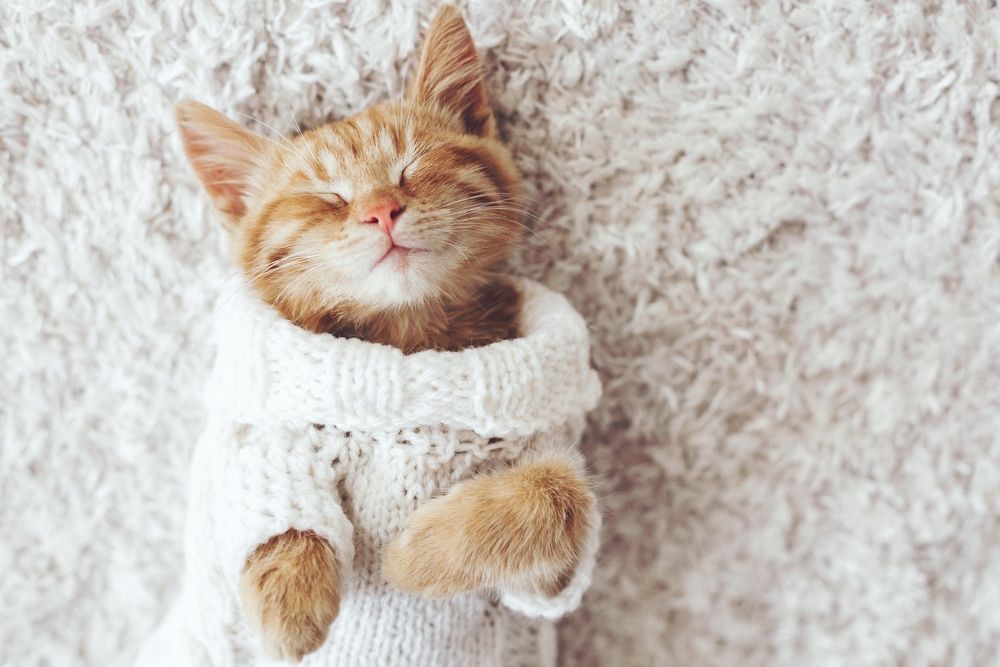
So, we’ve probably all used the term "catnap" to describe a short stretch of sleep that we take during the day. Perhaps it's because cats are perceived as lazy, but anyone who lives with a cat knows that this is hardly the truth! While cats do sleep quite a bit, they are also full of energy and constantly entertain us with their playful antics or exploration of their environment.
Partly how cats fuel that energy and keep themselves physically and mentally healthy is by getting plenty of sleep. One of the most distinguishing things about feline slumber is how quickly they manage to fall asleep! Cats can do this because they are drifting in and out of "slow-wave" sleep.
This article explains how cats fall asleep so fast and why they sleep as much as they do.

How Do Cats Fall Asleep So Quickly?
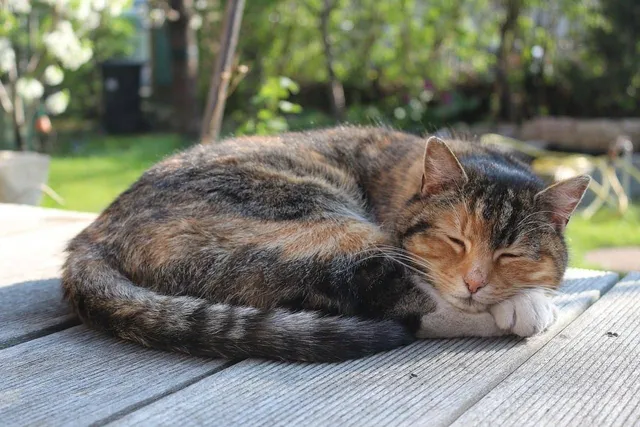
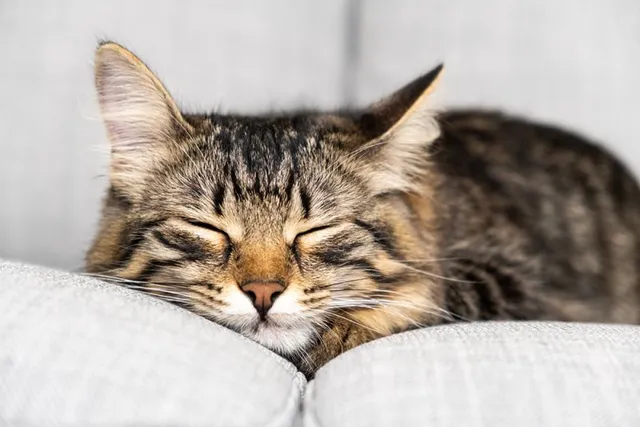
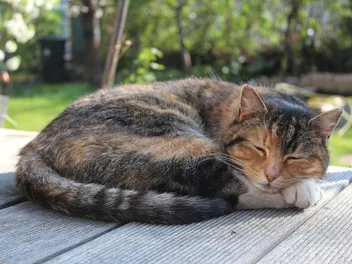
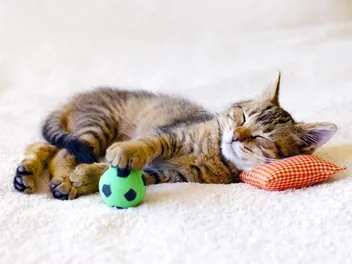
Of the many awesome things to appreciate about cats, their ability to fall asleep very quickly is one that often surprises their humans. One minute, they’re active and alert—chasing a favorite toy around the kitchen or rough-housing with other pets in the house. Then, seemingly out of nowhere, their eyes begin to droop, and they may start purring or kneading their favorite pillow or blanket. Soon, they begin settling down to sleep.
Mainly, cats fall asleep so quickly because they spend a large chunk of their day (12–18 hours for most cats) drifting in and out of various stages of sleep. This kind of extended sleep cycle with periods of wakefulness is called a polyphasic sleep cycle, meaning they fall asleep multiple times during 24 hours, unlike humans.

Sleep Stages in Cats
Four stages of sleep have been identified in cats: awake (including drowsiness), REM sleep, and two stages of slow wave sleep called light and deep slow-wave sleep.1 Although we know and understand much less about cats’ sleep stages than we do for humans, there is still available research that looked into cats and their sleeping patterns and dreams over the last few decades. Let’s get into a bit more detail.
Slow-Wave Sleep
Cats experience what is known as non-rapid eye movement (NREM) or slow-wave sleep, which is characterized by slow, synchronized brain waves. Cats go into slow-wave sleep quickly and easily. This type of sleep is important in humans for physical restoration and growth, and it is also thought to be important for memory consolidation and learning.2
In cats, the slow-wave sleep is further divided into light and deep sleep. Although there is some difference between the studies, it is believed that cats spend around 75% of their total sleep in the slow-wave sleep, with REM sleep making up around 25%. Out of the 75% of total slow-wave sleep, around 30% of it is light slow-wave sleep, while 45% is deep sleep.
In the slow-wave sleep stage, both light and deep, cats spend roughly less than 10 minutes altogether. They will go between various sleep stages several dozen times during one single sleep cycle, and they may not always progress to the REM phase.

Rapid Eye Movement (REM) Sleep
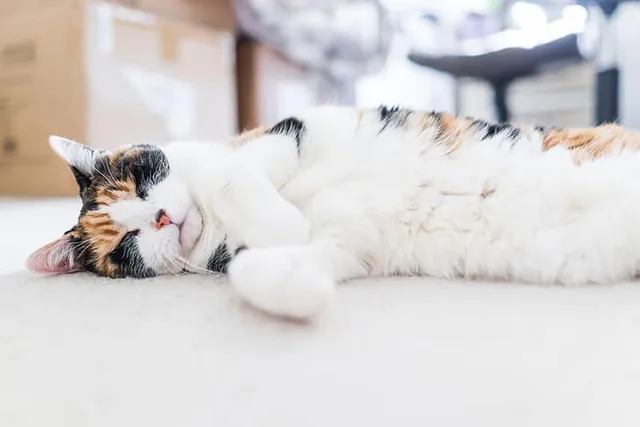
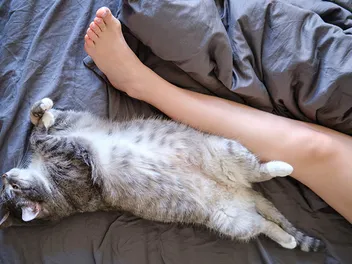
In contrast, during REM sleep, cats experience bursts of rapid eye movements, muscle paralysis, and a more active brain. REM in both cats and humans indicates brain activity, particularly dreaming. This type of sleep is thought to be important for emotional regulation and processing, as well as to improve cognitive function. You might notice your cat’s muscles, face, tail, and paws frequently twitching during this phase; this is because their brain is almost as active as when they’re awake.
Non-REM Sleep
In the non-REM stage (NREM) of sleep, cats are unlikely to move much and are tuned out to what is going on in the world around them. This is the deepest form of sleep and is crucial for maintaining a cat’s health. During NREM sleep, cats rebuild and repair their bodies.
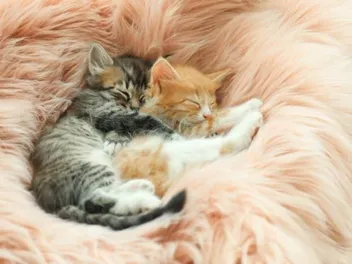
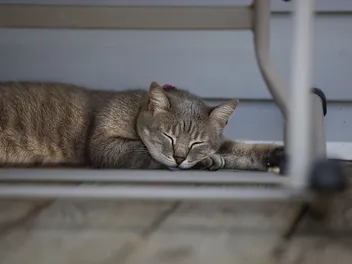
Cats in NREM will tuck themselves away to sleep, as they are at their most vulnerable and their instincts tell them to self-protect in this time. If you find your cat under your bed, in a closet, burrowed under blankets, or in whatever they consider their safest and coziest space, they are likely in NREM sleep. Kittens need more NREM rest than adult cats, as they build, strengthen, and revitalize their immune systems during this time.
Instinct and Wild Biology
Finally, cats’ brains are naturally wired to be able to fall asleep quickly. Their wild ancestors needed to be able to rest quickly so they would be ready to respond to any threats, predators, or opportunities for food. This instinct has been passed down through generations, allowing cats to still fall asleep quickly even as domesticated animals.
Our Favorite Cat Bed

- COMFY KITTY - Your cat or kitten will have an amazingly deep sleep in this self warming, nesting cat bed. The warm, fluffy cat bed lining provides calming stress relief for cats of all ages.
- PRETTY HOME - This round cat bed has a modern and unique design that’s perfect for a sleek indoor look. We don’t think of it as cat furniture but think of the Cat Nest as a “cat home”.
- SPACE SAVER - Reclaim your desk, window sill, or couch from kitten encroachment. This calming nest cat bed has an elevated, space-saving hideout so comfortable your kitty can't resist!
Cats sleep away the majority of the day, so finding a bed that's supportive, warm, and secure is key. Most cats find the modern design of the Hepper Nest Bed irresistible, making it a practical option if you're looking for a rest spot your cat will use consistently. It's supportive and caters to felines of all ages, sizes, and ailments. The portability means that your cat can nap wherever you go — your desk, couch, side table, or even your bed. Learn more about the heavenly Nest here.
At Catster, we’ve admired Hepper for many years and decided to take a controlling ownership interest so that we could benefit from the outstanding designs of this cool cat company!

Why Do Cats Sleep So Much?
Energy Conservation
Cats are known for their ability to conserve energy, and sleeping is one way they do this. By sleeping frequently throughout the day rather than a single longer session, they are able to conserve their energy for when they need it. Domestic cats share this aspect of their nature with their wild ancestors.
Crepuscular Natures
Cats are crepuscular animals, which means that they are most active during the dawn (between 5 a.m. and 8 a.m.) and dusk (between 6 p.m. and 9 p.m.) hours. They have a natural drive to hunt during these times, as their prey is also out looking for food during these hours.
A cat’s predators may also be out and about, so it is important that cats have enough energy to keep themselves safe. Cats are also known to be active during other times of the day and night, particularly if they are feeling well rested or if their owner has established a feeding schedule that requires them to be active at certain times. Cats that are bored or not exercised sufficiently, particularly kittens and young adults, may be more active during the night and require an adequate amount of mental stimulation, environmental enrichment, and physical activity in order to use up their energy.

Keeping Cool
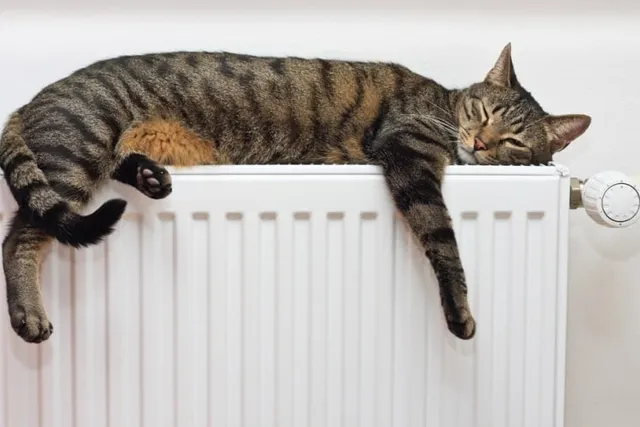
In warmer parts of the world and throughout the extremely hot summer months, some may sleep more often to conserve energy during the hottest part of the day. When the sun is blazing down, cats can spend most of the day snoozing, and you may even find them in the sun and taking in the warmth. It’s important to provide them with shade and fresh water at all times, and if your cat has a white coat, speak to your vet about a pet safe sunscreen to use on the edges of their ears, as cats can get sunburn too. Try and keep your cat indoors during the hottest part of the day.
If a cat is trapped or left in a hot car or enclosed space without adequate ventilation or AC, heatstroke may occur rapidly. This can escalate quickly and even cause death if left untreated. Keep an eye out for these signs of heat-related illness and seek immediate veterinary help if you notice them:
- Lethargy
- Breathing difficulties
- Open mouth breathing
- Drooling
- Redness of the tongue and mouth
- Stumbling or dizziness
- Vomiting
- Seizures
- Unconsciousness
- Restlessness

Conclusion
Anyone who lives with a cat may wonder how they can possibly need to sleep as much as they do. Among the many unique aspects of their feline nature is a polyphasic sleep cycle that has developed into a process that allows cats to stay healthy and conserve energy.
Cats appear to fall asleep very quickly but are actually spending time in a somewhat light stage of sleep that prepares them for deeper sleep that follows. All their stages of sleep work together to keep your kitty in good spirits and good health.
See also:
Sources
Featured Image Credit: Alena Ozerova, Shutterstock
Expert cat care, straight to your inbox
News, insights, and useful advice, delivered to you.

No spam — unsubscribe anytime.
By signing up, you agree to our Terms & Conditions and Privacy & Cookies Policy.
How useful was this post?
Click a star to rate. You can leave written feedback afterwards. (We read all feedback.)
Christian started writing for a local newspaper as a teenager, and he's been involved in the publishing industry for most of his adult life. Combining his love of writing with a passion for animals, he is currently the Director of Editorial at Pangolia and the Editor-in-Chief at Catster.
Christian lives in the Philippines with his wife, son, and four rescue cats: Trixie, Chloe, Sparky, and Chopper.