Ask Dr. Paola – Epilepsy, Skittish Rescues & Shivering (June 9, 2025)

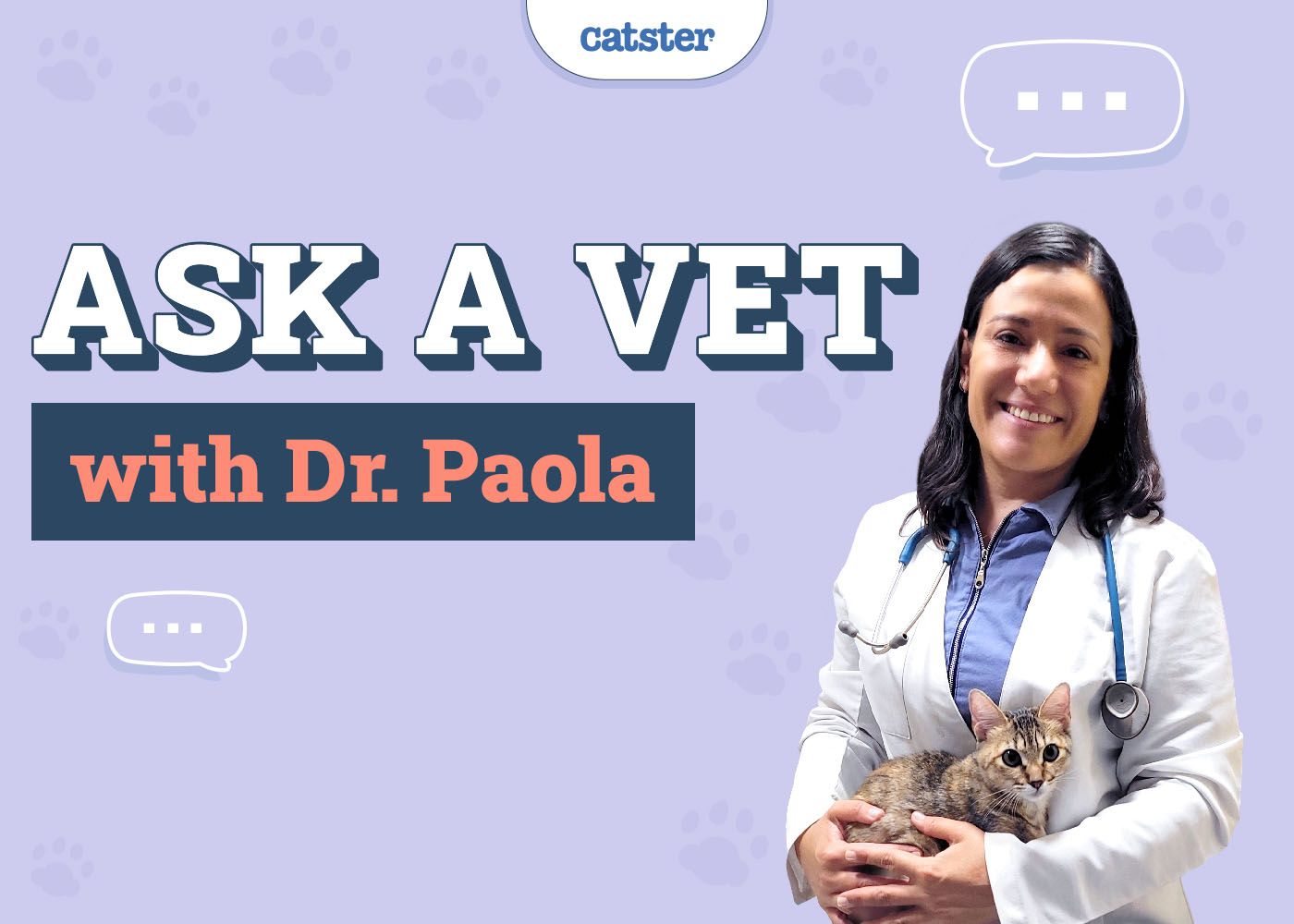
Welcome to our "Ask Dr. Paola" series, where every Monday we bring expert advice straight from Dr. Paola Cuevas (MVZ) to help our readers better understand their cat's health and well-being.
Whether you're a new pet parent or a seasoned cat lover, Dr. Paola is here to provide answers to your most pressing questions. From nutrition tips and preventive care to troubleshooting common behavioral issues, Dr. Paola is ready to offer insights that will keep your kitty happy, healthy, and feline fine. Stay tuned for expert guidance on a range of topics that matter most to you and your cat, so you can make informed decisions and provide the best possible care for your furry companion.
Have a question? Send it in here!

Help! My Cat is Shivering!
“Hello Dr. Paola, Why does my cat, Rayne, shiver or quiver when he’s relaxed and purring, sometimes even before he falls asleep, while lying next to me? What concerns me is that it’s more of a shivering or quivering, like from a fever or chills. He’s been checked by a vet, yet no one can explain this behavior. He’s not ill at this time, but has done this since I’ve had him. He’ll be 5 in August, and I got him at 8 months. My previous Abyssinian also did this shiver and quiver. I think my cat does suffer from anxiety. I know when he walks down the hallway, he rubs his mouth against the wall or objects every couple of feet, and I did read once that that was a way of securing his circle of security, so that doesn’t bother me. Once he is sound asleep, he doesn’t do it, but sometimes when he’s in a deep sleep, he’ll jerk up really fast up in the air. I know, as humans, we do that too. I appreciate any help that you might be able to give. Thank you. "- Charmaine
Hi Charmaine,
Thanks for your question. The shivering or quivering you describe while he's relaxed and purring may seem concerning at first, especially when you feel it resembles chills. However, given that he's otherwise healthy and has had veterinary check-ups without any red flags, it’s quite possible this is part of his unique relaxation pattern. Some cats, especially those with a bit of anxiety or heightened awareness, may exhibit muscle tremors as they begin to unwind. These small tremors can be part of the nervous system's way of releasing tension, much like a person sighing deeply before falling asleep.
It’s also quite interesting that your previous Abyssinian did the same thing. That might suggest a breed-linked personality trait, as Abyssinians are known for their alert nature. The sudden jerking awake you mentioned sounds very much like a hypnic jerk, which is a common sleep phenomenon in both humans and animals.
You’re absolutely right about the wall rubbing behavior being a self-soothing mechanism. Facial pheromones in cats are natural chemical signals released from glands located around their cheeks, forehead, and chin. When a cat rubs its face against furniture, walls, or even you, it’s depositing these comforting pheromones to mark the area as familiar and safe. This behavior is not only about claiming territory, but also about creating a scent-based map that helps reduce stress and increase their sense of security. It’s a bit like hanging family photos on the wall to make a space feel more like home. For anxious or sensitive cats, facial rubbing can be an important self-soothing tool, and synthetic versions of these pheromones, such as those found in feline diffusers or sprays, can help cats feel calmer in their environment.
You're clearly doing a great job being attentive to his needs, and Rayne is lucky to have you. Unless Rayne is showing other concerning signs, such as disorientation, vocalizing in distress, or changes in gait, this is usually nothing to worry about. Because you’ve noticed signs of anxiety, I’d encourage you to continue creating a calm and enriched environment for him, incorporating daily interactive play and predictable routines. If questions ever arise and you're not seeing anything that clearly needs hands-on care, an online veterinary service, such as PangoVet can be a helpful option to talk things through. You're clearly tuned in to what makes Rayne feel safe, and that in itself is powerful support for his well-being.
- Dr. Paola

Help! My Cat Has Epilepsy!
"Hi Dr. Paola,
I found out about a month ago that my 7-year-old cat, Georgia, has epilepsy. The vet has her on a quarter of a phenobarbital pill. Vet started her on half a pill, but she wasn't eating very much and using her litterbox very much. It's hard to get her to take her medicine once daily. It takes both my fiancé and me to give her a quarter of the half pill. She was also diagnosed with chronic cystitis when she was two years old. She's been on Science Diet wet stew food since then. She also doesn't drink water, no matter what I do. Any suggestions on how to give her the pill? Plus, she's also declawed." - Debra
Hi Debra,
Thank you for sharing Georgia’s story. Managing feline epilepsy is already complex, and when combined with her history of chronic cystitis and the challenges of being declawed, it’s understandable that administering her medication has become such a struggle.
Declawed cats, like Georgia, often experience long-term discomfort or sensitivity in their paws, even years after the procedure. This can make them especially reactive when handled or restrained, as their sense of security is compromised. Without their claws, they also lose a key way to defend themselves, so even gentle restraint can feel threatening to them. This added layer of stress may be contributing to her resistance when it’s time to take her phenobarbital. I’d suggest speaking to your vet about a compounded liquid version of the medication or chewable treats formulated with her exact dose. These alternative forms can even be chicken- or fish-flavored and feel more like a treat, dramatically reducing the handling stress, and may help rebuild a sense of safety around medication time.
Her chronic cystitis and refusal to drink water are also closely tied to stress. In declawed cats, lower urinary tract issues like FLUTD and FIC can be exacerbated by ongoing pain or anxiety. You’re absolutely right to keep her on wet food, and it’s great that you’re thinking creatively. Adding a bit of warm water or low-sodium, pet-safe broth to her meals can increase her fluid intake without relying on drinking behavior. Some cats prefer moving water, so a small cat water fountain placed in a quiet area might help, though I understand she hasn't been drinking much despite your efforts. Cats with a history of urinary issues often benefit from environmental enrichment, too, as stress can be a major trigger. Keeping her routine predictable, offering vertical spaces, and using synthetic feline pheromone diffusers can support her bladder health. I hope this helps!
- Dr. Paola

Help! My Rescue Cat is Skittish Around Me!
“Hi Dr. Paola,
I rescued my cat Midnight from an abusive home. I wonder why she is so skittish with me? I'm protecting her, and I let her do anything she wants because I love all my animals. How do I pick her up and put her in the carrier to take her to the vet? Also, she hurt herself, and she's limping and has her little paw up when she walks. I have to wait one more week before I can take her to see a vet in person because that's when I get paid next, so I’m wondering what I can do in the meantime? Every time I see my baby girl in pain, it makes me cry! " – Judy
Hi Judy,
First of all, thank you from the bottom of my heart for rescuing Midnight and giving her a loving, safe home. What you’re doing for her truly matters. Cats that come from abusive situations can take a long time to trust, even when they're surrounded by kindness. It sounds like Midnight is still working through her fears, and what you’re seeing as her being “Scottish” might be her way of staying a little distant or cautious until she feels completely secure. Check this post about Rescue Cat behavior, so you can see that you are not alone.
Sadly, her past taught her that humans can’t always be trusted. The good news is that with patience and kindness, trust can bloom even in the most wounded hearts.
For her limp, I understand it’s heartbreaking to see, especially when you feel helpless. Since she’s holding her paw up, that does suggest she’s in pain, and while I understand you can’t get her to the vet just yet, you can try to make her as comfortable as possible. Encourage rest by keeping her in a quiet room, ideally without high places to jump. Avoid touching or manipulating the injured leg, and don’t give human pain medications, as many of these are toxic to cats. If she lets you, gently check if the paw looks swollen, has a wound, or feels unusually warm. But if she seems uncomfortable or stressed with handling, it’s best not to push it. If you feel unsure and need support to better assess the urgency, a quick and affordable call with one of our own online veterinarians at Pangovet can help you evaluate the situation and guide you through the next best steps, especially if the signs get worse before your appointment.
When it comes to picking her up and putting her in a carrier, the key is to help her feel safe rather than restrained. If she’s not used to being handled, try to make the carrier a cozy space by leaving it out, open, and lined with a soft towel that smells like home. You can even place some treats or catnip inside, letting her go in at her own pace. If you do need to gently place her in, use a towel to swaddle her like a soft kitty burrito, which can help prevent struggling and keep her calm. Always speak to her in a gentle, reassuring voice.
You're doing your best, Judy, and Midnight is still just learning what is to be protected and loved. The healing path can be slow, but don’t give up.
Dr. Paola
This article is a part of our weekly Ask Dr. Paola series
Expert cat care, straight to your inbox
News, insights, and useful advice, delivered to you.

No spam — unsubscribe anytime.
By signing up, you agree to our Terms & Conditions and Privacy & Cookies Policy.
How useful was this post?
Click a star to rate. You can leave written feedback afterwards. (We read all feedback.)
Dr. Paola Cuevas MVZ (Veterinarian)
Dr. Paola Cuevas is the Senior In-House Veterinarian at Pangolia, the parent company of Catster. She has over 18 years of experience as a veterinarian and animal behaviorist. Paola's focus is on preventive medicine and animal welfare. Paola has a large range of skills in from diagnostic imaging to nutrition and clinical pathology. Paola enjoys sharing her extensive knowledge of animal training with our Catster readers and is always happy to answer reader questions as our in-house veterinarian.