Can Cats Eat Crickets? Vet Approved Health Facts & Precautions


In this article
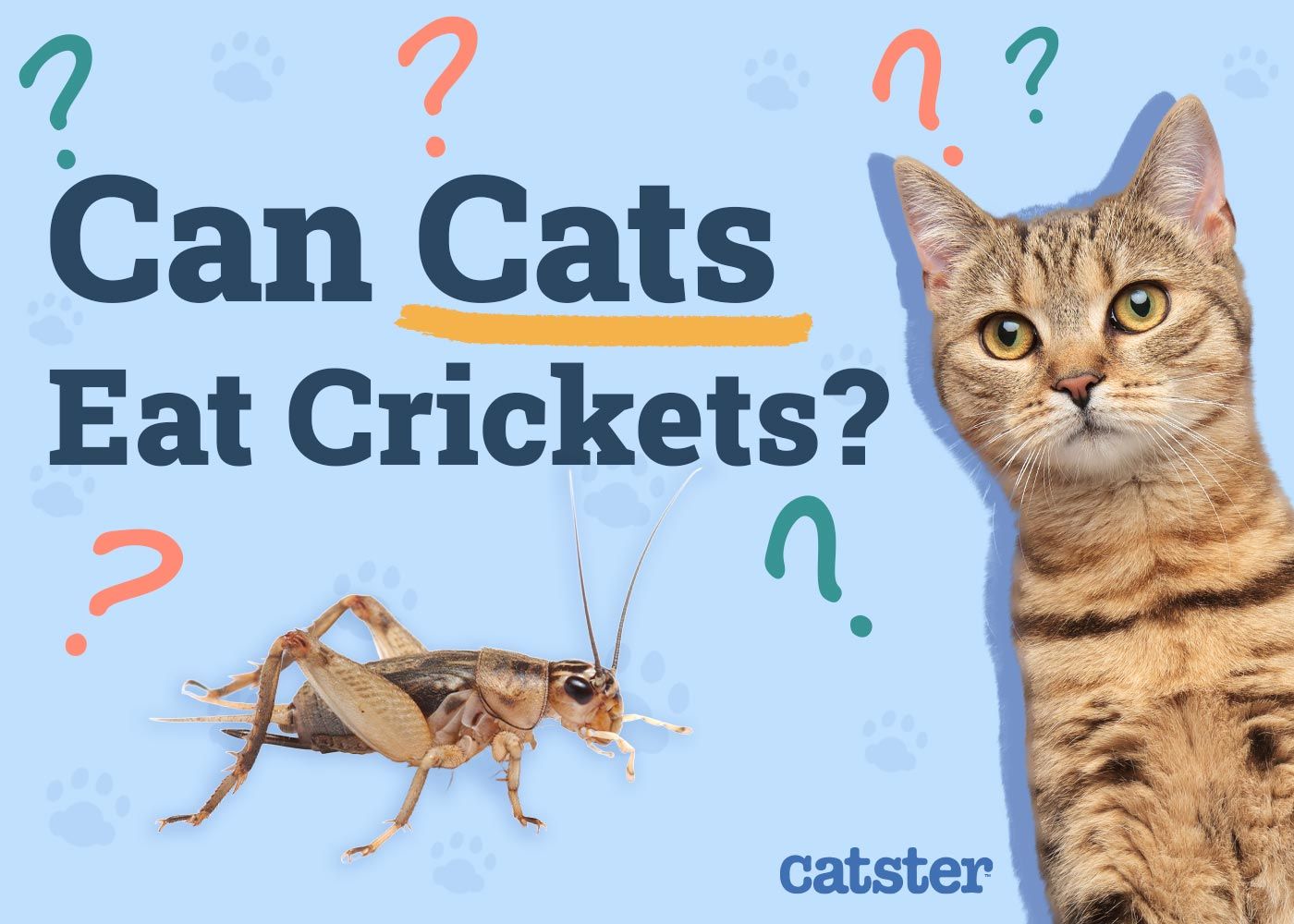
We all know that our cats are carnivorous beasts hidden in cute bodies. Cats are obligate carnivores, which means the majority of their dietary requirements come from animal flesh. When most people think of animal flesh, they often think of mammals and birds. But the animal kingdom also includes insects. Can our carnivorous felines eat bugs, such as the common cricket?
Cats can safely eat crickets in small amounts. They are non-toxic and have some nutritional benefits. However, there are risks in cats consuming crickets in large quantities, such as getting bites, stomach upset, insecticides, and parasites.

Are Crickets Safe for Cats to Eat?
Overall, crickets are safe for cats to eat. They won’t pose any immediate risk to your cat when consumed since they are non-toxic and non-venomous. The occasional cricket won’t harm your cat. Still, if your cat ingests several crickets or eats them often, there are some risks to consider.

Bites
There are several cricket species across the world. Many of the common species have jaws adapted for biting. Crickets do not bite animals or humans unprovoked; the behavior is purely a defense mechanism, not a form of feeding. Small, common crickets will usually cause little damage to the proportionally large domestic cat.
Their tiny bodies and jaws can't get through a cat's dense fur and thick skin. However, if faced with the soft skin of a cat's lips or mouth, a bite can pierce that skin. A minor bite will often cause minimal harm but may produce a small patch of irritation that becomes sore and itchy. On infrequent occasions, a cat may have an allergic reaction, and you may see an inflammatory response. In that case, you should contact your vet.
Hard to Digest
Insects like crickets have fundamentally different anatomy than the natural fleshy diet of a cat. Instead of an internal skeleton, like mammals, they have an exoskeleton that provides support and protection. A cricket's exoskeleton consists of a large amount of chitin.
The stomach acids of a cat may have a more challenging time breaking down the bond of chitin. Undigested pieces of a cricket exoskeleton can irritate the digestive tract, which can cause gastrointestinal issues.
In extreme cases where a cat consumes several crickets, an intestinal blockage can occur due to undigested chitin. However, the cat would need to eat a lot of crickets for this to be a risk.
Insecticides
Another risk of your cat consuming bugs like crickets is the chemicals present in their bodies. Suppose you or your neighbors use insecticides in and around the home. In that case, local bug populations could have accumulated the chemicals.
Considering your cat is much larger than a cricket, your cat’s immune system will be able to deal with minor amounts of chemicals. Again, this is only a risk if your cats eat bucket-loads of crickets.

Parasites
Crickets and other bugs can transfer parasitic larvae between animals. Crickets can ingest parasites from their food sources, and your cat can consume the larvae if they snack on a cricket.
There are several ways your cat can pick up parasites. It can be almost impossible to keep them parasite-free, but you can regularly treat your cat for parasites as directed by your vet.
Health Benefits of Crickets
Nutritionally speaking, crickets contain several nutrients. Crickets are dense in protein and high in healthy fats, and the chitin in the exoskeleton is high in fiber, which is a great boost for a healthy gut.
Crickets also contain taurine, an essential amino acid that cats can only get from animal-based proteins. Cats need large amounts of taurine, which is vital for their growth and development. It is also used in many other essential body functions such as heart function, digestion, and vision.
Crickets can be incredibly healthy if prepared correctly for the species. Cricket as a food source is emerging for human nutrition. It is particularly gaining popularity for its lesser environmental impact.
Cricket Cat Food
Crickets can be a dietary source of protein for cats as part of a balanced diet, and cricket-based cat foods are currently being researched and developed. Crickets processed in this form are much less risky than consuming live or whole crickets.
Suppose you want to include crickets in your cat's diet. In that case, you should do so in an approved way using safely produced products and under the guidance of a vet professional. You can also experiment with a range of cricket-based pet treats.
Why Do Cats Like Crickets?
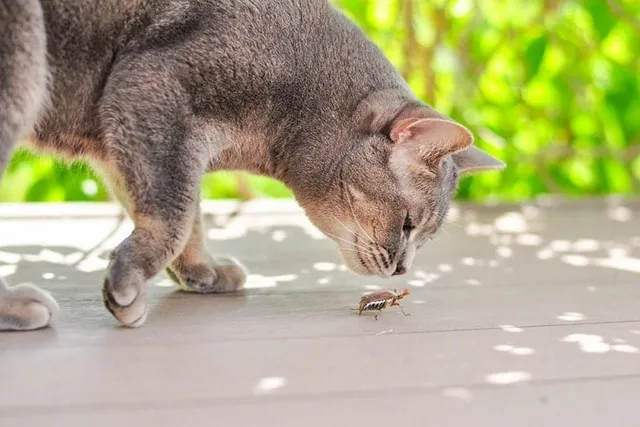
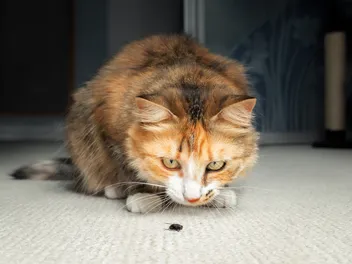
Cats are notoriously driven by their instincts. It seems strange that they love to chase, catch, and eat bugs like crickets when it is not a natural part of their diet. Bugs move fast and unpredictably, triggering the predator's response within a cat's brain. All your cat sees is something moving quickly away from them, and their body takes over to pounce upon it.
Cats chase bugs simply because it is fun and mentally stimulating. Often, they go on to eat them out of curiosity or a sense of pride in their prowess as a hunter.

Safe Bugs vs Harmful Bugs
We have established that crickets are mostly okay for your fearsome bug hunter to eat. But what about other insects? Harmful insects usually have a violent defense mechanism, which includes venomous species.
| Safe Bugs | Harmful Bugs |
| Crickets | Bees |
| Non-venomous spiders | Wasps |
| Flies | Venomous spiders |
| Moths | Fleas |
| Grasshoppers | Ticks |
Final Thoughts
Crickets have several nutritional benefits, so much so that pet and human food is being processed from cricket protein. However, for your cat who loves to eat wild crickets, a few risks are associated. Overall, a cricket-catching hobby for your cat will do little harm to them.
Expert cat care, straight to your inbox
News, insights, and useful advice, delivered to you.

No spam — unsubscribe anytime.
By signing up, you agree to our Terms & Conditions and Privacy & Cookies Policy.
How useful was this post?
Click a star to rate. You can leave written feedback afterwards. (We read all feedback.)
With an early start in the veterinary industry and as a conservation educator at Disney’s Animal Kingdom in Florida, Sophie has since been a successful Zookeeper and Conservationist, specializing in native New Zealand species. When she’s not bird watching in native forests or crawling through the underbrush at midnight searching for rare frog species, she can be found with her farmer husband on their sheep and beef station, far from civilization. Alongside them, they have 2 cats, 9 chickens, and 11 dogs (most notably, her sidekick, a black Labrador aptly named Jellybean). Sophie enjoys her writing career as it provides opportunities to help and support pet owners of all kinds to give animals the best welfare possible. The only downside is the long list of strange searches in her internet history!