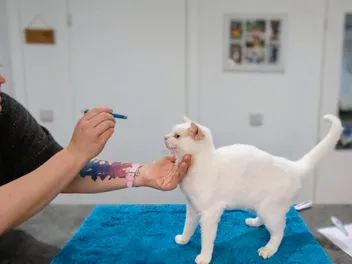
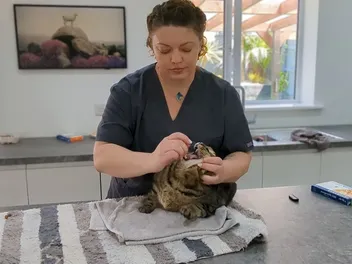
How to Safely Restrain a Cat: Dr. Karyn Shares Her Tips (with Video)

Hi, I’m Dr. Karyn! Read my introduction to learn more about me and meet my five hilarious cats: Clutch, Cyril, Alex, Zelda, and Zazzles.
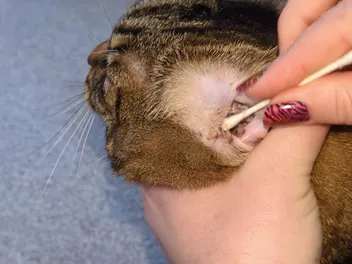
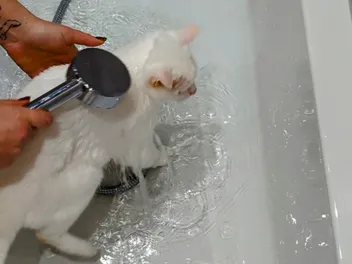
Over the next few weeks, with the reluctant help from my clan of cats, I will be bringing you a series of “How To” articles. Trimming claws, cleaning ears, medicating, and bathing your cat are all things you may need to do at various times, and some cats seem to make it more challenging than others. Although there are cats who will never be cooperative with these sorts of activities, many, and I would even say most, will respond well to confident handling.
Working as a vet, I know that I’m guilty of sending a patient home with a list of instructions for their overwhelmed owner, not realizing that not everyone is confident with all aspects of feline handling and husbandry. And many people are too embarrassed to ask for a demonstration (but you shouldn’t be!).
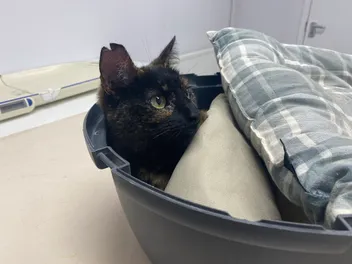
Clutch, Cyril, Alex, Zazzles, and Zelda are going to assist me in demonstrating some techniques for some common cat maintenance activities, starting with how to correctly and safely restrain your cat. These instructions are intended only to be used on your own cat, and only if it is necessary and safe to do so.
You can follow along with the action on our YouTube channel here.
Friendly and Firm
Cats know when we’re nervous. They can pick up on anxiety and spot your lack of confidence from a mile off. Something I always tell people is don’t ‘try’ to do something with your pet; Do It! I’m sure Master Yoda once said something very similar.

There are two concepts I want everyone looking to safely restrain their cat to remember:
Be Friendly and Firm. Never use Force or Fear.
From just picking them up, to holding them for a treatment or procedure, if you aren’t confident in your movements, your cat will not trust you to handle them. To understand the basics of this, let’s start with picking up your cat.
Although I don’t encourage you to force your cat to have cuddles or be carried around if that’s not their style, you should be able to lift and hold your cat without either of you becoming injured or distressed. We should always respect the comfort and safety of our pets, but if you need to do something for their health and wellbeing, you may find yourself fighting against an unwilling participant, and the only way to win that battle is by being firm and friendly. Keep calm, be confident about what you are about to do, but be prepared in case it all goes pear-shaped.

Picking Up A Cat
This is definitely getting back to basics, but if you need to pick up and restrain your cat for something other than a cuddle, it’s worth knowing the quickest way to gather them into a secure hold.
Step 1: Approach and Assess
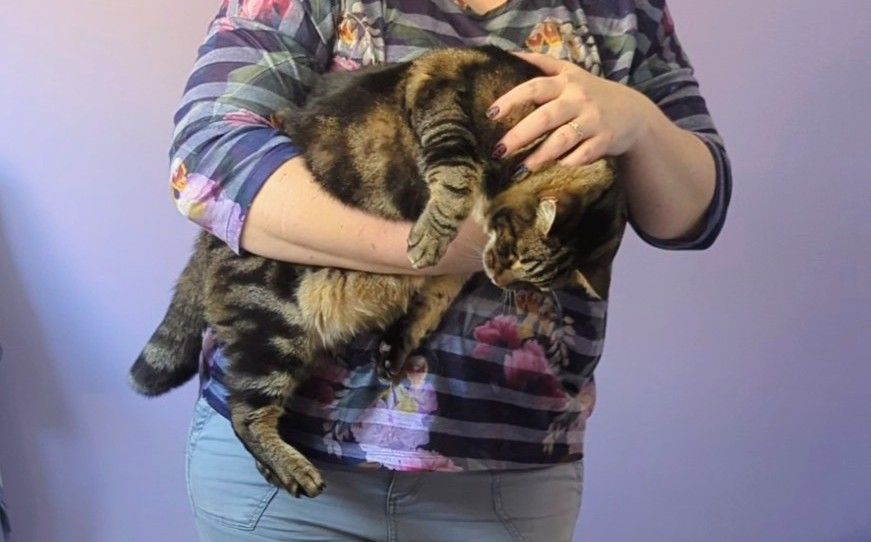
Decide if you’re dealing with a cooperative cat or cranky kitty, and approach them accordingly, ideally giving them a pat or scritch to break the ice. The more relaxed your cat is, the more relaxed and friendly your technique can be. If they are stressed and likely to flee, you’ll need to act more quickly. The aim is to gather them into your arms, pull them close into your body, and stand up in one movement, so get yourself into a position to do this.
Step 2: The Reach Around
If you’re right-handed like me, approach your cat side-on, with their head facing towards the left. Reach your right hand over their body in a diagonal, coming over the haunches, then around and under the chest, spreading your hand so you can place your thumb on the outside of the chest, and grip their left elbow (the one closest to your body) in your other fingers. Use your left hand to control or stroke their head and pull their body firmly against yours as you stand up.

Obviously, if you’re left-handed, your approach is the opposite.
Step 3: Be Friendly and Firm
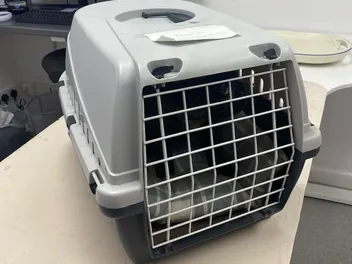
It is important to keep firm pressure on your cat’s body once you have them in this hold so that they feel secure, and not worried that they’ll be dropped. If they struggle at this point, keep calm and ride it out. If you don’t release the pressure, in most cases, your cat will settle down quickly. From here, you can place them on a table, into a carrier; wherever they need to be next.
Know When To Stop
If your cat is getting really stressed, panicking, or trying to bite and scratch, you may need to stop. Although most cats will submit once they realize that you’re holding them firmly, some just will not tolerate restraint, and you may need to talk to your vet about an alternative plan.
The Question of Scruffing
I will be honest and tell you that, on occasion, I will use a scruff hold to restrain a cat. I do this when it is necessary to ensure the safety of the cat and my team members. I never use it to pick up a cat, but there are times when it is the only safe way to hold a cat to give an injection, inspect a painful wound, or prevent them from injuring themselves or others. It should never be used for punishment or convenience, and if a cat needs to be restrained in this way for more than a minute to two, whatever procedure is being attempted should be abandoned in favor of sedation.

If your cat is fighting against restraint and you feel you need to let them go, you may find that the safest way to do so is to apply a scruff hold as you lower them, still supporting them with the other arm, and releasing them only once their feet are on the ground.
Safe Positioning
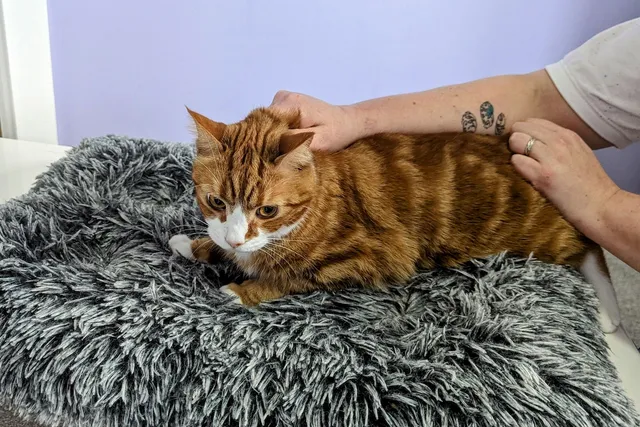
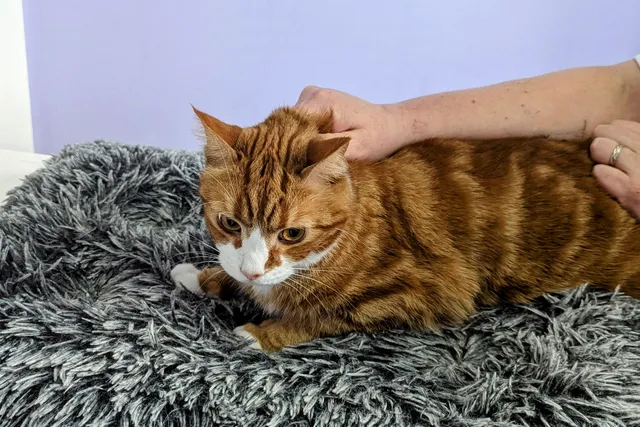
Once you have your cat on the table or countertop where you’ll be clipping claws, cleaning ears etc., you need to continue to keep them held firmly against your body, or firmly against the table surface. Do not force them against the table, but apply enough pressure for them to feel secure there. Depending on what you are doing, use your body and hands to immobilize your cat, and apply a firm hold to manipulate the area in question.
For example,
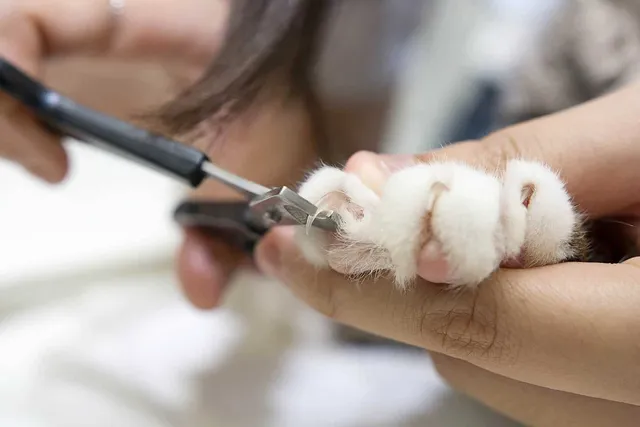
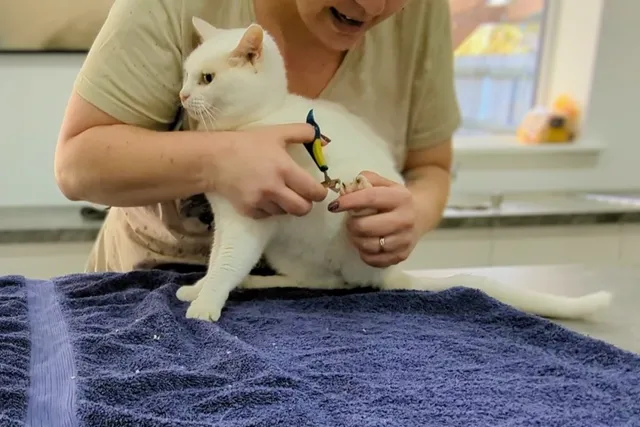
if you are trimming claws, a secure hold of the elbow can stop them pulling their paw away.
use your elbow to tuck their back end against your body, leaving your hands free.
use firm, flat-handed pressure over the shoulders or over the neck to keep them from turning their head.

What About A Kitty Burrito?
Personally, I don’t use the towel wrap unless I really have to. I find that the more you try to wrap up a cat, the more they are likely to struggle and panic, which is why I prefer restraint methods that allow them to feel that they have some freedom of movement. However, if you need to restrain your cat with all four limbs safely ensconced within the confines of a towel, the key to making this work is to use a large enough towel that allows you to fold it up and over the front legs, then firmly gripping both sides behind the head. From here, you wrap each side of the body tightly, never releasing the grip at the back of the neck.

For a cat like Clutch or Cyril, who are ridiculously relaxed and amenable to most things, this method of restraint is really resented, and they really fight against it.
Set Yourself Up to Win
If you know you have to do something your cat isn’t going to like, make sure you are completely prepared before you get started.
Choose a smaller room, and make sure doors and windows are closed.
Have everything you’re going to need within your reach.
Try to anticipate how your cat may react, and prepare for the worst.
Don’t pick your cat up without knowing how and where you need to have them positioned.
Be friendly and firm, do not use force or fear.
Check in with us each week to see Clutch, Zelda, Zazzles, Alex, and Cyril as they show you how confident handling can make even the most unpopular of tasks less stressful.
This article is a part of Christopher and Olga's series.
Expert cat care, straight to your inbox
News, insights, and useful advice, delivered to you.

No spam — unsubscribe anytime.
By signing up, you agree to our Terms & Conditions and Privacy & Cookies Policy.
How useful was this post?
Click a star to rate. You can leave written feedback afterwards. (We read all feedback.)
Dr. Karyn Kanowski BVSc MRCVS (Veterinarian)
Dr. Karyn comes from Queensland, Australia, and has lived in the UK for the past 10 years. In 2010, she graduated from The University of Queensland School of Veterinary Science and also has a Bachelor’s degree in Zoology. She is passionate about using evidence, experience, and owner collaboration to provide the best solutions for pets, and believes in making reliable information about animal health accessible to all. Dr. Karyn shares her home with five cats, four dogs, and one husband. When she is not in the scrubs, she spends her time writing, gardening, and cleaning up pet hair!