Ask Dr. Paola - Fur plucking, Hunger & Lesions (April 28, 2025)
Welcome to our "Ask Dr. Paola" series, where every Monday we bring expert advice straight from Dr. Paola Cuevas (MVZ) to help our readers better understand their cat's health and well-being.
Whether you're a new pet parent or a seasoned cat lover, Dr. Paola is here to provide answers to your most pressing questions. From nutrition tips and preventive care to troubleshooting common behavioral issues, Dr. Paola is ready to offer insights that will keep your kitty happy, healthy, and feline fine. Stay tuned for expert guidance on a range of topics that matter most to you and your cat, so you can make informed decisions and provide the best possible care for your furry companion.
Have a question? Send it in here!

Help! My Cat Plucks His Own Fur!
“Dear Dr. Paola,
My long-haired domestic orange cat, Frankfurt, tends to sometimes pluck his own fur when he’s grooming. I checked for dry and red skin, fleas, and he has no inflammation or redness of skin, and there's no sign of fleas. What else could it be?
"- Jessica
Hi Jessica, when a cat starts overgrooming or plucking fur without visible signs of skin disease or parasites, it often points to something a bit deeper: either internal discomfort or an emotional trigger. Cats are incredibly sensitive creatures, and overgrooming can be a feline version of nail-biting or stress-eating in humans. It’s their way of self-soothing. Changes in their environment, conflicts with other pets, boredom, or even shifts in your daily routine can all lead to this type of behavior.
However, it's also important to consider that some cats overgroom due to underlying pain or medical issues that aren't immediately visible on the skin. For example, discomfort in the bladder, joints, or even gastrointestinal irritation can sometimes cause a cat to focus on grooming in a specific area. If Frankfurt is targeting the same spot repeatedly, that’s a subtle clue worth investigating. Since there's no visible skin issue or external parasite involvement, this may be a great opportunity to connect with one of our veterinarians online at PangoVet, which is a teletriage veterinary service. They can help you evaluate behavioral or mild internal triggers based on his grooming pattern and recent changes in his life. If any signs of discomfort or progression appear, a hands-on physical exam would be necessary to rule out underlying pain or systemic causes. I hope this helps!
Good luck,
- Dr. Paola


Help! My Cat is Always Hungry?
"Why is my 5 and 1/2 years old female cat, Siya, always looking for food? I give her mostly wet food only. Also, she is a little overweight; she needs to lose weight. What kind of food do you recommend so she feels a little satisfied and still helps her to lose weight?" - Rekha
Hi Rekha,
It’s wonderful to hear that you’re offering Siya mostly wet food, which is typically more appropriate for a cat’s natural hydration and nutritional needs. When a cat is persistently seeking food despite being slightly overweight, it’s often a mix of biological and behavioral factors at play. Some cats have a strong food drive, especially if meals are spaced far apart or if they’re eating foods that aren’t particularly filling. Wet food is a great base, but not all formulas are equally satisfying. If the food is low in protein or high in carbohydrates, Siya may be feeling full temporarily, but never get truly satiated.
To help her feel more satisfied while gently reducing weight, I’d recommend a high-protein, low-carbohydrate wet food with moderate fat content. Cats thrive on animal-based proteins, and these tend to support lean body mass while curbing hunger. Look for foods that list real meat as the first ingredient and avoid those with fillers like corn, wheat, or starchy vegetables. If your budgets allow for it, you could give fresh food like Smalls a try, they offer recipes that align much more closely with a cat’s natural dietary needs. Fresh diets are generally lower in carbohydrates and free of unnecessary thickeners and plant-based ingredients that cats don’t metabolize efficiently.
Otherwise, Tiki Cat, Weruva (especially the low-carb varieties), or Dr. Elsey’s CleanProtein may be suitable. Also, feeding smaller, more frequent meals throughout the day can help reduce food-seeking behavior.
Using feeding toys or puzzle feeders can also slow her eating and keep her mentally engaged. If you're unsure how many calories Siya should be getting, a quick consultation with one of our veterinarians at PangoVet. They can help you calculate her ideal daily intake and tailor her plan, all while staying aligned with a species-appropriate approach.
It’s also important to rule out medical causes like hyperthyroidism or early diabetes, especially if her hunger has noticeably increased. A quick check-in with your veterinarian and blood sample collection will be ideal. I leave this last because you mentioned she needs to lose some weight, and cats with this condition are usually underweight, but still worth checking her.
You’re clearly doing a wonderful job caring for Siya, and it's likely that with just a few tweaks, Siya will be well on her way to a leaner, happier life.
Good luck
- Dr. Paola

Help! My Cat Has a Lesion!
“Dear Dr. Paola,
My cat Garfield has had a lesion on his lower lip for a year. It now appears bigger. He has not lost weight and has no problem with appetite. I am aware of squamous cell carcinoma. Garfield is approximately 16 years old. He was born on my business property (feral) and lives there as a barn cat. Not sure what the best action to take is, as it will be difficult to get him to the vet. Please advise." – Joanne
Hi Joanne,
Thank you for looking out for Garfield, especially given his age and the challenges of his semi-feral lifestyle. A persistent lesion on the lower lip that’s slowly enlarging, particularly in a senior cat, absolutely deserves attention. You’re right to have squamous cell carcinoma (SCC) on your mind; this is unfortunately one of the more common oral cancers in older cats, especially those with outdoor exposure. That said, not every lesion is cancer. Chronic inflammation, eosinophilic granulomas, or even old trauma can also cause similar changes, but a year-long history and recent enlargement do raise concerns.
Because he hasn’t lost weight and is eating well, it may not be causing him discomfort just yet, but cats are incredibly stoic. Oral cancers can stay deceptively quiet until they reach an advanced stage. The only way to confirm the nature of the lesion is through a veterinary exam, possibly followed by a biopsy. I understand he’s hard to handle, and that’s a real consideration with feral or barn cats. In cases like this, a humane trap might be the most practical tool to safely transport him. Many veterinary clinics will work with you if you explain the situation in advance, and some mobile vets or shelter-affiliated clinics are familiar with handling ferals and may even sedate them in the trap for the exam.
Garfield has already beaten the odds by reaching 16, and he clearly means a lot to you. Giving him the chance for a proper diagnosis, even if treatment ends up being limited by his lifestyle or comfort, is the kindest next step. If it is SCC, early palliative care can help maintain his quality of life for as long as possible.
Thanks for your kindness,
Dr. Paola
This article is a part of our weekly Ask Dr. Paola series

Expert cat care, straight to your inbox
Vet-reviewed advice, behavior tips, and the best of Catster. Free, and you can unsubscribe anytime.
By signing up, you agree to our Terms & Conditions and Privacy & Cookies Policy.
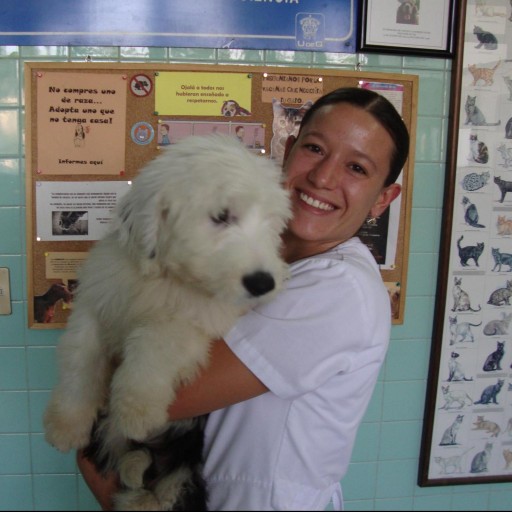
Dr. Paola Cuevas MVZ (Veterinarian)
Dr. Paola Cuevas is the Senior In-House Veterinarian at Pangolia, the parent company of Catster. She has over 18 years of experience as a veterinarian and animal behaviorist. Paola's focus is on preventive medicine and animal welfare. Paola has a large range of skills in from diagnostic imaging to nutrition and clinical pathology. Paola enjoys sharing her extensive knowledge of animal training with our Catster readers and is always happy to answer reader questions as our in-house veterinarian.
Join the conversation
Ask a question, share your story, or send private feedback.