Skin Disease in Cats: Our Vet Explains Causes, Signs & Treatments

In this article
Skin disease in cats is incredibly common. Cat's skin plays an important role, and it is the largest organ in your cat's body. It functions as a protective barrier to the outside world and helps your cat regulate their body temperature.
There are many different conditions that can cause skin disease in cats. There are contributing factors in your cat's environment, as well as your cat's genetics and lifestyle. Skin disease can be very complicated and treatment options vary depending on the underlying cause. It is important to take your cat to see a vet immediately if you notice any problems with their skin as prompt diagnosis and treatment will mean a better prognosis.

What Is Skin Disease in Cats?
Skin disease in cats can be a serious and debilitating condition. It is caused by a number of different conditions, some directly affecting the skin, others causing disease elsewhere in the body that has an effect on the skin later on in the disease process. Causes can include injuries, wounds, parasites, infections, and allergies.
A cat's gender, breed, and general habits can have a profound effect on the condition of their skin. Cats that go outdoors are at higher risk of picking up parasites and getting injuries climbing and jumping. They are also more likely to encounter other cats and potentially get into cat fights and get wounds and abscesses. Male cats that have not been neutered are more likely to become aggressive and territorial which can result in more fights with other cats.
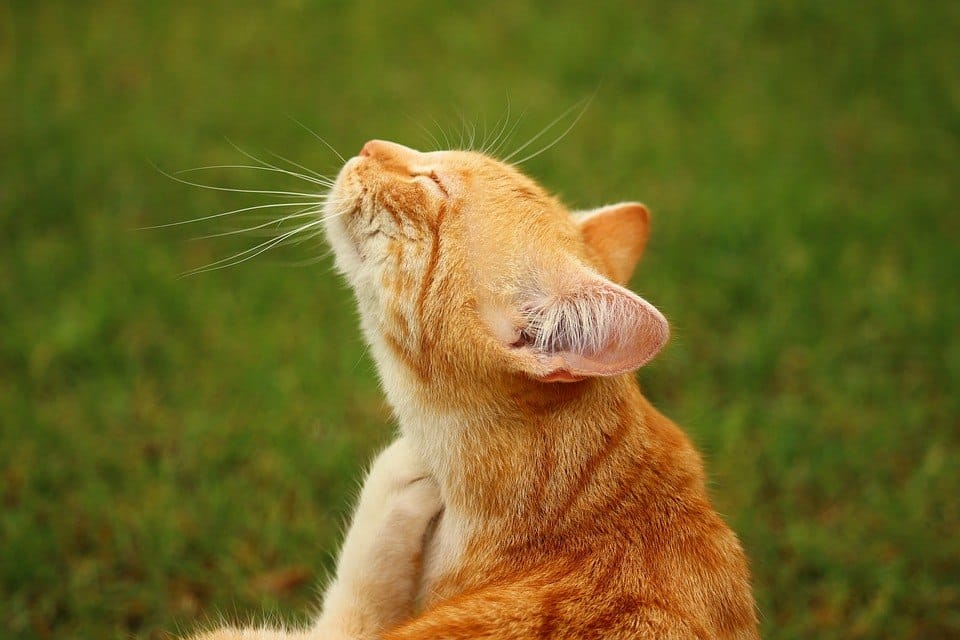
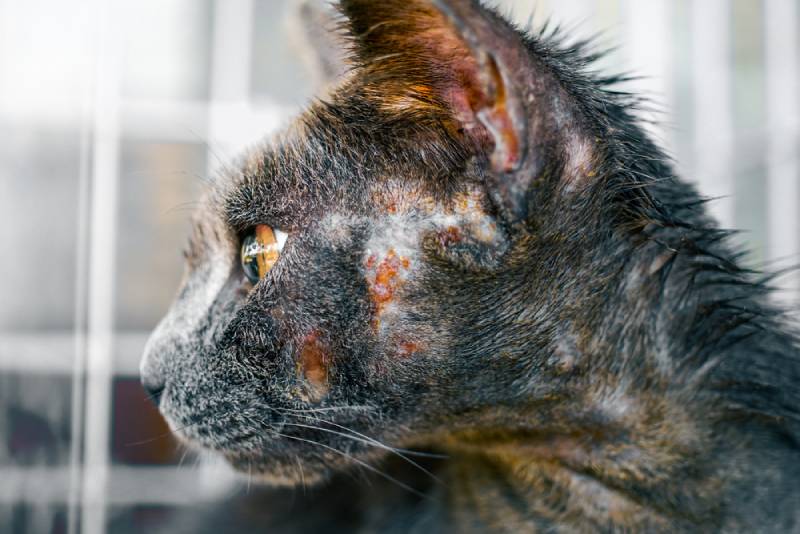
Skin disease is a broad category that describes any disorder of the skin. Common signs of skin problems in cats include redness, itching, licking, lumps, bumps and rashes, alopecia and scabs, ulcers, and swelling.
The skin has three main layers.
These consist of:
There are other important components such as the hair and claws, also known as the skin appendages, and the subcutaneous fat and muscles. There are small muscles in the skin called arrector pili that are responsible for making the cat's hair stand on end. Skin also contains sebaceous glands that produce lubrication for the hair and skin.
Skin disease can affect all of the layers of the skin and the appendages. Some skin disorders start at the epidermis and some start in the deeper layers.

What Are the Signs of Skin Disease in Cats?
Due to the many different causes of skin disorders, there can be lots of clinical signs. Some of the clinical signs owners report initially are ways in which the cat is responding to the disease, trying to alleviate itchiness or reacting to pain, so can seem generalized and relatively non-specific. Some cats are very good at hiding or masking clinical signs so may not show any behavioral changes in front of their owners.
The clinical signs reported vary depending on the underlying cause of the condition.
Common signs of skin disease seen in cats include:
Get in touch with a veterinarian for guidance and advice on the best course of action.

What Are the Causes of Skin Disease in Cats?
There are many causes of skin disease in cats. The most commonly encountered are listed below:
Parasites
Both indoor and outdoor cats can pick up parasites. Outdoor cats are more prone to picking them up as they are exposed to more in their environment. Fleas cause itchiness and can cause cats to over groom and cause damage. Some cats are also allergic to the saliva of fleas and they have a serious reaction when they are bitten.
Lice and mites can also affect cats. Ear mites are common in kittens. Ticks are small blood-sucking parasites that latch onto cats’ skin and can spread tick-borne diseases as well.
Infections
Skin infections are a very common cause of skin disease in cats. Infections can be bacterial, viral, fungal, or yeast in origin.
Allergies
Skin allergies occur when a cat is exposed to something in their immediate environment that causes their immune system to overreact. This can be environmental such as pollen, dust, or mold. Some cats can have food allergies that cause skin lesions. Some cats are allergic to fleas or other parasites.

Cancer
Cats can get different types of skin cancer. These skin cancers can take on different forms. Common types of skin cancer seen in cats include malignant melanoma, squamous cell carcinoma, and mast cell tumors. Cats can also get benign tumors and lumps such as cysts.
Nutritional Disorders
Nutritional disorders can affect cats' skin. One of the main ways is a nutritional deficiency if a cat is being fed a lower quality diet that is missing viral components, or if they are using inappropriate supplements.
Endocrine Disease
Some endocrine disorders affect cats' skin. Common diseases such as hypothyroidism and hyperadrenocorticism cause dramatic changes in the skin such as hair loss, thinning of the skin, changes in pigmentation, and dryness and scaling.
Self Trauma
Some cats overgroom themselves because they are stressed or anxious. They may be suffering from separation anxiety or are bored and lacking mental stimulation.
Wounds and Injuries
Wounds and injuries such as cuts and scrapes or cat bite abscesses from fights can be very painful and become infected.
Diagnosis of Skin Disease in Cats
Skin disease can be very complicated and determining the underlying cause is often the most challenging part for vets. A vet will take a full clinical history and examine your cat. They will perform a full analysis of your cat's skin. This will involve taking samples if necessary, such as tape strip impressions, hair plucks, skin scrapes, swabs for culture and sensitivity, and fine needle or excisional biopsies. They may examine your cat under a special lamp called a “Woods Lamp” to check for fungal infections.
The vet may also take routine blood tests and urinalysis to assess the general health of your cat. There are other more specific blood tests the vet may take as well if they have suspicions about a certain skin disease.
How Do I Care for a Cat with Skin Disease

Treatment of skin disease requires prompt identification of the underlying cause. Many effective skin treatments are applied directly to the skin as topical medications.
Other things a vet may prescribe include:
Frequently Asked Questions (FAQ)
What is a common skin disease in cats?
Cats suffer from many different skin diseases. The most commonly seen include allergic skin disease, bacterial infections, parasites, and tumors.
What does a cat skin infection look like?
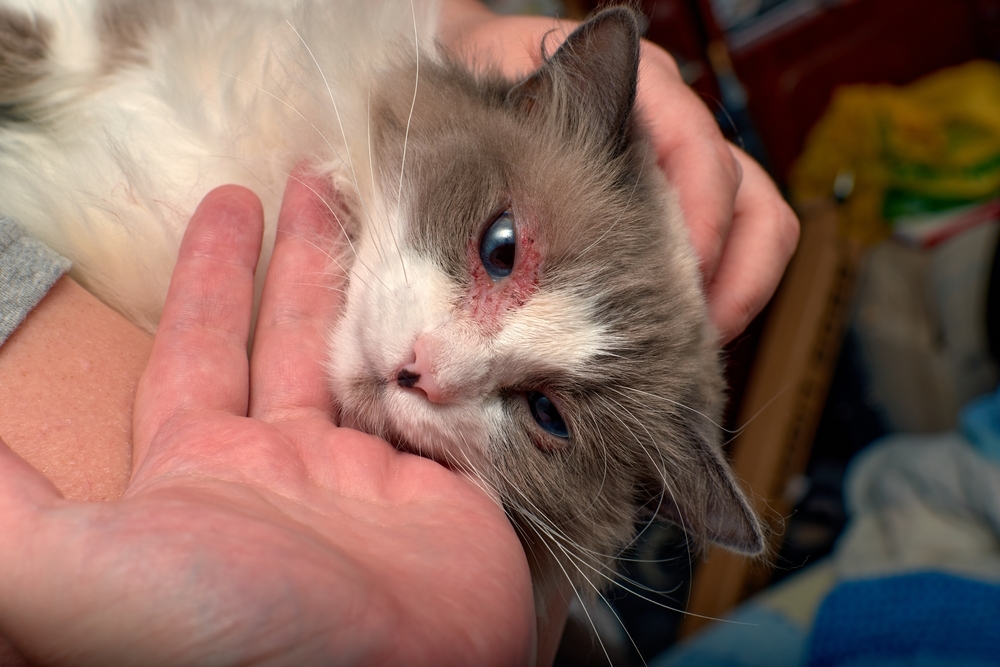
Skin infections can take on many different forms. Bacterial skin infections often have red inflamed skin lesions, with crusts and scaling. The skin can be irritated and there can be open weepy wounds. There may be hair loss present and raised bumps on the skin. Your cat may be itchy too.

Can I treat my cats' skin infection at home?
There are some measures you can take to ensure that your cat's skin is as healthy as possible at home. However, it is not recommended to attempt to treat your cat's skin disease at home without direction from a vet.
Things you can do at home include:
Conclusion
Skin disease is a very common occurrence in cats. Some skin diseases can be very straightforward to diagnose and treat, while others are extremely complex and require lengthy investigations and treatment courses. If you see any signs of skin disease in your cat, it is important to take them straight to a vet to have them checked out.
Sources
Featured Image Credit: Pakbaraman, Shutterstock

Expert cat care, straight to your inbox
Vet-reviewed advice, behavior tips, and the best of Catster. Free, and you can unsubscribe anytime.
By signing up, you agree to our Terms & Conditions and Privacy & Cookies Policy.
Dr. Emma Chandley, BVM MRCVS (Veterinarian)
Dr. Emma is an experienced vet who is happy to share her expertise and knowledge about cats with readers. Her passion is surgery but she will happily talk about anything animal-related. Dr. Chandley graduated from The Royal Vet College and since then she has worked in general practice in Great Britain. Dr Chandley has completed a postgraduate certificate in Small Animal Surgery and has also gained Advanced Practitioner status in the same discipline. She enjoys developing her skills in animal behavior, nutrition, and clinical pathology as well.
Join the conversation
Ask a question, share your story, or send private feedback.