Ask Dr. Paola - Tail biting, Feeding & Dirty Ears (April 22, 2025)

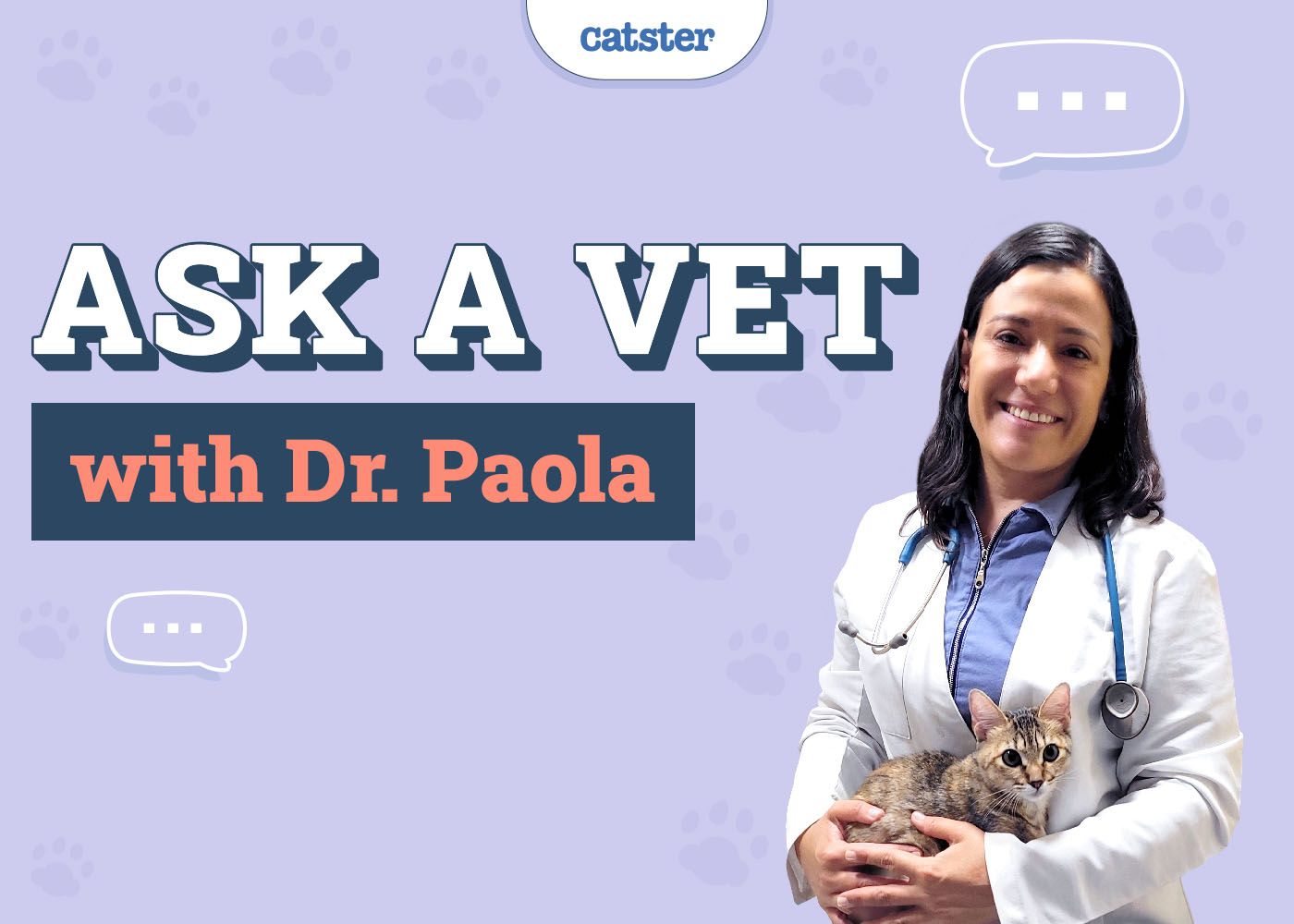
Welcome to our "Ask Dr. Paola" series, where every Monday we bring expert advice straight from Dr. Paola Cuevas (MVZ) to help our readers better understand their cat's health and well-being.
Whether you're a new pet parent or a seasoned cat lover, Dr. Paola is here to provide answers to your most pressing questions. From nutrition tips and preventive care to troubleshooting common behavioral issues, Dr. Paola is ready to offer insights that will keep your kitty happy, healthy, and feline fine. Stay tuned for expert guidance on a range of topics that matter most to you and your cat, so you can make informed decisions and provide the best possible care for your furry companion.
Have a question? Send it in here!

Help! My Rescue is Biting Her Tail!
“Dear Dr. Paola,
Help please. I have a 12-year-old spayed shorthair cat, Minnie. The problem: she is biting her tail (not playing!). I took her to our vet (who only does routine vaccines and low-key stuff as she is nearly retired). She expressed Minnie’s anal glands. One side was solid, and the other side was somewhat liquid. Seemed to express quite a lot. We all thought that was the problem, but it didn't make any improvement. Any suggestions or ideas on which direction we should go now? I appreciate your time." - Connie
Hi Connie,
Thank you for taking the time to describe what’s going on with Minnie. It’s clear how much you care about her, and I can tell you’re doing your best to get to the bottom of this. Tail biting, especially in a senior cat like Minnie, is a behavior that deserves close attention, particularly when it’s not playful and seems more like a reaction to discomfort or irritation.
You were absolutely right to address her anal glands first, especially since one side was impacted with solid material. Anal gland issues in cats are less common than in dogs, but when they do occur, they can cause significant discomfort and even lead to behaviors like tail biting or scooting. It’s important to know that these problems can be recurrent, especially if the underlying cause such as inflammation, abnormal consistency of the stool or the gland contents, or chronic irritation hasn’t fully resolved. Sometimes, even after expression, the glands can refill quickly or remain uncomfortable, which might explain why Minnie hasn’t improved.
That said, if she’s still persistently biting at her tail, it’s possible that there’s more at play than just her anal glands. In older cats like Minnie, we also consider other possibilities like spinal arthritis, nerve irritation, or feline hyperesthesia syndrome, which can make the tail and lower back feel twitchy, painful, or hypersensitive. These conditions can mimic or overlap with gland issues, so it’s important to take a broader look. A full-service vet who can evaluate her neurologically and orthopedically may be the next best step. They may also recommend diagnostic imaging such as X-rays to rule out spinal issues, or possibly blood work to check for systemic causes of discomfort. In the meantime, keeping a close eye on whether Minnie seems more reactive to touch near her lower back or tail base, or if the biting seems triggered by specific movements, can offer helpful clues to your vet. If possible, try to also record the behavior in a video which will provide illustrative information. You're clearly very attentive and dedicated to her comfort, and she’s lucky to have you in her corner.
Good luck, - Dr. Paola


Help! How Much Do I Feed My Cat?
"How much wet food should I be feeding my cat, Baby, every day?" - Michelle
Hi Michelle,
Thank you for reaching out with your question about Baby’s diet. Feeding the right amount of wet food is essential not only for maintaining a healthy weight but also for supporting your cat's overall well-being, especially since cats tend to be more hydrated when eating wet food compared to dry. The exact amount Baby needs depends on a few different factors. On average, a healthy 8-pound adult cat typically needs between 180 and 250 calories a day, but this can shift depending on her age, activity level, current weight, and whether she’s spayed. A great starting point is using a cat calorie calculator, which takes these factors into account to estimate her daily needs. This tool can be quite accurate when paired with regular monitoring.
Most standard 3-ounce cans of wet food contain between 70 and 100 calories. So, if Baby’s daily requirement is around 200 calories, she’d likely need about two to three cans a day. But beyond just counting calories, it's helpful to regularly assess her body condition score, or BCS. This score looks at her shape and how easily you can feel her ribs and waistline. Think of it like tailoring a dress; you want a fit that's neither too tight nor too loose. If Baby is carrying a bit extra or feels too lean, her portion sizes can be adjusted gradually. It is especially important to do it carefully and gradually, especially when trying to get a cat to lose weight, as extreme changes can put their health at high risk. If you’re unsure about interpreting her BCS or using a calorie calculator, you can contact one of our vets online through PangoVet, a teletriage service that can offer quick, personalized guidance without needing an in-person visit. You're doing a great job by being proactive; nutrition is such a powerful part of preventive care. Congratulations!
- Dr. Paola

Help! My Kittens Ears Are Dirty!
“Dear Dr. Paola,
My 5-month-old kitten, Raven, has a bit of dark dirt on the inside of her ears. Is that normal?" – Tiziana
Hi Tiziana,
Thank you for your thoughtful question about Raven. A small amount of waxy debris inside a kitten’s ears can sometimes be normal, especially if it’s light brown and doesn’t have a strong odor. However, if what you’re seeing looks more like dark coffee grounds, or if Raven has been scratching her ears or shaking her head more than usual, it could be a sign of ear mites or an ear infection. Kittens are particularly prone to these conditions, especially if they’ve had exposure to other animals or came from a shelter environment.
Because ear issues can be uncomfortable and may worsen if left untreated, it’s best to have her ears examined by a veterinarian. Ear mites, for example, are very treatable, but they do require a proper diagnosis and prescription medication. If Raven isn’t showing signs of discomfort and you’re just noticing a bit of wax, a gentle clean with a vet-recommended ear cleaner might be all she needs, though I’d still suggest having her ears checked to be sure the eardrum is intact. A vet can look deep into the ear canal using an otoscope, check the eardrum’s integrity, and choose the right type of cleaner or medication if needed. Until then, it’s best not to attempt cleaning the ears at home, especially if you’re unsure whether there’s discomfort or underlying infection.
Best,
Dr. Paola
This article is a part of our weekly Ask Dr. Paola series
Expert cat care, straight to your inbox
News, insights, and useful advice, delivered to you.

No spam — unsubscribe anytime.
By signing up, you agree to our Terms & Conditions and Privacy & Cookies Policy.
How useful was this post?
Click a star to rate. You can leave written feedback afterwards. (We read all feedback.)
Dr. Paola Cuevas MVZ (Veterinarian)
Dr. Paola Cuevas is the Senior In-House Veterinarian at Pangolia, the parent company of Catster. She has over 18 years of experience as a veterinarian and animal behaviorist. Paola's focus is on preventive medicine and animal welfare. Paola has a large range of skills in from diagnostic imaging to nutrition and clinical pathology. Paola enjoys sharing her extensive knowledge of animal training with our Catster readers and is always happy to answer reader questions as our in-house veterinarian.