Ask Dr. Paola - Socializing, Bloody Poo & Meowing (April 14, 2025)

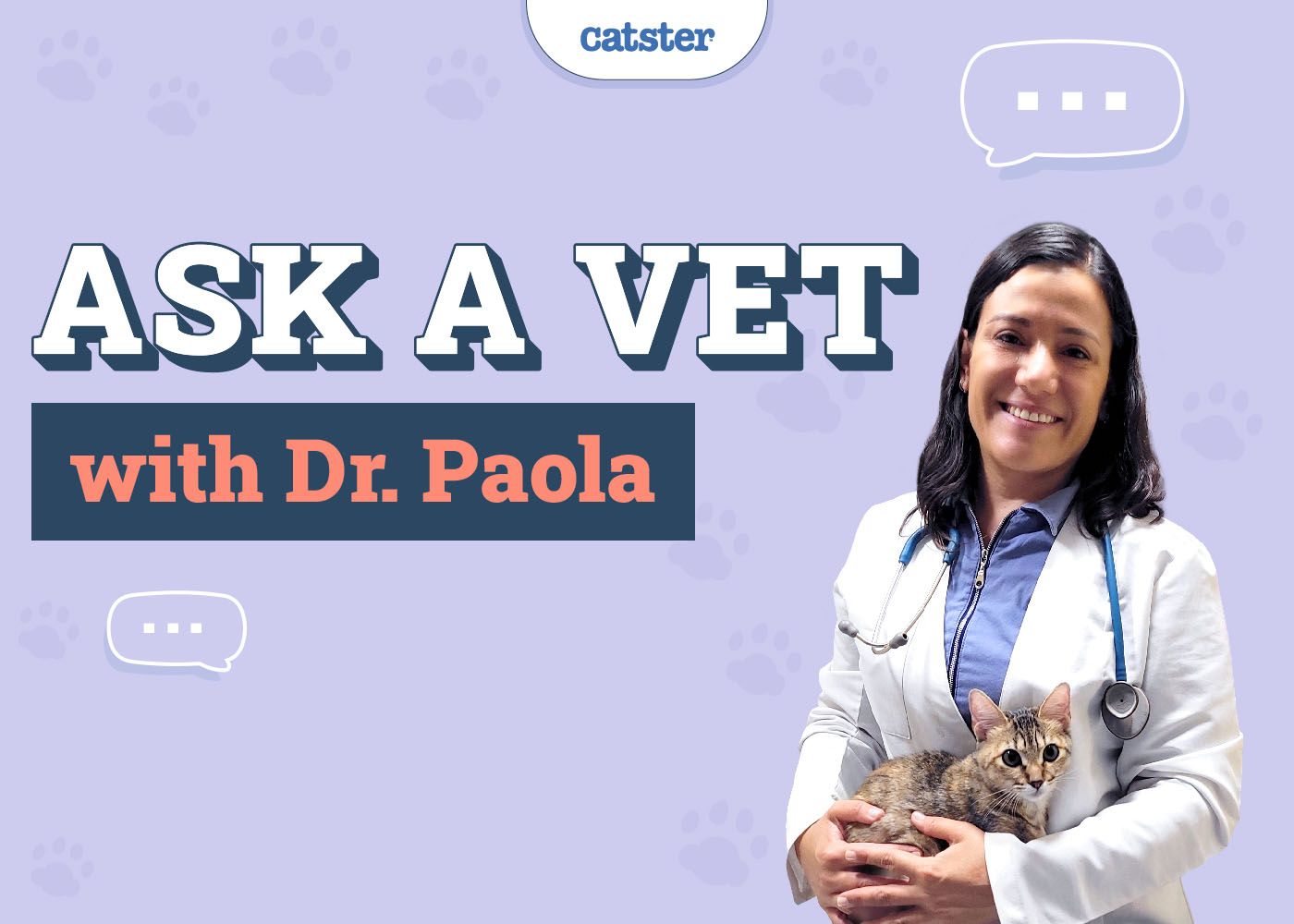
Welcome to our "Ask Dr. Paola" series, where every Monday we bring expert advice straight from Dr. Paola Cuevas (MVZ) to help our readers better understand their cat's health and well-being.
Whether you're a new pet parent or a seasoned cat lover, Dr. Paola is here to provide answers to your most pressing questions. From nutrition tips and preventive care to troubleshooting common behavioral issues, Dr. Paola is ready to offer insights that will keep your kitty happy, healthy, and feline fine. Stay tuned for expert guidance on a range of topics that matter most to you and your cat, so you can make informed decisions and provide the best possible care for your furry companion.
Have a question? Send it in here!

Help! My Rescue Isn't Very Social!
“Dear Dr. Paola,
I’ve rescued my wee boy, James Connolly, when he was about 6 weeks old. He was abandoned with his mom and two sisters and was very shy and withdrawn, and therefore was often left alone with little food. Since he’s been rehomed with me on his own, within 24 hours, the semi feral kitten became a cuddle monster with a silly personality. However, he has difficulty socializing. He is very jumpy and very anxious. He always needs to be with me, and I try my best. I attempted to be away for one weekend and left him with a cat sitter, and it was a disaster. The vet says he has anxiety. How can I boost his confidence and ensure he feels safe even if I’m not physically there? - Sarah
Hi Sarah,
Thank you for opening your heart and home to little James Connolly; what a beautiful name for such a brave little soul. From what you’ve shared, it’s clear you’ve already transformed his world. His shift from withdrawn and overlooked to cuddly and expressive says so much about the love and safety you’ve offered him. Cats who experience early stress, particularly those who’ve gone without consistent food, maternal comfort, or gentle handling, often develop what we call “insecure attachment styles.” It’s similar to a child clinging tightly after being left alone too often. It’s not just fear, it’s a survival mechanism.
Helping James build confidence is a process. Start by creating a predictable routine around meals, play, and rest; this rhythm becomes a safety net. Try using interactive toys like wand teasers or treat puzzles to shift his focus outward and encourage independent play. Confidence can bloom through “safe wins,” which are small, non-threatening challenges he can overcome. In your absence, your scent can be a powerful comforter, you might leave behind a worn T-shirt. You should also consider synthetic pheromone diffusers, which mimic the calming signals cats associate with maternal presence. Gradual desensitization to short absences, starting with seconds, not hours, can help, but this must be done slowly and patiently.
Because James has shown such intense separation anxiety, it might also be helpful to consult a feline veterinary behaviorist to explore options like nutraceuticals or calming supplements. These are not sedatives but gentle aids that can support his emotional balance during training. You’ve already given him so much. Now it’s just about helping him believe that safety doesn’t vanish when you walk out the door.
Best,
Dr. Paola


Help! I Am Seeing Blood in My Cats Poo!
"Hi Dr Paola!
I have a 7-year-old cat called Myst. Periodically, we see a small amount of blood in the litter box after she has a BM. She has had multiple exams, fecal studies, and an ultrasound. All were negative. The suggestion now is to have a colonoscopy. She eats Hill’s Z/D. She has a good appetite & is playful. I just don’t know if I should have this done. Should I get another opinion? What are your thoughts, please?" - Pam
Hi Pam, thank you for sharing about Myst. It’s clear how deeply you care for her, and I can understand how concerning it is to see traces of blood in the litter box, especially when everything else about her seems normal. The fact that she's eating well, is playful, and is maintaining her routine is encouraging, but it's also a bit puzzling when signs like this persist without a clear cause. You’ve already taken all the right steps: physical examination, fecal studies, and even an ultrasound, which tells me you’ve been very thorough and committed to getting her the care she needs.
At this point, a colonoscopy can be a reasonable next step. It’s the best way to directly visualize the lining of the colon and possibly obtain biopsies if there's any subtle inflammation, polyps, or early disease that wouldn’t show up on other diagnostics. However, before moving forward, it’s perfectly valid to seek a second opinion, ideally from a veterinary internist. Their perspective can help you feel more confident about whether this step is necessary right now or if other less invasive adjustments might be worth trying first. In the meantime, I’d suggest closely monitoring Myst’s stool consistency, frequency, and any straining. Softer stools tend to pass more easily and may reduce minor trauma that can cause bleeding, especially if the colon is sensitive. Encouraging hydration through a water fountain, broth-soaked kibble, or incorporating moisture-rich fresh or wet food can help naturally ease bowel movements and may offer some relief if the bleeding is mechanical in nature. You're doing a wonderful job advocating for Myst, and she’s lucky to have you by her side.
Dr. Paola

Help! My Cat Meows All Day Long!
“Dear Dr. Paola,
My partner and I adopted a stray female (neutered) 1-year-old cat 6 months ago. Her name is Maru. The worrying issue is that she keeps meowing multiple times a day, loudly, at walls and doors. She has hip dysplasia, so she can’t jump like a normal cat. We know she was living outside before, but now she is supposed to be an indoor cat. Our apartment is quite big, so there is no space issue, but the meowing is stressful for all of us. I am practising with her on a harness every day to get her going on outside walks in the summer, but we have no idea if this will help her. We play with her multiple times a day (sometimes a few hours in a row), she is never alone for too long, and she is well fed and her litter box taken care of. I’m also giving her some no-stress treats, etc. We also hung cat climbing stairs on the wall, and she has multiple scraping posts and good views from the big windows.
We have absolutely no idea what to do with her to keep the meowing to a minimum and would be very grateful for some new tips " – Emili
Hello Emili, thank you for sharing Maru’s story.
She is very lucky to have found such a loving and attentive home. From everything you describe, it is clear that you are doing a wonderful job supporting her physical and emotional needs, especially considering her hip dysplasia and her background as an outdoor cat. Cats like Maru, who have had to rely on themselves in unpredictable environments, often develop strong vocal habits as a way to express their needs or communicate uncertainty. Even once they are safe and well cared for, those behaviors that became habitual can continue, even when things are calm.
Her meowing at walls and doors could have a few different explanations. Cats have incredibly sensitive hearing, and sometimes they react to sounds we cannot detect, like plumbing, wind, or even small animals behind walls. It might also be a sign of frustration related to her mobility challenges. Cats are wired to climb and explore vertically, and when their bodies limit that ability, they may feel restless or unfulfilled. That feeling can come out through vocalizing. You are already offering her an enriched environment, which is wonderful. Creating predictable routines around feeding, play, and rest can help some cats feel more secure and may reduce vocalizations over time. Your plan to start taking her on outdoor walks during the warmer months sounds promising and might offer her a healthy outlet for both mental and physical stimulation.
If her meowing is becoming more frequent or intense, it is worth considering whether pain may be playing a role. We actually have a tele-triage veterinary service, PangoVet, where you can speak to one of our experienced veterinarians online from the comfort of your home, where they can help answer questions in real time and help guide you toward the next best steps. Chronic discomfort from conditions like hip dysplasia can sometimes show up in unexpected ways, and even subtle relief can bring meaningful improvement in her behavior. You are clearly offering her a safe and loving space, and that makes all the difference. I hope this helps!
Dr. Paola
This article is a part of our weekly Ask Dr. Paola series
Expert cat care, straight to your inbox
News, insights, and useful advice, delivered to you.

No spam — unsubscribe anytime.
By signing up, you agree to our Terms & Conditions and Privacy & Cookies Policy.
How useful was this post?
Click a star to rate. You can leave written feedback afterwards. (We read all feedback.)
Dr. Paola Cuevas MVZ (Veterinarian)
Dr. Paola Cuevas is the Senior In-House Veterinarian at Pangolia, the parent company of Catster. She has over 18 years of experience as a veterinarian and animal behaviorist. Paola's focus is on preventive medicine and animal welfare. Paola has a large range of skills in from diagnostic imaging to nutrition and clinical pathology. Paola enjoys sharing her extensive knowledge of animal training with our Catster readers and is always happy to answer reader questions as our in-house veterinarian.