Constipation in Cats: Our Vet Explains the Signs, Causes & Treatment

In this article
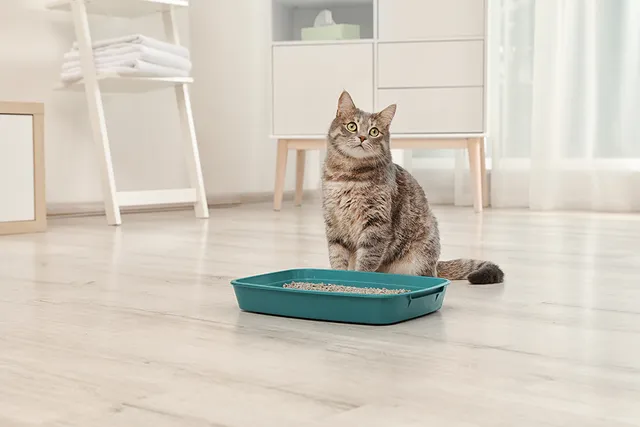
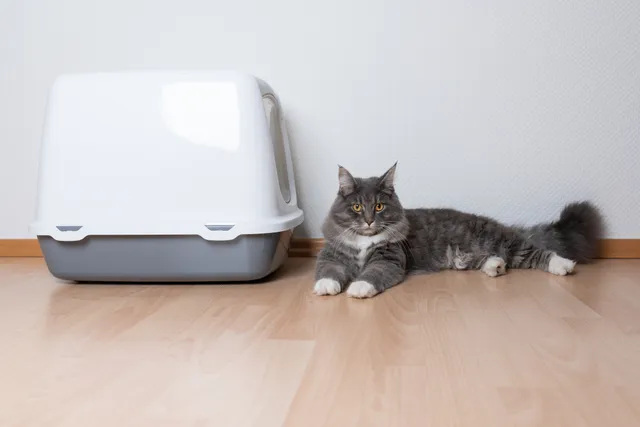
Everyone poops. There is even a book about it. If you have cats and litter boxes, you'll be very familiar with how much and how often your cat poops, but what if your cat does their business outside? Is there a way to find out if everything is working as it should be?
In the following article, we will talk about feline constipation, what causes it, how to deal with it, and how to know if your cat is suffering from it. But before we do, we should talk about how regular your cat should be.

How Often Should My Cat Poop?
The answer to this question depends on a few factors: diet, age, individual variability, and health. As with many conditions, it is important to familiarize yourself with what is normal for your cat so that you know when things aren't right.
A cat fed a high-quality, dry kibble diet may poop once a day, sometimes less; once every 36 hours might be normal. Cats eating lower-quality foods may poop two to three times a day, and their feces tend to be larger and smellier. That's because premium diets are generally higher in digestible energy, which means that for every ounce of food eaten, they absorb more of it, leaving less to be excreted as waste. Foods with low digestible energy mean more of it winds up in the litter box more frequently.
Because of this variability, there's no set answer for how regular your cats should be; it's just important that they're regular.
How Do I Know if My Cat Is Constipated?
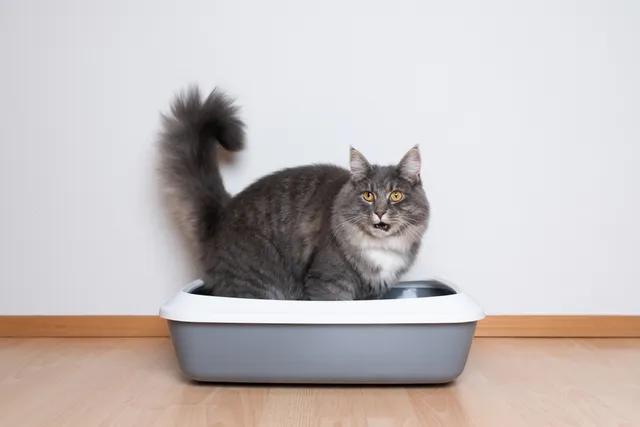
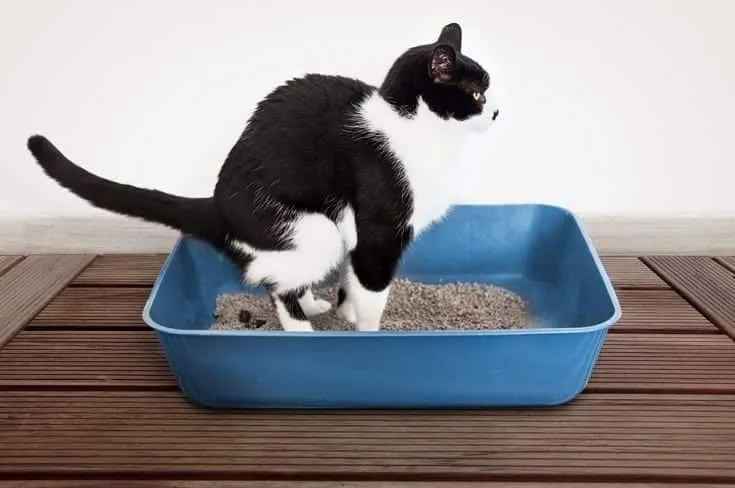
In many cases, this will be obvious; your cat is straining to go to the toilet but not passing any feces. It is important to distinguish between straining to defecate and urinating. One is a fairly urgent matter, and the other may be an emergency, particularly if the cat is male.
Cats going in and out of the litter box may show signs of cystitis or a urinary tract infection. In these cases, they may be passing small amounts of urine often, or there may be blood in the urine, but they are not usually painful enough to cry when toileting.
Male cats (very rarely females) can develop blockages in their urethra, and this is an emergency. If your cat is trying to urinate, licking their genitals, and especially if they are crying out, you must contact your veterinarian immediately.
If your cat is still passing urine but straining to poop, you are likely dealing with a constipated kitty. The exception to this rule is in cats that have had diarrhea. Sometimes the inflammation in the rectum caused by diarrhea can make your cat feel like they need to poop when they actually don't.
As you can see, knowing the recent history of the cat is important!
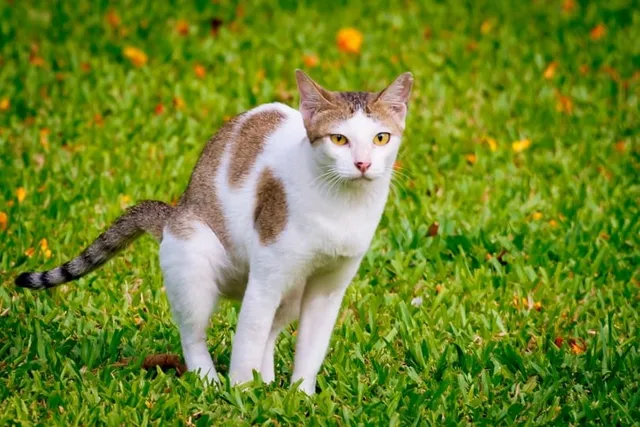
What if My Cat Doesn't Use a Litter Box?
You might think that if your cat goes outside to eliminate, you will never know if they have a problem, and sometimes, this is true. But usually, the rule still applies. Knowing what is normal means you can tell when things aren't right. If your cat is bright and happy, eating normally, and showing no signs of illness or unexpected weight loss, then their toileting is likely normal as well.
In most cases, when a cat that normally toilets outside has a problem, they find a way to let you know. Whether this is a conscious decision or just a result of the urgency of the condition, we'll never know, but it certainly is useful.
Cats with urinary problems will often try urinating indoors—in sinks, on floors, in fruit baskets (yes, that has actually happened!)—and you might see big puddles or tiny droplets, sometimes containing blood. Cats with diarrhea might have an accident indoors, but more commonly, you might just notice the evidence around their back end, hopefully before they've sat on your lap!
A constipated cat will often be so frustrated and uncomfortable that it will continue to try to defecate, indoors or out. But if that is not the case, there are some other signs to watch out for in a constipated cat.


What Are the Other Signs That My Cat Might Be Constipated?
The following signs may accompany constipation but may also occur with other health problems.
In any event, they all warrant a trip to the vet.
If your cat is showing any of these signs, get in touch with your veterinary practice to make an appointment.

What Causes Feline Constipation?
There are many potential causes of constipation. Some are quite straightforward, while others are more complex. Before we start, we need to know the difference between constipation and obstipation.
Constipation: The reduced, infrequent passage of hard, dry feces due to a medical or physical problem. The colon itself is functional, and straining (tenesmus) is usually seen.
Obstipation: This is when the colon is no longer able to push the feces along (no peristalsis), so there is no tenesmus. It can occur due to prolonged constipation or due to a primary problem affecting the muscles and nerves of the large intestinal wall.
All but one of the conditions discussed below involve constipation.

The 6 Reasons Your Cat Might Be Constipated
1. Hairballs
We often hear the term "cough up a hairball," but this is not an accurate description. Cats often make a retching, gagging sound when bringing up a hairball, but it is not technically a cough. A hairball in the lungs would be an extremely serious problem! Cats that suffer from hairballs will usually suffer at both ends. Sometimes the hair can accumulate in the intestines and slow down the digestive process, and other times it can cause a complete obstruction. The longer it takes feces to travel through the large intestine, the drier it becomes, and this can lead to constipation.

2. Dehydration
Similar to the hairball problem, dehydration can cause the contents of the large intestine to dry out, accumulate, and become too difficult to pass. The more time that passes, the drier it becomes. Often, the cat stops eating and drinking, worsening the dehydration.
3. Diet
It is a common misconception that cats need to consume bones. When cats hunt, they will eat the cartilage, skin, muscle, and organs of their prey, but the only bones they consume are small ones that are eaten incidentally. Bony material can accumulate in the large intestines, forming large, hard stools that are too difficult or painful to pass. Bones also pose a risk of intestinal obstruction or, if cooked or sharp, can damage or pierce the walls of the stomach or intestines.
Cats that eat only or primarily dry food should naturally drink enough water, but sometimes they don't, which can lead to the accumulation of hard, dry feces.
4. Arthritis/Back Pain
You might be wondering how arthritis fits into this equation. Pain can be an indirect or consequential cause rather than a direct cause of constipation. Cats with back problems, pelvic injuries, or arthritis, particularly of the hips, may have difficulty getting into the appropriate "pooping position," or they might delay passing feces as it causes them discomfort or pain.
Pelvic fractures (a common injury in cats that are hit by cars) can lead to a narrowing of the pelvic canal, making defecation difficult, or there may even be nerve damage that affects defecation. This leads to an accumulation of feces in the rectum which can lead to constipation but can also result in fecal incontinence, as the pressure building is too much for the anal sphincter to contain.

5. Kidney Disease and Diabetes
Another example of an indirect cause of constipation. Cats with advanced renal (kidney) disease will often develop constipation as their damaged kidneys are unable to keep water in the body, resulting in dehydration. Cats with renal disease will also usually drink and urinate a lot.
This is also the case with diabetes. The high blood glucose causes diuresis (increased urine production), which can also lead to dehydration. Like cats with renal disease, diabetic cats will also drink and urinate excessively.
6. Megacolon
This can be an acquired or primary condition, where the walls of the rectum become dilated and unable to exert the peristaltic pressure needed to pass feces. It can occur secondary to constipation or nerve damage but is most commonly due to a neurogenic, neuromuscular degenerative disorder known as idiopathic megacolon. This condition results in obstipation and is more difficult to treat.

Diagnosing and Treating Constipation
Diagnosis of constipation in cats is usually straightforward, based on clinical history and physical exam. Fortunately, constipation can usually be felt on abdominal palpation. In all cases, basic blood work should be run to look for any underlying conditions. X-rays must be performed to assess the extent of the constipation and to check for megacolon, which appears as a very dilated colon full of feces and gas on an X-ray.
In most cases, treating constipation involves dealing with the accumulated feces in the colon and addressing the underlying issue.
There are a number of ways in which constipation may be tackled, depending on the extent and severity:

How Can I Stop My Cat From Becoming Constipated?

In cases of kidney disease and diabetes, diagnosing and controlling these conditions is essential. If well managed, the cat should no longer urinate excessively, and their dehydration risk will be reduced.
Providing your cat with plenty of fresh water is vital, particularly when the weather is hot or if they are fed a dry diet. For cats, the presentation and location of their drinking water are important.
Here are a few tips to make their water bowl more appealing:
If your cat has a long or thick coat or sheds a lot, use a diet or paste designed to help prevent hairballs. If your cat is showing signs of arthritis, like a reluctance to jump or thinning muscles over their back legs, talk to your vet about pain management, particularly if your cat has a history of pelvic injury.
Feeding a high-quality, highly digestible diet high in fiber is one of the easiest ways to keep them happy, healthy, and regular. Premium diets may cost more, but you end up feeding less.
What About Megacolon?
Cats with acquired megacolon due to prolonged constipation will often recover once the primary problem has resolved, but they may require medications to help the colon function normally. In cases of primary or idiopathic megacolon, medical management can be successful in managing these cases, but sometimes, they require surgery to remove the non-functioning part of the colon. Sadly, cats with severe megacolon are often euthanized.

Conclusion
Constipation is a fairly common problem in cats, largely due to the number of things that can cause it. In most cases, the signs of constipation are quite obvious, but there are several conditions that may present in a similar way. If you suspect your cat may be constipated, early intervention is key to avoid complications like secondary megacolon.
There are a number of things we can do to reduce our cats' risk of becoming constipated, such as promoting hydration, feeding premium food, preventing hairballs, and managing pain. Annual health checks are a great way to make sure your cat is fit and well and can result in early detection of problems. Get to know your cat's routine, as it's far easier to recognize when something is wrong if you are familiar with what is right.
Remember, if you think something is wrong, you're probably right, so it's always better to get them checked.
Sources
Featured Image Credit: victorhugosilvafotografo, Shutterstock
Expert cat care, straight to your inbox
News, insights, and useful advice, delivered to you.

No spam — unsubscribe anytime.
By signing up, you agree to our Terms & Conditions and Privacy & Cookies Policy.
How useful was this post?
Click a star to rate. You can leave written feedback afterwards. (We read all feedback.)
Dr. Karyn Kanowski BVSc MRCVS (Veterinarian)
Dr. Karyn comes from Queensland, Australia, and has lived in the UK for the past 10 years. In 2010, she graduated from The University of Queensland School of Veterinary Science and also has a Bachelor’s degree in Zoology. She is passionate about using evidence, experience, and owner collaboration to provide the best solutions for pets, and believes in making reliable information about animal health accessible to all. Dr. Karyn shares her home with five cats, four dogs, and one husband. When she is not in the scrubs, she spends her time writing, gardening, and cleaning up pet hair!