Megacolon in Cats: Signs, Causes, Treatment & Prevention (Vet Answer)

In this article
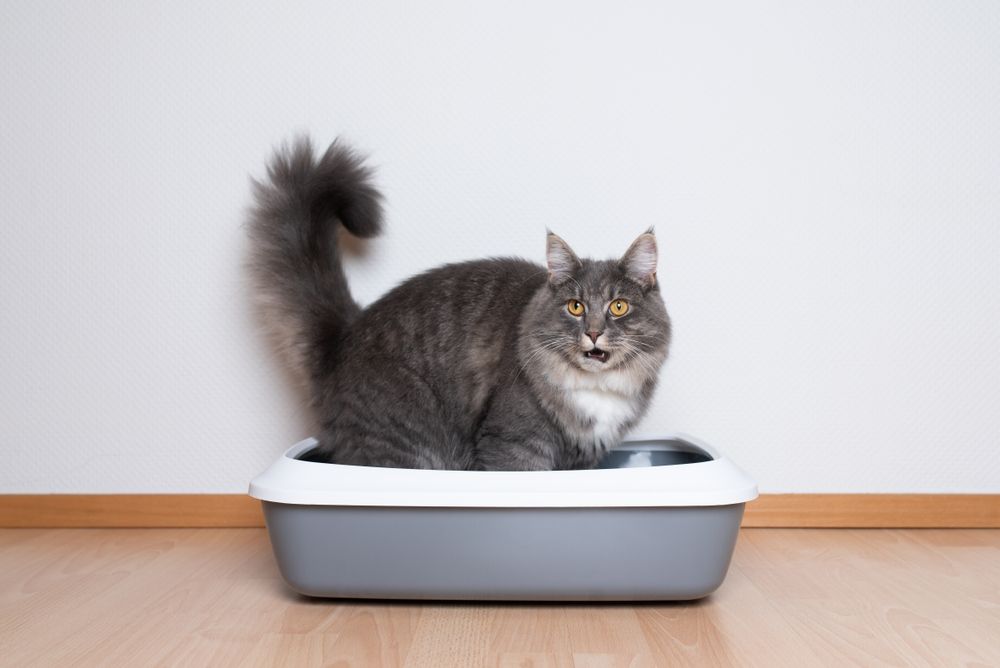
You’re likely quite familiar with your cat’s litter box habits. After all, you need to regularly scoop and clean the box, so you can note how much there is and how often everything is moving through. For certain kitties, the latter can be a bit of an issue due to frequent or repeated constipation. While there are many causes of constipation in felines, a major one that can lead to the more serious version of constipation, called obstipation, is megacolon.
Here, we discuss the ins and outs of megacolon in cats so you’ll know what signs to look for, what can cause it, and how it can be treated.

What Is Megacolon in Cats?
The colon makes up most of the large intestine. It serves a couple of purposes: to absorb water from the fecal material and to store that feces until the body’s ready to get rid of it. The walls of the colon are made of muscles that contract to move feces through the rectum and out the anus. It’s important to note that the muscles of the colonic walls are controlled by nerves that come from the spinal cord.
If a cat has a megacolon, something has disrupted the normal movement of the colon, causing feces to build up, stretch the muscular walls, and make the diameter of the colon larger. Overly stretched muscles don’t work as they should, which further increases the accumulation of feces, leading to even more problems.
What Are the Signs of Megacolon in Cats?
The first signs of megacolon often coincide with those of constipation and include straining to defecate and small amounts of feces or none at all. If you have more than one kitty residing in your household, it can be hard to notice this sign at first, as there will likely still be feces in the litter box from your other cat, but you may catch the affected kitty frequently visiting the litter box and not producing anything.
After a day or two of constipation, a cat with a megacolon will likely stop eating and become lethargic. They won’t feel well and may even show abdominal discomfort, such as not wanting you to touch their stomach or frequently moving around or shifting when lying down. Some cats may also start vomiting.
As this goes on, cats can become dehydrated or even start to lose weight. A vet will likely be able to feel the hard feces in the abdomen.
Is your cat presenting any of these signs? We suggest you speak with a vet online.

What Can Cause Megacolon in Cats?
The causes of megacolon in cats can be divided into three main categories.
1. Nerve Issues
Since the nerves controlling the movement of the colon come off of the spinal cord, a spinal injury in that area can cause megacolon. A herniated disc or spinal fracture due to trauma, or disruption from an abscess or tumor can disrupt the nerves that head to the colon, making those muscles go flaccid and enabling them to stretch and expand as the fecal material starts to build up.
Manx cat owners should know that their cat’s adorable little nubbin of a tail can come at a cost. Some individuals of this breed have what’s aptly called Manx syndrome, in which the genetics that leads to their tail-lessness also causes deformities at the end of the spine, disrupting the nerves to the colon and potentially, the bladder and hindlegs.1
2. Muscular Issues
Muscles don’t work well when they’re overly stretched, so anything that blocks the movement of feces out of the colon can lead to stretching and expansion of the muscles and the diameter of the colon. Nerve problems aside, masses, foreign objects, or hairballs can all block the passage of feces, thus enabling a build-up and muscle stretching. Constant constipation due to diet, hairballs, or something else going on with your kitty can do the same thing.
As part of this, cats that experience pelvic trauma and fractures may end up with a severely narrowed pelvic canal and have difficulty passing feces. This can also result in recurrent constipation and megacolon.
3. Idiopathic Issues
Unfortunately, many cases of megacolon happen for unknown reasons. We simply don’t know the exact cause of the disruption. Idiopathic megacolon happens more commonly in older kitties but can occur at any age.

How Do I Care for a Cat With Megacolon?
Noticing constipation in the early stages is the best way that you can help your kitty. This means paying attention to their litterbox use and monitoring them for any signs of straining or otherwise abnormal defecation. If you notice a problem, see your vet immediately, as waiting could result in your cat developing a megacolon.
Your vet will start by looking over your cat and palpating their abdomen to check for hard fecal balls. They may also use ultrasound or X-rays to determine the extent of the problem and perform blood work or other diagnostics to rule out potential causes.
From there, it’s all about getting the feces out of your cat. This often involves sedation or even general anesthesia, as it can be painful. Enemas and manual evacuation techniques will be used to remove as many poop pieces as possible. Your cat will also likely be given fluids to treat dehydration.
Once the feces are removed, the underlying issues should be treated, if possible. Problems with the spinal cord may require medication or surgery; obstructions from masses, foreign objects, or strictures should be removed; and diet may need to be addressed. If the cause is unknown, most vets will attempt medical management, consisting of medication to improve colonic motility and transit time. A low-residue diet may also be recommended, which will help the colon without adding too much fiber that will bulk up bowel movements.
For most cats, medical management may be all that’s necessary to get them through the next few months or even years with normal bowel movements. However, some cats will relapse to the point that surgery may be necessary. In these cases, a colectomy will be performed. Most or all of the colon will be removed, since it’s essentially nonfunctional. Fortunately, after a few months of soft stools, most cats return to fairly normal bowel movements and only rarely experience fecal incontinence following a colectomy.

Frequently Asked Questions
How Long Can a Cat Live With a Megacolon?
Getting a cat treated for megacolon as soon as possible is always the best route, but some people might still wonder how long a cat can live without treatment. There’s not a definite answer for this, as it will vary from case to case, depending on the cause of the megacolon, the cat’s age, and health status prior.
Are Cats With Megacolon in Pain?
As fecal material starts to build up in the colon, it can become painful and uncomfortable, especially when there is pressure on the abdomen, such as when they lie down or when it is touched.
How Do You Prevent Megacolon in Cats?
Prevention is always the best medicine, so treating your cat at the first signs of constipation can help prevent megacolon from forming. Getting prompt treatment for any injury to the spine or pelvis is also crucial. Be sure to feed your cat a high-quality, highly digestible food, treat hairballs, and prevent them from eating foreign objects.

Conclusion
Megacolon in cats forms if there is a disruption to the innervation of the colonic muscles or if an obstruction prevents feces from moving through. The result is a stretching and expansion of the walls of the colon that encourages further fecal accumulation that can build up to dangerous levels. Getting quick treatment at the first signs of constipation or other issues affecting your kitty is your best bet to prevent megacolon. Otherwise, it can be managed medically or require surgery to treat.
Sources
Featured Image Credit: Nils Jacobi, Shutterstock
Expert cat care, straight to your inbox
News, insights, and useful advice, delivered to you.

No spam — unsubscribe anytime.
By signing up, you agree to our Terms & Conditions and Privacy & Cookies Policy.
How useful was this post?
Click a star to rate. You can leave written feedback afterwards. (We read all feedback.)
Dr. Chyrle Bonk DVM (Veterinarian)
On top of healing animals and writing for veterinary publications, Dr. Chyrle Bonk owns a small cattle herd! When she’s not busy with those things, she can be found somewhere in the Idaho outdoors with her husband and two kids.
Chyrle has practiced in a mixed animal clinic for over 10 years. She also writes for various veterinary websites and magazines, like Catster!
Dr. Chyrle Bonk received her Doctor of Veterinary Medicine (DVM) from Oregon State University in 2010.