Get

In Your Inbox

Catster is reader-supported. When you buy via links on our site, we may earn an affiliate commission at no cost to you. Learn more.

Moody Blues: Cats and Their Emotions

Share

Pancake is definitely showing some grumpy face emotion here, after being awoken from a nap.

Hi, I’m Dr. Lauren! Read my introduction to learn more about me and my two adventurous cats, Pancake and Tiller.

Cats, the effervescent cog in the otherwise somewhat bland wheelhouse of modern home life. Or, at least, that’s my opinion and I’m sticking to it. Cats are steadily creeping up to become one of the more popular household pets in many countries, but as I’ve written time and time again, we don’t really know all that much about them.

Do they get anxiety? Why are they so different from dogs? Can we typify the feline personality, or do cats that are more dog than cat actually exist? When does a healthy appetite actually mean something bad? Truly, they remain as much of a mystery, as a beloved household family addition.

divider 1 paws

Cats & Personality

One thing that has surprised me, again and again since graduating from vet school, is their personality. Stoically, we were repeatedly told as vet students that cats had no emotions. No research was given to support this, and yet none of us questioned this assertion. And yet, daily, in clinical practice, I am reminded of this supposed truism. And that, while I still have next to no research to back it up, cats almost certainly have emotions.

Last night, for example, was an exceptionally cold spring evening. Pancake has recently realized that Tiller has a favorite spot on a cardboard scratching post, that also happens to be near the main heating vent for the family room. And, therefore, Pancake has taken it upon herself to extricate Tiller from this spot…mainly by getting to the spot as soon as the heat goes on, much to Tiller’s dismay.

Last night, a number of bopping, punching, ear biting, and generally feline-tense moments ensued between the two, as they had a kerfuffle over who owned said hot spot. That is, until human intervention opened a can of wet food, and all grievances were quickly forgotten.

Pancake and Tiller often cohabitate without issues.

Pancake vs. Tiller

Pancake also gets inordinately grumpy if she doesn’t maintain her routine. That means breakfast by 6 am, second breakfast by 7 am, the sofa free by 8 am, and a prompt bedtime by 10 pm. I’ve actually seen her march upstairs, at 10 pm on the dot, in an attempt to lead people to bed. And I’ve seen her boycott the humans all night, if they don’t follow her lead. Further, houseguests be warned- if you try to pay her too much or too little attention, just know that, as the Klingons say “Heghlu’meH QaQ jajvam”.

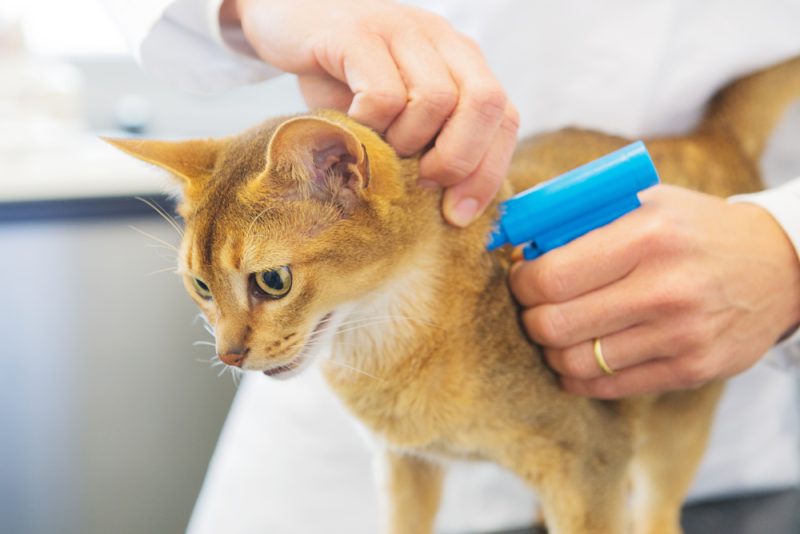
Worse, is applying their flea treatments. Tiller is a bit more forgiving: once it’s done, it’s done. But with Pancake, a 3-month application of a flea and tick product, means that invariably for at least 1 month, but more than likely 2 months, I have to tiptoe every time I go anywhere near the back of her head, lest she turn around in sheer disbelief that I am again betraying her confidence, then run and hide for the next few hours. Don’t ask what it is like trying to give her pills! I’m pretty sure the neighbors would call the police if it was a common occurrence…and I refer again to the Klingon axiom written above.

Now, you may say that I am anthropomorphizing the cats. Sure, I live with them. I see their personalities. Tiller is athletic, aloof, intelligent, a bit high-strung, and a bit skeptical. Pancake is food motivated, constantly talking with whoever is around, grumpy when hungry (truly the definition of hangry!) and always happy to steal your chair or sofa the minute you get up to do something else. Without question, they have tiny brains, too much fur, and huge personalities.

Tiller sometimes shows evidence of jealousy when Pancake steals a prime sleeping spot.

What Does The Research Say?

Research on the subject of feline emotions is divided. Conversely, or perversely, we do discuss feline emotional health when talking about environmental enrichment in feline medicine, yet to what extent those emotions are experienced, or even acknowledged, is sparse, and just beginning to be investigated.

For instance, in a Japanese study (and others), pet owner attachment was directly related to the observation and assessment of pets’ emotions, with compassion and jealousy being the two most frequently observed emotions by owners. However, the jury remains out on just how accurately humans can interpret feline emotions in certain settings, especially when anthropomorphic tendencies have a role in the owner’s interaction with their pets.

Other, early data suggests that cats vocalize other than meowing in part for conveyance of positive emotions, but much remains to be elucidated on that front. One interesting paper even went so far to suggest that a feline left gaze and head turn may indicate low level fear, while a right gaze and head turn may indicate relaxation… feline emotional psychology indeed!

Essentially, the jury remains out on feline emotions, at present. At least officially. But when I walk into a clinic, and start a day of consulting, and cat after cat gets onto the exam table, looks at me, and sighs, it’s difficult not to feel their very real emotions. I’ve never gone so far as to see an eye roll, but I suspect it may yet happen. And if it does, Pancake will probably be first in line.

This article is a part of Dr. Lauren, Pancake, and Tiller's series.

Want content like this delivered to you?

Sign Up For Our Newsletter

News, insights, expert advice, and everything cat

* By submitting, you agree to our Terms & Conditions and Privacy & Cookies Policy.


How useful was this post?

Click on a star to rate (you can leave written feedback after clicking submit)

Help us improve Catster for pet parents!

Your feedback really matters.

What did you like about this post? Also how can we improve it?

Join the conversation

Leave a Reply

You’re very welcome to leave a comment or question. Please know that all comments must meet our community guidelines, and your email address will NOT be published. Let’s have a positive and constructive conversation.


Catster's Digital Magazine is Back!

Vet-approved health & behavior advice

Real cat stories & community features

A Paw-sitive Milestone: Canada Officially Becomes a Declaw-Free Nation

Canada has officially become a declaw-free nation. On May 25, 2026, a new regulation was filed in Ontario under the Provincial Animal Welfare...

The Surprisingly Simple Ways to Help a Cat With Hairballs

Cats spend an astonishing amount of time grooming. It is part hygiene routine, part comfort ritual, and part instinct that traces back generations....

What a CATastrophe! A Tire-ing Ordeal For a Pony in the UK

As you would expect, our weekly news updates are usually centered around feline topics – we are a cat care website after all...

Ask Dr. Paola – Help! My Cat Has Stopped Eat His Wet Food! (June 1, 2026)

Welcome to our “Ask Dr. Paola” series, where every Monday we bring expert advice straight from Dr. Paola Cuevas (MVZ) to help our...

More related

A Simple DIY Cat Fence Idea You Can Build Today (With Instructions)

If you are a cat owner who would love to let your cat enjoy the great outdoors but are concerned about the risks...

Catster Photo Contest: Cats of the Week Winners (December 18, 2025)

Every week our team gets the privilege of sorting through our readers photos to choose what cats will win this weeks contest! See...

How Much to Get a Cat Chipped In the UK? (2026 Update)

Microchipping is a common practice for pets in the UK and it helps ensure that lost or stolen cats are reunited with their...

Cat Mange & Scabies: Our Vet Explains Causes, Symptoms & Treatments

All pet parents are familiar with the common parasites, fleas, and ticks that can affect our four-legged friends, and they regularly prevent them...

Keep reading

8 Best Waterless Cat Shampoos in 2026: Reviews & Top Picks

Cats are known for their grooming, as they spend such a large part of their day, every day, bathing themselves. But sometimes your cat might get into something nasty that they might need help removing. Most cats are also known...

light grey cat with rubber ducky bath bathroom shampoo

What’s a Lick Mat & Does It Help Cats? Pros, Cons & FAQ

A lick mat is a flat silicone or rubber mat with ridges and bobbles designed to slow your cat’s eating and provide mental stimulation during mealtimes, as pets have to work to free their food. They’re incredibly easy to use;...

Why Do Cats Show You Their Butt? 6 Vet-Reviewed Reasons

Although cats have lived with humans for millennia, they still do many things that leave us feeling puzzled or confused. One behavior that can surprise or shock new cat owners is a cat’s tendency to show their butt when they...

black cat enjoying when owner scratch at the base of his tail showing the butt

Why Is My Cat Peeing Outside the Litter Box? 7 Possible Vet-Approved Reasons

Cat pee is not a pleasant odor, even when it’s safely contained in a litter box. However, when a cat starts urinating in inappropriate locations, the situation escalates. Inappropriate urination is a common reason that cats are surrendered to animal...

orange cat beside litter box

Heartworm Prevention for Cats: 3 Vet Approved Methods

Of all the diseases our cats can suffer from, heartworm disease is one of the worst. This disease is transmitted by mosquitoes that carry heartworm larvae that burrow into the body and can go on to grow up to 12...

Sick cat in animal hospital

Pregnant Cat Nipples vs Normal: Vet-Verified Differences Explained

Both male and female cats have nipples, but the female’s nipples will change during and after pregnancy to accommodate the nutritional needs of her little ones. After all, those nipples must be ready to feed several kittens at the same...

male hand touching the pregnant bacl and white cat's belly

My Cat Isn’t Interested in Playing: 5 Vet-Reviewed Reasons & Solutions

Playing is beneficial for cats in so many different ways as it encourages independence, promotes positive brain development, relieves stress, and keeps your cat healthy. Because of this, playing is an essential activity in every feline’s life, and most felines...

two cats playing with a toy indoors

10 Vet Reviewed Facts About Cat Anal Glands

If you’ve ever noticed a stinky, fishy smell coming from your cat or a swelling next to their anus, then you’ve likely noticed their anal glands. The anal glands contain chemicals that act as territory markers, although they do serve...

vet checking up a cat

Love Cats? So Do We! Join the Catster Community

Stay informed with expert pet care insights delivered straight to your inbox! Discover professional guidance on animal behavior, feeding tips, trusted product picks, and much more.


Sign up for the Catster Email Newsletter

Stay informed with expert pet care insights delivered straight to your inbox! Discover professional guidance on animal behavior, feeding tips, trusted product picks, and much more.