


By the time your cat is 5 years old, they’ve gone through a couple of life stages and have settled into a relatively humdrum, stable, day-to-day routine. Your cat knows how family life works and has carved out a little niche for themselves in the pecking order. They are most likely trained and, in reverse, trained you and your family in all the best ways to care for them.
There are so many different facets to feline owner life that it can be dizzying to keep up with them all individually, so we’ve decided to just list a few of them for your convenience. Scroll down for everything you should know about your 5-year-old cat by now.

Things to Know About Your 5-Year-Old Cat
Diet & Weight
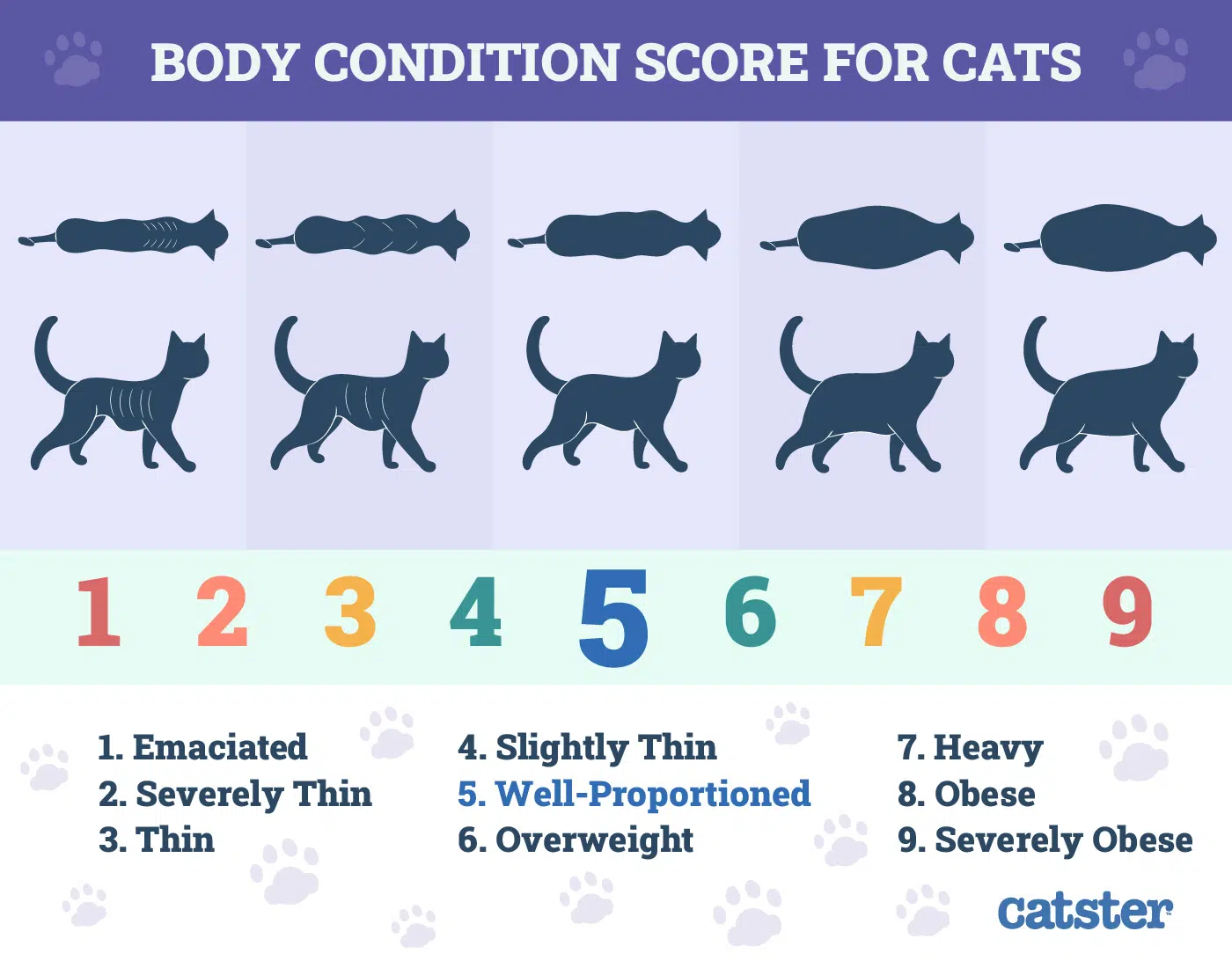
Kittens and younger cats need more protein and fat to fuel their growing bodies, while adult cats can have varying nutritional requirements based on age, activity level, lifestyle, and health. These types of diets are often referred to as “maintenance diets.” Adult cats who have filled out their furry frame can start gaining weight once they pass 3 years, or sooner, if their portions aren’t adjusted to their desired weight and activity. Using a body condition score chart is an excellent way to determine where your cat needs to be.
By definition, a maintenance diet maintains a healthy weight and vigor, but you need strict portion control, too. By now, you should know not to feed your cat or let them graze with unlimited access to food at all times, which is a big contributor to cat obesity and other health conditions that come with it. If your cat struggles with overeating at 5 years old, we suggest increasing their activity and reducing their total food intake throughout the day with more frequent, smaller meals. Try three slightly smaller meals per day to start, and adjust up or down from there. For obese cats, consult your veterinarian, as there are diets suitable for weight loss.
Health
You and your cat should be familiar with your annual wellness exam by the fifth year, and generally speaking, your kitty is in the prime of their little life. However, depending on genetic and breed predispositions and many other risk factors, this is also the time that various health conditions may arise. It’s important to observe your cat’s behavior, such as their appetite, drinking, demeanor, and toileting, to be able to pick up any changes that may signal illness quickly.
It’s also important to check your cat daily, making sure they are their normal selves and that there aren’t any signs of external injuries, wounds, limping, stomach upset, respiratory issues, or other issues. By cuddling them, you will be able to pick up any scabs or lumps that shouldn’t be there and warrant a veterinary check.
Let’s briefly cover how to identify some of the signs that may indicate there is a health issue in your 5-year-old cat and which body areas to check regularly. This list is not exhaustive since there are a lot of possible signs of illness, pain, and injury in cats, so please consult your veterinarian if there are any concerns about your cat’s health.
- Face: Your cat shouldn’t have scratches, fur loss, scabs, or discharge coming from any part of their face, such as the eyes and nose. Observe their teeth and mouth, if possible, and monitor for signs of dental issues and bad breath.
- Ears: Inspect your cat’s ears daily and watch for bites, redness, fur loss, discharge, or excessive ear scratching.
- Nose: A cat’s nose shouldn’t be too wet or dry, but this is very individual and greatly depends on environmental factors, temperature, and humidity. There shouldn’t be any discharge, crusts, or redness. Have your cat checked by a vet if you notice any kind of discharge, excessive sneezing, or particularly respiratory difficulties.
- Claws: The length of your cat’s claws will depend on their lifestyle and level of activity. Outdoor cats may use their claws more, while indoor cats resort to scratch posts. It’s important to let your cat exhibit their normal scratching behavior, but some may benefit from regular trimming. Usually, 5-year-old cats do not require regular claw clipping as long as there are plenty of opportunities to scratch.
Besides checking particular areas of the body and watching for signs of illness, keep an eye on your cat’s weight, as sudden weight gain or weight loss may indicate an underlying health issue.

Behavior
Five-year-old cats can display a huge range of personality traits, just like dogs or people. Both bursts of playfulness and stints of somnolence are common and not anything to worry about on their own. Observe your cat’s behavior closely so you can pick up on any changes that may indicate illness, pain or stress, such as excessive hiding, reduced appetite, limping, walking hunched, or growling when being picked up.
Sleep & Exercise
An adult cat can sleep 12 to 18 hours per day, with some cats being more active or lazier than others, also depending on their age. Their naps can be as short as 10-15 minutes or longer, and they will wake up frequently and carry on with their daily activities in between sleeping. This is referred to as a polyphasic sleep pattern because their sleep is broken up throughout the day. Naps from less than an hour to almost 2 hours long are normal and no cause for concern.
Your average adult cat needs plenty of exercise, generally as shorter bursts of activity, many times throughout the day, alongside mental stimulation in an enriched environment. Your cat loves playing with you with enriching toys and puzzle feeders, and cat towers are always a good idea to provide a beneficial scratching outlet. Window perches and outdoor secure catios that allow them to exhibit some of their natural predatory behavior in a controlled manner, without actually endangering the wildlife or themselves, are another way to fulfill their time.

Grooming
Your cat’s fur should be soft, sleek, and healthy to the touch. If your cat’s fur is thinning, dull, or falling out, they are scratching excessively, or there are scabs or crusts on their skin, take them to a vet ASAP. Your cat is likely just as fastidious as ever about their self-grooming, and most cats have perfected a grooming routine by their fifth year of life.
It’s advisable to run a pet brush through their fur once or twice a week to remove dead fur and identify any problem areas in the fur or skin if your cat is shorthair. For long and medium-haired kitties, the brushing and grooming routine should be more regular, even daily, particularly to prevent or gently detangle any existing mats. While you’re at it, you can check your cat’s ears and claws to make sure they’re in healthy, presentable shape, too.
Oral Hygiene
We recommend brushing your cat’s teeth at least three times a week, or ideally daily if possible, but that depends on whether your cat is cool with it or not. Teeth brushing helps remove plaque and reduce tartar accumulation and gingivitis, which are woefully common and detrimental for adult cats. Your vet will also be checking your cat’s teeth at their wellness exams to ensure they’re clean and healthy.
Many cats dislike having their teeth brushed, which makes things tricky. That’s why it’s crucial to start training them to accept brushing from an early age. This process requires dedication and patience, and with time, many cats will learn to tolerate it, especially if they are rewarded with treats throughout and after brushing is complete. As a complement to brushing, there are dental toys that may promote chewing to a degree but aren’t a substitute for having their teeth brushed. Again, the best way to stay on top of your cat’s dental health is to brush their teeth.

Wrapping Up
Your 5-year-old cat is a part of the family, and it’s always a good idea to brush up on the most important things to know about their health. The good news is that most cats are in their prime at this age, but you should still pay attention to warning signs and stay on top of daily routines like teeth brushing.
Related Reads:
Featured Image Credit: New Africa, Shutterstock
 Things to Know About Your 5-Year-Old Cat




