Get

In Your Inbox

Catster is reader-supported. When you buy via links on our site, we may earn an affiliate commission at no cost to you. Learn more.

How to Give a Cat a Pill: 5 Easy Steps (Vet Answer)

Share

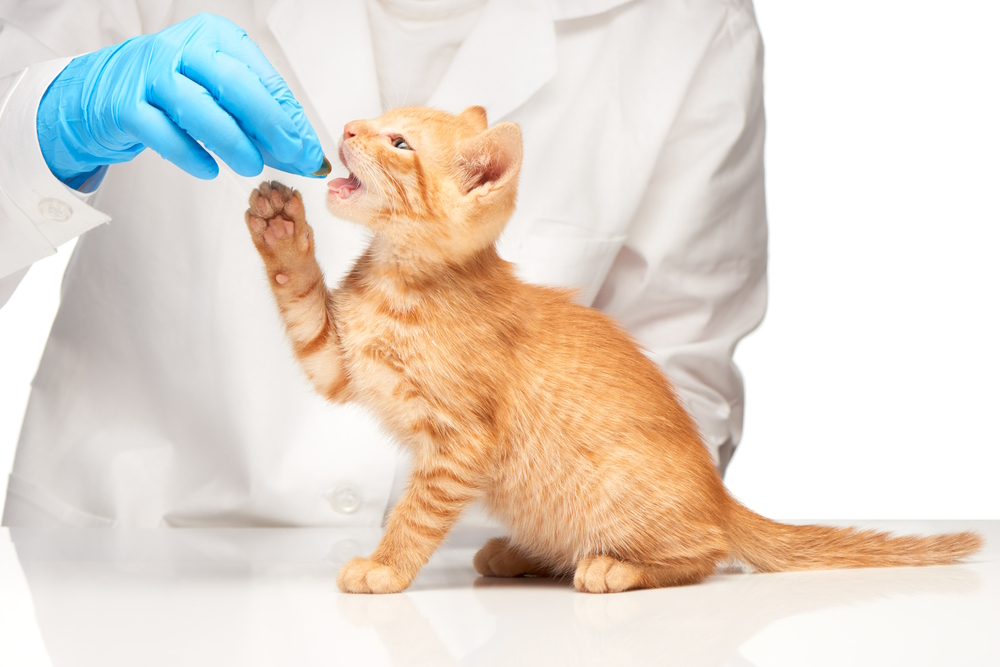
vet-giving-pill-to-kitten

If you have just returned home from a veterinary visit with oral medication for your cat, you may wonder, “How on earth am I going to get this pill into them?” Administering medication to our feline friends can be tricky, but preparation, patience, and a little creativity will help set you up for success.

Remember that all kitties are unique individuals, and you may have to try a few different methods to see what works best for your cat. Keep reading to learn how to give your cat a pill in five easy steps.

divider 3 paws

The 5 Tips on How to Give Your Cat a Pill

1. Double-Check the Directions on the Label

Woman reading medicine leaflet before taking pills
Image By: Grustock, Shutterstock

It is vital to give your cat’s medication exactly as directed by a veterinarian. Even experienced veterinary staff double-check labels before administering medication to patients! Taking a few extra seconds to read the label (especially if it is a new prescription) can help you avoid a mistake that might affect the success of your cat’s treatment plan or even be dangerous (in the case of an overdose, for example).

Make sure to examine the following:
  • How many times per day the medication needs to be administered, and how many hours to wait between doses
  • Whether it should be given with food or on an empty stomach
  • If you need to wear gloves when handling the pills for your safety (some medications can present health concerns if absorbed through your skin)

2. Confirm That No One Else in Your Home Has Given the Medication Already

If multiple people in your home will be giving your cat’s medication, it is a good idea to develop a system to ensure doses are not doubled up or missed.

This can be as simple as:
  • Using a pill organizer
  • Creating a written or digital schedule and noting doses as they are given
  • Checking in with other family members before giving medication

3. Collect All of The Treats and Tools You Will Need Before Getting Started

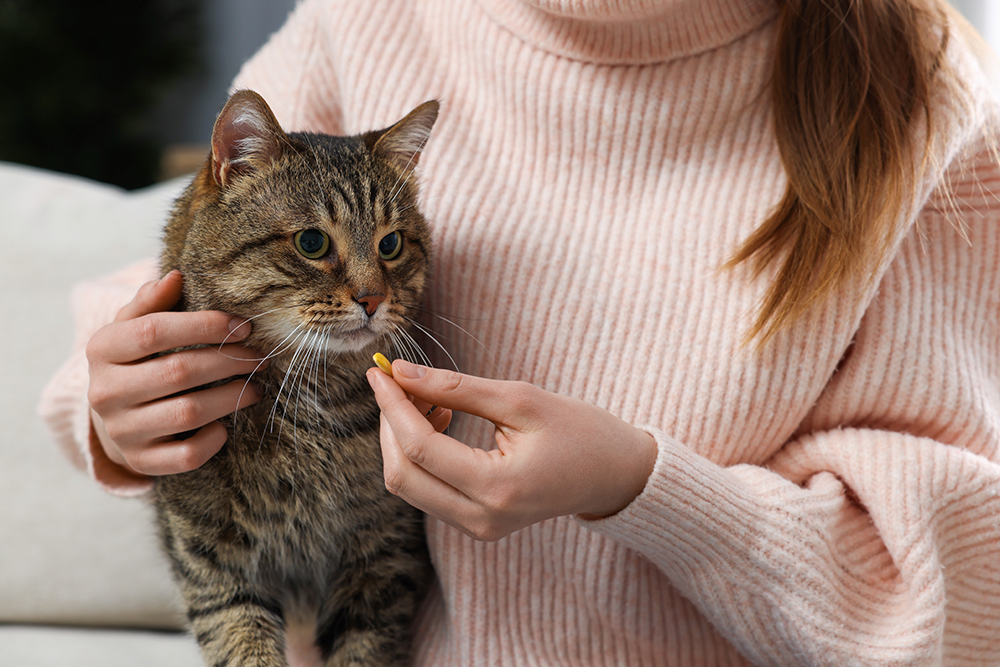
woman giving cat a pill
Image By: New Africa, Shutterstock

Have everything ready before finding your cat.

This may include the following:
  • The pills to be administered
  • A pill splitter or sharp knife, if needed, to cut the pills
  • Yummy food or treats

A second person can be helpful, too!


4. Disguise the Medication

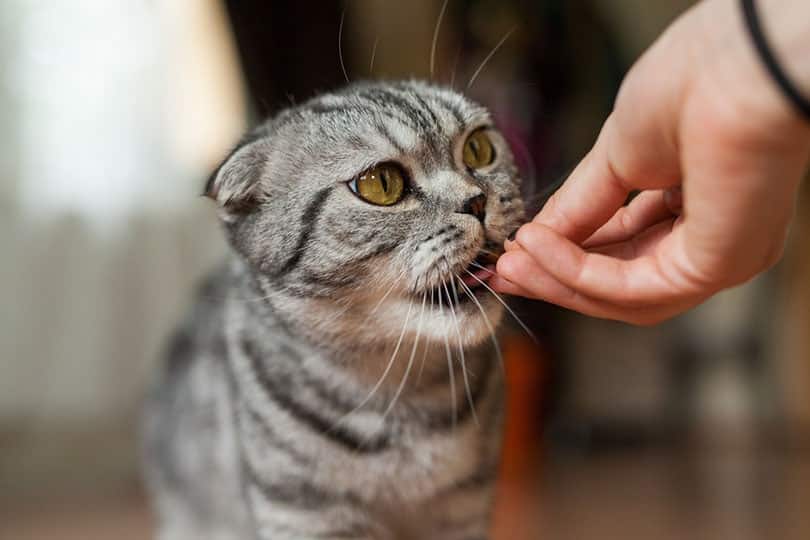
Many kitties will readily accept medication if it is hidden in something delicious. Try wrapping the pill in a specially designed treat (e.g., Greenies’ Pill Pocket) or a soft food that can be molded around the pill. You can ask a vet to suggest some appropriate options for your cat.

It is vital to handle the pill with one hand and the treat with your other hand so the outside of the treat does not taste like medication. Mikkel Becker, a pet behavior expert, recommends using a 3-step approach:

  • First: give a treat without a pill
  • Second: give the treat containing the pill
  • Third: give another freebie treat (or a few!)

Each time you give your cat’s medication, change the number of treats and their order so they do not figure out which treat contains the pill. Some kitties appreciate variety in their treats. Remember to keep the treats small so your cat does not have to chew them.

If the veterinarian gives the okay, you can also try crushing the pill and mixing it with wet cat food or canned salmon juice. However, a risk with this method is that your kitty may not get their full dose of medication.


5. If Necessary, Place the Pill in Your Cat’s Mouth

woman-giving-pill-to-cat
Image By: New Africa, Shutterstock

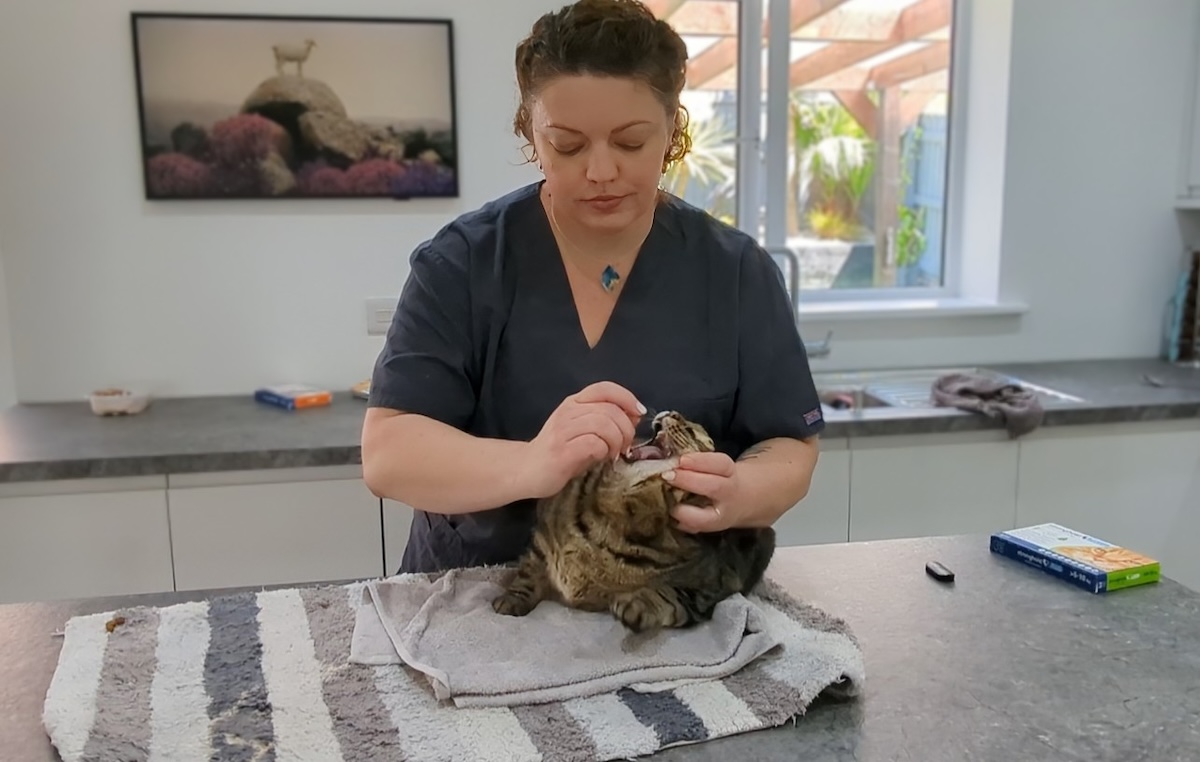
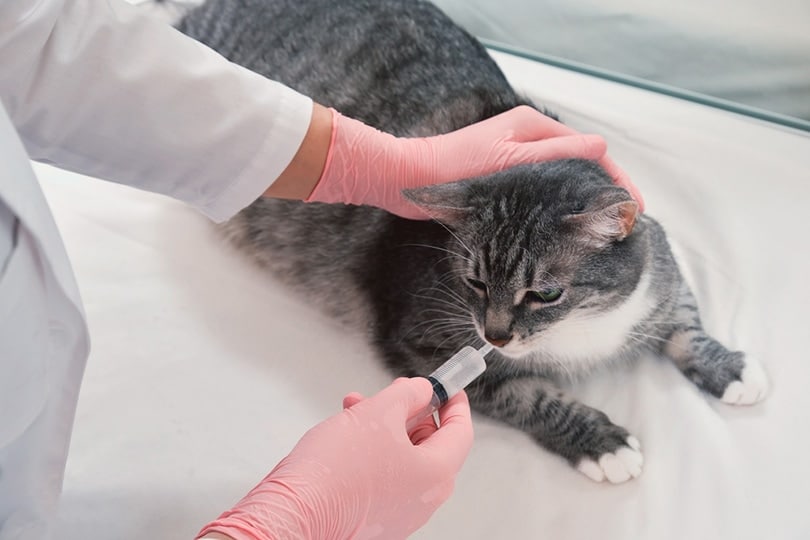
If you have a finicky feline who is too discerning to take their medication disguised in food or treats, you may have to place the pill directly in their mouth. It is important to go about this the right way to minimize stress and make sure you and your cat do not get hurt!

Here is the best approach:
  • Pick a time when you and your cat are both relaxed, and you will not feel rushed.
  • Gently hold your cat’s head by making a sideways C-shape with your non-dominant hand; place your thumb on one side of their upper jaw and your index or middle finger on the other side.
  • Tip your kitty’s head back slightly (not too far), and with the middle finger of your dominant hand on the center of their lower jaw, slowly open their mouth.
  • Use the thumb and index finger of your dominant hand to place the pill inside their mouth, near the back of their tongue.
  • Close their mouth, lower their head to a more natural position, and gently hold their mouth shut until they lick their nose (indicating they have swallowed the pill).
  • It may be helpful to massage your cat’s face and neck to help encourage swallowing.
  • Always follow up by offering some food or treats to help the pill pass into your cat’s stomach.

IMPORTANT: if your cat becomes agitated or tries to bite or scratch you, stop what you are doing and try again later!

If you are uncomfortable placing your fingers in your cat’s mouth, ask a veterinarian to show you how to safely use a tool like a pill gun.

divider 3 paws

Conclusion

Giving your cat a pill does not have to be a scary or stressful experience! If you have worked through our recommended steps and are still having trouble, ask a veterinarian for help. There may be a longer-acting or injectable medication available. As surprising as it sounds, some cats are more tolerant of injections than oral medication.

Some medications can be compounded into forms that are easier to administer. Examples include flavored liquids, chews, and transdermal gels applied to the skin.

One of the best things you can do is practice giving your cat a pill before they need medication! It is ideal to begin when your cat is a kitten and make it a regular part of their training, but it is never too late to start. Check out this handout with great tips for a fear-free experience.

See Also: 


Featured Image Credit: Andrew Rafalsky, Shutterstock

Want content like this delivered to you?

Sign Up For Our Newsletter

News, insights, expert advice, and everything cat

* By submitting, you agree to our Terms & Conditions and Privacy & Cookies Policy.


How useful was this post?

Click on a star to rate (you can leave written feedback after clicking submit)

Help us improve Catster for pet parents!

Your feedback really matters.

What did you like about this post? Also how can we improve it?

Join the conversation

Leave a Reply

You’re very welcome to leave a comment or question. Please know that all comments must meet our community guidelines, and your email address will NOT be published. Let’s have a positive and constructive conversation.


Catster's Digital Magazine is Back!

Vet-approved health & behavior advice

Real cat stories & community features

The Bite Stuff: The Truth Behind a Cat’s Sudden Nip

A cat bite that seems to come out of nowhere is one of the more confusing things a cat owner deals with. Everything...

Your Cat’s Purr Proves They’re One of a Kind

There are few sounds more comforting to a cat parent than the familiar rumble of a purring cat. You probably know your own...

“Pspsps!” Why Cats Find This Sound Irresistible

There are a few things that will capture the undivided attention of virtually any nearby feline: the sound of a can of tuna...

“Trophy Pets”: Two Rescued Lions Finally Find Freedom

Ori began life in a basement. BenTzur was found tied to a tree on a short rope. Both were rescued as lion cubs...

More related

Do Cats Like Eye Contact? Vet-Reviewed Reasons & Behavior Explained

Cats are stealthy and observant animals, and you may often find them quietly staring at you from their favorite perch or hiding spot....

How to Protect a Cat From a Hot Stove: 11 Vet-Reviewed Methods

Many cats know to keep away from hot stoves. Most can feel the heat coming off of it and can guess that it...

Why Are Cats So Flexible? Vet-Verified Facts & Reasons

Cats are amazing creatures capable of some fantastic feats of strength and agility. For example, did you know that a cat can jump...

How to Feed Feral Cats While on Vacation: Risks & Tips

Cats are independent creatures, and that’s never truer than when it comes to a feral cat. Feral cats were born outside, made their...

Keep reading

What Causes Mouth Ulcers in Cats? Our Vet Explains Signs, Causes & Prevention

Mouth ulcers in cats are spots in a cat’s mouth that can cause them to drool and not eat and intensify their bad breath. But there’s more to this condition in cats than just those signs. In fact, mouth ulcers...

veterinarian checks mouth of the maine coon cat

5 Side Effects of Microchipping Your Cat – What You Should Know! Vet-Approved Info

These days, microchipping pets is commonplace and beneficial for you and your pet for many reasons. One of the risks of owning pets is that they can get lost, stolen, or otherwise escape from you. Before microchipping, you had to...

Microchip implant for cat

My Cat Keeps Walking Away From Her Kittens, Is It Normal? Vet-Approved Reasons & Facts

Kittens are challenging for queens and their owners. When they’re small, kittens are vulnerable to many dangers, such as not eating enough, getting too cold, and getting sick, so it’s common for us to worry about them! Newborn kittens are...

American shorthair cat kitten sitting

Cat Shedding: What’s Normal & When to Call the Vet (Vet Reviewed)

Some cats shed more than others, but knowing what’s normal for your own cat is useful. Excessive shedding can be a sign that something is wrong with your feline friend. If it suddenly seems like your cat is shedding more...

white cat shedding

How Long Should a Cat Be Confined After Being Spayed or Neutered? Vet-Approved Recommendations

Spaying and neutering your cat is highly recommended, not only for the prevention of health and behavioral problems, but also to help combat the severe overpopulation of cats. Overpopulation leads to homelessness and the risk of euthanasia. Spays and neuters...

vet putting on surgical suit to a cat after surgery

10 Best Cat Foods for Nursing Mother Cats in Canada 2026: Reviews & Top Picks

Taking care of any cat means being attuned to their health and their happiness. When cats go through different stages of life, a change in diet is usually required. The diet of a kitten is different from that of an...

Gray mother cat feeding kittens while taking a nap

How to Tell If Your Cat Needs to Pee: 5 Vet-Reviewed Signs to Look For

Have you ever wondered if your cat needs to go to the bathroom? For example, you might be thinking of taking your kitty on a long-distance trip in the car and want to know when your feline friend would need...

cat-peeing-on-the-bed

How to Tell if My Cat Has Worms? 5 Vet-Reviewed Signs

Parasitic worms are repulsive to think about, but they’re a common health problem for cats. Along with being off-putting, worms can cause severe complications for your cat if left untreated. Fortunately, worms can be treated safely and effectively in cats,...

cat owner belly rubbing her cat

Love Cats? So Do We! Join the Catster Community

Stay informed with expert pet care insights delivered straight to your inbox! Discover professional guidance on animal behavior, feeding tips, trusted product picks, and much more.


Sign up for the Catster Email Newsletter

Stay informed with expert pet care insights delivered straight to your inbox! Discover professional guidance on animal behavior, feeding tips, trusted product picks, and much more.