“Trophy Pets”: Two Rescued Lions Finally Find Freedom
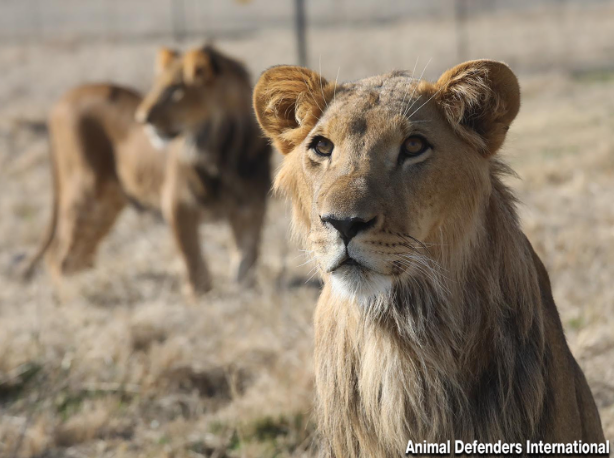
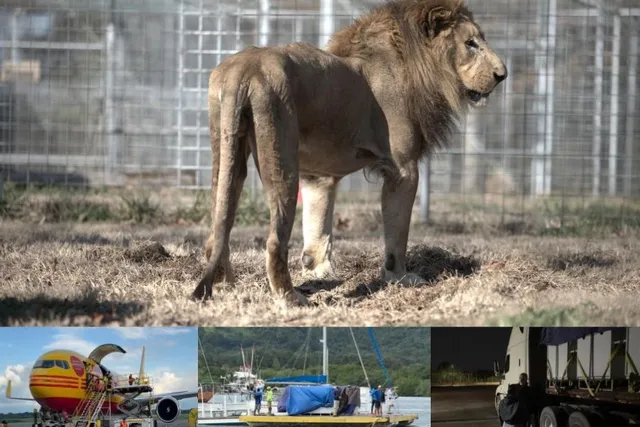
Ori began life in a basement. BenTzur was found tied to a tree on a short rope. Both were rescued as lion cubs by Israel’s Nature and Parks Authority during a crackdown on illegal wildlife trafficking, but rescue was only the beginning. With conflict in the region disrupting air travel, the two lions spent months waiting for a safe route out. Finally, at 16 months old, they boarded an Animal Defenders International (ADI) cargo flight from Tel Aviv. Fifty hours and three countries later, they arrived at ADI’s Wildlife Sanctuary in South Africa’s Free State, where they stepped onto grass for the first time in their lives.
Think about that for a moment: a lion at 16 months old had never felt grass under its feet. It had never had to decide where to hide, investigate a new smell, choose a resting place, or hear another lion calling nearby. Those aren’t little luxuries. They are part of how a young lion learns what its world is supposed to look like, and human greed denied these lions those experiences.
When a Lion Cub Becomes a Social-Media Prop
Lion cubs are almost unfairly good at making humans fall in love with them. The oversized paws, round faces, soft coat, and clumsy curiosity make an irresistible photograph.
And that photograph is where the trouble begins.
A cub can be bottle-fed, carried around, dressed up, and posed on someone’s lap. For a few months, it can look remarkably like having an oversized exotic kitten. But underneath that cute face is a developing large predator, with teeth, claws, muscles, and senses built for a very different life.
Meanwhile, the cub is supposed to be learning how to be a lion.
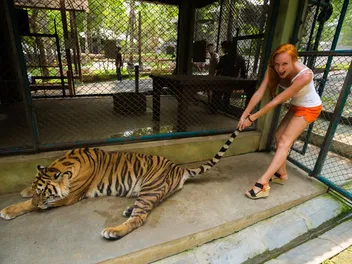
ADI President Jan Creamer described these animals as “trophy pets” taken from their mothers and kept in unnatural conditions as status symbols. She said they can become “fashion accessories for social media likes” before being abandoned when they become too large, dangerous, or expensive to keep.
A human may be able to provide food and warmth; what they can’t do is take on the role of another lion correcting a cub’s behavior, a mother teaching boundaries, or the daily interactions through which a young lion learns to communicate with its own species.
And when the cub grows...management becomes more challenging, and mismanagement can be deadly.

Learning to Be a Lion
Removing a young mammal from its mother changes far more than where its meals come from. Lion cubs normally grow up surrounded by their mother and other members of the pride. They watch, listen, follow, play, and learn boundaries.
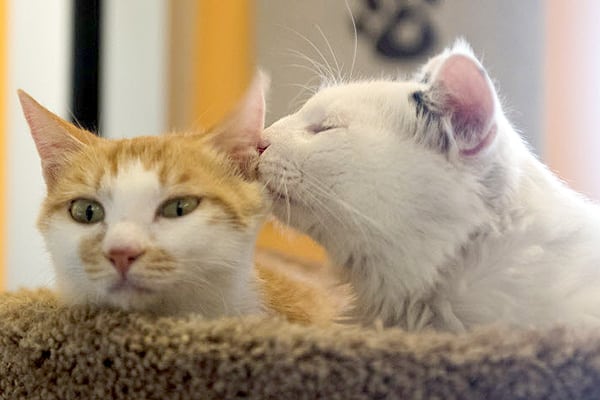
The same principle is familiar to anyone who has watched kittens grow. Young cats learn through play, observation, and correction. They learn how hard is too hard, how to respond when another cat says “enough,” and how to behave within their social group.
Kittens that are separated from their mother and littermates too early often show classic signs of poor socialization, such as being overly skittish, playing too rough, and other behavioral challenges. In a cat, this can be a frustrating issue to deal with, but imagine if these issues are lion-sized?
Lion cubs have a much bigger lesson ahead of them. They are preparing for life as large social predators, not household pets.
Human contact cannot replace that education. BenTzur and Ori were taken from their mothers when they should still have been suckling and passed around as “trophy pets” for photographs, likes, and shares.
Their early experiences shaped their opportunity to learn.

At Home In Africa, But Never Fully Wild
Saving a wild animal does not always mean returning them to the wild.
A lion that has spent its formative months in captivity and become accustomed to humans cannot simply be released into an unfamiliar African ecosystem. It will lack normal hunting experience and appropriate wariness of humans. They know nothing about their natural environment, and have missed out on the social experience of growing up within a pride.
In BenTzur and Ori’s case, ADI reports that early-age malnutrition, inbreeding and associated genetic problems, together with their close contact with humans, mean that sadly, they can never be released to the wild. But all is not lost.
Their sanctuary habitat is therefore their permanent home, where they can receive veterinary care, appropriate nutrition, enrichment, and opportunities to explore and behave like lions within a safe environment.

The Day Their World Got Bigger
From Tel Aviv, through Cairo, Frankfurt, and finally to Johannesburg, BenTzur and Ori finally reached South Africa after 50 hours of travel. They were leaving the extreme heat of Israel for the middle of the South African winter, so their first night was spent in a heated house. Then, finally, the doors opened.
The 2.5-acre habitat gave them something they had never had: room to move. There were platforms, dens, toys, unfamiliar smells, and grass under their paws.
At first, they were cautious. It is almost impossible to imagine that at 16 months old, neither lion had ever walked on grass, let alone had space to run. They slowly began moving through the dry, golden winter grass, growing more confident as they explored.
By their third circuit, they had investigated the dens and platforms and settled on top of them.
Then they heard the other lions.
The sanctuary’s resident lions were roaring nearby. BenTzur and Ori had been taken from their mothers so young that they would not have grown up surrounded by the everyday sounds of a pride.
Now there were lions nearby. They could stop and listen, explore, and choose where to sit and rest.

Engagement Feeds The Cycle
Most of us have done it. A cute animal video appears while we are scrolling. We stop, watch, maybe tap like, send it to a friend, or watch it again.
It feels harmless. It is just a lion cub being bottle-fed.
But that attention can help determine what content reaches more people. When the animal is a wild species being handled like a pet, it can also make the situation look normal.
You see the bottle. You see the cuddling. You see the sleepy cub with oversized paws.
You don't see the basement. You don't see the short rope around the tree. You don't see the mother they were taken from, or the adult lion they will become.
Social-media accounts featuring exotic animals have attracted millions of followers, helping turn interactions with wild species into entertainment. ADI has also rescued other big cats abandoned after being kept as pets, including six young lions in Kuwait.
This is where you have more influence than you might realize. Watching, replaying, commenting, sharing, or following can help signal that this is content people want to see more of.
So before rewarding a video with more engagement, ask yourself: What am I actually looking at?
If it is a wild animal being handled like a pet, perhaps the kindest response is not to help make the video more popular. No negative comments, no more traffic; just scroll on past.

A Different Kind of Happy Ending
Ori and BenTzur’s journey may not end with two lions running across the African savannah, but it is still a happy ending. Two young lions in a secure, species-appropriate habitat where they are expected to remain for the rest of their lives, free to behave as lions should. They cannot get their first 16 months back or learn everything they would have learned from a mother or pride.
But they now have space to explore, places to climb, and a life built around their needs rather than ours.
They missed the beginning of their lives. At least now, they have the rest of them.
If you would like to help support Ori and BenTzur’s ongoing care at the sanctuary, you can make a donation through the ADI’s website.
Feature Image Credit: War Zone to Wild
Did You Know?
- Our brand-new posts are rounded up and included in our weekly emails. Don't miss out on the latest - sign up for our newsletter below!

Expert cat care, straight to your inbox
Vet-reviewed advice, behavior tips, and the best of Catster. Free, and you can unsubscribe anytime.
By signing up, you agree to our Terms & Conditions and Privacy & Cookies Policy.

Dr. Paola Cuevas MVZ (Veterinarian)
Dr. Paola Cuevas is the Senior In-House Veterinarian at Pangolia, the parent company of Catster. She has over 18 years of experience as a veterinarian and animal behaviorist. Paola's focus is on preventive medicine and animal welfare. Paola has a large range of skills in from diagnostic imaging to nutrition and clinical pathology. Paola enjoys sharing her extensive knowledge of animal training with our Catster readers and is always happy to answer reader questions as our in-house veterinarian.
Join the conversation
Ask a question, share your story, or send private feedback.