First New Cat Species In A Century – and It Has Been Hiding in Plain Sight
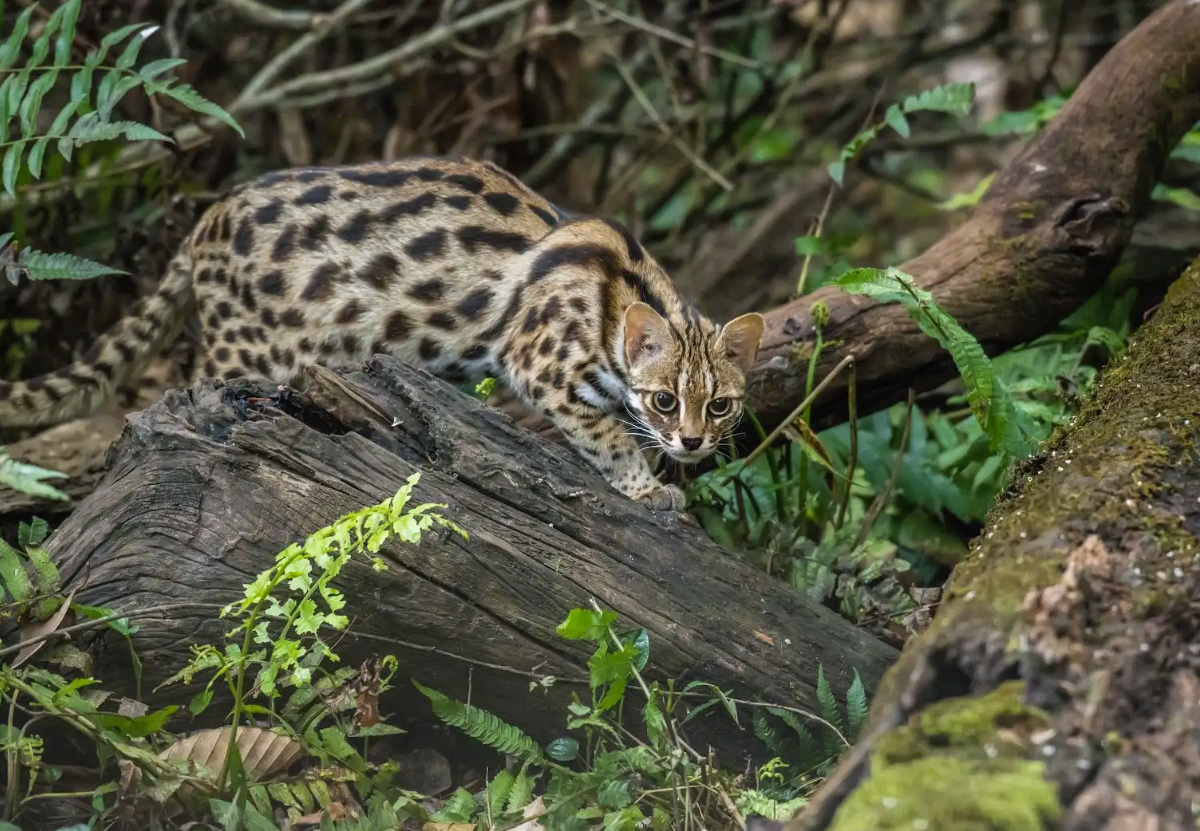
It turns out, nature still has a few secrets up her sleeve, and apparently, some of them have whiskers.
You would think that, by now, biologists and taxonomists would have named and identified all animal species on the planet, particularly when it comes to mammals. However, a tiny spotted cat in Bolivia has just pulled off something pretty remarkable: it has officially become a new species.
Meet Leopardus tilcayo, or simply the tilcayo. Scientists have formally recognized it as a species of its own, making it the first newly described living feline in more than a century. The last completely new cat species was described way back in 1923.
And here's the fun part: nobody had to trek into some untouched jungle and stumble across an unknown cat.
This little guy was already living in a wildlife sanctuary.
The story began in 2016, when a young man in Bolivia found a kitten on the road. It was raining, and the little cat was covered in mud. Wanting to help, he took it home, believing it was a domestic cat. After about a year, it became clear that the animal was wild and would be better suited to a sanctuary. The cat was eventually brought to Senda Verde Wildlife Sanctuary in Bolivia's Yungas region.
There, researchers began to realize that this was not quite the cat they thought it was.
Meet the Tilcayo
The tilcayo belongs to the tiger-cat group, a collection of small spotted wild cats found throughout South America. And honestly, this is one ridiculously cute cat.
With its round face, big eyes, tiny body, and light-brown coat covered in irregular, open rosettes, the tilcayo looks a little like someone shrank a leopard down to smaller than your average house cat. Picture a cat that’s only about 18 inches (46 centimeters) long and weighs around 3 pounds (1.4 kilograms). That’s the tilcayo: tiny enough to make an average house cat look downright chunky by comparison.
It's also easy to see why someone might mistake one for a very unusual-looking kitten.
At the Sanctuary, they assumed it was an oncilla, one of the tiger cats already known to science. But the more closely they looked, the less neatly the cat seemed to fit. When biologist Paola Nogales-Ascarrunz first examined the cat, she agreed.
Its small size and distinctive coat pattern stood out, and when they compared it with other Bolivian wild cats, there were enough differences to warrant a closer look. Turns out, this little face was hiding a pretty big scientific surprise.
DNA Doesn't Lie
The real breakthrough came from genetics, and this is where modern technology gets pretty amazing.
Researchers, including Nogales-Ascarrunz, analyzed the complete genomes of 38 cats from the Leopardus genus, using samples from living animals and specimens preserved in museum collections.1 By comparing their DNA, they could spot differences that aren't always obvious from appearance alone.
Two cats can look remarkably similar and still have very different evolutionary histories. DNA gives scientists another way to see those differences, and in this case, it revealed that what had traditionally been grouped as tiger cats actually represented five distinct species.
One of them was the Bolivian cat.
The researchers named it Leopardus tilcayo, using the local name for the animal. The genetic evidence suggests that its lineage separated from other tiger cats during the Pleistocene epoch.
In other words, the tilcayo didn't suddenly become a new species when scientists identified it. It had been following its own evolutionary path for around 1.4 million years – around one million years longer than Homo sapiens – ie, humans – have been around.
This is where modern genetic tools are so useful. Researchers can uncover aspects of an animal's history that aren't written on its face or visible in its coat. Even specimens collected decades ago and sitting in museum collections may reveal information scientists couldn't access when they were first collected.
Not All Cats Belong on the Couch
The fact that the tilcayo was initially thought to be a regular house cat reminds us that wild kittens can often be mistaken for their domesticated cousins, but that doesn’t make them pets.
A tiny, fluffy, spotted kitten may be irresistibly adorable, like it belongs curled up on the couch with you, but a wild kitten has very different nutritional, behavioral, developmental, and welfare needs than a pet cat. The difference between tame and domesticated is thousands of years of instinct, adaptation, and evolution, and just because it looks cute and cuddly doesn’t mean it’s a suitable pet.
The Mystery Isn't Over Yet
Identifying the tilcayo is only the beginning, and there is still much to learn about this little cat.
How many are out there? How far do they roam? What does a typical day look like for a Tilcayo?
One adult male is living at the Senda Verde sanctuary, and researchers have documented the species through camera traps and other evidence from the region. Preliminary evidence suggests that small rodents may be part of its diet, while camera-trap observations suggest the cats may be more active at night.
Now researchers need to find out where the tilcayo lives in the wild, how many there are, what kind of habitat they need, and what pressures they face.
There's More to This Than a New Name
At first, discovering that one group of cats is actually five different species might sound like a technical detail. But picture looking at a map and seeing one large population of tiger cats spread across a huge area. It can make the species look relatively widespread.
Now divide that map into five species.
Each one may occupy a much smaller area and have a much smaller population than scientists originally thought. A cat that looked widespread on paper may turn out to have a far more limited range.
The Tilcayo's home in Bolivia's Yungas forests already faces deforestation, agriculture, fires, and mining. Researchers have shared their findings with the International Union for Conservation of Nature (IUCN), which assesses species for its global Red List.
The tilcayo is not automatically considered endangered simply because it is a newly recognized species. Scientists still need to find out how many there are, where they live, and how much suitable habitat remains.
But now they know exactly which cat they are looking for. They can begin mapping its range, studying its population, and keeping track of what happens to the forests it depends on.
And There May Be More Cats Hiding in Plain Sight
Perhaps the most intriguing part of the story is that the tilcayo was never exactly hiding.
People had seen this little cat, given it a local name, and even brought one into human care. What was missing was the scientific recognition that it was its own species. It just took close observation and genetic analysis to reveal that the family tree of South America's tiger cats is a lot more complicated than scientists realized.
The tilcayo may be the first new cat species formally described in more than a century, but it probably won't be the last surprise nature has in store. After all, there could be other animals out there that look familiar, have local names, and have been part of people's lives for generations, while science is still busy playing catch-up.
Did You Know?
- Our brand-new posts are rounded up and included in our weekly emails. Don't miss out on the latest - sign up for our newsletter below!
Expert cat care, straight to your inbox
News, insights, and useful advice, delivered to you.

No spam — unsubscribe anytime.
By signing up, you agree to our Terms & Conditions and Privacy & Cookies Policy.
How useful was this post?
Click a star to rate. You can leave written feedback afterwards. (We read all feedback.)

Dr. Paola Cuevas MVZ (Veterinarian)
Dr. Paola Cuevas is the Senior In-House Veterinarian at Pangolia, the parent company of Catster. She has over 18 years of experience as a veterinarian and animal behaviorist. Paola's focus is on preventive medicine and animal welfare. Paola has a large range of skills in from diagnostic imaging to nutrition and clinical pathology. Paola enjoys sharing her extensive knowledge of animal training with our Catster readers and is always happy to answer reader questions as our in-house veterinarian.