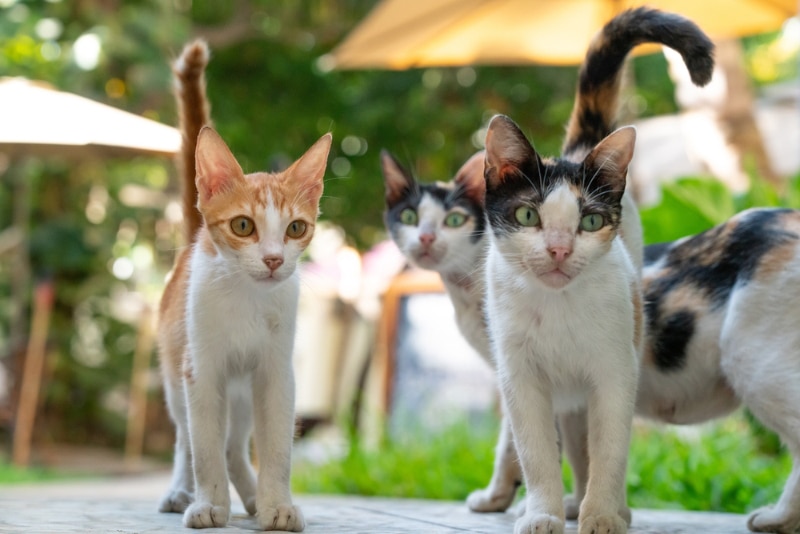
Your Cat’s Purr Proves They’re One of a Kind
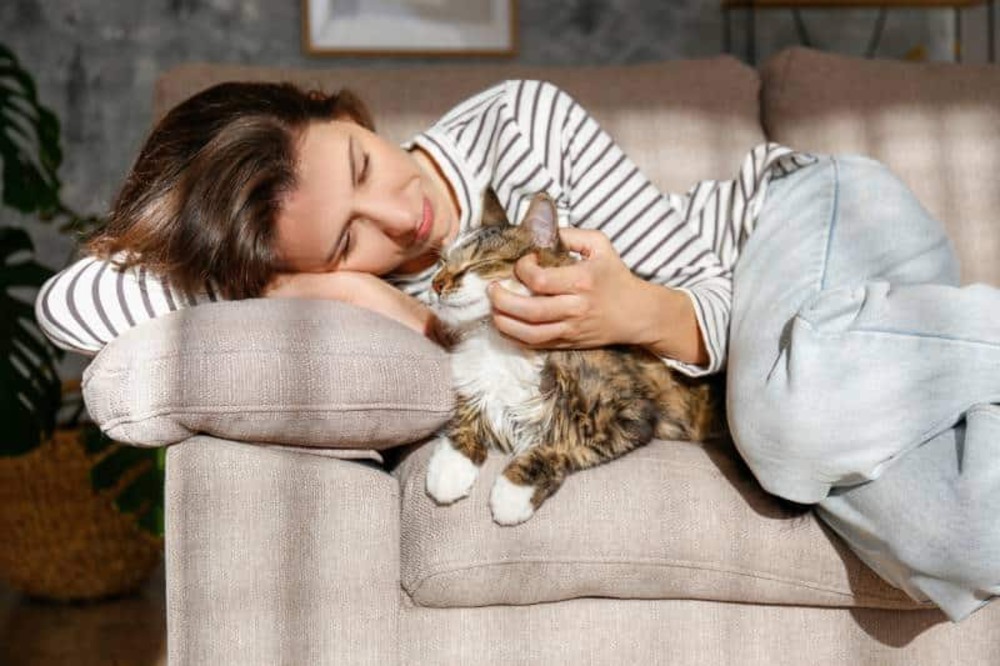
There are few sounds more comforting to a cat parent than the familiar rumble of a purring cat. You probably know your own cat’s purr without even seeing them. Maybe it’s deep and motor-like. Maybe it’s soft and almost squeaky. Or perhaps your cat has a particularly enthusiastic purr that you can feel across the room.
It turns out, you may be noticing something real.
New research from scientists at the Museum für Naturkunde Berlin and the University of Naples Federico II suggests that a cat’s purr may contain enough individual information to help distinguish one cat from another. In other words, your cat’s purr may be more unique than we ever realized.
While researchers are still figuring out exactly what this means, the discovery gives us another fascinating glimpse into how much cats may be communicating through the sounds we often take for granted.
A Feline Vocal Fingerprint
Anyone who has lived with more than one cat probably doesn’t need a scientist to tell them that cats have different voices. Some cats have a deep, rumbling purr. Others sound more like a tiny vibrating motor. And some seem to turn their purr up to maximum volume the moment they climb onto your lap.
When identifying individual cats, researchers originally expected meows to be the distinguishing feature. After all, cats use meows frequently when communicating with us, and many of us can recognize our own cat’s “feed me” or “open the door” voice from another room.
But the researchers found something surprising. Purrs appeared to carry stronger individual identity signals than meows.
While a cat’s meow can change depending on what they want or what is happening around them, purrs appeared to have characteristics that were unique from one cat to another.
So that little rumble beside you on the couch may contain more information about your cat’s identity than we previously understood.

Not Every Purr Is a Happy Purr
There’s another reason this finding is interesting: purring is more complicated than we sometimes give it credit for.
We tend to associate purring with a happy, relaxed, and contented cat, and often that’s exactly what it means. But cats can also purr when they are stressed, uncomfortable, or looking for reassurance.
Kittens begin purring when they are only a few days old, using the sound while nursing and staying connected with their mother. That makes purring a very early part of feline communication.
Unlike the highly flexible meow that cats use in all sorts of situations, the purr may preserve certain characteristics that are more closely tied to the individual cat. So the next time your cat starts purring beside you, there may be more going on than simply “I’m enjoying this.”
Can Cats Tell Who’s Who by Their Purrs?
This is where things get really interesting, but we need to be careful not to get ahead of the science.
Although the study has identified distinctive purr characteristics unique to individual cats, it has not determined how those characteristics are used or interpreted. In other words, it would be quite a leap to assume that cats are listening to those differences and thinking, “Yep, that’s Luna.”
That question still needs to be investigated.
If cats can recognize individuals through their purrs, it would reveal something fascinating about how they identify familiar cats, including mothers and kittens, or cats that live together.
And it adds another piece to the bigger picture of feline communication.
Cats don’t just rely on one form of communication. They use scent, body language, facial expressions, and a whole range of sounds, and their purrs may have more to say than we realized.

Purr vs. Roar
We know that the big cats – lions, tigers, jaguars, and leopards – roar, but do not purr, while the reverse is true for the rest of the feline family. We also know that this is linked to the anatomy of the hyoid bones that support the tongue and larynx. In the smaller cats, the hyoid bone is completely ossified and rigid, resulting in a rumbling vibration as air passes through the delicate structures – the purr. Big cats like lions have a more flexible hyoid bone, allowing them to produce roars and bellows that can be heard up to five miles away. These impressive vocalizations send messages across the jungle or savannah about sex, territory, reproductive status, and dominance; would it be difficult to believe that these sounds also conveyed information about the individual’s identity?
Given what we know about the roar of a lion, it seems even more plausible that the innocuous purr of our domesticated companions might contain more information than we have previously guessed.
Could Your Cat’s Purr Be Giving Us Health Clues?
This is where researchers may eventually take the discovery in an even more interesting direction.
Scientists studying animal sounds are increasingly interested in whether vocalizations can provide clues about an animal’s behavior, stress, welfare, or health.
If future research shows that a cat’s purr stays relatively consistent over time, scientists may eventually be able to look for changes in that individual cat’s normal vocal patterns.
Could that someday help us detect changes associated with pain, stress, illness, or aging?
Maybe. But we’re not there yet.
It’s far too early to say that listening to a cat’s purr could become a veterinary diagnostic tool. More research is needed before we can know whether these subtle vocal differences have practical applications. Still, it’s an intriguing possibility, and with pattern recognition technology evolving every day, such a development may soon become more science than science fiction.

Your Cat’s Purr May Be One of a Kind
One thing that feline research continues to remind us is that cats are much more complex communicators than we sometimes give them credit for, and we have only scratched the surface of this field of study.
We’ve shared our homes with cats for thousands of years. We think we know their purrs, their meows, their head bumps, and their tail movements. Then a new study comes along and shows us there is still more to discover.
For cat parents, this research gives us another reason to pay attention to those little sounds we hear every day. You may already recognize your cat’s purr without even thinking about it. Now science is giving us another reason to wonder just how much that familiar sound is telling us, and perhaps why a changing purr is worth paying attention to.
So, thanks, science. My cat already knew they were one of a kind. Now they may have a purr to prove it.
Feature Image Credit: evrymmnt, Shutterstock
Did You Know?
- Our brand-new posts are rounded up and included in our weekly emails. Don't miss out on the latest - sign up for our newsletter below!

Expert cat care, straight to your inbox
Vet-reviewed advice, behavior tips, and the best of Catster. Free, and you can unsubscribe anytime.
By signing up, you agree to our Terms & Conditions and Privacy & Cookies Policy.
Dr. Paola Cuevas MVZ (Veterinarian)
Dr. Paola Cuevas is the Senior In-House Veterinarian at Pangolia, the parent company of Catster. She has over 18 years of experience as a veterinarian and animal behaviorist. Paola's focus is on preventive medicine and animal welfare. Paola has a large range of skills in from diagnostic imaging to nutrition and clinical pathology. Paola enjoys sharing her extensive knowledge of animal training with our Catster readers and is always happy to answer reader questions as our in-house veterinarian.
Join the conversation
Ask a question, share your story, or send private feedback.