Win–Win: How a Community TNR Project Helped Cats and Vet Students
In this article
Community cats can be a complicated subject. Some people see free-roaming cats as beloved neighborhood animals that deserve care and protection. Others worry about their welfare, their impact on public health, or the effects these cats can have on native wildlife. Shelters and veterinary teams are often left trying to find practical ways to address all these concerns.
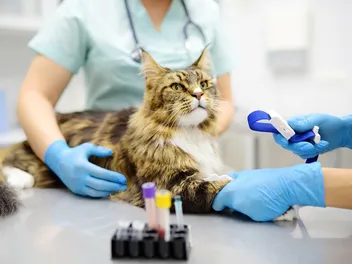
It’s something that affects many people from all walks of life, and it was even the subject of a recent study at Cornell University. Their research examined a community cat project from 2024 in New York that took place after residents approached their local SPCA for help. The project brought together community members, shelter professionals, volunteers, Maddie's Shelter Medicine Program, and veterinary students. A total of 147 cats underwent trap-neuter(+ vaccinate)-return, or TNR.
The study, published in the Journal of the American Veterinary Medical Association on March 4, 2026, wasn’t simply about procedures or statistics. Instead, it looked at several outcomes, including shelter data, the experience of the veterinary students involved, and how residents perceived changes in their community.
That broader perspective is what makes this research interesting. Community-cat management is rarely just about the cats. It involves the people living alongside them, the organizations providing services & equipment, the veterinarians delivering care, and the environment those cats share with other species.
Starting with the Community

The project began with residents asking for assistance with an ongoing free-roaming cat population. That detail is important because community involvement can make a significant difference in how these situations are understood.
People who live in a neighborhood often know its cats better than anyone else. They may know where the animals gather, which females have had litters, which cats are friendly, and which ones avoid human contact. They may also have a very good understanding of the concerns within the neighborhood, whether those involve kittens, fighting, property damage, or simply disagreements among neighbors about what should be done.
In this case, that local knowledge became part of a larger collaboration.
So, What is TNR?
Trap-neuter-return is an increasingly popular approach to managing free-roaming cat populations. Cats are humanely trapped, examined, and sterilized by a veterinarian, and may receive vaccinations or other veterinary care before being returned to the location where they were found.
The reasoning is fairly straightforward. A sterilized cat cannot produce additional litters, so increasing the proportion of sterilized cats in a population can reduce reproduction.
That does not mean TNR is universally accepted or appropriate in every situation.
There is an ongoing scientific and public discussion about how free-roaming cats should be managed. Wildlife biologists and conservation researchers have raised concerns about predation, particularly in areas where cats overlap with vulnerable wildlife populations. There are also questions about how effectively TNR reduces overall cat numbers when sterilization rates are not high enough, when new cats move into an area, or when reproduction continues among unsterilized animals.
Context is important when reading studies like this one. We can look carefully at what happened in a particular community without assuming that the same approach will produce the same results everywhere.
And that is exactly what this study allows us to do.

Facts, Figures, and Context
The researchers found a significant reduction in unweaned kittens entering the shelter from the target area. They also reported a threefold reduction in euthanasia among cats from that community.
Those are interesting findings, but they need to be interpreted within the context of the study. This was a single, community-based intervention, not a controlled experiment conducted across multiple locations. The results, therefore, cannot tell us that TNR will reduce euthanasia by the same amount in every community.
There was also a small increase in shelter intake from the target neighborhood. Rather than automatically interpreting that as a negative result, the researchers suggested that it could reflect improved access to shelter services. In other words, residents may have become more likely to bring cats to the shelter once a clearer avenue for assistance was available.
That is a good example of why shelter statistics can sometimes be more complicated than they appear at first glance. An increase in intake does not necessarily mean that a program has failed. We need to understand why animals are entering the shelter before deciding what that number truly means.

The Human Element
As part of the study, researchers also asked residents about their experiences. People reported improvements in feline welfare, including fewer kitten births and deaths, fewer fights & injuries, and less property damage. Significantly, they also reported renewed trust in the local SPCA; a factor rarely accounted for in shelter statistics. Yet it can influence what happens next.
When residents feel comfortable approaching an animal welfare organization, they are more inclined to report concerns, seek veterinary assistance, or participate in future population-management efforts. At the same time, organizations gain an opportunity to understand what is actually happening on the ground.
That doesn't make one approach automatically right for every community. It does suggest that listening to the people who live with the situation can be an important part of understanding it.
The Vet Students
One group was actively learning as the research was being carried out: 48 veterinary students.
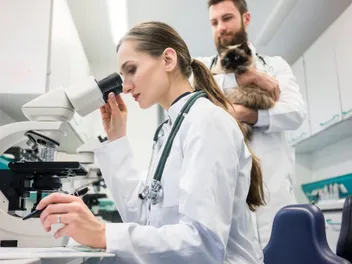
Students were given the opportunity to perform around three surgical procedures each, a huge boost to their hands-on experience. Their feedback also indicated increased confidence and a stronger perception that they were prepared for their future professional careers.
Veterinary education isn't only about learning how to diagnose and treat disease. Students also need supervised opportunities to develop technical skills, communicate with people, work as part of a team, and understand how veterinary medicine functions within the larger community.
A project like this can provide those experiences in a real-world setting while addressing an existing community need.

The Big Picture
Free-roaming cats are one of those subjects where good intentions can sometimes lead us to very different conclusions. What might seem like an obvious solution from one perspective may look very different when we consider the cats themselves, the people living alongside them, the shelter trying to help, or the wildlife sharing the same environment.
That is why studies like this are worth paying attention to. Not because they provide a universal solution, but because they allow us to step away from the debate and look at what actually happened in one community.
This project brought together people with very different roles and allowed researchers to look at more than one outcome. The results are encouraging in some areas, while other questions remain open. And those unanswered questions are part of the story too.
We still have much to learn about the most effective and responsible ways to manage free-roaming cat populations in different environments. This study gives us one more piece of the puzzle, and reminds us that the best conversations about animal welfare begin with curiosity, good data, and a willingness to consider more than one side of the story.
Feature Image Credit: M.Pakats, Shutterstock
Did You Know?
- Our brand-new posts are rounded up and included in our weekly emails. Don't miss out on the latest - sign up for our newsletter below!
Expert cat care, straight to your inbox
News, insights, and useful advice, delivered to you.

No spam — unsubscribe anytime.
By signing up, you agree to our Terms & Conditions and Privacy & Cookies Policy.
How useful was this post?
Click a star to rate. You can leave written feedback afterwards. (We read all feedback.)

Dr. Paola Cuevas MVZ (Veterinarian)
Dr. Paola Cuevas is the Senior In-House Veterinarian at Pangolia, the parent company of Catster. She has over 18 years of experience as a veterinarian and animal behaviorist. Paola's focus is on preventive medicine and animal welfare. Paola has a large range of skills in from diagnostic imaging to nutrition and clinical pathology. Paola enjoys sharing her extensive knowledge of animal training with our Catster readers and is always happy to answer reader questions as our in-house veterinarian.