Cat paws are equally adorable and interesting features of our favorite felines. A cat’s paws play a role in several important functions, such as temperature regulation, movement, and even communication. While it’s obvious their paws are primarily used to help them walk, there are other interesting facts worth knowing about them.
This article will dive into 15 facts about cat paw anatomy, uses, benefits and more, some of which might surprise you!

The 15 Facts About Cats’ Paws
1. Cats Have a Different Number of Toes on Each Set of Paws
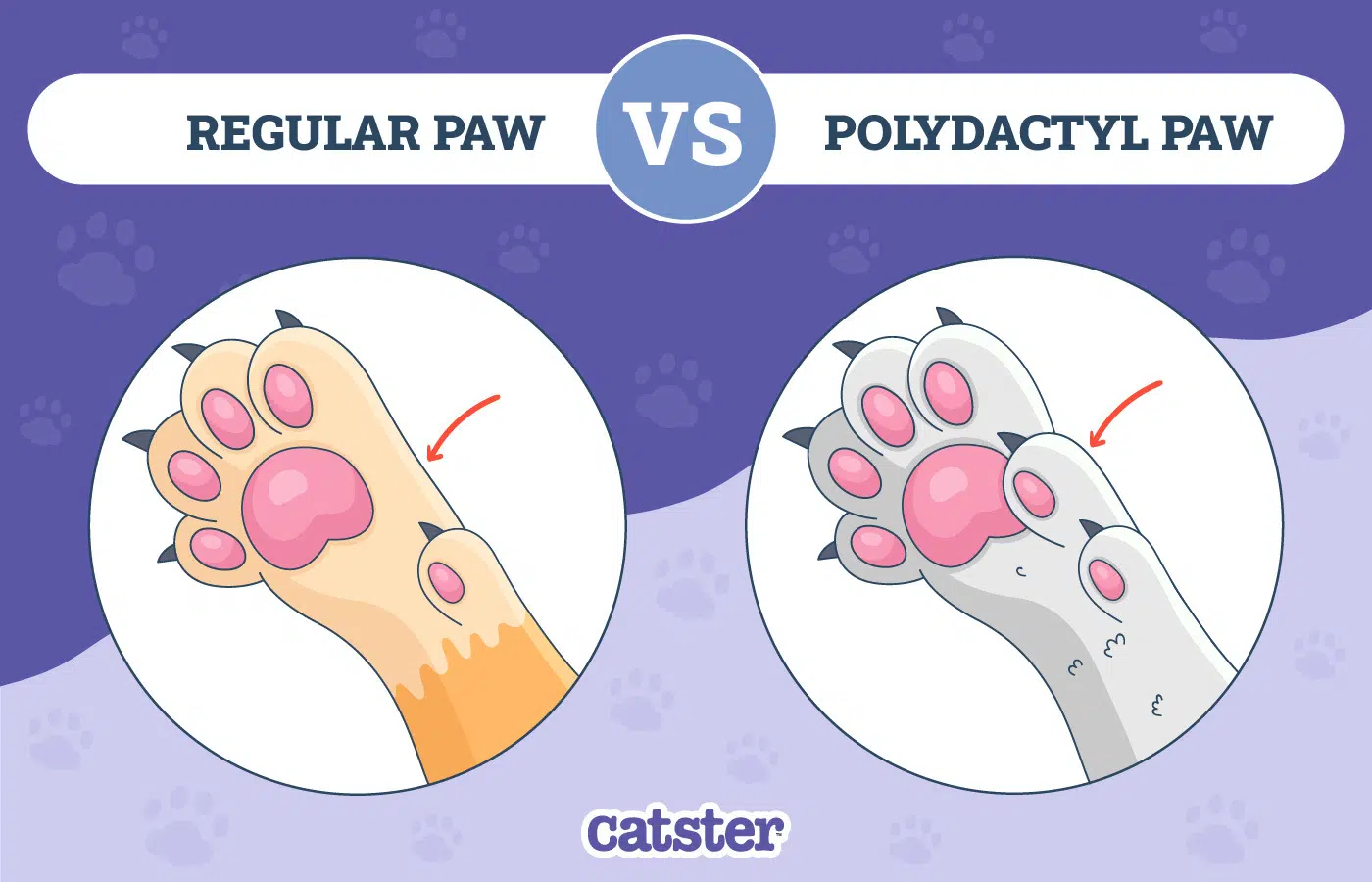
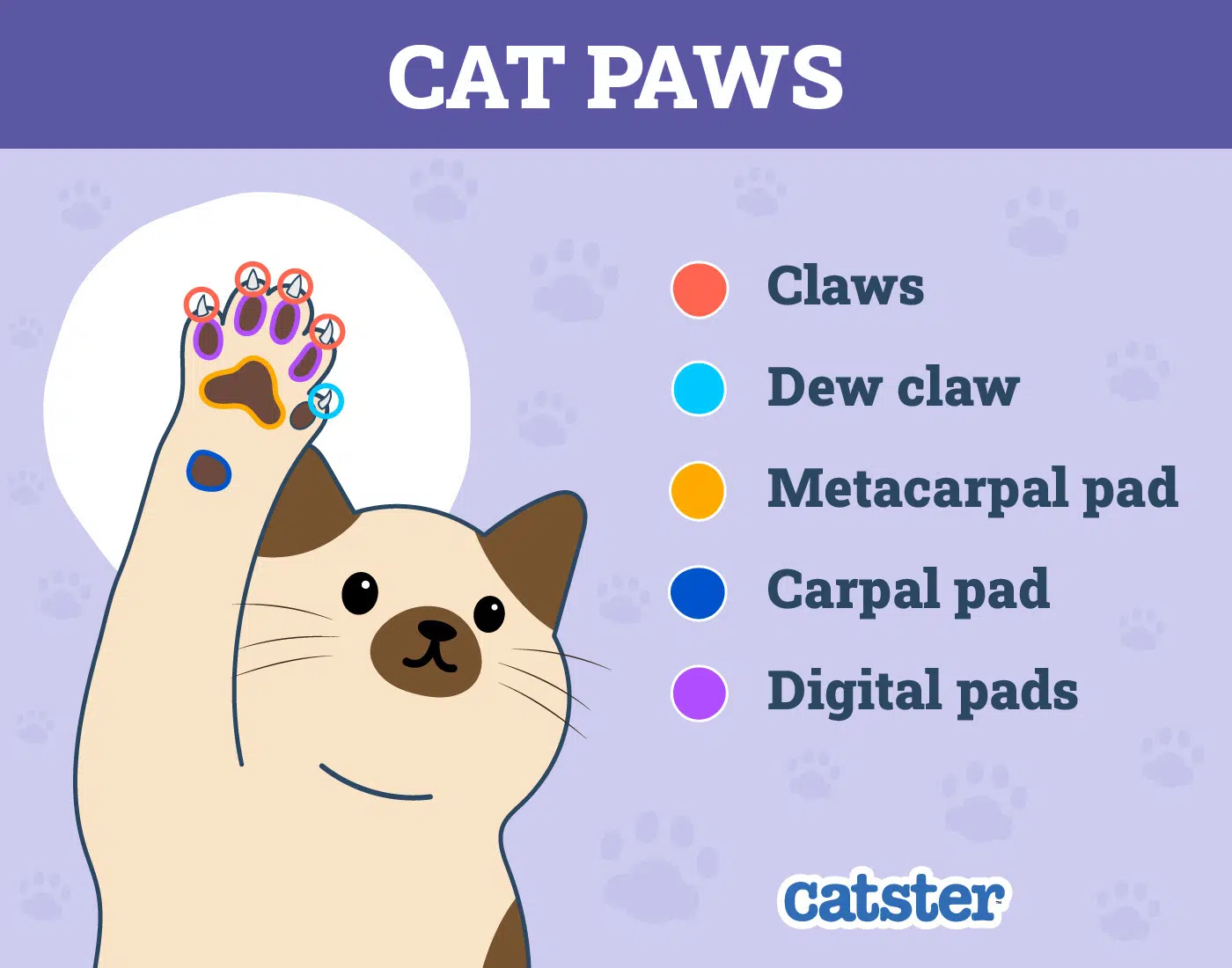
Cat paws are unique, and so is their structure. The number of digits (toes) on their paws can vary depending on whether they are the front or back set. They have about 18 toes in total. A cat’s front set of paws has a total of five digits on each paw because of their additional dewclaws (thumbs). Their back set of paws has only four digits each. However, cats with a genetic condition called polydactyly are an exception.
2. They Sweat Through Their Paws
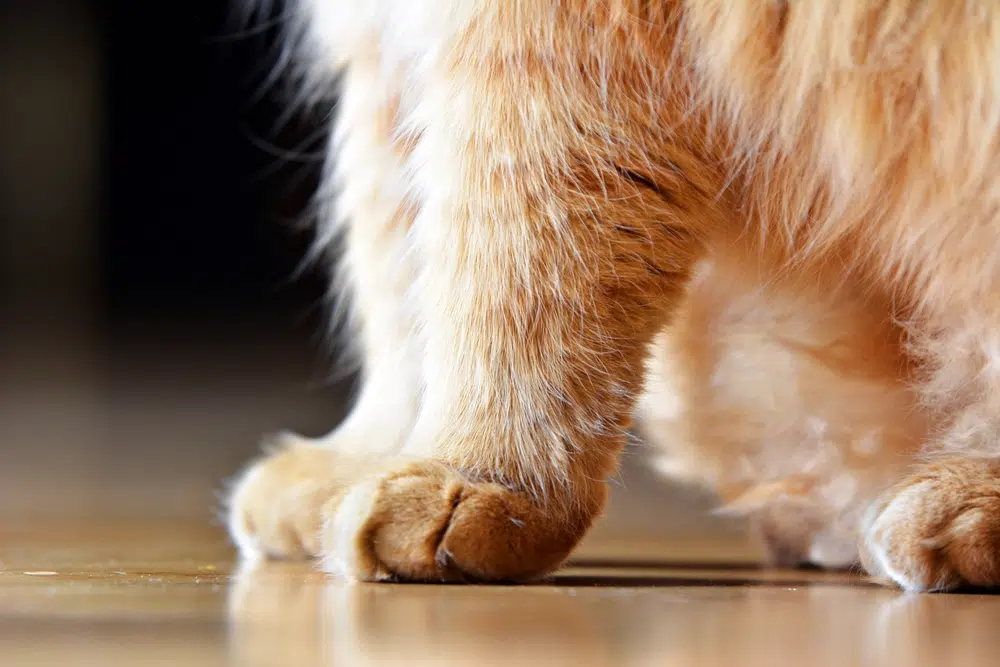
Cats do not sweat the same way humans do because their sweat glands are limited to specific areas of their body. They are located mainly on the cat’s paws, which means the paws have a major role in the body’s thermoregulation, specifically the cooling system.
Cats will sweat from the eccrine glands on their paw pads, which is why they can leave foggy footprints on metal or glass countertops. Heat is not the only reason cats will sweat, as they might sweat when they feel stressed too.
3. Polydactyl Cats Have More Toes Than Usual
Although the average cat has a total of 18 toes on all of their paws, polydactyl cats do not. Polydactyly is a type of genetic mutation or abnormality caused by a dominant gene. Polydactyl cats have more toes than normal, either by one additional toe on some paws, but it could be more. This type of condition does not necessarily affect a cat’s health, but it should not be deliberately perpetuated.
4. Cats Rely on Their Paws for Grooming
If you have ever observed your cats groom themselves, you will notice that they use their paws a lot. Their paws are well-equipped for grooming, and cats use them to smear their saliva over their faces and ears. This is why you will often see your cat lick their paws while they groom.
Most cats prefer to use their front paws to groom, but others rely more on their hind paws.
5. Unlike Dog Paws, Cat Paws Are Flexible
Cat paws are incredibly flexible, which is useful when they are climbing and jumping. Their flexible paws also come in handy when they climb to narrow surfaces like branches or platforms. It helps to keep them stable by allowing them to turn their front paws inward. This explains why cats can climb trees and remain stable on narrow branches.
6. Paws Act as Shock Absorbers When Landing
You are probably familiar with the phrase, “Cats always land on their feet.” This is partially true thanks to their shock-absorbing paw pads, which help soften their landings. Cat’s paw pads are used for for traction, silent hunting, and stability while climbing. However, their paw pads also absorb some of the impact that happens from landing roughly on their paws.
7. Their Front Paws Have Extra Paw Pads
Cats’ front paws have two additional pads apart from their digital and metacarpal paw pads. The dewclaw, only located on their front paws, has a pad, but there is an additional pad, called the carpal pad, on each of their forelimbs.
The carpal pad is thought to help a cat with traction if they stop suddenly or need to brace themselves before jumping from a narrow surface. Each of their paw pads is made up of hairless skin and filled with nerve endings, blood vessels, connective tissues, and glands.
8. Their Paws Give Them an Advantage While Hunting
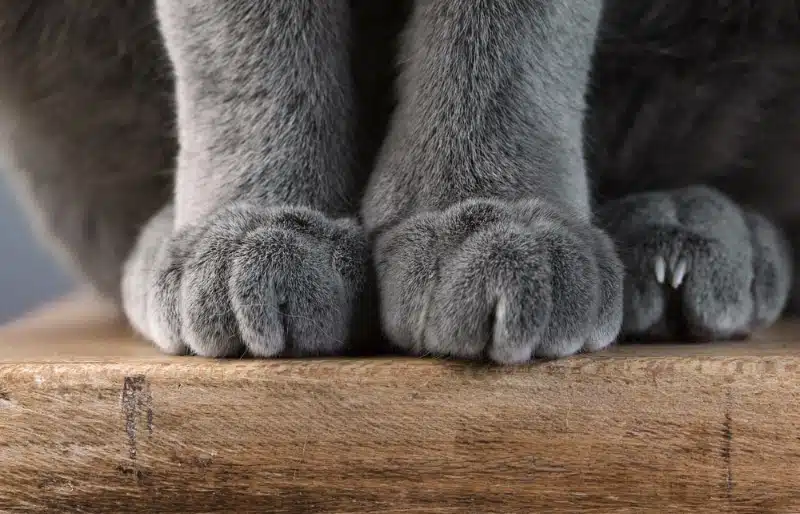
Cats are hunters by nature and are quite good at it too. They are designed to hunt silently and strategically, and their paws give them an advantage in this. Their paw pads are soft and full of nerve endings that enable them to detect different textures under their paws and change their movement accordingly.
If a cat is stepping on crunchy leaves, they will adjust their walking or running to limit the amount of noise they make. This allows cats to sneak up on prey and make a successful kill without alerting their prey. Furthermore, their paw pads enable them to land silently on their paws after a lengthy jump.
9. Cat Paws Have Scent Glands
Cats have scent glands in many different parts of their bodies, including each of their paws. They are called the interdigital glands and release a scent each time your cat scratches or paws at something. Scent is an important part of feline communication and one of their strongest senses.
Cats don’t only scratch because it is fun, as they often do it to spread their scent and mark their territory using their paws’ interdigital glands.
10. Cats Can Either Be Right-Pawed or Left-Pawed
Just like humans can have a dominant hand, some cats have a preference for using a certain paw. These possibilities were discovered from a published study that explored lateralized spontaneous behaviors in felines.1
Researchers found that cats might have favored one paw over the other when performing certain activities. This behavior is comparable to humans, who might prefer using their right or left hand to write, wave, or use for sports.
The study found that the preferences for using a certain paw could differ between the sexes. The male cats seemed to prefer their left paw, whereas the females preferred their right paw.
11. A Cat’s Paws Control Their Claws
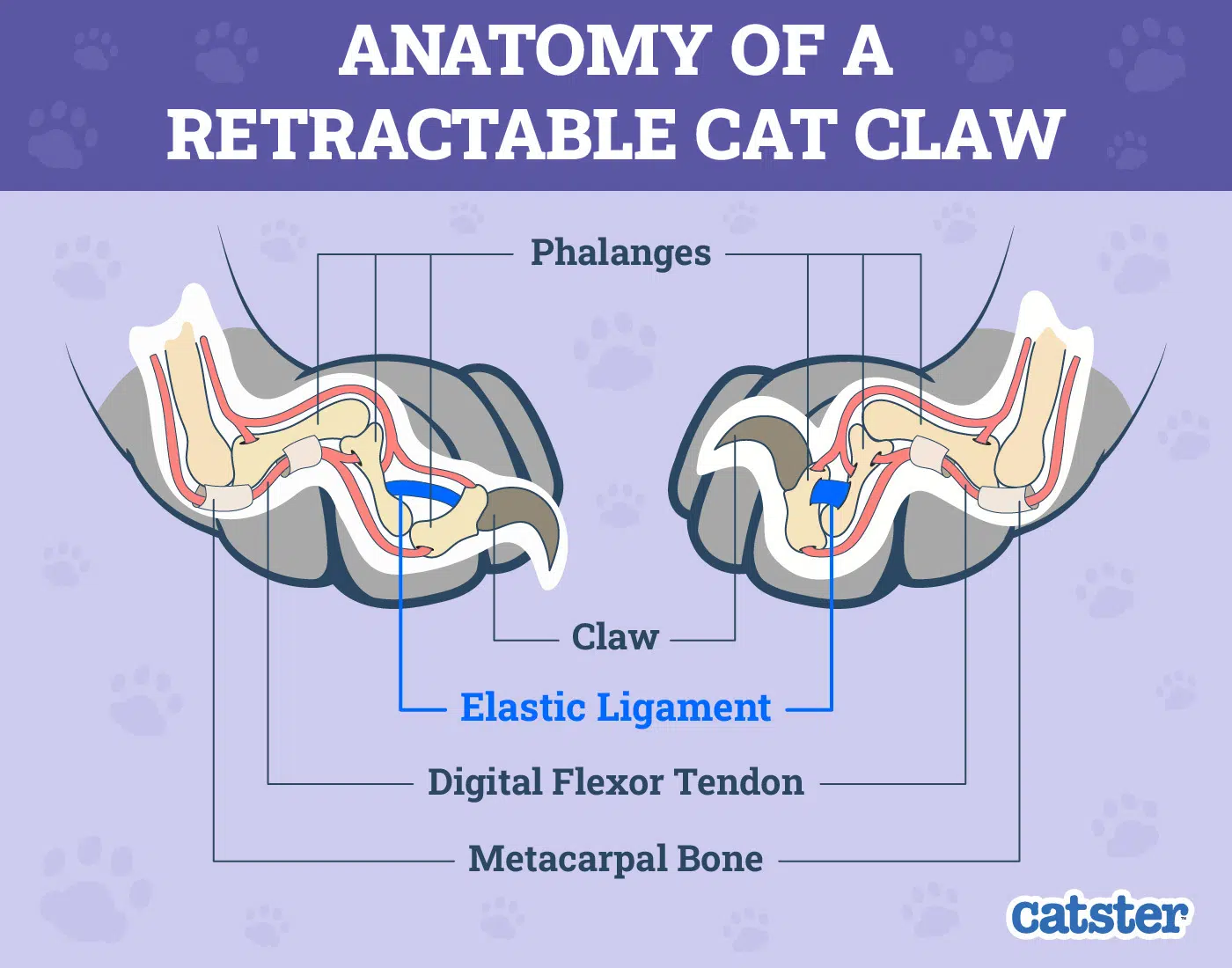
Cats have retractable claws that are pulled back into a sheath on each paw. They protract their claws out of the sheath using their superficial flexor tendons and digital flexor tendons located in their paws. An elastic ligament behind their claws keeps their retracted claws from touching the ground. Cats may retract and protract their claws for various reasons.
They commonly retract their claws when walking leisurely around the house or sleeping. They often protract their claws when hunting, scratching, playing, or during a good stretch.
12. The Color of a Cat’s Paw Pad Varies
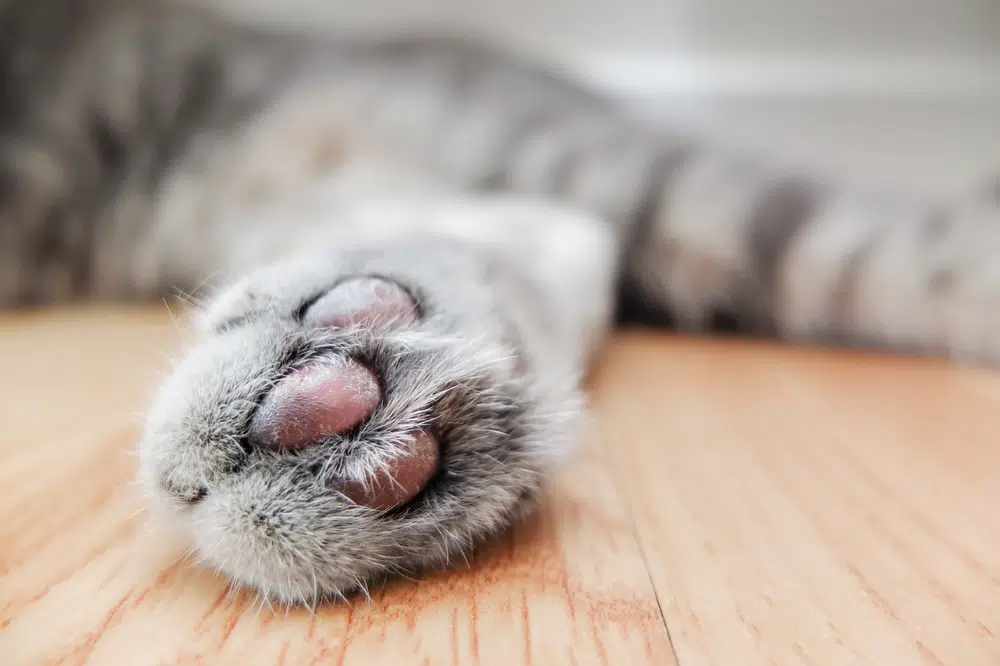
Not all cats have the same colored paw pads, which can vary depending on their coat color. Cats with black fur generally have dark-colored paw pads, whereas cats with white or ginger fur might have pink pads. Interestingly, calico and tortoiseshell cats usually have multi-colored paw pads. Some of the pads might be pink, while others have a bit of black.
13. Kittens Use Their Paws to Stimulate Their Mother’s Milk
Kittens rely on their paws to stimulate their mother’s milk flow so that they can drink it. This is why kittens are often observed kneading at their mother’s belly, as they are targeting her mammary glands.
It is an instinctive behavior and might even bring kittens a sense of comfort and security. The kneading action also helps release calming pheromones from the mother, which may explain why some adult cats continue kneading behaviors even after being weaned.

14. Cats Use Their Paws for Stress Relief
As we have already touched on , some cats will knead to relax and soothe themselves. They may do it on blankets or bedding using their front paws.
This type of behavior is likely their way of expressing comfort or trying to get comfortable and relieve stress, as it is what they did as a kitten. Many cat owners affectionately refer to this behavior as their cats “making biscuits.”
15. They Walk Tip-Toed
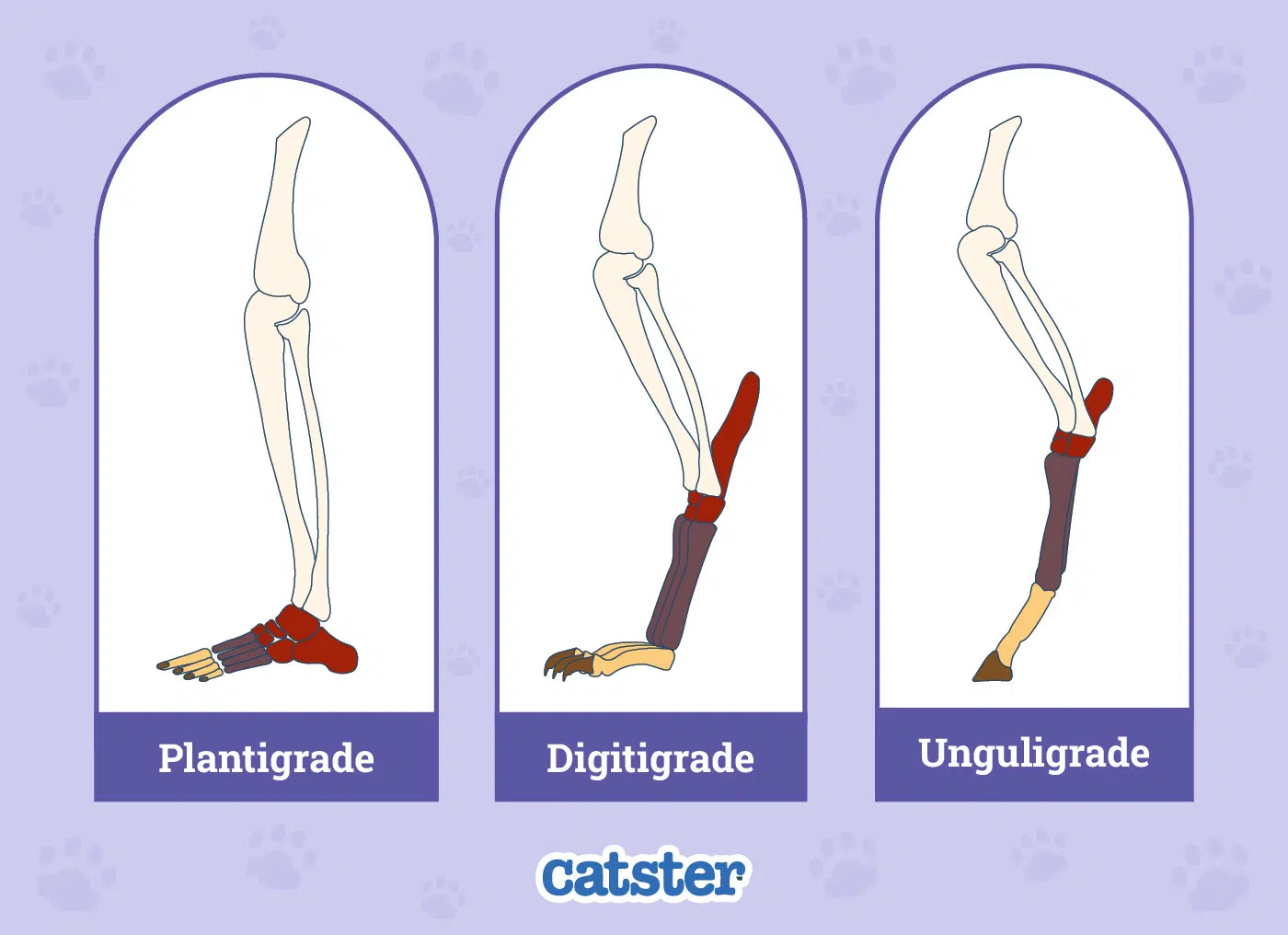
Cats do not walk flat-footed (plantigrade) like most humans. Instead, they walk on the tips of their toes in a digitigrade stance. Their digitigrade walking is believed to help them stay silent and move silently while stalking their prey.
Conclusion
Cat paws hold a lot of secrets and give them many advantages as skilled hunters. From being highly flexible for agility, acting as shock absorbers, having cooling properties, and aiding in territorial marking, cat paws are incredibly interesting.
There is so much you can learn about your feline just by observing many of their everyday behaviors, which easily explains why they make such popular pets.
Your next reads:
Featured Image Credit: Africa Studio_Shutterstock
 The 15 Facts About Cats’ Paws