Get

In Your Inbox

Catster is reader-supported. When you buy via links on our site, we may earn an affiliate commission at no cost to you. Learn more.

Can Cats Eat Beggin’ Strips? Vet Reviewed Health Risks & FAQ

Share

Can Cats Eat Beggin’ Strips

Beggin’ Strips are popular dog treats and have a strong, meaty odor, which may make your cat seek them out. However, Beggin’ Strips are not healthy for cats and neither are most dog treats.

Dog treats, like Beggin’ Strips, are intended and formulated for dogs, not cats. They may be two of the most popular pets, but they have different nutritional needs.

divider 1 paws

What Are Beggin’ Strips?

Beggin’ Strips are bacon-like strips with a meaty odor and coloration that looks similar to bacon, which is the focus of the marketing. They’re manufactured by Purina.

Though they look like bacon, Beggin’ Strips have small amounts of bacon and many other ingredients, including sodium nitrite, BHA, corn gluten meal, ground yellow corn, soybean meal, wheat flour, sugar, sorbic acid, and hydrogenated starch hydrolysate.

BHA, or butylated hydroxyanisole, is considered “reasonably anticipated to be a human carcinogen” based on animal studies. Though it’s often used in animal feed as a preservative and generally recognized as safe, this is something to consider when feeding Beggin’ Strips.

For cats, there’s no nutritional benefit to feeding Beggin’ Strips or other dog treats or food. Your cat has unique nutritional needs that aren’t met by commercial dog food products.

Can My Cat Have Dog Treats?

In short, yes, cats can have a small number of dog treats, including Beggin’ Strips, without experiencing significant toxicity or complications.

Should your cat have dog treats? No, not really. There’s no reason to give your cat dog food or treats when commercial cat treats specifically formulated for them are available.

Cats can’t be maintained on dog food or dog treats. Stealing a bit of dog food or feeding a dog treat in a pinch probably won’t be harmful, but it should only happen rarely.

Dogs and cats have different nutritional needs. Cats are obligate carnivores, which means they need animal-based proteins and fats to survive and thrive. Dogs are omnivores and have more flexible dietary needs, so they can thrive on both animal and plant-based ingredients.

Dog food and dog treats don’t offer the nutrients cats need, so feeding a cat these products only adds to the calorie count without providing a lot of nutritional value.

Here are some of the nutrients cats need that may not be present in high enough amounts in dog products:
  • Protein: Cats require a minimal protein percentage of 30-35%, though 40-50% is preferred.
  • Taurine: Cats require taurine as an essential element. Without it, they can experience health problems like vision loss, weakened hearts, and digestive problems.
  • Arachidonic acid: Cats can’t create this fatty acid—they must ingest it. Without it, cats may develop skin problems or abnormal kidney and liver values.
  • Vitamin A: Cats can’t create vitamin A and must get it from their diet. Without it, they may have poor coat quality, possible night blindness, and muscle weakness.
  • Niacin: Cats can’t make their niacin, which comes from animal tissue.
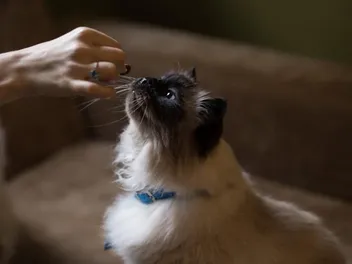
calico cat having treats
Image Credit: Andriy Blokhin, Shutterstock

divider 1 paws

Conclusion

Cats can have a small piece of a Beggin’ Strip or other dog treat without adverse effects, but it’s not a healthy choice. There are plenty of commercial cat treats available that give your cat the nutrients they need, such as protein and taurine, to thrive.

See Also: 


Featured Image Credit: Two Beggin’Strips (Image Credit: Jennifer Gradl, Nestlé Purina PetCare, Wikimedia Commons, CC BY-SA 4.0)

Want content like this delivered to you?

Sign Up For Our Newsletter

News, insights, expert advice, and everything cat

* By submitting, you agree to our Terms & Conditions and Privacy & Cookies Policy.


How useful was this post?

Click on a star to rate (you can leave written feedback after clicking submit)

Help us improve Catster for pet parents!

Your feedback really matters.

What did you like about this post? Also how can we improve it?

Join the conversation

Leave a Reply

You’re very welcome to leave a comment or question. Please know that all comments must meet our community guidelines, and your email address will NOT be published. Let’s have a positive and constructive conversation.


Talk With A Vet Online

Peace of mind,
anywhere, anytime

Affordable vet advice

Ask Dr. Paola – Help! My Momma Cat Is Very Thin! (May 18, 2026)

Welcome to our “Ask Dr. Paola” series, where every Monday we bring expert advice straight from Dr. Paola Cuevas (MVZ) to help our...

The Cat Biting Mistakes Most Owners Make (And What Works Instead)

Cat bites sent more than 400,000 people to emergency rooms in the US each year.1 Not scratches. Bites. And the reason they’re so...

Do Cats Cause Schizophrenia? Scientists Find a Link – Here’s What It Means

Being a fierce advocate (and occasional recipient of) mental health support and awareness, the term ‘crazy’ is not one I like to fling...

One in 100 Cats Gets Diabetes – Here’s How to Catch It Early

One in every 100 cats develops diabetes.1 That’s not a rare, unlucky condition reserved for cats with obvious health problems. It’s common enough...

More related

How to Plan a Cat-Themed Birthday Party: 8 Great Tips

If you’re a cat lover, or a family member is a cat lover, or a good friend is a cat lover, and one...

Will a Cat Protect Me From Evil Spirits? Myths & Feline Supernatural Powers

Cats and humans have a long history of sharing their lives. We love cats for their companionship, the way that they enhance our...

Persian Cat Grooming Tips: Vet-Verified Guide

Persians have a striking appearance with their gorgeous long fur. This unique appearance has made them quite popular amongst cat fanciers, but many...

150+ Flower Names for Cats: Inspiring Floral Ideas

Your cat is an explorer who loves the outdoors or sits in the window dreaming of adventures they could go on if only...

Keep reading

How Many Times Do Cats Go Into Heat? Vet-Approved Explanation (With Infographic)

Cats are seasonally polyestrous animals, which means they have multiple estrous cycles throughout the year when days are long (during spring and summer). The average cat goes into heat for the first time at around 6 months of age, but...

Gray cat following person with camera

Can Cats Get Lice? Vet-Approved Facts & Treatment Tips

Lice are a common problem for most pet owners, especially if your pet enjoys the outdoors. They can cause skin disease and itchiness, affect your pet’s coat, and even cause a variety of health complications. Many cats, especially those who...

cat scratching itself

Do Cats Get Senile? Vet-Approved Signs & How to Help

As cats age, their behavior can change. They may sleep more, have less energy, suffer from joint problems, and suffer a decline in their cognitive functioning. By age 16, more than 80% of cats are affected by feline cognitive dysfunction,...

old tabby cat lying on bed

Can Cats Eat Horseradish? Vet-Approved Nutrition Facts

While we pet parents may want to let our cats eat everything that we do, it’s just not feasible or even safe for our feline friends. So, when it comes to whether we should allow cats to eat horseradish, the...

Can Cats Eat Horseradish

Can Cats Eat Wheat? Vet Approved Nutrition Facts & FAQ

Cats are always interested in eating, and it can be tempting to share food with these furry family members. But this isn’t always healthy for them, depending on what you’re eating. Cats may want to eat your food, but that...

Can Cats Eat Wheat

Why Is My Cat Not Losing Weight? Vet Approved Reasons & Advice

Weight control is critical for your cat—and you! If you’ve ever tried to shed a few pounds, you know how challenging it can be. Temptation is everywhere, and it’s not too different for your pet. However, the secret to losing...

veterinarian weighs an overweight pet on a scale

Is Aluminum Plant Toxic to Cats? Vet Approved Safety Facts & FAQ

Aluminum plants, known as Pilea cadieri, are hearty evergreen perennials in the same family as nettles. The plant features dark green leaves that look as if they’ve been brushed with aluminum. It’s native to Vietnam and parts of China and...

Catster_Is Aluminum Plant Toxic to Cats

Are Rubber Plants Toxic to Cats? Vet-Reviewed Houseplants Examined  

The American rubber plant (Peperomia obtusifolia) is native to South America. However, it will flourish indoors with proper humidity and adequate sunlight. This plant is also called a baby rubber plant and a pepper face plant. Your cat may take...

Catster_Are Rubber Plants Toxic to Cats

Love Cats? So Do We! Join the Catster Community

Stay informed with expert pet care insights delivered straight to your inbox! Discover professional guidance on animal behavior, feeding tips, trusted product picks, and much more.


Sign up for the Catster Email Newsletter

Stay informed with expert pet care insights delivered straight to your inbox! Discover professional guidance on animal behavior, feeding tips, trusted product picks, and much more.