Get

In Your Inbox

Catster is reader-supported. When you buy via links on our site, we may earn an affiliate commission at no cost to you. Learn more.

American Ringtail Cat Breed: Info, Pictures, Care & More
Share

American Ringtail Cat

Breed Overview

Height:

8–10 inches

Weight:

7–15 pounds

Lifespan:

15–20 years

Colors:

Brown, pied, black, cream, white, orange, tabby, gray

Suitable for:

Families with older children, singles, seniors, first-time cat owners

Temperament:

Affectionate, curious, outgoing

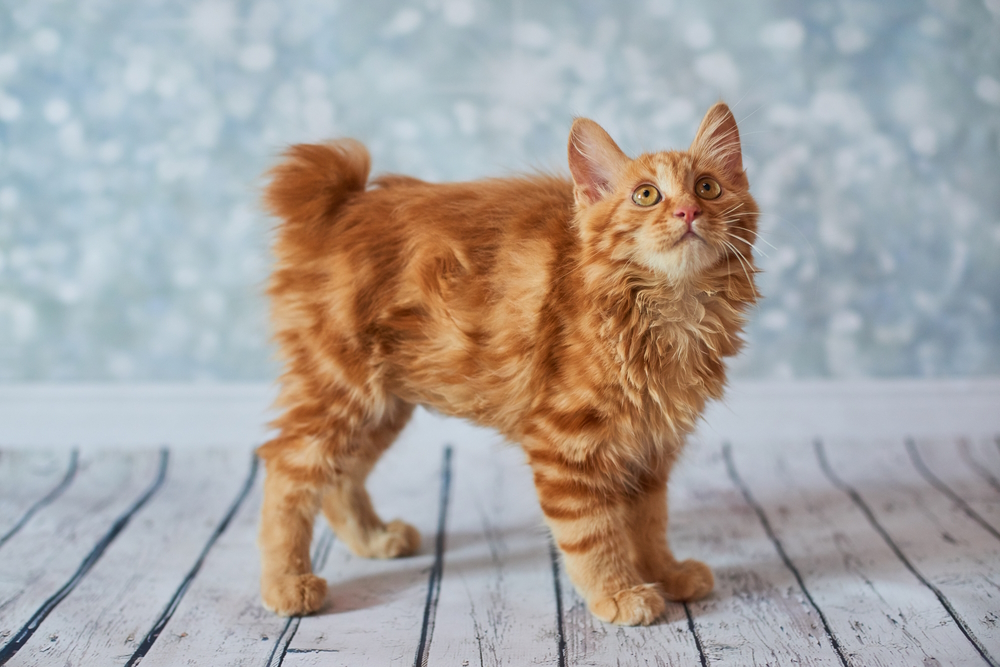
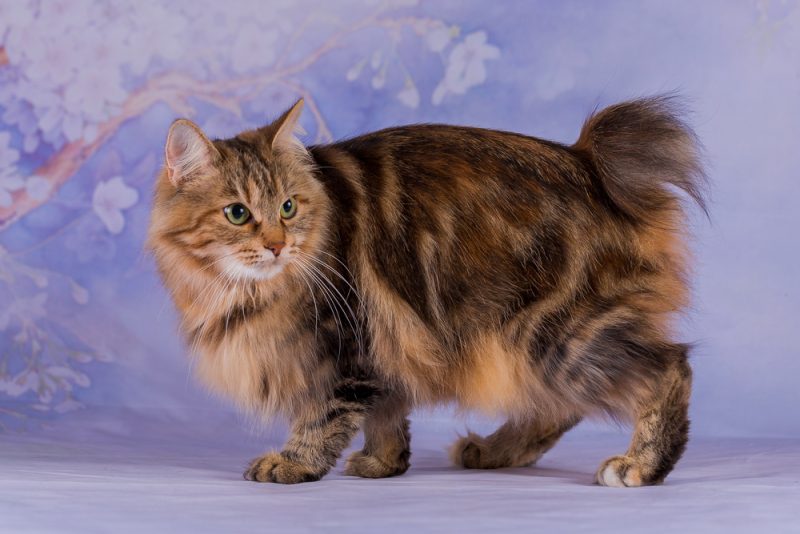
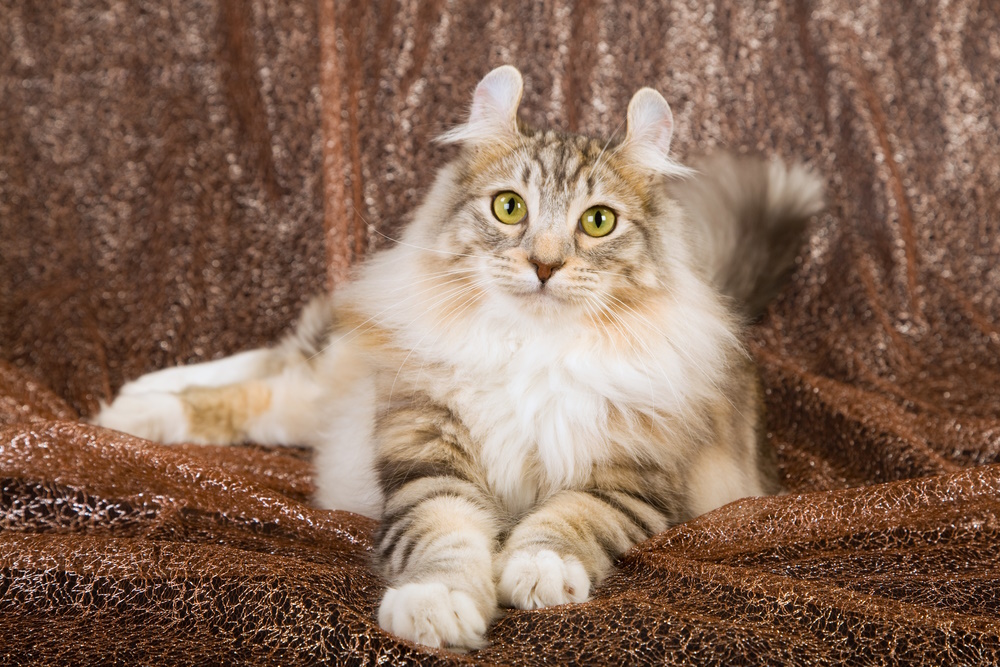
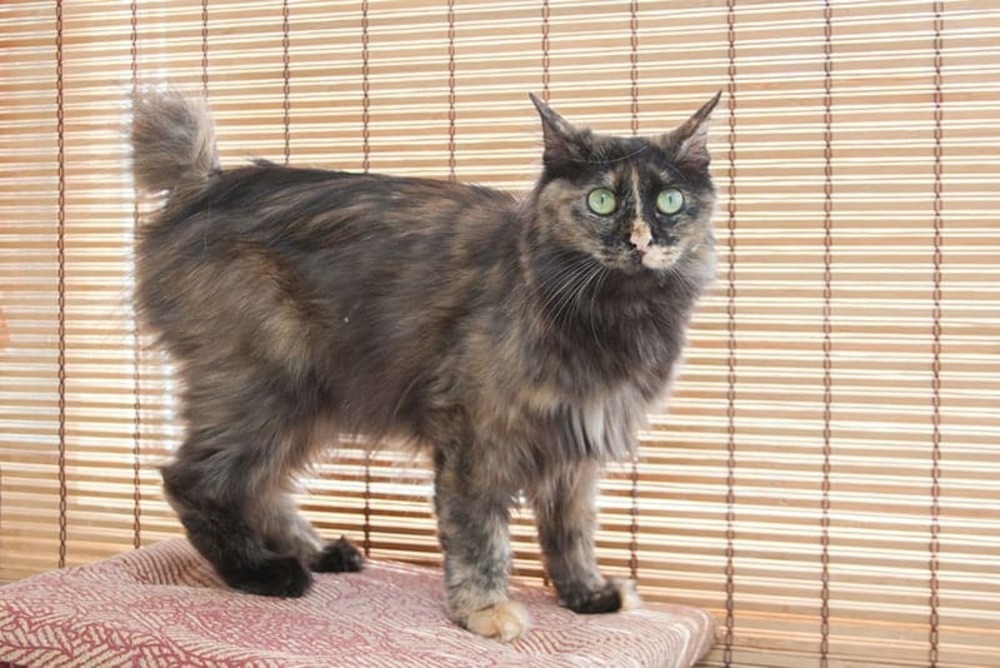
The American Ringtail is also known as the Ringtail Sing-a-Ling. They are a relatively new cat breed. The primary distinction between these cats and others is their curling tails that form a ring towards their back.

American Ringtails are sweet cats that tend to get along with most others they encounter, including other animals and humans. They usually are pretty loving and relatively patient for a cat. Most cat associations still consider them a rare breed, and locating a breeder for these felines can be challenging.

American Ringtail Cats Characteristics

Energy
+
A high-energy cat needs a lot of physical and mental stimulation to keep healthy and happy, while a low-energy cat needs minimal physical activity, but still needs mental stimulation. When choosing a cat, It’s important to ensure their energy levels match your lifestyle.
Trainability
+
Cats that are easy-to-train are more willing and skilled at quickly learning prompts and actions with minimal training. Harder-to-train cats are usually more stubborn or aloof and require a bit more patience and practice.
Health
+
Certain cat breeds are more prone to various genetic health problems, and some more than others. This doesn’t mean that every cat in those breeds will have these issues, but they do have an increased risk, so it’s important to understand and prepare for any additional needs they may require.
Lifespan
+
Due to their size or potential genetic health issues of a specific breed, some cats have shorter lifespans than others. Proper nutrition, exercise, mental stimulation, and hygiene also play an important role in your cat’s lifespan and quality of life.
Sociability
+
Some cat breeds are more social than others, both towards humans and other cats and animals. Cats that are more social have a tendency to rub up on strangers for scratches or jump on laps for cuddles, while cats that are less social shy away, hide, are more cautious, and even potentially aggressive. No matter the breed or gender, it’s important to socialize your cat and expose them to many different situations.

divider 1 paws

American Ringtail Kittens

American Ringtail kittens can be a challenge to find since they are still a rare breed. They are currently only recognized by The International Cat Association, but with “Registration Only” status.

Although you will not likely find these cats in a shelter, it is still worth looking. Adopting an animal from a shelter gives an abandoned cat a new family and loving home. If you research breeders of American Ringtail cats, ensure that the breeder you decide to adopt your cat from practices healthy breeding habits.

You can do this by asking to get a tour around their facility. Reputable breeders will always show you around since they have nothing to hide. Many of the best breeders are proud of their breeding facility. They should show you all the areas where they allow their cats. While going through the facility, check for safety measures they have put in place and the facility’s cleanliness.

Beyond getting a tour through their facility, you should also ask to see the parents’ registration or certification papers. Also, check through the parents’ veterinary records since they can make you aware of any possible diseases that could be genetically inherited. If you see evidence of any, alert your vet so that they can watch for them specifically as your cat ages.

divider 2 cats

Temperament & Intelligence of the American Ringtails

American Ringtail cats are very friendly. Their sociability doesn’t stand out too far from the attitude of other breeds, but it is something to appreciate if you frequently have guests over. They have an average intelligence level, so training them to do much more than use their litter box shouldn’t be expected.

They have a wonderful personality and seem to communicate with their owners as they speak with them. They are affectionate and quite outgoing, although shyness can surface around strangers.

American Ringtails like to explore and sometimes want to hide their food instead of eating it immediately. Some of these traits are thought to be because of their feral roots.

Are These Cats Good for Families? 👪

American Ringtails are a good choice for families, particularly those with slightly older children. They do not have a lot of patience if kids mishandle them. Gratefully, these cats are pretty robust and will not be injured easily. Teach your kids and the cat how to interact with each other to encourage a good relationship.

Does This Breed Get Along with Other Pets?

American Ringtails can experience the need to protect their territory against other animals. However, they tend to tolerate others if you socialize them from a young age and do not allow them to foster aggression towards other animals.

divider 1 paws

Things to Know When Owning an American Ringtail Cat:

Food & Diet Requirements

You can free-feed your American Ringtail cat. At times, if their food is left out for too long, they might try to hide pieces of it around the house. If you experience consistent issues with this, monitor the times you feed your cat and put them on a schedule.

Exercise 🐈

American Ringtails typically keep themselves in pretty good shape if they have enough space around the house to play. They do enjoy climbing and playing with toys, so giving them interactive toys and a climbing tree is ideal.

To keep them in as good a shape as possible, try to take at least 20 minutes to play with them. With toys and games, encourage them to move around, jump, and run.

Training 🧶

Training American Ringtails is a challenge. It is easy to teach almost any cat to use a litter box, but the American Ringtail’s attention span does generally not last very long.

Grooming ✂️

Grooming your cat is an excellent way to spend one-on-one time with them. The American Ringtail cat typically has a coat that is short or medium length. Their coats usually are effortless to maintain, and they tend to keep themselves clean.

You can brush your cat about two times a week to work out any mats or tangles, and some American Ringtails grow to love the experience. They do not shed very much, but brushing helps keep their fur soft and shiny.

Health and Conditions 🏥

Although their ringed tail doesn’t cause them any specific health problems, American Ringtails can experience issues as they age.

Minor Conditions
  • Eye problems
  • Lactose intolerance
  • Deafness
  • Constipation
Serious Conditions
  • Arthritis

divider 1 paws

Male vs. Female

There are no significant differences between males and females. Generally speaking, the personality traits of your American Ringtail will be more influenced by their parents and environment than by their sex.

divider 1 paws

3 Little-Known Facts About the American Ringtail Cats

1. American Ringtails Were First Developed From a Feral Cat in 1998

The American Ringtail is still considered by many to be an experimental breed. The entire line of the breed began with one feral cat who was rescued in 1998. The cat’s name was Solomon. Susan Manley adopted him as a 2-day-old kitten who had been seemingly abandoned by his mother.

Susan bottle-fed him so he would survive, and he eventually grew into a strong and healthy cat. When he reached 4 weeks old, she noticed that his tail curled uniquely over his back in a way that wasn’t typical of most cats.

She eventually took Solomon to be examined by a vet. The veterinarian determined it was not a medical issue causing the tail’s curl. The cat was comfortable, in no pain, but simply holding his tail curled over his back whenever he was relaxed.

The following year, 1999, Susan began her breeding program. The program’s primary goal was to reproduce the trait of the curled tail. It helped when she noticed that some of the other feral cats in her neighborhood also exhibited the ringed tail trait and could be used in her breeding program.

In 2005, her breeding program expanded, and more breeders began to work with her. They were primarily bred with other purebreds and Domestic Shorthairs. The International Cat Association gave the breed its current “Registration Only” status that same year.


2. These Cats Are Bred to be All Colors and Patterns

Since the other side of this cat’s genetic parentage has never been firmly set, they can come in various colors and patterns. The breed has become more established, but before this, many purebreds were used to produce the American Ringtails we have today.

As a result, they can have several colors, patterns, and shades.


3. The Ringed Tail of the American Ringtail Comes From a Genetic Mutation

If a physical deformity or a medical illness isn’t what has caused the cats’ ringed tail, then what is it? A genetic mutation causes the ringtail. It doesn’t cause the cats pain or harm, so breeding them to enhance this trait isn’t deemed cruel. They can straighten their tail and move it around if they want. It isn’t stuck in a ring.

When American Ringtails are first born, the kittens have straight tails. However, they will steadily grow longer as they age and begin to curl towards their back.

Their tail is muscular, and the feature of the ring develops because the bones that grow at the base of the tail do not fuse. They can uncurl it, but the curl is often where the tail sits whenever they feel relaxed. The curl doesn’t impact their balance or movement since they can move it around when necessary.

Interestingly, American Ringtails use their tails even more than other cats. Because it is naturally shaped, they can use it to slow them down more effectively. You might notice this when they descend from a tree or want to slow down in a high-speed chase.

divider 1 pawsConclusion

The American Ringtail is a unique cat breed that is still relatively new. They are considered experimental by most cat associations and have only gained recognition by one organization (TICA) thus far. Their ringed tails set them apart, but their coat colors and patterns resemble other felines. The care requirements for American Ringtails are otherwise very typical compared to many other breeds.

Related Reads:


Featured Image Credit: Wirestock Creators, Shutterstock

Want content like this delivered to you?

Sign Up For Our Newsletter

News, insights, expert advice, and everything cat

* By submitting, you agree to our Terms & Conditions and Privacy & Cookies Policy.



How useful was this post?

Click on a star to rate (you can leave written feedback after clicking submit)

Help us improve Catster for pet parents!

Your feedback really matters.

What did you like about this post? Also how can we improve it?

Join the conversation

16 Responses

  1. I have a ring tale adopted him from a shelter, actually my brother did and his 5 year old son was not ready for an animal yet, so I decided to take him, my boy mufasa is a long haired and he is very affectionate and he is very friendly when people come over, I love having him.

    1. Thank you so much for sharing your American Ringtail’s adoption and happiness story with us, Molly. Please consider sending us a good quality pic for our Cat of the Week contest: https://www.catster.com/submit-your-cat/ 🙂
      We are happy to hear about our readers loving their cats.

  2. I happened to look at a book at the bookstore yesterday about cat breeds and discovered my sweet Lucy could be an American Ringtail. Her tail always stays curled around her back. She is super super affectionate! She loves to cuddle and sit with me and leeeannn against me. She is the hostess with the mostest when company comes. I found her as a 6 week old kitten in the shrubs! She’s 5 now, the best thing that happened during Covid!

    1. Hi Janet Pescatore. What a wonderful story about finding your sweet Lucy! It sounds like she's a fantastic, loving companion and a true silver lining from a tough time. It's so much fun to learn about potential breeds and discover traits that match your cat.
      It's lovely that you're celebrating her distinctive tail and her super affectionate, "hostess with the mostest" personality!
      We're glad she found her way into your family! Thank you so much for sharing her story with us, please consider sending us a good quality pic of your cat for our Cat of the Week contest: https://www.catster.com/submit-your-cat/ 🙂

  3. I adopted my cat from a shelter because she was so unique. She was labeled as a domestic short-hair, but I'm convinced after reading your article, that she is an American Ringtail. I would love to learn more about the breed. Do you have any suggestions? I'll attach a picture of my Callie to the link you posted above. 🥰

    1. Hi Karen, thanks for your comment. You can find some more information in this post: https://resources.pangovet.com/pet-breeds/cats/american-ringtail-cat/
      Looking forward to having her in our cat of the week contest :)

  4. hi my name is Sierra, I recently adopted an American ringtail who is all black. they had labeled him a domestic Short
    hair I was so intrigued by his tail that I googled what could cause this and when I found out he was a rare breed I felt so much joy. he is extremely shy and hides 90% of the time. I've been slowly encouraging him to come out but I'm stumped on how to keep him from going under my couch and hiding. he was in the shelter for over a year and I think he was mistreated previously so I'm Taking my time with him. I also have a bombay who lives with me too which seems to help. any advice to help with the hiding.

    1. Hi Sierra, thanks for sharing your story. These posts might help you get a clue of the possible reason and some possible solutions to help: https://www.catster.com/cat-behavior/why-is-my-cat-hiding/
      https://www.catster.com/cat-behavior/how-to-get-a-scared-cat-out-of-hiding/
      https://www.catster.com/cat-health-care/how-to-socialize-a-shy-cat/
      You also need to ensure you desensitize your cat using positive reinforcement techniques. Thank you for reading us!

  5. we got 2 cats brother and sister from rescue think their mum was a ferrari cat. As they got older Teddy the boy developed the curly tail but his sister didn't. He is such a sweetie but doesn't like other people and will disappear until they have gone. He loves hunting brings me lots of presents home and chases all the other cats in the neighbourhood away. His sister is the complete opposite but love them both.

    1. Hi Lisa, thank you very much for sharing your two rescue cats' stories and for loving them both with their different and unique personalities. They both sound special and cute.

  6. we adopted a kitten and as he grew we discovered he is Ringtail! He is an orange flavored kitty full of energy, mischievous and loves his attention and will call for us if not seen and talks to us in chirps!

    1. Hi Jennifer Harris, thanks for reading us and sharing his story. How lucky you are, a Ringtail! Please consider submitting their pictures to our Cat of the Week contest. You can use this link ???? https://www.catster.com/submit-your-cat/ Thanks for reading us!

  7. My granddaughter picked out our America ring tail at the pound. When she saw him he was the only one racing out so energetic, that was 7 years ago 2017 she was 8 and named him Bagheera.
    I have had Siamese, Abyssinians, bangles, Russian blue, persian cats, and this cat that my granddaughter picked out at the pound is by far the most special cat that I’ve ever had. When I noticed that his tail was curling over his back. I had to google it to see what kind of cat he was, I have never heard of American ringtail. I’m looking for another one, but not from a breeder, I’d like to get one just from the pound. Just a regular old cat.

    1. Thank you for sharing, Cyndi. Bagheera sounds like a lovely boy, the American Ringtails are very special indeed. :)

  8. I have a ringtail very active he likes to fight and bite but he loves me his name is speedy because he is extremely fast I got him at 6 weeks old he 3 months now he ran my other cat away and now he here by his self and he loves it . He wants to eat everything I have I love him so bad . He will sleep as long as I'm in b3d he sleep right now on my chest…. If you have 1 congratulations ???? because speedy ismy befriend…

Leave a Reply

You’re very welcome to leave a comment or question. Please know that all comments must meet our community guidelines, and your email address will NOT be published. Let’s have a positive and constructive conversation.


Catster's Digital Magazine is Back!

Vet-approved health & behavior advice

Real cat stories & community features

Chatting About Big Cat Tourism, Lion Hunting, and Learning From Our Mistakes | Chatty Cattys, Episode 26

In this episode of Catster’s Chatty Cattys podcast, Nicole and Dr. Karyn dive into the dark side of big cat tourism and the...

Why Cats Sit by the Door (But Don’t Go Through It)

Door-sitting is one of those quirky little habits that almost every cat owner experiences at some point. You know how it goes: a...

Six Legs Are Better Than Three – How A Tripod Dog and Kitten Found Friendship Through Recovery

Sometimes the most meaningful friendships begin in the most unexpected places. At a Maryland veterinary hospital operated by Last Chance Animal Rescue, two...

The Original Space Invaders – Why Zero Respect for Personal Boundaries Is a Good Thing

Cats have a reputation for being independent, and in many ways they are. But anyone who has tried to work at a laptop...

More related

Big Daddy Is a King-Size Rescue Kitty Who Will Rule Your Heart

When Big Daddy was found living among a feral cat colony behind a Home Depot in Georgia, he was starved and limping on...

Ask Dr. Paola – Laptops, Drama Queens & Furniture Scratching (December 16, 2024)

Welcome to our “Ask Dr. Paola” series, where every Monday we bring expert advice straight from Dr. Paola Cuevas (MVZ) to help our...

Will Cat Fur Grow Back Over Scar Tissue? Vet Reviewed Facts & FAQs

If your cat has recently gotten injured or had surgery, you may wonder whether their fur will grow back in the injured area...

7 Best Cat Beds in the UK in 2026 – Reviews & Top Picks

Cats love to sleep and can spend hours on end partaking in their favourite pastime. Whether they’re sleeping on your favourite spot on...

Keep reading

Can Cats Eat Sausage? Vet-Reviewed Nutritional Facts & FAQ

As cat lovers, we all want to spoil and treat our feline friends, but we also want to keep them happy and healthy. While your cat may show interest in some of your human food, not everything on your plate...

Can Cats Eat Sausage

How Do Cats Show Affection? 12 Vet-Reviewed Body Language Cues

If you have a cat at home, you may wonder if your buddy loves you. And if so, how can you tell? Since cats can’t speak, it’s reasonable to wonder how they show affection. Cats show their love in several...

young woman holding cute siberian cat with green eyes

Can Cats Eat Chicken? Vet Approved Facts & FAQ

Your cat probably loves chicken. Most cats usually do. It is found in a lot of cat food, both canned and dry, and in cat treats, but perhaps you’re wondering if it’s okay for you to slip your cat some...

Can Cats Eat Chicken

How To Tell Which Cat is Dominant? 5 Vet Approved Signs To Look For

Contrary to the aloof and standoffish stereotype that’s been given to cats, cats have a wide range of personalities and temperaments. Some may have the independent personality that they’re known for, but many domesticated cats are very social and love...

two cats playing on a hammock at home

Can Cats Eat Lettuce? Vet-Verified Benefits & Precautions

Cats may be true carnivores, but their curious nature attracts them to all types of human food, including greens. Lettuce is a popular green that may be enticing for cats, but can cats eat lettuce? Is it healthy for them?...

Can Cats Eat Lettuce

What Is Cat Grass? Vet-Reviewed Benefits, Safety & Growing Tips

You may have seen your outdoor cat nibbling on the grass outside and wondered what they were up to. Many cats enjoy eating grass, but what about indoor cats that don’t get the chance to chew on that green stuff?...

cat eat young wheatgrass

15 Hazards That Could Hurt or Kill Your Cat & How to Avoid Them (Vet Reviewed)

When you are at home relaxing with your cat, you might be totally oblivious to all the hazards around the home. After all, we don’t foresee some events, making it difficult to navigate. While we could go on for hours...

vet wrapping cat's injured paw with bandage

Why Do Cats Pounce? Feline Instinctive Behavior Explained (Vet-Reviewed)

Have you ever watched your cat bound around the house, seemingly jumping on random things? You may have wondered why they do it. The answer is simple: Cats love to pounce! But why? Cats pounce as an instinctive behavior and...

Cat hunting to toy mouse at home

Love Cats? So Do We! Join the Catster Community

Stay informed with expert pet care insights delivered straight to your inbox! Discover professional guidance on animal behavior, feeding tips, trusted product picks, and much more.


Sign up for the Catster Email Newsletter

Stay informed with expert pet care insights delivered straight to your inbox! Discover professional guidance on animal behavior, feeding tips, trusted product picks, and much more.