13 Rarest Cat Patterns & Coat Colors (With Pictures)

In this article
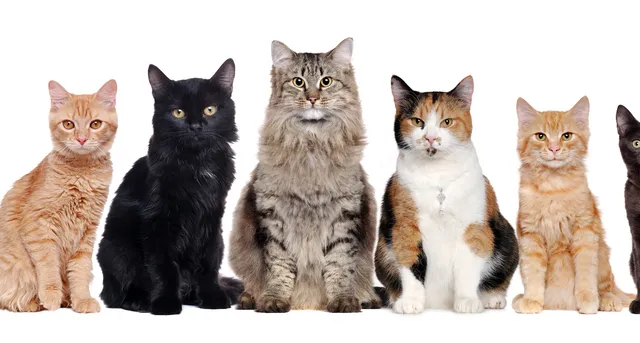
We’ve all seen plenty of cats in our lifetimes and know that they come in a wide range of colors and patterns. There are many feline breeds, and many of them have distinctive markings and colors that are instantly recognizable. Most cats are black-based or red-based and can be one solid color or a combination of these with white.
Join us while we discuss the hardest-to-find colors and what factors influence the color. We'll cover cat patterns, colors, genetics, and even some history to help you learn more about the rarest patterns and coat colors in cats.

Cat Identification
We identify cats by color, pattern, breed, and hair length. For instance, Taylor Swift’s cat Olivia is a white and black bicolor Scottish Fold shorthair. This system is a great way to learn everything in one sentence.
Cat Colors
Most people don’t realize that all cats are genetically either black-based or red-based, with varying amounts of white masking pigment. The orange cats have inherited a red gene related to sex that is only transmitted on the X chromosome. Therefore, male cats with one X and one Y chromosome tend to be either black or red. Female cats have two X chromosomes and can express both colors simultaneously, resulting in tortoiseshell or calico patterns.
Overview
Here are the colors and patterns you may find on your cat's coat, from the rarest to the most common.
The 13 Rarest Cat Patterns and Colors
1. Albino Cats
The albino cat is the rarest of all coat types. Two recessive alleles in the tyrosinase (C) gene cause complete albinism, and it is extremely rare for cats to get both.1 Most cats will inherit one of the alleles and present the colorpoint pattern instead. These cats usually have the trademark very pale blue to pinkish eyes, and must stay out of the sun to protect them. Their skin can also suffer damage from the sun, especially around the nose and ears.
2. White Cat

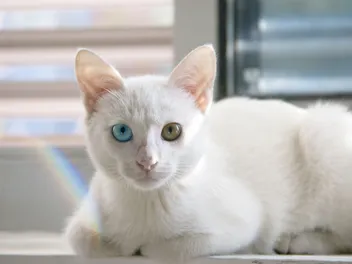
The white cat may look like an albino cat, but the color comes from the dominant white (W) allele of the KIT gene. Cats that inherit this allele appear pure white because the pigment cells, melanocytes, fail to migrate to the skin. These cats can have associated health concerns, including congenital deafness, particularly when blue-eyed. Their eye color may be blue, green, gold, or odd-eyed.
Though not albinos, this is an uncommon coat color, but white cats are not considered extremely rare and can be found in both mixed-breed and purebred populations.
3. Colorpoint Pattern

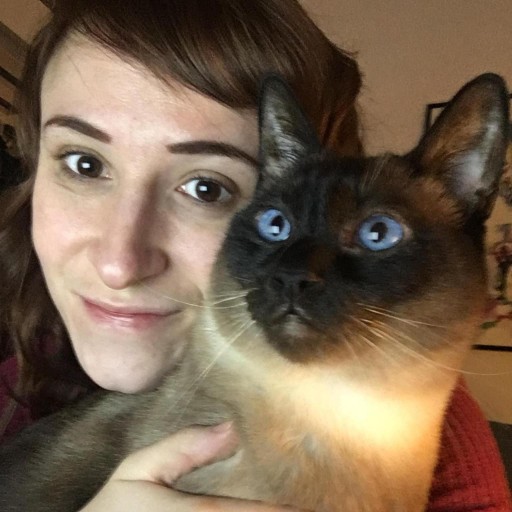
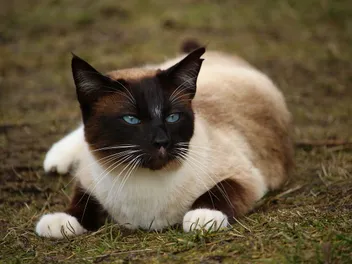
Cats with the colorpoint pattern have mostly white bodies with coloring on the face, ears, paws, and tail. It is temperature-sensitive partial albinism caused by a mutation in the tyrosinase gene that reduces pigment production in warmer areas. The color present is usually brown or black and is darker in areas where the body is cooler. This pattern is one of the most unusual cat colors and offers more protection from sunlight, and allows the pigment to reach sensitive areas like the ears and nose. Because albinism is involved, many of these cats have blue eyes.
Colorpoint is relatively common in the Siamese and related breeds and uncommon in the general cat population, though it can occur in any breed.
4. Silver Pattern

The silver coat pattern describes a condition where only the tip of the hair contains pigment; the inhibitor gene suppresses pigment at the base of the hair shaft, which gives your cat a smoky or silvery appearance but leaves the stripes and other markings still visible. There are three types of silver patterns based on how much hair is colored.
- Silver striped means half of the hair is colored.
- Silver shaded means less than half of the hair is colored.
- Silver-tipped, also known as chinchilla, means that only the tips are colored.
All silver patterns are rare and can fetch a high price from breeders.
5. Smoke Pattern
The smoke pattern is somewhat like the silver pattern and is a condition that leaves a part of the hair uncolored. In this case, the pattern affects solid-colored cats and leaves the bottom portion of the strands a white or cream color.
The smoke pattern is almost as rare as silver. However, it's not as sought after since you can usually find it for a fair price.
6. Tortoiseshell

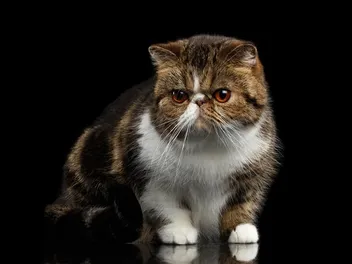
Tortoiseshell is a two-color pattern that features a mottled or swirled mixture of red and black or any of the diluted colors. There can also be some white in very small amounts, but the white will be minimal, without any large areas covered.
While the tortoiseshell is not that rare among female cats, a male cat will require an extra X chromosome to produce this pattern, which makes finding one extremely rare.
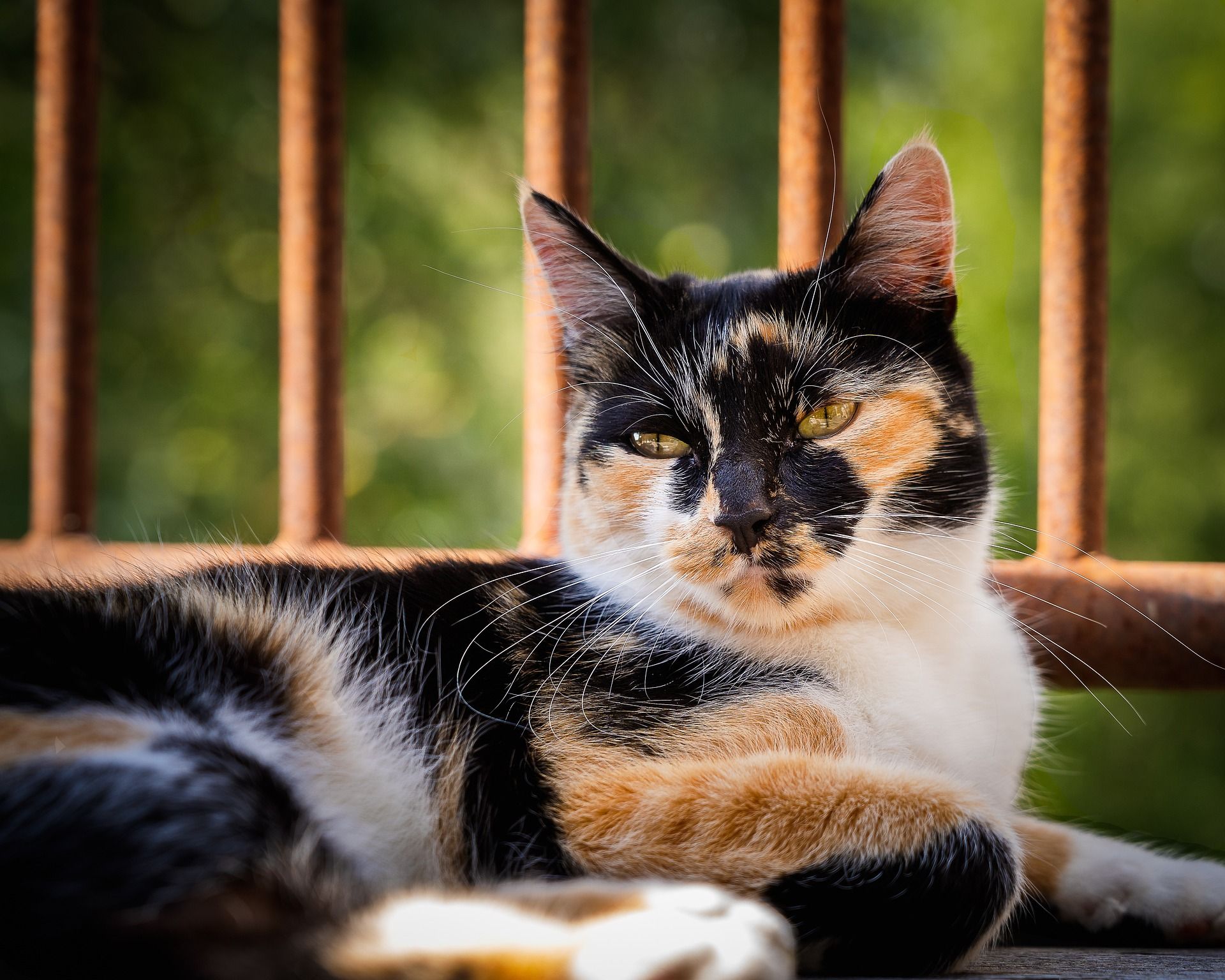
7. Calico

The calico features the same colors as a tortoiseshell, but the colors resemble patches instead of a blended or swirled coat. Calico cats also have a large amount of white fur, especially on their underside, which the tortoiseshell does not have.
Like tortoiseshells, only females can create this pattern normally. A male cat born with an extra X chromosome may also produce this pattern in rare cases.
8. Tuxedo

Tuxedo is a bi-color cat pattern that features an all-black cat with a bit of white on its chest. This pattern can have white paws as well. The overall look resembles a man's tuxedo. It is not rare and occurs frequently in domestic cats.
9. Ticked Tabby
Ticked tabby cats do not have stripes. Instead, these cats often have a sandy appearance and may also have bands of colors on each hair shaft. Ticked tabbies are the rarest among the common tabby cats, and it can be challenging to find one.
10. Spotted Tabby

The spotted tabby has broken stripes that resemble spots. The spots can be of various sizes, and certain breeds are much more likely to have this type of pattern. The breeds most prone to the spotted tabby coat include the Arabian Mau, Bengal, Maine Coon, and the Serengeti.
11. Classic Tabby

The classic tabby looks marbled or blotched. The cats usually have swirls on their side with three thin stripes down the back. There is often a butterfly pattern on the shoulders as well.
12. Mackerel Tabby

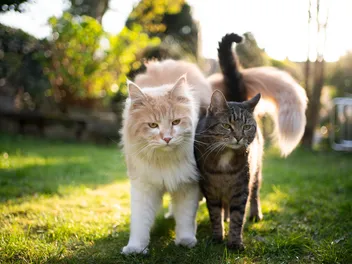
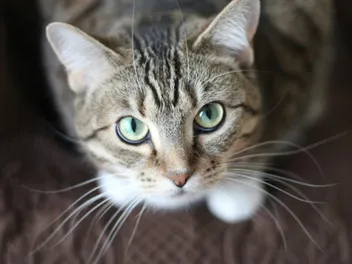
The mackerel, or fishbone tabby, features vertical stripes on the sides. The pattern can feature unbroken or broken stripes resembling bars or spots. You can often see the telltale M on their forehead that defines this common pattern. The mackerel tabby pattern is the most common type and is one of the most commonly seen tabby patterns.
13. Van

Van is a bi-color pattern that features a mostly white cat with some color on the tail and top of the head. Body patches are minimal or absent. This pattern is uncommon and distinct from other high-white bicolors.
The Color Genes
Let's discuss the genes responsible for the colors of your kitten.
Eumelanin Pigment
The eumelanin pigment is affected by the primary gene for coat color B/b/b1 in all cats. The dominant allele B is responsible for the black color, while the recessive allele b creates a chocolate brown. The other recessive gene, b1, creates a cinnamon color. The intensity of each color depends on other genes, as do the patterns and markings.
Phaeomelanin
Phaeomelanin is affected by the red gene O/o. The dominant allele O is responsible for the red color in cats, while the recessive o results in black fur. The intensity of the colors is affected by other genes, and it is here that sex comes into play. Since male cats have only one X chromosome, they can only receive one allele and either be orange or black.
Female cats have two X chromosomes, which results in more options.
- Allele OO – The female cat will have an orange color
- Allele Oo – The female cat will have a tortoiseshell color
- Allele oo – The female cat will only have black-based colors
Dense/Dilute Pigment Gene
As the name suggests, this gene, D/d, affects the intensity of the resulting color. If the cat receives a D, DD, or Dd, the color will be deep and vibrant, for dd, the result will be a faded color known as dilution. A black cat will appear grey, and a red cat will take on a creamy color. It will do the same to the other colors, like chocolate and cinnamon.

The KIT Gene
The KIT gene determines how much white the fur contains, and there are several alleles.
- Birman Gloving Allele -The Birman gloving allele is breed-specific and responsible for the white paws of Birman cats.
- Wild Type Allele -The wild-type allele does not produce white spotting.
- Dominant White Allele -The dominant white allele blocks melanocytes from reaching the skin, resulting in a pure white cat, no matter what other color genes they have. This gene can be associated with deafness, particularly in blue-eyed cats.
- Dominant White Spotting Allele - The dominant white spotting allele blocks the melanocytes from reaching certain areas of the skin.
Tyrosinase Gene
The tyrosinase gene has three alleles, C/c/c1, and it affects the tyrosinase enzyme. If your cat receives the C allele, it will receive a full coat of pigmentation, while c and c1 result in temperature-sensitive or complete albinism.

Summary
Of all the cats we discussed, the albino is the rarest cat color. These cats will have an all-white coat with blue to pinkish eyes. The non-albino white cat is the next rarest, followed by other cats with white fur due to albinism, or the gene that prevents color from reaching the skin. These cats include the colorpoint, silver, and smoke patterns. A male tortoiseshell or the calico cat pattern would be the next most unusual, since this would mean the male has an extra X chromosome. After that, the patterns are pretty common, with some being more prevalent than others.
You might also like:
Featured Image Credit: loicp90, Pixabay

Expert cat care, straight to your inbox
Vet-reviewed advice, behavior tips, and the best of Catster. Free, and you can unsubscribe anytime.
By signing up, you agree to our Terms & Conditions and Privacy & Cookies Policy.
Christian started writing for a local newspaper as a teenager, and he's been involved in the publishing industry for most of his adult life. Combining his love of writing with a passion for animals, he is currently the Director of Editorial at Pangolia and the Editor-in-Chief at Catster.
Christian lives in the Philippines with his wife, son, and four rescue cats: Trixie, Chloe, Sparky, and Chopper.
Join the conversation
Ask a question, share your story, or send private feedback.