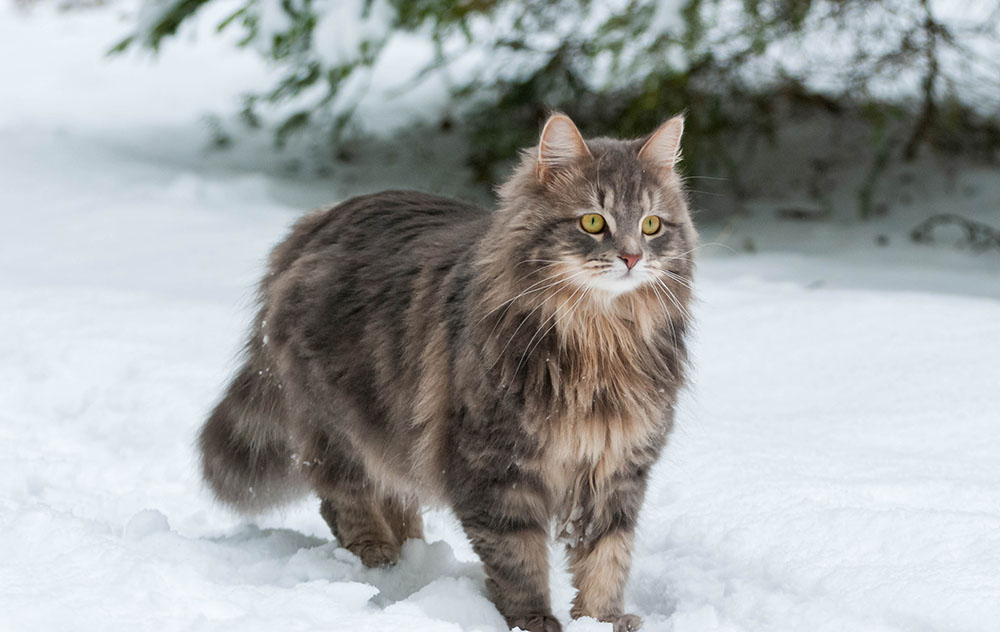
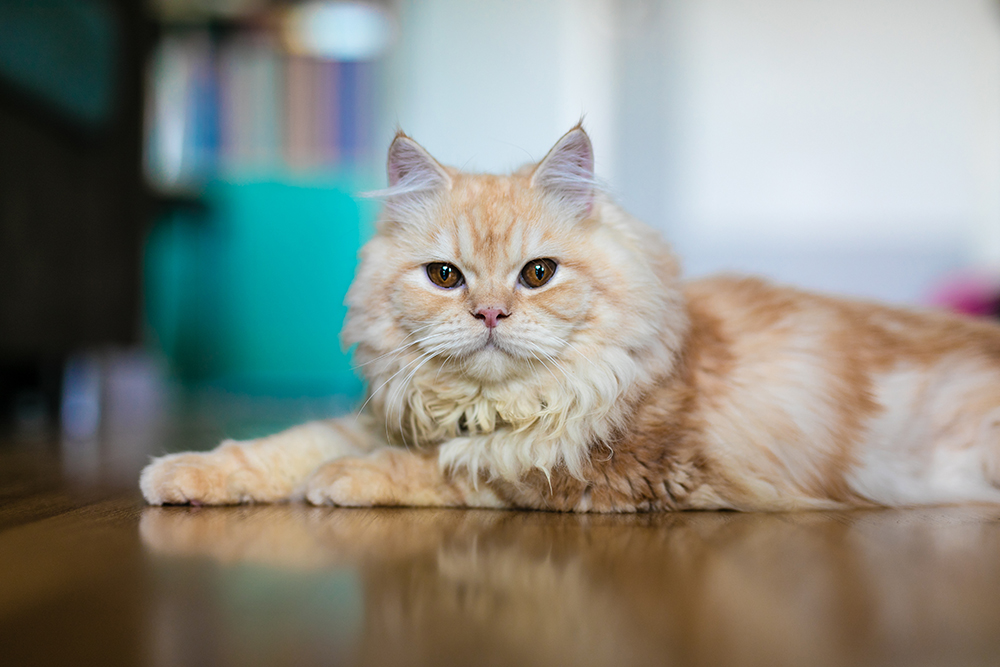
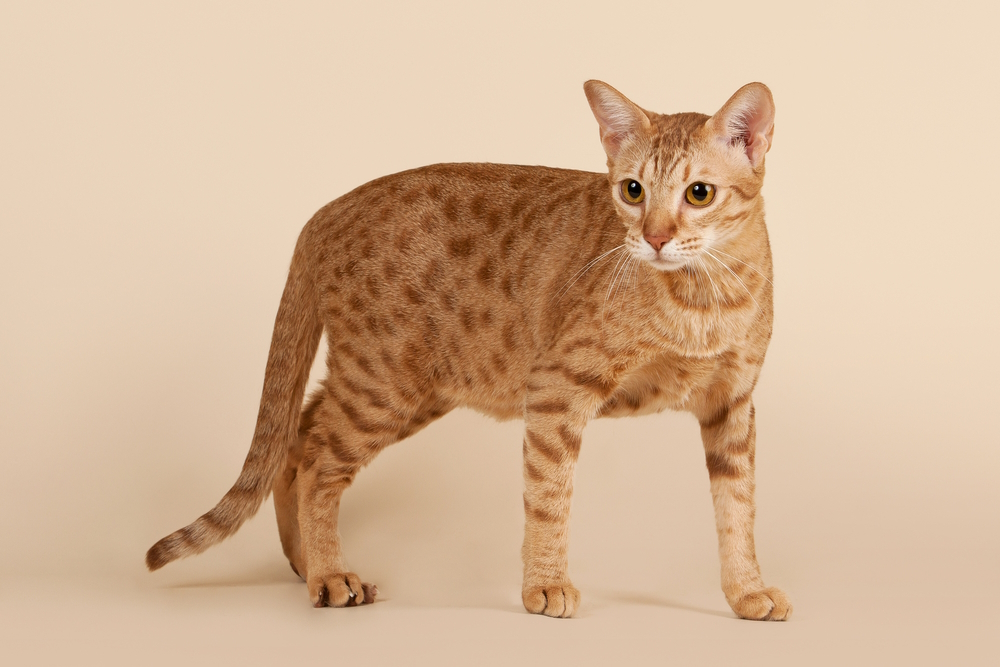
33 Striking Siamese Cat Colors (With Pictures, Vet-Reviewed)


In this article
Some cat breeds have the most beautiful and eye-catching colors, and the Siamese is the perfect example of this. Besides coming in a range of stunning, different types of colors, the Siamese breed has a distinct personality that has won them a legion of loyal fans.
Siamese cats can be intelligent, noisy, and sometimes demanding, but for those of us who love them, this is all part of their charm. Their striking coloration is also something that Siamese cat owners love. You’ve probably seen a Siamese cat with the classic seal points, but did you know that there are several other recognized color variations? We'll explore these colors in this article.

How Do Siamese Cats Get Their Color?
Siamese cats have a distinct type of markings due to a temperature-sensitive mutation in the tyrosinase (TYR) gene, often referred to as the “colorpoint” allele.1 The mutation in the TYR gene affects the function of the enzyme tyrosinase involved in melanin production. The pointed markings seen in Siamese cats are caused by a form of partial albinism that affects pigment production in a temperature-dependent way. This enzyme doesn’t function at body temperature, so most of a Siamese cat’s fur will stay white or cream, with no melanin produced.
At their extremities, however, it’s a different story. Here, because the temperature is cooler, melanin will be produced, leading to darker colored fur. So, the paws, tail, ear tips, and face of your Siamese cat will show their “true” color.
Siamese cats living in warmer climates will often have lighter-colored coats and points than those in colder locations. How cool is that!
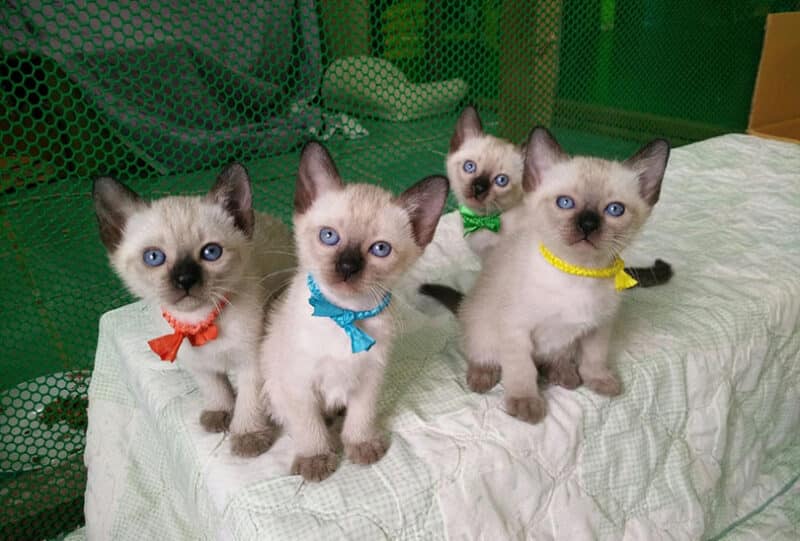
All Siamese kittens are born in a white or cream color. It’s only when they get to be around 1 month of age that their points will start to appear. By this stage, it is possible to begin identifying likely adult coloration, although full coat development continues over several months.
Now, let’s take a look at all these gorgeous shades of Siamese cats!

Standard Siamese Cat Colors
First off, there are four main colors recognized in the official Siamese breed standard in the U.S., such as those used by major cat associations.
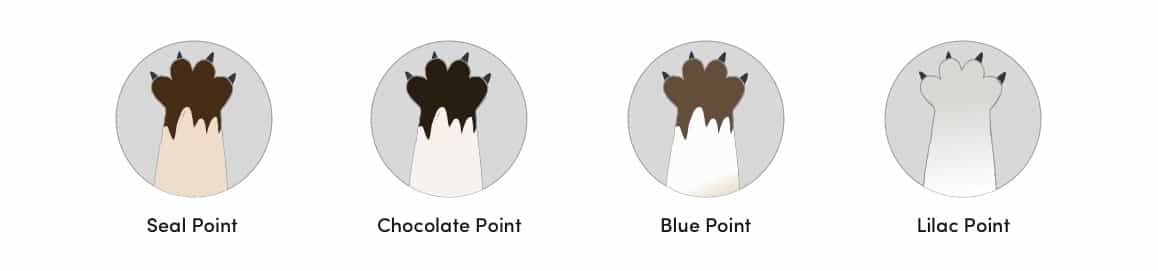
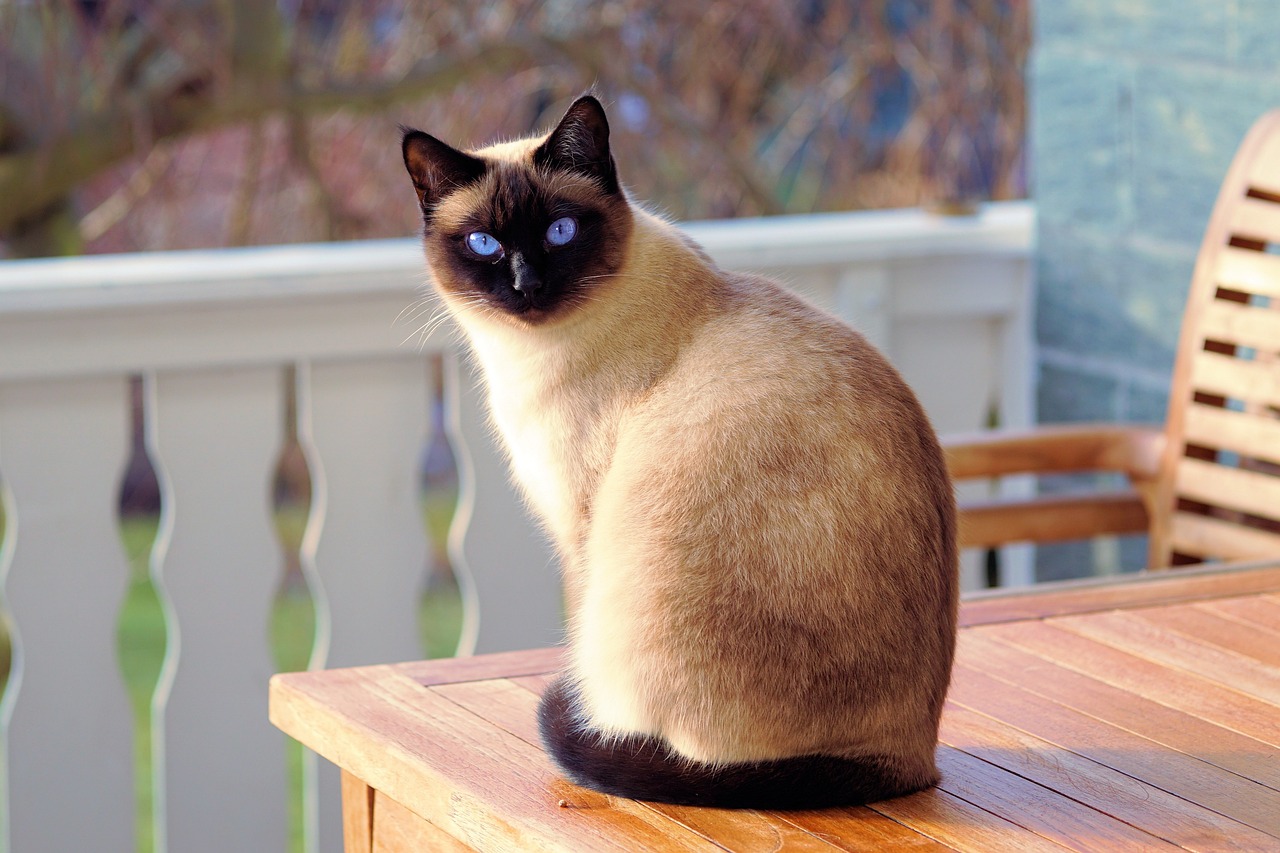
1. Seal Point

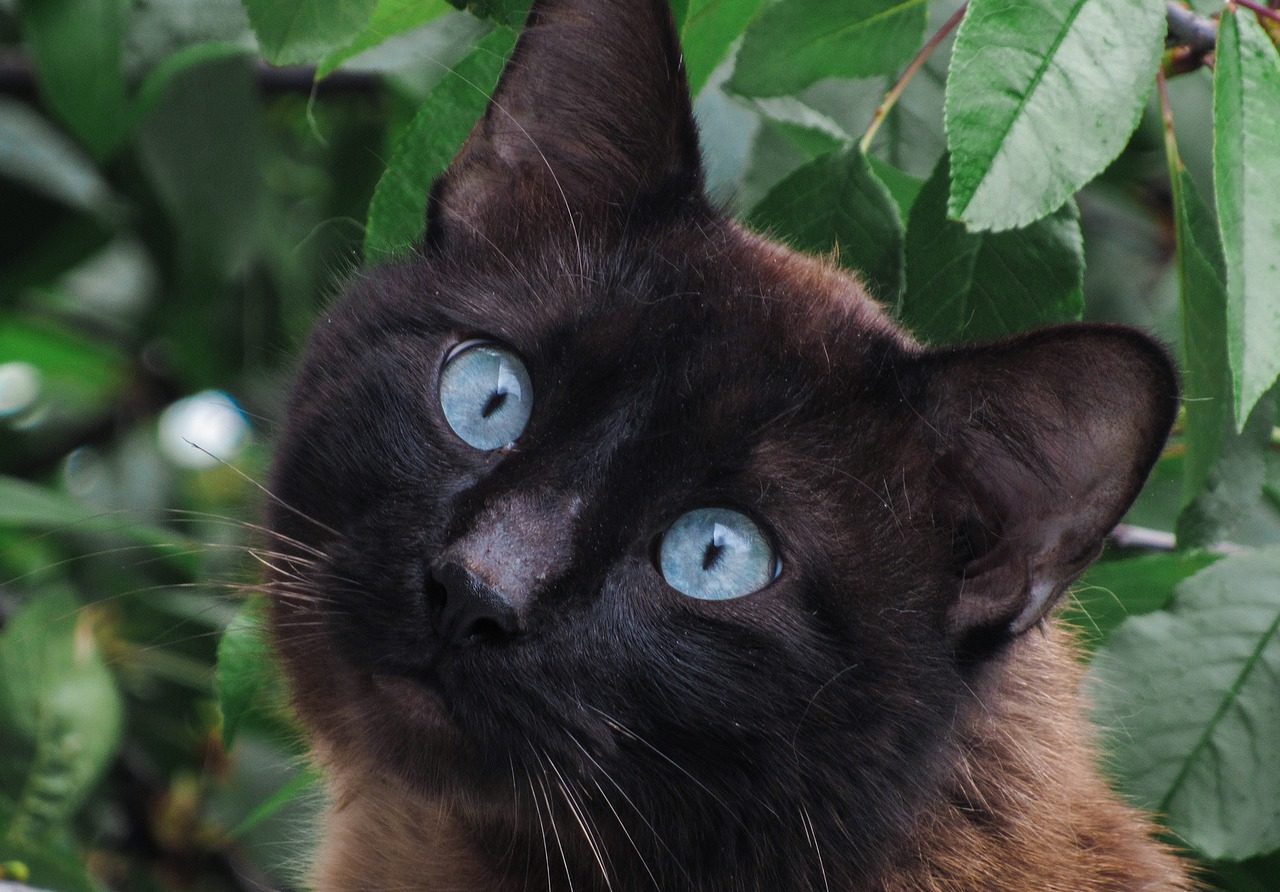
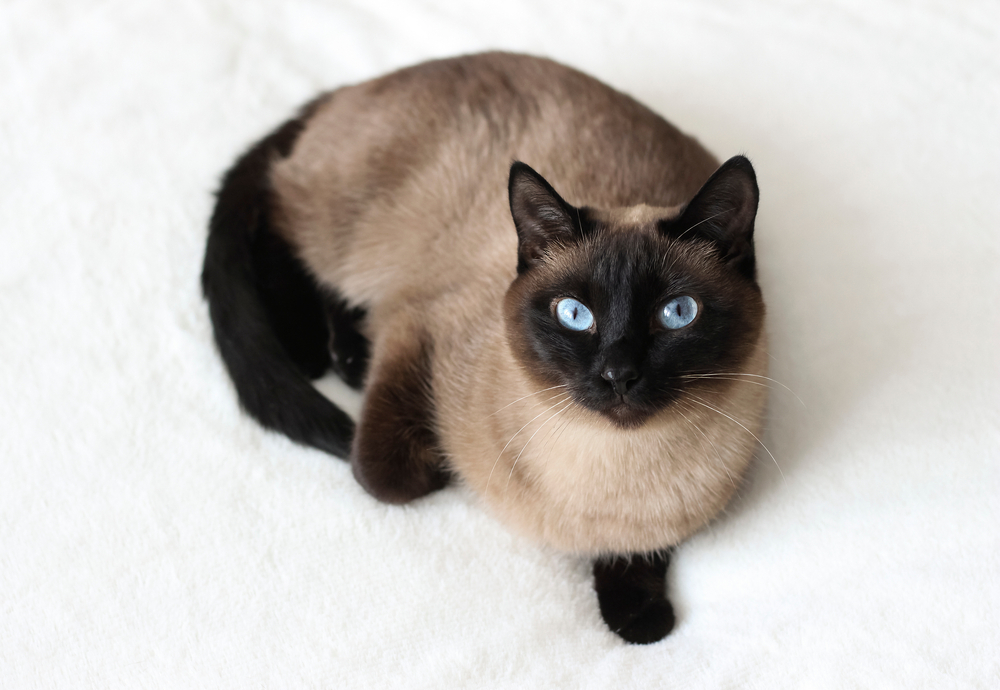
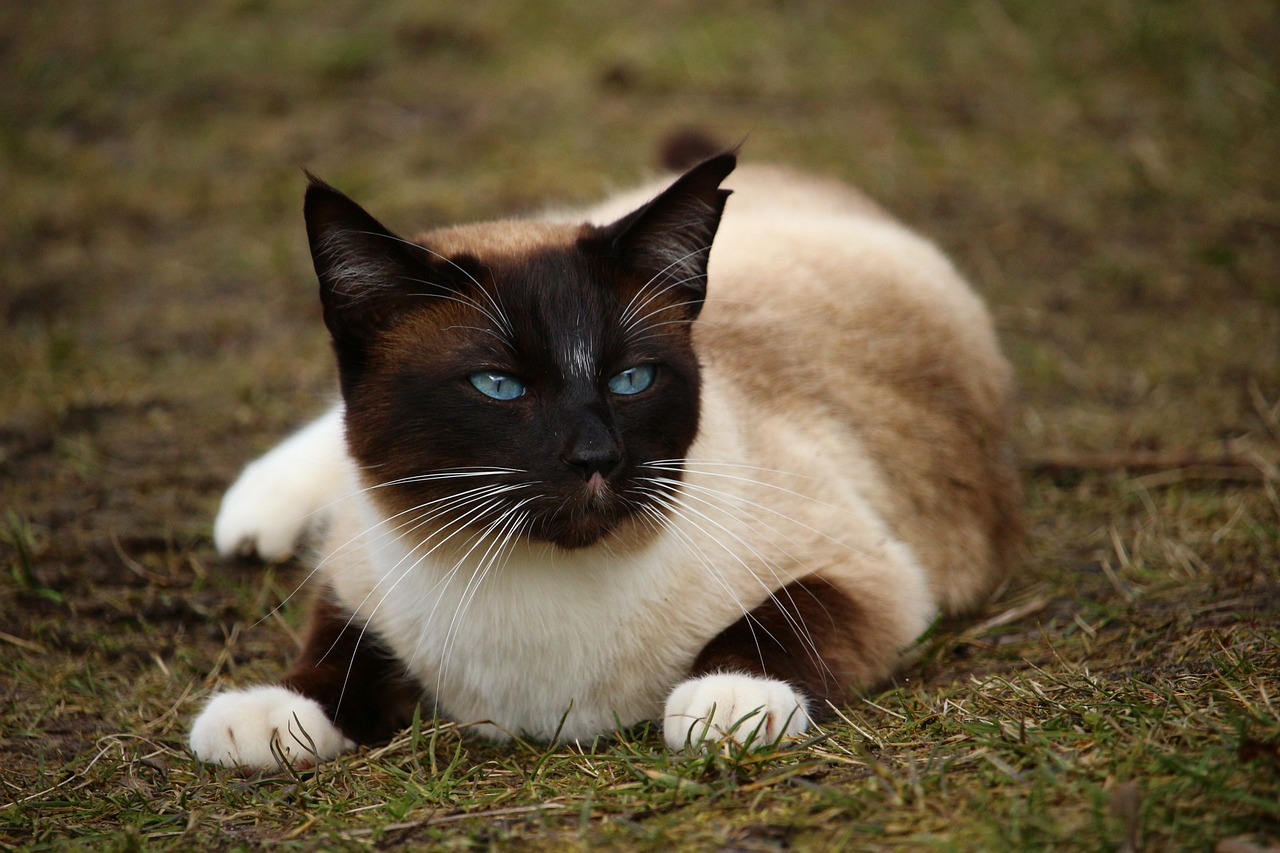
This is the classic Siamese color that most of us are familiar with. At one point, this was the only widely recognized color in early Siamese breed standards. The seal points are a rich and dark chocolate color, bordering on black. Their nose leather and paw pads will also be a deep brown.
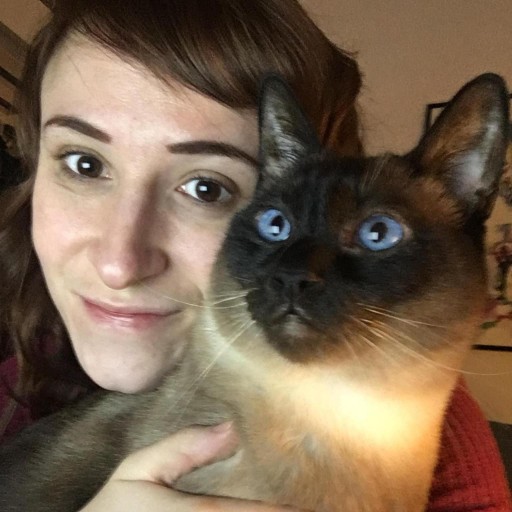
2. Chocolate Point
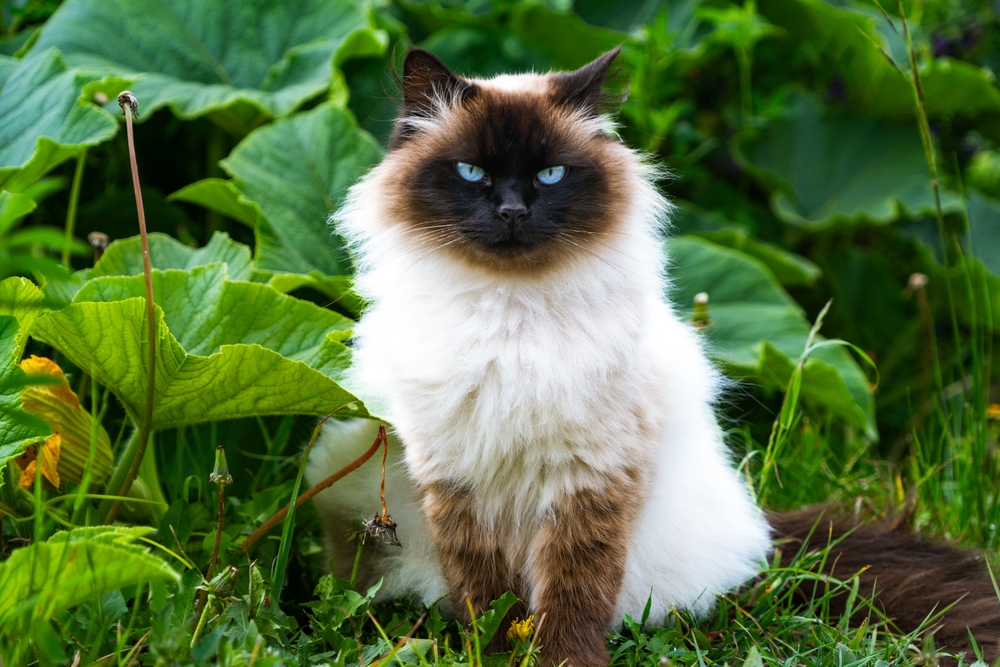
Chocolate-pointed Siamese cats have points the color of pale milk chocolate, which contrasts with the rest of their white fur. Their noses and paw pads are often pale browns with a hint of pink. Chocolate is a lighter variation of the seal point coloration, resulting from genetic differences that affect pigment intensity.
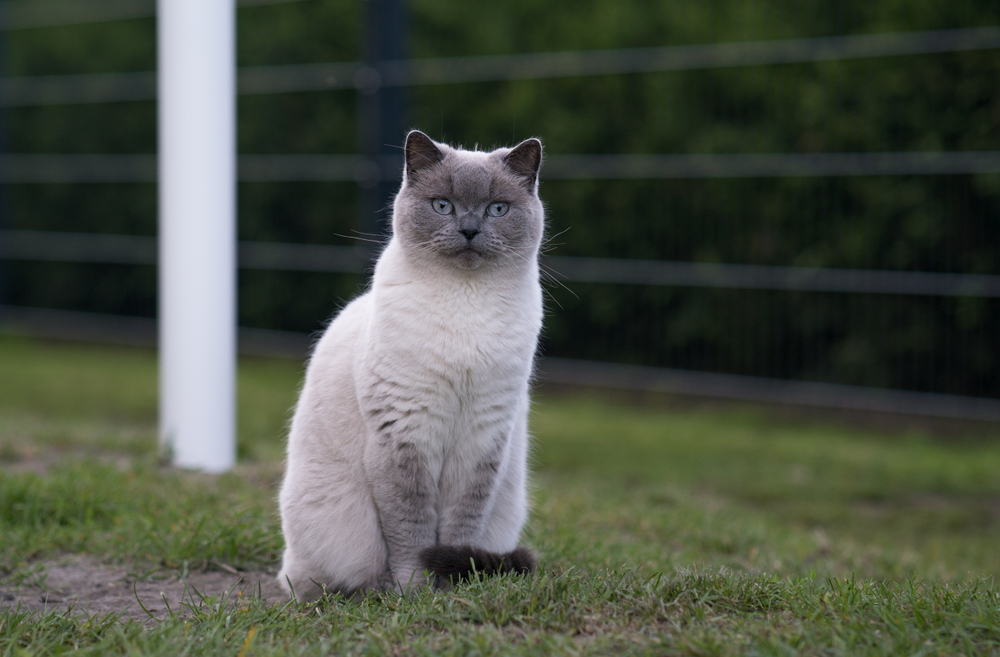
3. Blue Point
Blue point Siamese cats have shading in a beautiful, cool, silvery gray. Their color may darken as they get older. Siamese cats with blue points will have dark grey-colored noses and paw pads. This is another colorpoint variation produced by a dilution gene that lightens the underlying seal-based pigmentation.
4. Lilac Point
The lilac point is a warm gray color with a hint of pink running through it. The lilac point is sometimes informally referred to as “frost point,” though lilac point is the standard term used in most cat breed registries. The lilac points may be less well defined than the previous three colors, but they do contrast with the pale white coat. The paw pads and nose of a lilac-pointed Siamese will be a soft pink. The lilac point is a diluted version of the chocolate point.
More Types of Siamese Cat Colors
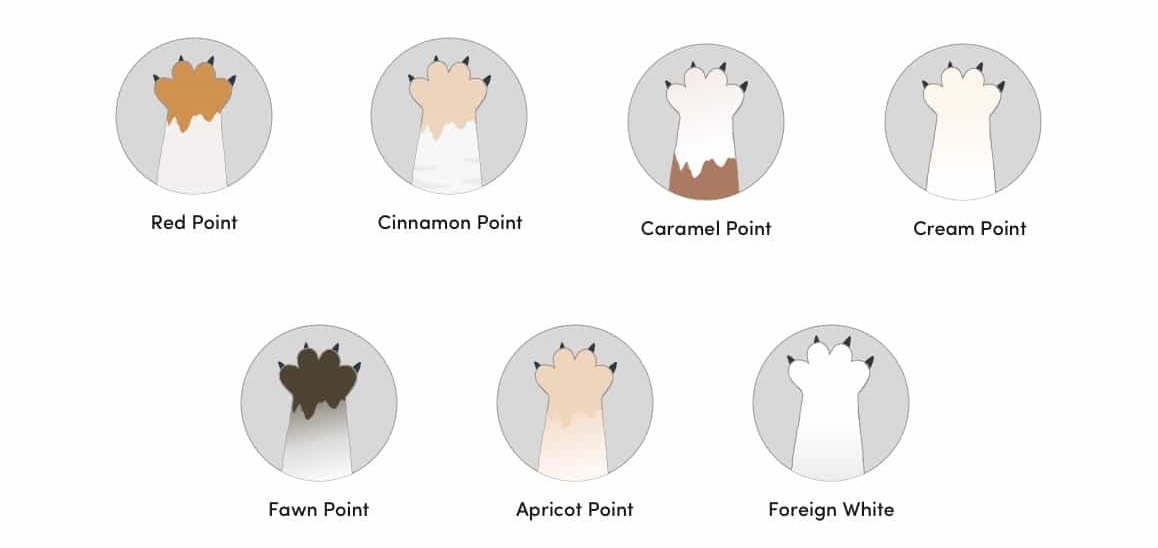
In addition to the four classic colors covered above, there are also several additional point variations seen in Siamese-type cats. Some of these are not accepted by certain breed standards, depending on the cat registry, as recognition of colors can vary between organizations.
5. Red Point

Also known as “flame point” and “orange point,” these Siamese cats have distinctive chestnut red points and pale pink noses and paw pads. This coloration was developed through breeding programs that introduced the orange gene into Siamese-type lines, producing red or flame point variations.
6. Cinnamon Point
Cinnamon point cats have a beautiful cinnamon shade across their points. Their facial shading is usually lighter compared to other point colors, with warm brown typically concentrated in the mask area. The rest of their coat is warm ivory, and they will have pink to pale brown noses and pads.
7. Caramel Point
Siamese cats with caramel points will have warm gray-brown tones across their extremities. This can vary in darkness, but the color is usually concentrated on the facial mask, ears, paws, and tail, rather than covering the whole body. Pads and noses are a soft gray with pink undertones.
8. Cream Point
Cream point Siamese coloration developed through breeding programs that introduced and refined the orange and dilution genes within Siamese-type cats. In comparison to the strong contrast of most Siamese points, the cream point has delicate cream points against a paler cream coat. Their nose leather and pads are a soft pink.
9. Fawn Point
Fawn-pointed Siamese cats have soft gray points and creamy-white bodies. The depth of color is not as strong as in the seal, chocolate, or blue-pointed Siamese cats. Fawn-pointed cats will have pink to gray nose leather and paw pads.
10. Apricot Point
Similar to the cream-pointed Siamese, the apricot point has subtle soft orange points, though exact recognition and appearance can vary between breed standards. Sometimes faint tabby markings may be present due to underlying genetics. They may get freckled skin on their nose and lips. Their paw pads and noses are orangey-pink.
11. Foreign White
The foreign white is now sometimes accepted as a separate breed, but they are also frequently referred to as white Siamese cats. As the name suggests, these cats have pure white coats but, in all other respects, look exactly like a Siamese.
The Foreign White was developed by introducing the dominant white gene into Siamese breeding lines. The gene masks the point coloration that would otherwise be visible on their coats.

Tabby Point Siamese Cats
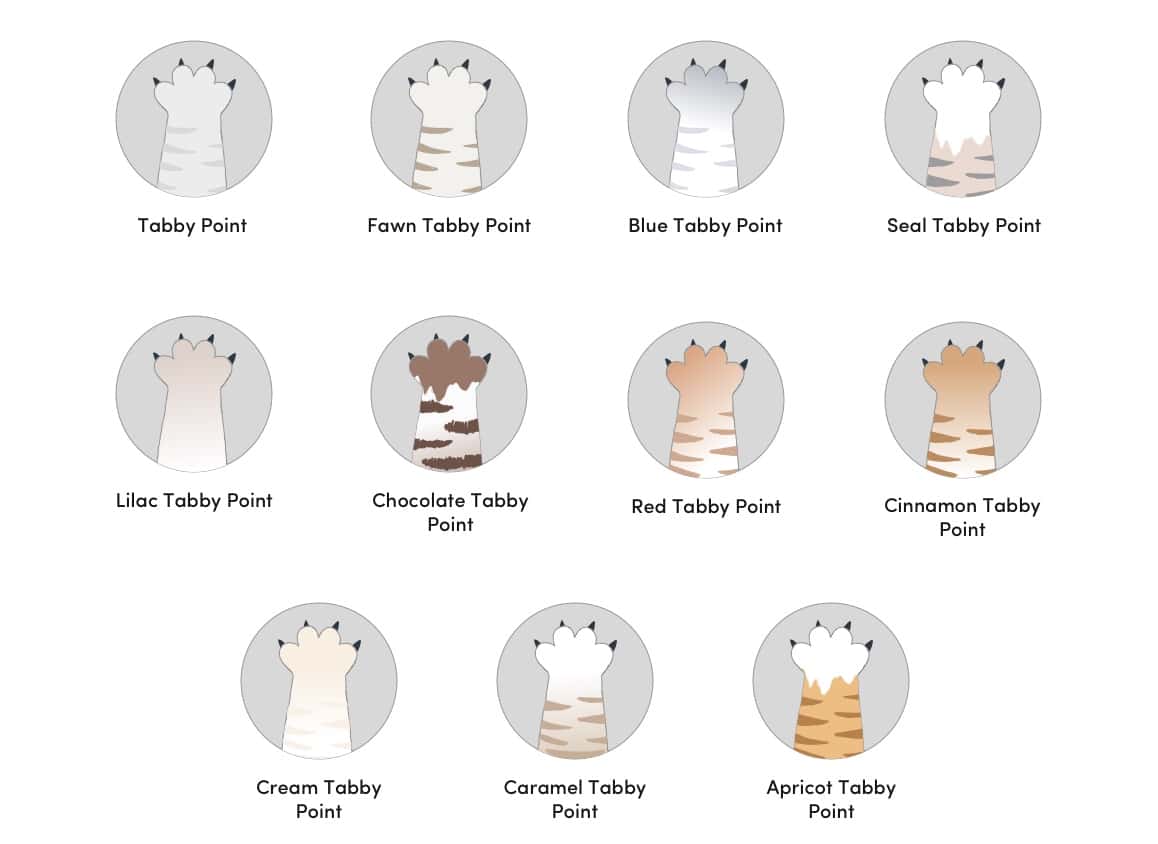
12. Tabby Point
It’s believed that tabby point Siamese cats were developed in mid-20th-century breeding programs. They are sometimes also called shadow points or lynx point. Their points have a beautiful and distinct tabby stripe that will fade into their paler bodies. They will have the classic “M” tabby marking across their foreheads if their points are dark enough to show this.
Some breed associations do not accept tabby point as an official Siamese color because recognition varies between registries, and its status depends on breed standards rather than a requirement for crossbreeding. Tabby points come in a wide range of colors, all of which are variations of the colors listed above but with tabby stripes.
13. Fawn Tabby Point
14. Blue Tabby Point
15. Seal Tabby Point

16. Lilac Tabby Point
17. Chocolate Tabby Point
18. Red Tabby Point
19. Cinnamon Tabby Point
20. Cream Tabby Point
21. Caramel Tabby Point
22. Apricot Tabby Point
Tortie Point Siamese Cats
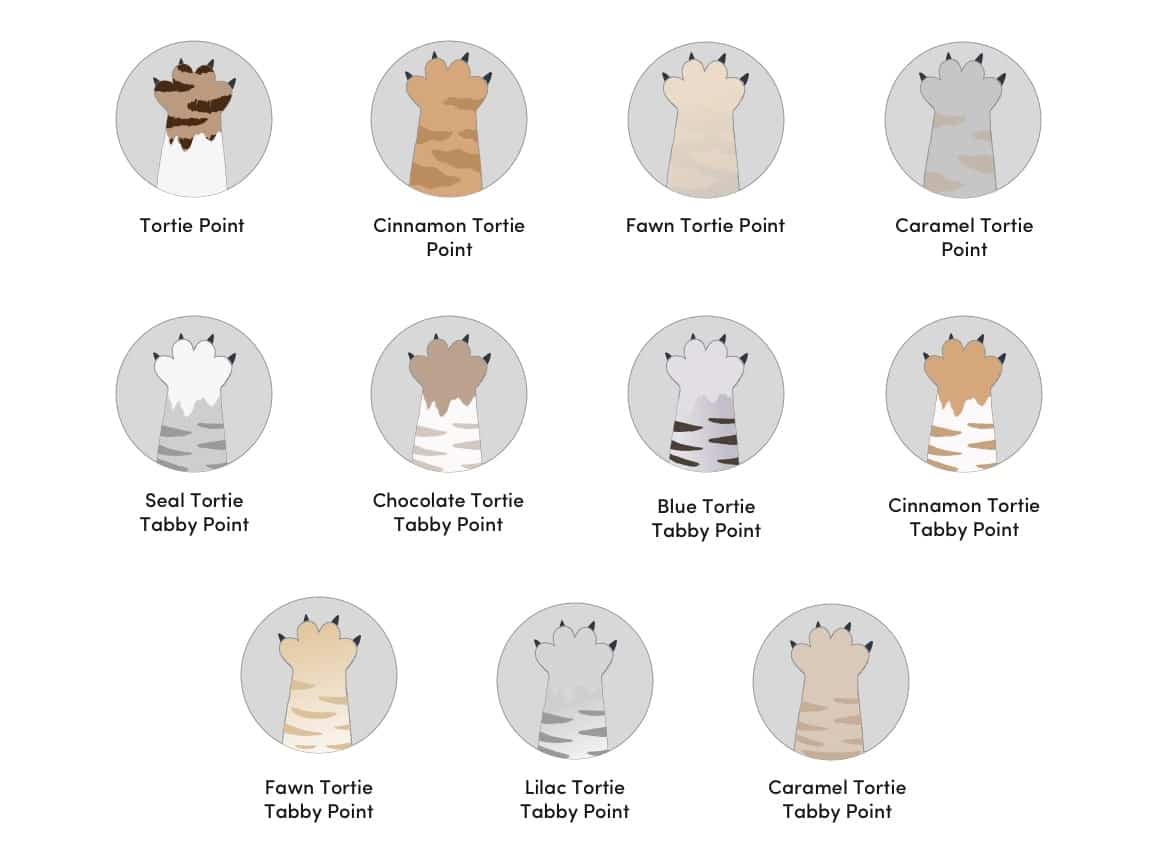
23. Tortie Point
As you might have guessed from the name, tortie-point Siamese cats have points in stunning shades of tortoiseshell. They were developed through breeding programs that introduced the orange gene into Siamese-type cats, resulting in tortoiseshell-point variations. Tortie-point Siamese cats can be further split into the following.
24. Cinnamon Tortie Point
Cinnamon tortie-point cats have tortoiseshell patterning in cinnamon-brown and orange tones on their points, contrasted with a light cream or ivory body coat.
25. Fawn Tortie Point
A fawn tortie-point cat will have diluted warm gray-brown (fawn) and cream/orange markings across its points. Their bodies are a pale cream fading into the points.
26. Caramel Tortie Point
A caramel tortie-point cat has diluted warm brown (caramel) tones blended with soft apricot or orange in its points, depending on the specific genetic expression. Their bodies are a soft cream.
Tortie Tabby Point Siamese Cat Colors
If you have a tortie with tabby markings, there are even more possibilities! These cats will have points showing a combination of tortoiseshell patching and tabby striping patterns, resulting in a variety of possible color expressions.
27. Seal Tortie Tabby Point
A cinnamon tortie point Siamese cat has a pointed coat pattern with cinnamon-based tortoiseshell coloration, and may also show tabby stripes depending on genetic background.
28. Chocolate Tortie Tabby Point
Chocolate tortie tabby point cats have chocolate-based tortoiseshell point coloration combined with tabby striping, and may show the characteristic “M” marking on the forehead typical of tabby patterns.
29. Blue Tortie Tabby Point
A blue tortie tabby point Siamese has blue-based tortoiseshell point coloration combined with tabby striping, resulting from the interaction of dilution, orange, and tabby pattern genes.
30. Cinnamon Tortie Tabby Point
This Siamese has warm brown-based point coloration with tortoiseshell and tabby patterning, creating a striking combination.
31. Fawn Tortie Tabby Point
Fawn point is a warm, diluted gray-brown color. The combination of tortoiseshell and tabby patterning can create a distinctive appearance on a Siamese. The tabby “M” marking on the forehead may also be visible, depending on the individual cat’s pattern intensity.
32. Lilac Tortie Tabby Point
Lilac is a less common Siamese point color, so a lilac point Siamese with tortie tabby markings is relatively rare.
33. Caramel Tortie Tabby Point
Caramel point is a diluted warm brown coloration seen in some Siamese-type cats, and caramel tortie tabby points combine this base color with tortoiseshell and tabby patterning.
Conclusion
Whatever your preference, there are plenty of different types of Siamese Cat coat colors to choose from, and some of them have stunning names to match.
Of course, you could decide to be surprised and choose a Siamese kitten while they’re still young enough to have the color of their points hidden by baby white coats. Imagine how exciting it will be to see their coats develop!
See Also:
Ragdoll vs Siamese Cat: What’s the Difference? (With Pictures)
Burmese vs. Siamese Cat: What’s the Difference? (With Pictures)
Featured Image Credit: rihaij, Pixabay

Expert cat care, straight to your inbox
Vet-reviewed advice, behavior tips, and the best of Catster. Free, and you can unsubscribe anytime.
By signing up, you agree to our Terms & Conditions and Privacy & Cookies Policy.
Christian started writing for a local newspaper as a teenager, and he's been involved in the publishing industry for most of his adult life. Combining his love of writing with a passion for animals, he is currently the Director of Editorial at Pangolia and the Editor-in-Chief at Catster.
Christian lives in the Philippines with his wife, son, and four rescue cats: Trixie, Chloe, Sparky, and Chopper.
Join the conversation
Ask a question, share your story, or send private feedback.