The EU Just Made "Cute but Unhealthy" a Legal Issue
Picture a hopeful cat parent scrolling through kitten listings late at night, falling in love with an adorable, squishy little face before reading a single word of the actual description. That instinct of choosing with the eyes before the head gets involved is exactly what the European Union is trying to shut down with a controversial new law that has been two years in the making.
For the first time, the difference between "cute" and "healthy" is being treated as a legal question, not just a personal one.
With an overwhelming majority of 558 votes in favor of the legislation and only 35 against, the European Parliament approved the EU's first-ever bloc-wide law on the welfare and traceability of dogs and cats on April 28, 2026. For the first time, all 27 member states will be held to the same minimum welfare standards regarding how companion animals are bred, sold, and identified, with individual countries remaining free to impose additional or stricter rules of their own. Buried within the legal jargon are two provisions that speak directly to cats: a ban on breeding close relatives, and new limits on breeding for extreme physical traits; those flat faces and folded ears that help keep veterinary clinics busy.
A First for Feline Equality
You might be surprised to learn that while farm animal welfare has had EU-wide rules for decades, companion animals have not. Instead, pets like dogs and cats have been governed by a patchwork of 27 different national systems, some far more protective than others, meaning a breeding practice banned outright in one country could continue legally just over the border; a border that can be crossed as easily as driving between US states. According to Eurogroup for Animals, who have tracked the legislation through to its final vote, it is loopholes like this that the new EU legislation aims to close. Whilst the new laws do not apply to the 17 non-EU countries, it does bring Europe one step closer to a unified stance on animal welfare standards throughout the continent.
The rules apply to breeding establishments, pet shops, and shelters, with mandatory inspections and a public registry designed to increase transparency and traceability, making it easier for purchasers to know exactly who they're buying from. Small-scale breeders, defined as those with no more than three queens producing two litters or fewer per year, are exempt from the new breeding and housing requirements. However, they still have to identify and register the animals they sell.
The question that only time can answer is: will this threshold lead to an increase in small-scale hobby breeders, or become a loophole to be exploited?

Every Cat Gets a Paper Trail
All dogs and cats kept in the EU, not just those bred or sold commercially, will eventually need to be microchipped and registered in interconnected national databases, meaning even a cat who has never once left the house is about to get their own paperwork. According to reporting on the regulation's rollout timeline, breeders, sellers, and shelters have four years to comply, while pet parents whose cats were never bought or sold get fifteen years. The aim is to close another legal loophole that's been an open secret in the illegal pet trade for years: animals brought across borders as "non-commercial" travel companions, then quietly sold once they arrive in the destination country. A working, searchable microchip database makes that sleight of hand much harder to pull off.
Taking Aim At Folded Ears and Flat Faces
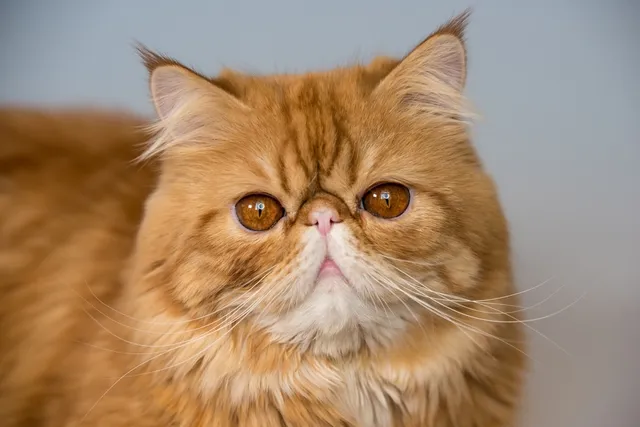
This is the part of the regulation that will hit close to home for many breeders and cat fanciers. Article 6, as reported by the Legal Advisory Group on Extreme Conformation in Dogs, states that breeding strategies "shall not result in genotypes and phenotypes that have detrimental effects on the welfare" of dogs, cats, or their offspring. Put simply, it points a finger directly at the health burden of brachycephalic breeds like Persians and Exotic Shorthairs, whose shortened skulls often mean narrowed airways, lifelong breathing difficulties, and eye problems. It also highlights the plight of breeds like the Scottish Fold, whose signature folded ears result from a genetic defect that causes cartilage abnormalities, often leading to painful, progressive joint disease throughout the body, not just in the ears.
But here's the catch, and it's a big one: Article 6 states that the breeding of brachycephalic cats and dogs may continue as long as breeders take steps to "minimize the negative welfare consequences" of those traits. The trouble is, nobody has yet defined exactly what that looks like in practice, which is a little like telling car manufacturers they can keep building cars with weak brakes as long as they try to make the brakes less weak. Enforcement will depend heavily on rules still to be written based on guidelines yet to be defined, and legal scholars reviewing the text have already flagged this stipulation as the regulation's weakest point.
What this legal grey area does allow for is the improvement of existing breeds through selectively breeding animals with less extreme features, genetically walking back these problematic breeds rather than banning them altogether. While some diehard fans of folded and flat-faced felines may balk at the idea of diluting the gene pool, working toward a population of cats that are healthier and more robust is something that all animal-lovers should be in favor of. After all, these breeds were created by people, so it stands to reason that they can be updated and improved by people too.

No More Keeping It in the Family
Unlike the blurry lines surrounding the ‘brachycephalic breeding grey area’, the rules pertaining to inbreeding are pretty clear-cut. Breeding between parents and offspring, grandparents and grandchildren, or siblings and half-siblings is now flatly prohibited. As veterinarians, we regularly see the downstream effects of limited gene pools, with recessive and deleterious genes more likely to pair up in offspring, resulting in everything from minor deformities and poor joint conformation to severe immune problems and inherited heart and kidney disease. Preventing inbreeding won't eliminate hereditary disease altogether, but it significantly reduces the chances of stacking multiple copies of the same faulty gene in one kitten.
The Devil is in the Details… and the Loopholes
The new regulation isn't without problems. For example, cats living on farms are excluded from its protections entirely, the fairness of which has already been questioned by animal welfare groups. Much of the practical detail, exact housing standards, inspection frequency, and what "minimizing" brachycephalic risk actually requires, is left to rules that are yet to be written. Not only that, but with transition periods stretching from two to fifteen years, depending on the provision, the measurable impact on welfare will happen gradually, not overnight.
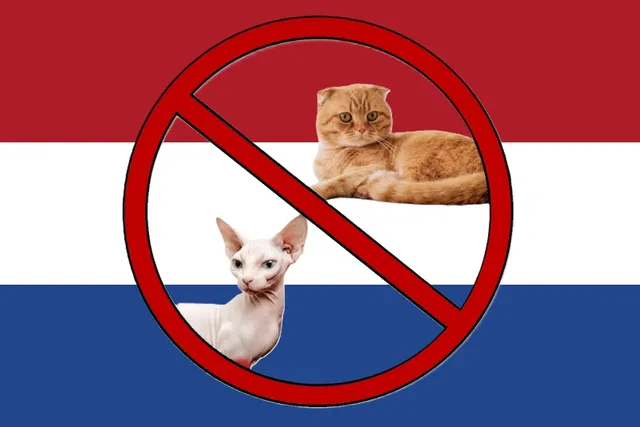
Some countries aren't waiting. The Netherlands has already gone further and faster on its own, banning the breeding, sale, and keeping of Sphynx and Scottish Fold cats outright as of January 1, 2026, a preview of what "stricter national rules" can look like once a member state decides that EU standards aren't high enough.

EU Laws Raising Global Welfare Standards
As veterinarians, we've spent years explaining to hopeful cat parents why that impossibly squished face or those irresistibly folded ears so often come bundled with a lifetime of breathing problems or joint pain, and it's genuinely encouraging to see that conversation reflected in binding law rather than left entirely to individual vets in individual exam rooms.
You don't need to live in the EU for this to matter
Breed standards, buyer expectations, and breeder practices move across borders more easily than legislation does, and a rule written in Brussels has a way of reshaping conversations everywhere cat lovers are choosing their next family member. It is unrealistic to expect that changing a law is enough to revolutionize the way people think about animal welfare, but it can get people talking. Understanding why these laws are being passed can be just as important as the laws themselves. Realizing that selectively breeding for physical appearance can have severe health consequences for future generations of cats puts us one step closer to healthier, happier pets.
Changing the law won’t fix everything, but changing how we think about breeding and welfare? Now that is something to get behind, no matter which side of the Atlantic you're on.
Feature Image Credit: Maria Sbytova, Shutterstock
Did You Know?
- Our brand-new posts are rounded up and included in our weekly emails. Don't miss out on the latest - sign up for our newsletter below!
Expert cat care, straight to your inbox
News, insights, and useful advice, delivered to you.

No spam — unsubscribe anytime.
By signing up, you agree to our Terms & Conditions and Privacy & Cookies Policy.
How useful was this post?
Click a star to rate. You can leave written feedback afterwards. (We read all feedback.)

Dr. Paola Cuevas MVZ (Veterinarian)
Dr. Paola Cuevas is the Senior In-House Veterinarian at Pangolia, the parent company of Catster. She has over 18 years of experience as a veterinarian and animal behaviorist. Paola's focus is on preventive medicine and animal welfare. Paola has a large range of skills in from diagnostic imaging to nutrition and clinical pathology. Paola enjoys sharing her extensive knowledge of animal training with our Catster readers and is always happy to answer reader questions as our in-house veterinarian.