Can Cats Eat Sausage? Vet-Reviewed Nutritional Facts & FAQ


In this article
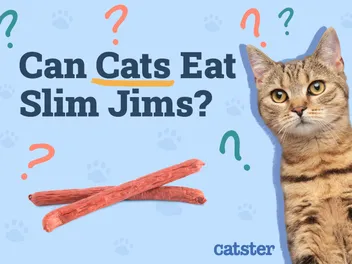
As cat lovers, we all want to spoil and treat our feline friends, but we also want to keep them happy and healthy. While your cat may show interest in some of your human food, not everything on your plate is healthy for them, and you may want to think twice about sharing. We know cats are primarily meat-eaters, so what about the fattier meats that we enjoy, like sausage? Is it safe to give your cat sausage?
While the answer is technically yes, you’ll have to jump through various hoops to find the right sausage. So, it may be best to avoid giving your cat sausages, as many will contain harmful ingredients for felines. Read on to hear more about why sausages are not appropriate for cats and which ingredients are most problematic.

The Issue Is Not the Meat Itself

Cats’ diets are made up primarily of animal proteins, so the pork, chicken, or turkey that your sausage is likely made up of would be perfectly safe for your cat to consume if it was in its plain form. In fact, these meats are beneficial to your cat’s health and well-being. It’s critical to make the distinction between sausage being healthy or unhealthy for your cat and meat in general being healthy or unhealthy.
A healthy sausage may be difficult to find, as it’s intended for people and not with a cat's nutritional needs and requirements in mind. Sausages are also made with many preservatives, such as nitrates and nitrites, that may be harmful for cats if ingested in large enough amounts. Additives, such as garlic and onion, are quite problematic too, as plants from this family are toxic to cats and should always be avoided. If your cat ever eat a sausage containing some of these ingredients, immediately contact a vet!

Is Sausage Too Fatty for Cats?
It’s no secret that sausage isn’t all that healthy for us, and one of the main reasons is the abundance of trans fat found in most sausage products. There is a limited amount of evidence-based information and research available about the potential effects of trans fats on cat’s short-term and long-term health, but the concern is that they may be harmful to the liver if ingested in large amounts or too frequently.
While it may be delicious, sausage is not a good example of a food that has a moderate amount of what we typically think of as “unhealthy fats.” Although cats can safely consume some trans and saturated fats in their diet, an abundance of sausage is not a good source of these for your cat.
Is Sausage Too Salty for Cats?
Sausage tastes good because it’s fatty and salty, so now that we know the fats aren’t necessarily healthy for our cats, what about the salt content?
The high salt content in foods can be an issue for cats, but it actually may be less of a problem than you think. Cats can tolerate a fairly wide range of dietary salt amounts, but remember, sodium is already a part of their diet and treats, and all this adds up.
There is a high concentration of salt in sausage, and although it may not be terribly detrimental for your cat, it’s best to keep their salt intake down to prevent issues.


What About Sausage With Low Fat Content?
So, if fat seems to be the issue, are pork-alternative sausages safe for cats? Chicken and turkey sausage for cats generally have less of the fat that we try to avoid ourselves and limit for our cats. Therefore, you may think that sausage made with less fatty meat is generally healthier for your cat.
However, another health concern with feeding your cat sausage of any kind is the presence of sulfites, nitrates, and other preservatives. Experts maintain that these preservatives (which are particularly abundant in sausage and deli meats) can be quite detrimental if consumed in high quantities or long term by cats and other pets.
The combination of fats, sulfites, and nitrates makes the majority of sausage products unhealthy and unsuitable for cats.

Are Any Sausages Healthy for Cats?
Since the main health concerns when feeding your cat sausage are the high amounts of fat and abundance of preservatives, the only sausage that could be acceptable is one made without any preservatives and ideally, one that is low in fat content. There are many options for sausage made without preservatives, and opting for a base meat lower in fat than pork is a good idea. Still, you’ll want to feed your cat this lower-fat, preservative-free sausage in small quantities to avoid any issues. You should also make sure not to give your cat spicy sausage, as the spices in the meat can lead to stomach issues, mouth irritation, or discomfort, regardless of the meat used to make the sausage.
The best way to serve a healthy sausage to your feline is by making it yourself at home, so you know exactly what’s in it and can offer it to your cat while it’s fresh. However, do note that this will require balancing the rest of their daily meals/treats to ensure that you’re not overfeeding your pet. Remember that no matter how healthy your cat’s diet is, excessive calories will lead to an overweight pet over time.
If your cat seems to love the smell or taste of sausage, there are plenty of sausage-flavored cat foods and cat treats available, and they’re made specifically for felines! So, while some sausages may be safe for your cat, it may be a better idea to leave the diet to the professionals and opt for appropriate and complete cat food.
While sharing human food with your cat is not always safe, we have a solution that will keep you both smiling.
We've currently got a 40% discount to share on the HUMAN-GRADE premium cat food that ranked number #1 in our reviews! CLICK HERE & use code Catster24 to SAVE 40% on Smalls cat food!

Should I Feed My Cat Sausage?
Not really, especially when it comes to sausage formulated for human consumption. Like we’ve discussed, too much of a delicious thing can be unhealthy for your kitty, so if you do choose a sausage that is low in fat and salt and is made without preservatives, consider offering your cat a tiny piece here and there as a special treat and not as the main treat or portion of a meal. Ensure that any piece you share with your cat is small enough that they won’t choke or have difficulty chewing.
You should also remember that raw sausage can hold harmful bacteria like Salmonella, so always fully cook any sausage pieces you offer to your cat. A good rule of thumb for serving sausage to your cat: If you wouldn’t eat it, neither should they.
Lastly, sausage is made of meat stuffed inside of a casing, and even when cooked, the casing can be stringy and difficult to chew. Before giving your cat any sausage, make sure that it’s a piece from the inside of the link and doesn’t contain any of the casing. This will also help prevent your cat from choking.

- NO MESS - The 360° tray on this cat food and water bowl set has a raised design to catch and contain stray crumbs and drips. Protect your indoors and floors from wet and messy meals!
- WHISKER FRIENDLY - Shallow and wide metal containers with flat bottoms ensure your kitty can enjoy mealtime free from whisker fatigue!
- CHEW-SAFE MATERIALS - Kittens and cats love chewing on silicone and soft rubber - but it's a choking hazard. Our cat feeding station materials are anti-chew for a 100% safe feeding frenzy!
Learning about what your cat can and cannot eat is a crucial part of keeping them happy and healthy! Choosing a bowl to serve cat-friendly foods in is another important decision pet owners face. Satisfy the specific needs of your cat with the innovative design of the Hepper NomNom Cat Bowl. Learn why it’s our (and our cats!) favorite food and water dish here.
At Catster, we’ve admired Hepper for many years and decided to take a controlling ownership interest so that we could benefit from the outstanding designs of this cool cat company!
What’s the Final Verdict?
Sausage in small quantities may be fine for most cats to consume now and then or by accident, as long as it is made without harmful preservatives. In that case, be sure to opt for lower-fat, low-sodium sausage made with chicken or turkey rather than pork. Fat is good for cats, but the high concentration in sausage can be problematic, so moderation is key.
Additionally, you should only offer small pieces of fully cooked sausage without any of the casing to your cat, and it should be consumed sparingly as a treat and not a meal. Sausage will not bring any health benefits to your cat, and they might develop an upset stomach, so it’s best to avoid giving any sausage to your pet if you want to be on the safe side.
Related Reads:
Sources
Featured Image Credit: mali maeder, Pexels, Ariana Suárez, Unsplash
Expert cat care, straight to your inbox
News, insights, and useful advice, delivered to you.

No spam — unsubscribe anytime.
By signing up, you agree to our Terms & Conditions and Privacy & Cookies Policy.
How useful was this post?
Click a star to rate. You can leave written feedback afterwards. (We read all feedback.)
Christian started writing for a local newspaper as a teenager, and he's been involved in the publishing industry for most of his adult life. Combining his love of writing with a passion for animals, he is currently the Director of Editorial at Pangolia and the Editor-in-Chief at Catster.
Christian lives in the Philippines with his wife, son, and four rescue cats: Trixie, Chloe, Sparky, and Chopper.