Why Do Scottish Fold Cats Sit Strangely? Vet-Reviewed Facts & FAQ


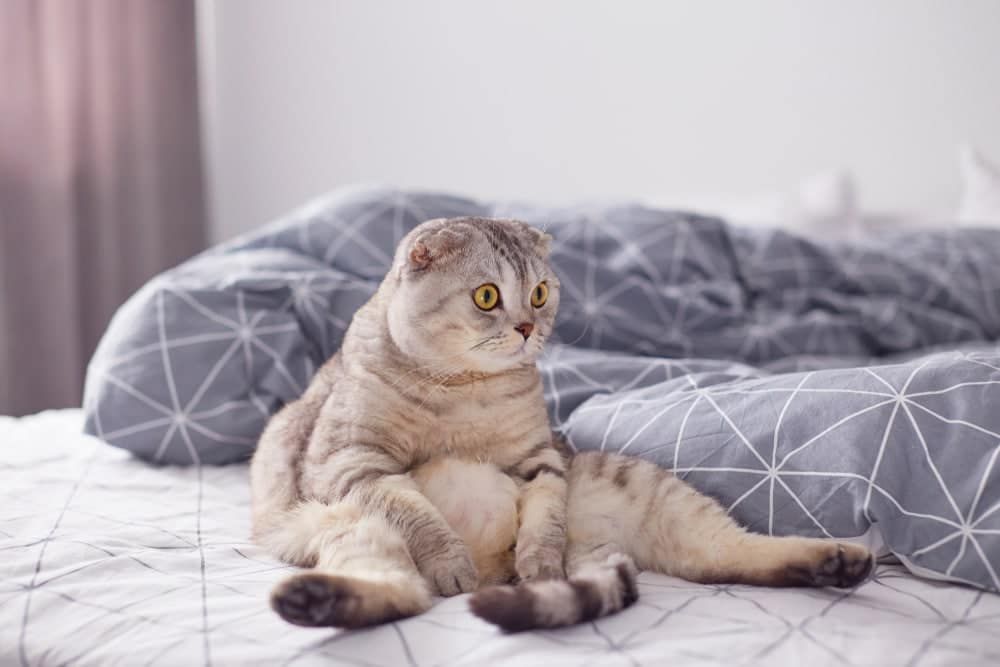
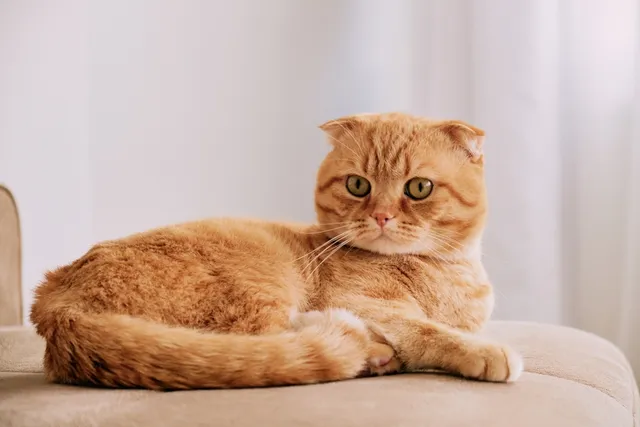
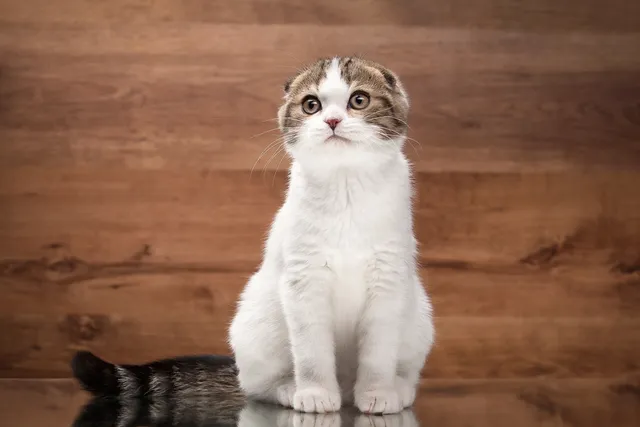
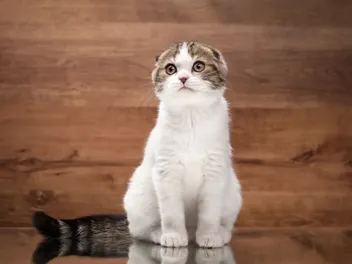
If you’re a Taylor Swift fan, you’re probably familiar with the Scottish Fold breed. Swift’s kitties, Meredith Grey and Olivia Benson, are arguably two of the most well-known cats in the world, and both are Scottish Folds. However, in photos of these and other Scottish Folds, you may notice that the cats sit strangely, with stiff legs, but have you ever wondered why?
Scottish Folds often sit strangely because they suffer from a joint condition called osteochondrodysplasia or Scottish Fold disease, caused by the same mutation that gives them their popular folded ears. Because this disorder causes them daily discomfort, veterinary professionals and international cat organizations have started raising awareness that it is not ethical to breed Scottish Folds.
In this article, we’ll explain what this condition is and why it causes Scottish Folds to sit strangely. We’ll also discuss some of the controversy surrounding Scottish Folds due to this condition.

Scottish Fold Disease Explained
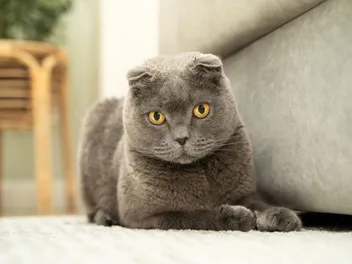
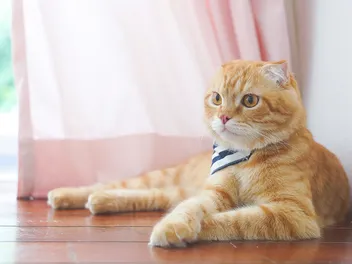
The very first Scottish Fold was born in the 1960s and was the single flop-eared cat in a litter of otherwise straight-eared kittens. It was later learned that the folded ear was the result of a naturally occurring genetic mutation. Because of this, the Scottish Fold breed was developed by deliberately breeding these cats to pass along the inherited trait.
This genetic mutation weakens the cat’s ear cartilage to the point where it can’t support itself normally and folds over. Unfortunately, the mutation also impacts other bones and cartilage throughout the cat’s body. The Scottish Folds will suffer with degenerative joint disease of variable degree that can lead to the painful fusion of joints on the tail, ankles, or knees, thus affecting normal movement.
These joint changes are responsible for the Scottish Fold cat sitting strangely, among other signs we’ll discuss in the next section.

The Physical Toll of Scottish Fold Disease
The genetic mutation that causes Scottish Fold disease doesn’t affect each cat in the same way. The severity of impact depends greatly on whether a cat carries one or two copies of the genetic mutation. Scottish Fold kittens with two copies of the gene mutation will develop more severe bone, cartilage, and joint issues. Signs may start as early as 4-6 months of age.
Besides sitting strangely, here are some other common signs of Scottish Fold Disease:
These signs all point to a cat that is suffering the effects of Scottish Fold disease. Aside from symptomatic pain management, which can be challenging in cats, there’s no reliable treatment for this condition. Severely affected Scottish Folds, primarily those with two copies of the mutation, typically live short and painful lives. The only way forward is breeding cats that are not carriers of this gene mutation, having normal ears and no joint or cartilage problems, and stopping any other breeding practices altogether. Genetic testing is available in identifying cat carriers that will very likely transfer these detrimental bone, cartilage, and joint abnormalities to their offspring.
Is your dog presenting any of these signs? We suggest you speak with a vet online.
Why Scottish Folds Are Controversial
Scottish Folds are most popular for their unusual ears, but as we’ve learned, that adorable look comes at a price. To produce the sought-after folded ears, breeders must run the risk that the kittens will also suffer future joint pain and abnormalities. Only Scottish Folds with the genetic mutation will have folded ears. To avoid producing kittens with two copies of the genetic mutation, breeding two parents with folded ears should never be performed. This practice results in some kittens with folded ears and a variable degree of osteochondrodysplasia, while some kittens will have normal ears. Because cats with folded ears fetch a higher price, ethical breeding may not be as profitable. Breeding two folded-ear cats, will almost certainly result in kittens with two copies of the genetic mutation. The severe impacts are well-documented, and the resulting cats will probably be in pain for most of their lives. Even if done responsibly, breeding Scottish Folds is still controversial. After all, it requires us to deliberately reproduce a mutation that will be painful to the cat simply to get a look that humans find cute and photogenic.
Conclusion
If you like the unique look of a Scottish Fold but worry about the controversy involved with their breeding due to serious welfare concerns, consider looking for an adult cat to adopt instead of buying from a breeder. Educate yourself about Scottish Fold issues and look for signs that your cat is in pain. Also, ensure your cat is protected from rough play and excessive or inappropriate physical activity that could be painful. Scottish Folds make lovely family pets, but teaching children how to properly and gently handle them is essential. On the other hand, if you disagree with breeding such cats and want to help in raising awareness about the serious health issues that are present in this breed due to selfish focus on the exterior looks, refrain yourself from getting such a cat, and instead consider adopting a cat from a local shelter. See Also:
Sources
Featured Image Credit: zossia, Shutterstock
Expert cat care, straight to your inbox
News, insights, and useful advice, delivered to you.

No spam — unsubscribe anytime.
By signing up, you agree to our Terms & Conditions and Privacy & Cookies Policy.
How useful was this post?
Click a star to rate. You can leave written feedback afterwards. (We read all feedback.)
Elizabeth Gray is a lifelong lover of all creatures great and small. She got her first cat at 5 years old and at 14, she started working for her local veterinarian. Elizabeth spent more than 20 years working as a veterinary nurse before stepping away to become a stay-at-home mom to her daughter. Now, she is excited to share her hard-earned knowledge (literally--she has scars) with our readers. Elizabeth lives in Iowa with her family, including her two fur kids, Linnard, a husky mix and Algernon, the worldʻs most patient cat. When not writing, she enjoys reading, watching all sports, and spending time outdoors with her family.