Scottish Fold Cat Health Problems: 7 Vet-Reviewed Issues

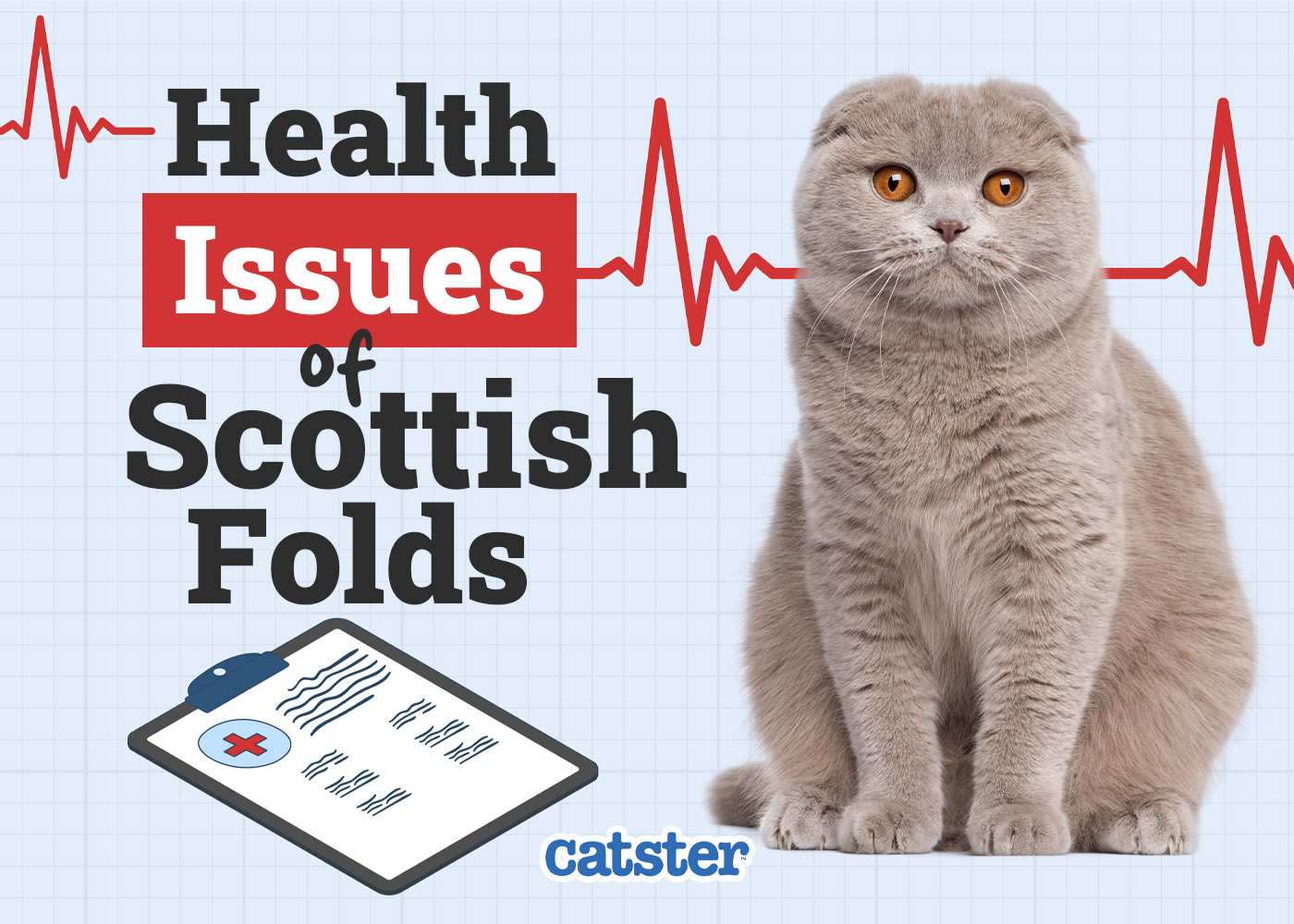
Scottish Fold cats have found their way into many pet lovers' hearts with their unique folded ears and sweet personalities. As with any breed of cat, the Scottish Fold cat has its own set of health issues you need to be on the lookout for. Some of the issues we’ll discuss in this list could be inherited genetically, and others are just common health issues you have to watch out for with any cat breed. If you’re considering adopting a Scottish Fold cat and giving it a forever home, follow us as we explain a few of the health issues you’ll need to watch for as your little darling grows.

The 7 Common Scottish Fold Cat Health Problems
1. Congenital Osteochondrodysplasia (SFOCD)
Signs:
| Tails are shorter and thicker than normal | Cat doesn’t like to play because of pain and tenderness |
| Short misshapen limbs | Lameness |
| Cat doesn’t like to jump | Pain |
The biggest health concern with owning a Scottish Fold cat is inheriting Congenital Osteochondrodysplasia (SFOCD) or Scottish Fold Disease. All Scottish fold cats with folded ears suffer from this genetic condition to a degree as it is linked to the curled ears. Signs may start occurring between 4 and 6 months old, and the signs will get worse as your cat ages.
This is a genetic disease that is related to the gene mutation that causes the folded ear cartilage. With this disease, there is abnormal development of cartilage and bone. The result is varying degrees of painful arthritis. The cats can end up with fused tail, ankle, or knee joints. As the cat ages, it will suffer from problems with movement.
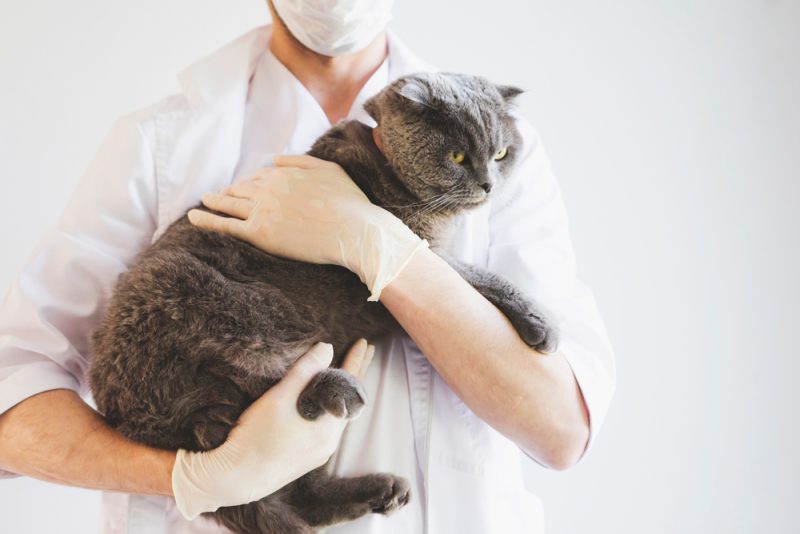
While the condition is incurable, it is possible for the cat to live with it if they receive proper care and treatment. If you see any of the signs of this disease in your Scottish Fold cat, it’s best to make an appointment with your vet right away for diagnosis and treatment options.
2. Hypertrophic Cardiomyopathy (HCM)
Signs:
| Decreased appetite | Weight loss |
| Heart murmur found by a vet | Elevated heart rate |
| Reduced energy levels | Cough |
Another possible health issue to watch out for with your Scottish Fold cat is hypertrophic cardiomyopathy (HCM). This disease can also be genetic and affects the muscles in the heart. The heart muscle becomes thickened and reduces the ability of the heart to pump blood around the body. Sadly, many cats don’t show outward signs and can pass away unexpectedly. Regular checkups with the vet can help pick up this problem, allowing treatments to be started. Although not possible to cure HCM, the medications can extend life expectancy.

3. Polycystic Kidney Disease (PKD)
Signs:
| Weight loss | Changes in urinary habits |
| Poor hair coat | Increased thirst |
| Anemia | Diarrhea/constipation |
Polycystic kidney disease (PKD) is also inherited from the parents in some Scottish Fold cats. PKD is a disease where small cysts start to form in the cat’s kidneys. These cysts contain fluid, and as they start to multiply and grow, they cause problems with kidney function. It is possible for your cat to start showing symptoms of this disease between 2 and 10 years old.
This disease is not able to be cured currently and almost always ends in kidney failure. If you see any of the signs above in your Scottish Fold cat, it’s best to get them to a vet right away.
4. Ear Infections
Signs:
| Pawing at the ears | Not playing as much as usual |
| Visible discharge | Meowing excessively |
| Head tilt | Smell from ears |
The folded ears are a genetic mutation in Scottish Fold cats and make them somewhat prone to waxy ears. Dirty ears can provide an environment for ear infections. You, of course, know your cat better than anyone else, so you’ll know when they are feeling off-color and to watch for signs of ear infections.
It’s important to clean your Scottish Fold cat’s ears at least once a week and to constantly check them for any sign of ear mites, parasites, or other things that can cause ear infections to develop, including leaving water in their ears when cleaning them.

5. Dental Issues
Signs:
| Pawing at the mouth | Lack of interest in food |
| Bad breath | Excessive drooling |
| Eating on one side | Pain or discomfort |
Dental issues can also be a concern with Scottish Fold cats, just as they can with any cat. Since cats use their teeth for a number of activities, from eating to hunting and playing with toys to grooming themselves, it’s no surprise how important dental health is to cats.
The best way to prevent these issues from affecting your Scottish Fold cat is to take great care of its teeth. Make sure that you’re brushing your cat's teeth regularly and that you’re taking them in for dental checkups when needed.
6. Obesity
Signs:
| Difficulty climbing stairs or jumping | Collar keeps getting tighter |
| Loss of a recognizable waistline | Sitting or lying down more often |
| Dirty, messy coat | Visible weight gain |
Vets see obesity issues in cats more often than you might expect. Unfortunately, many cats—especially indoor cats—are prone to becoming obese, and the Scottish Fold cat is no exception.
A cat is considered to be overweight if it weighs over 10% to 20% more than its average body weight should be. Obesity sets in when the cat is overweight by 20% or more of its ideal body weight.
The best way to keep your Scottish Fold cat lean and healthy is by limiting their food intake and only feeding the cat high-quality, protein-rich cat food. If you feel that your cat is becoming overweight and are unsure how to deal with it, then make an appointment with your vet. The vet will be able to tell you what the best diet for your feline friend would be.

7. Eye Issues
Signs:
| Red or pinkish eyes | Watery eyes |
| Heat around the eye | Green or yellow discharge coming from the eyes |
| Squinting or holding the eye closed | Pawing or rubbing at the eyes |
The Scottish Fold cat is prone to a few health issues with its eyes, just as other cats are. An eye infection in a cat usually occurs when a bacterial or viral infection is introduced to the cat’s eye.
This can happen in several ways, such as cat fights, foreign objects, and close contact with infected cats. The signs of an eye infection in a cat, as listed above, are usually obvious. It’s best to take your cat to the vet to determine the cause of the problem and to get appropriate treatment. Eyes are precious!
If you suspect that your cat is suffering from any of the above, it's best to contact your vet for more information and determine your next steps.
Conclusion
These are just seven of the most common health issues found in the Scottish Fold cat breed. While it’s possible that your cat won’t inherit any of these issues, it’s something you need to be on the lookout for when you bring your feline pal home from the breeder.
Sources
Featured Image Credit: dien, Shutterstock

Expert cat care, straight to your inbox
Vet-reviewed advice, behavior tips, and the best of Catster. Free, and you can unsubscribe anytime.
By signing up, you agree to our Terms & Conditions and Privacy & Cookies Policy.
Patricia is a pet writer and lifelong animal lover. She has two cats (Binx and Link) and one dog (Mystery). Binx was found as a kitten under her house and has been part of the family ever since! Patricia is also a published author under the pen name Skylar McKinzie. When she isn’t writing, Patricia enjoys volunteering at her local animal rescue.
Join the conversation
Ask a question, share your story, or send private feedback.