6 Types of Cornish Rex Cats: Colors, Breeds & Patterns (With Info & Pictures, Vet-Reviewed)


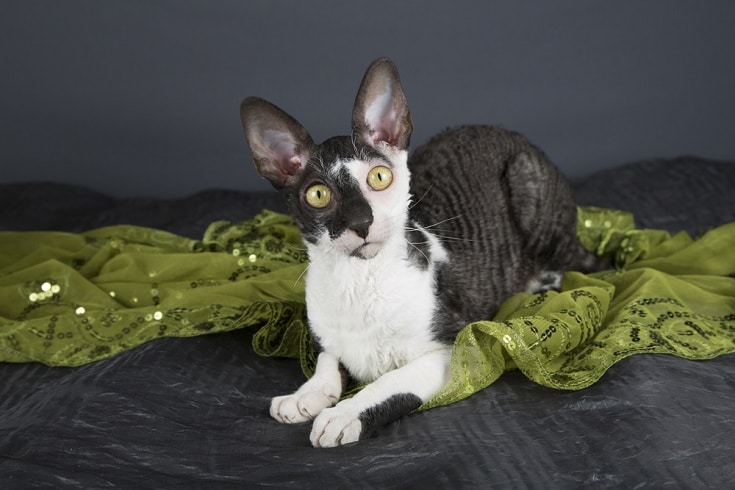
Cornish Rex cats are incredible cats. They tend to be friendly cats that love their humans, and will generally get along with other pets as well as strangers, somewhat depending on their personality, socialisation, and previous experiences. They are very energetic cats that love to play and run around. However, it is the coat that the Cornish Rex is best known for. They lack the top layer of coat that other cats have, so they just have the soft undercoat. This coat is curly, which is what gives the Cornish Rex its unique look. Beyond that, the Cornish Rex can come in a variety of different colors, markings, and color points.
Below are different types of Cornish Rex that you can consider for your next pet.

The 6 Types of Cornish Rex Cats
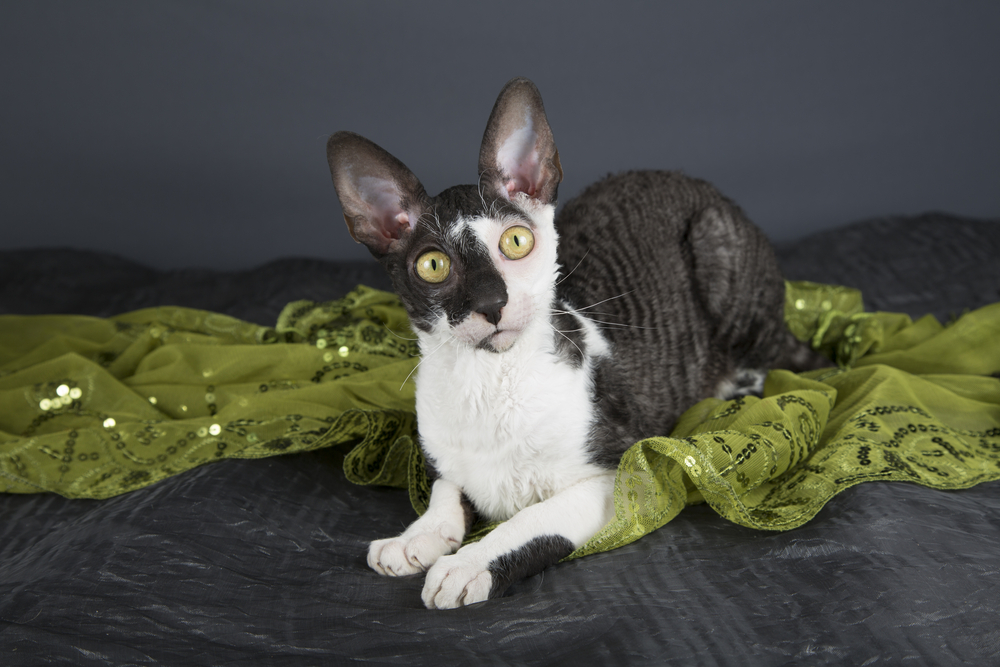
1. Bi-Color Cornish Rex

Bi-color Cornish Rex cats have coats that consist of just two colors. Common color combinations are black and white or gray and white. To be considered a standard Cornish Rex with a bi-color coat, the chest, belly, and legs should be white, but the rest of the coat can be virtually any other single color.
The secondary color can look striped or patched, and the cat should have the curly hair that the Cornish Rex is so well known for.
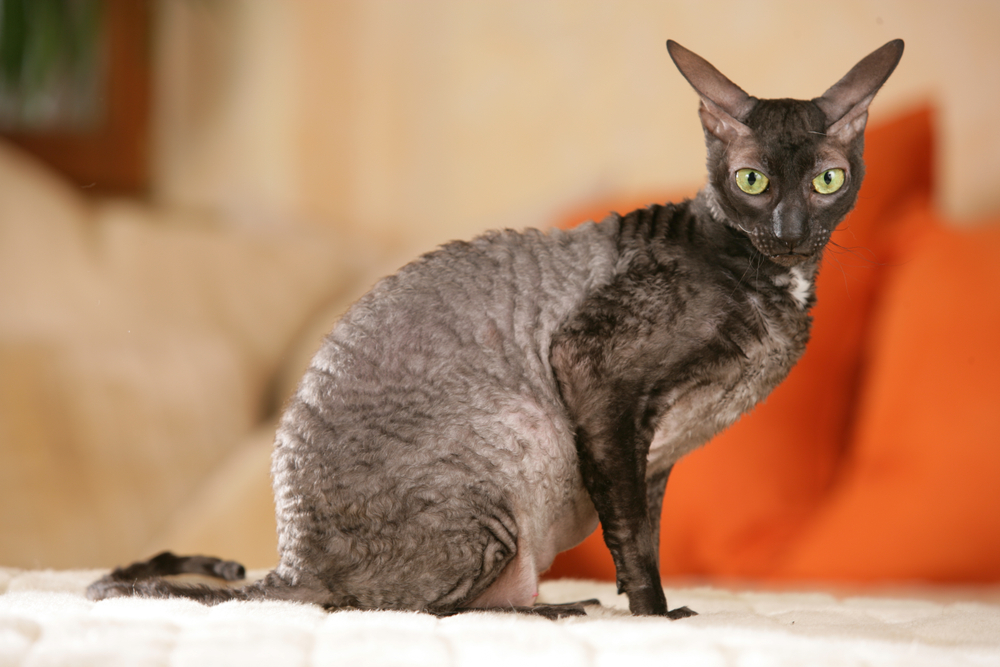
2. Black Cornish Rex
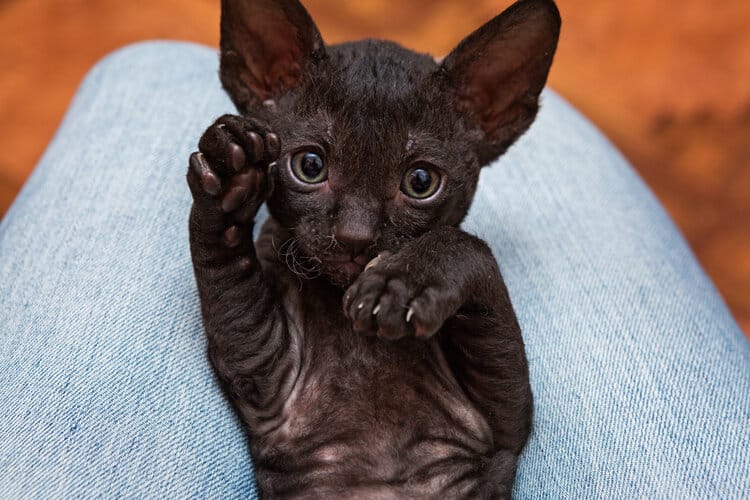
The black Cornish Rex is a rare color. It should be black from head to toe and have the same curly undercoat hair as other Cornish Rexes. Cornish Rex cats don't do well in extreme heat or extreme cold because their coat offers very little protection. Black Cornish Rexes are especially prone to extreme heat, as what little coat they do have will attract and retain the heat.
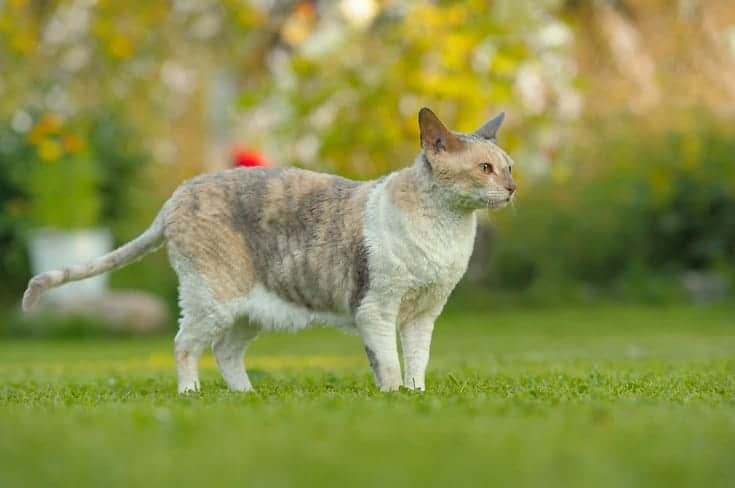
3. Calico Cornish Rex

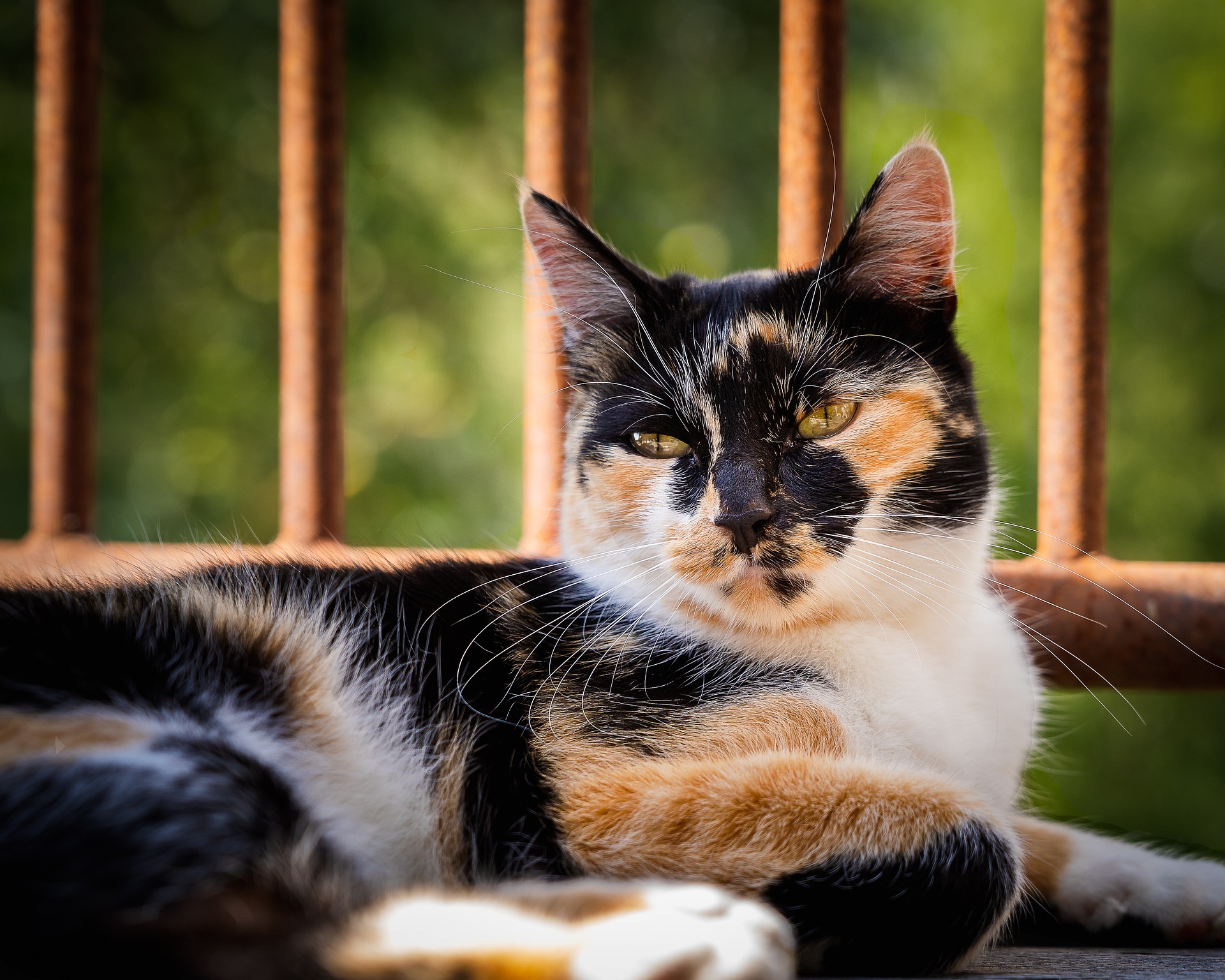
Cats with a calico pattern, which are also known as tri-color cats, have a base coat of white, which can cover anywhere from a quarter to three-quarters of the cat’s body. It also has large orange and black patches. The black and orange may be replaced by other colors, but the white, black, and orange combination is the most common in the calico Cornish Rex.
4. Pointed Cornish Rex

Pointed markings are similar to those seen in Asian cat breeds like the Siamese. The base coat is a pale color, but it has a darker tail, feet, ears, and facial markings. Variants of this color include the seal point, blue point, lilac point, and chocolate point.
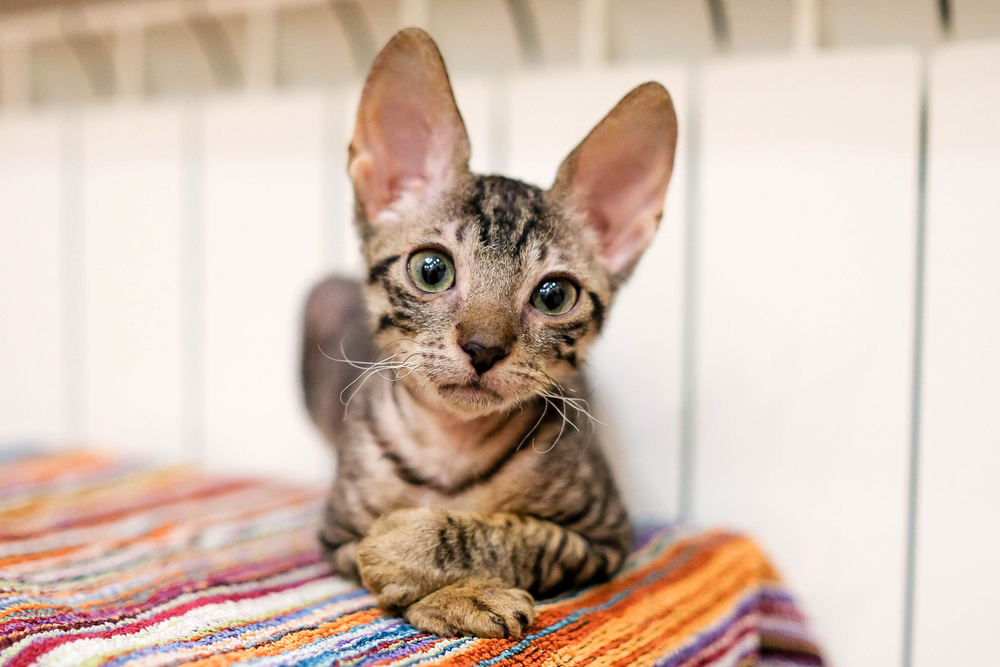
5. Tabby Cornish Rex

The tabby marking is one of the most common markings found in the Cornish Rex breed. The base coat of the cat is usually a brown color, but can be other colors, and it has black stripes, rings, or blotches around the legs, body, and head. The tabby is also well known for having the distinctive M mark on its forehead, and it is said that all tabbies have this marking, even though it isn’t always easy to spot at first glance.
6. Tortoiseshell Cornish Rex

The tortoiseshell or tortie Cornish Rex has a coat with markings that resemble those of a tortoise, with a mix of black and orange. Torties are almost always female, and the few male tortoiseshells that are found are sterile due to genetic causes. Although character traits are not determined by coat color, owners of torties swear that they have a very distinct attitude, and this is sometimes referred to as “tortitude.”
Do Cornish Rex Cats Make Good Pets?
Cornish Rex cats can make excellent pets. When properly socialized, they can get along well with their family members, are usually friendly with strangers, and they may get on with other cats as well as dogs when introduced gradually. As well as being friendly, they are also playful and energetic, which means they enjoy any playtime they are given. This also means that they tend to do well in a family with children.
However, like any cat, the Cornish Rex needs daily physical activity, mental stimulation, and environmental enrichment, so make sure to find time to spend with them on a daily basis.
Are Cornish Rex Cats Cuddly?
The breed is well known for being lively and active, so it is reasonable to question whether they are cuddly cats. Depending on their personality and upbringing, between play sessions, these cats are also likely to be loving, and they will happily snuggle up with their humans for some attention and affection.

How Expensive Is a Cornish Rex?
The breed is not common, although there are certainly breeders to be found with some careful searching and due diligence on your part. You can expect to pay anywhere from $1000 and more for a Cornish Rex, which certainly isn’t cheap, but it isn’t as expensive as the rarer Devon Rex, which can cost anywhere from $2,000 for a kitten.
Can You Leave Cornish Rex Alone?
Some cats may be prone to separation anxiety and require attention from their humans, regardless of breed. Besides spending plenty of time with your cat, it’s important to keep them mentally stimulated through interactive toys, puzzles, and environmental enrichment with cat scratchers, cat trees, perches, window spots, and other means to enable them to exhibit their natural behaviors.
Although some cat breeds are considered more independent, such as the Maine Coon, all cats require attention and plenty of time spent with their owners and should not be left home alone for too long.

Do Cornish Rex Cats Need Baths?
Cornish Rex cats are somewhat driven by their unique coat. They are typically on the lookout for warm places to sit and relax because they lack the outer coat that most other felines have. And because the Rex doesn’t have the typical coat to absorb and distribute natural oils secreted by the skin, they can benefit from regular baths, as recommended by your vet. One advantage of that coat is that when the Rex does get wet, it dries quickly and with minimal fuss, but it’s important to dry them up as they may be prone to hypothermia.
Conclusion
Best known for their curly-looking hair that gets its curls from the lack of a topcoat, the Cornish Rex is also known for being a friendly and loving cat that will get on with all family members, is friendly with strangers, and will usually even get along with other cats and dogs when properly socialized and introduced.
Although it is a fairly rare breed in the US, it is still available from a good number of breeders.
See Also:
Sources
Featured Image Credit: Jenni Ferreira, Shutterstock

Expert cat care, straight to your inbox
Vet-reviewed advice, behavior tips, and the best of Catster. Free, and you can unsubscribe anytime.
By signing up, you agree to our Terms & Conditions and Privacy & Cookies Policy.
Christian started writing for a local newspaper as a teenager, and he's been involved in the publishing industry for most of his adult life. Combining his love of writing with a passion for animals, he is currently the Director of Editorial at Pangolia and the Editor-in-Chief at Catster.
Christian lives in the Philippines with his wife, son, and four rescue cats: Trixie, Chloe, Sparky, and Chopper.
Join the conversation
Ask a question, share your story, or send private feedback.