Littermate Syndrome in Cats: Vet-Reviewed Signs, Causes & Care



In this article
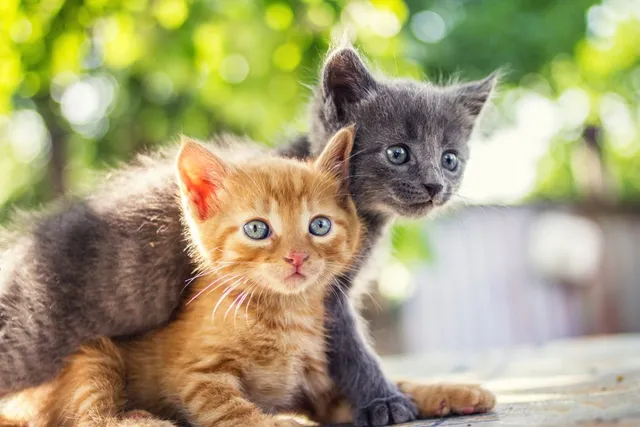
If you want to add a new cat to your family, you might wonder whether two kitties are better than one. When adopting kittens, for example, it is often suggested that taking home a pair of baby cats is ideal. However, you might be concerned that related cats will develop a behavioral condition known as littermate syndrome, which is problematic behavior usually developed between two dogs raised together from a young age.
In this article, you’ll learn what littermate syndrome is, including the signs of the condition. We’ll also cover the causes of littermate syndrome, why it’s not recognized in cats, and other issues that may look similar in sibling kittens.

What Is Littermate Syndrome?
The term littermate syndrome is used to describe problematic behaviors that generally occur in two dogs who are raised together from a young age. It is also known as littermate dependency, but the two animals don’t have to be related for it to occur. Any pair of young animals raised together can develop littermate syndrome.
Pets with littermate syndrome are believed to bond more closely with each other than with the humans in their lives, leading to behavioral problems in adulthood. For example, they may develop anxiety if separated from each other or have trouble learning independently.
Veterinary behaviorists agree that littermate syndrome doesn’t automatically occur when two young dogs are raised together. Instead, they believe that the difficulty and challenges of owners trying to pull double duty when training and socializing the animals lead to inappropriate behaviors associated with littermate syndrome.
The good news for cat owners is that littermate syndrome isn’t currently recognized to occur in cats. Cats are naturally more independent than dogs and typically don’t have problems with socializing or bonding as pairs of puppies do.
In fact, adopting a pair of kittens can sometimes make your life easier since the energetic animals can keep themselves entertained and exercised.

What Are the Signs of Littermate Syndrome?
Pets with littermate syndrome may display a variety of behavioral signs. They are often extremely attached, ignoring other humans or animals when the other is around. This attachment can cause them to have a hard time bonding with people and lead to poor socialization and training challenges.
Poorly socialized animals can have problems with aggression or fear because they never learned how to respond appropriately to unfamiliar situations. Littermate syndrome can also lead to separation anxiety in adult animals.
What Are the Causes of Littermate Syndrome?
As we mentioned, experts believe that it’s not simply the act of two pets being raised together that causes littermate syndrome, but specific experiences and challenges that go along with it. For example, because it’s so time-consuming to train and socialize a puppy, owners with two puppies may try to work with both animals at the same time.
However, because animals are individuals, the same socialization and training methods may not work for both puppies. In addition, the puppies may not get the time they need to process and develop at their own pace. Housetraining can be frustrating because the most effective methods rely on routines and positive reinforcement, which can be hard to accomplish with two dogs.
Behaviors like chewing, scratching, or play-biting are doubly frustrating when trying to redirect two animals. You may miss chances to reward the behavior you’re trying to encourage or accidentally reinforce those you aren’t.
To sum up, young animals who don’t get the chance to experience training and socialization as individuals are more likely to develop behaviors associated with littermate syndrome. Again, these issues typically occur in dogs rather than cats.


Frequently Asked Questions (FAQ)
Is It Better to Adopt Two Kittens?
As we discussed, two kittens raised together are unlikely to develop the behavior problems summed up as littermate syndrome like puppies do. Adopting two kittens at once certainly has benefits. Kittens often form a strong bond and get along well together, though this is not always the case.
Kittens can help tire each other out by playing together rather than pestering you or another pet for attention. Interestingly, research suggests that owners who adopt two kittens from a litter are more likely to keep them long-term. However, kittens don’t necessarily need to be adopted together to thrive.
Adopting two kittens is a good option if you have the space and money, but it’s not always necessary. With attention and proper environmental enrichment, one kitten can be perfectly happy at home with their humans.
My Cat Seems Lonely. Should I Get a Second Cat?
Unrelated adult cats don’t always have the easiest time bonding with each other. Before getting a second cat, consider the personality of your existing pet. Calm, friendly cats may be fine with a new friend, while shy cats may think the world is ending.
As we discussed, cats can fill their social and emotional needs by other means, such as human attention or even a dog friend. If you want a second cat, you may have better luck introducing a kitten into the house than another adult.
Plan to introduce the new cat gradually, and don’t be surprised if it takes months for the animals to get along. There’s also a chance that they never will.

Conclusion
Because cats generally aren’t recognized to get littermate syndrome, the question of whether to adopt two kittens will depend on other factors. Remember, two cats require twice as much food, supplies, and veterinary care. They also need more time and attention than a single animal. Consider your budget and downtime when deciding whether to adopt more than one kitten. For the cat’s sake, do not feel pressure to take on more pets than you can afford or care for successfully.
Sources
Featured Image Credit: Chendongshan, Shutterstock
Expert cat care, straight to your inbox
News, insights, and useful advice, delivered to you.

No spam — unsubscribe anytime.
By signing up, you agree to our Terms & Conditions and Privacy & Cookies Policy.
How useful was this post?
Click a star to rate. You can leave written feedback afterwards. (We read all feedback.)
Elizabeth Gray is a lifelong lover of all creatures great and small. She got her first cat at 5 years old and at 14, she started working for her local veterinarian. Elizabeth spent more than 20 years working as a veterinary nurse before stepping away to become a stay-at-home mom to her daughter. Now, she is excited to share her hard-earned knowledge (literally--she has scars) with our readers. Elizabeth lives in Iowa with her family, including her two fur kids, Linnard, a husky mix and Algernon, the worldʻs most patient cat. When not writing, she enjoys reading, watching all sports, and spending time outdoors with her family.