Why Do Cats Lick Themselves After You Pet Them? Deciphering Cat Behavior (Vet-Reviewed)

Cats engage in many behaviors that can leave us scratching our heads and wondering what’s going on. If you’ve found that your cat is doing something you can’t explain, it doesn’t necessarily mean that anything is wrong, though it could sometimes be an indication of an underlying issue. Really, the only thing for sure is that we need to make our best efforts to understand the subtle signs our pets are giving us.
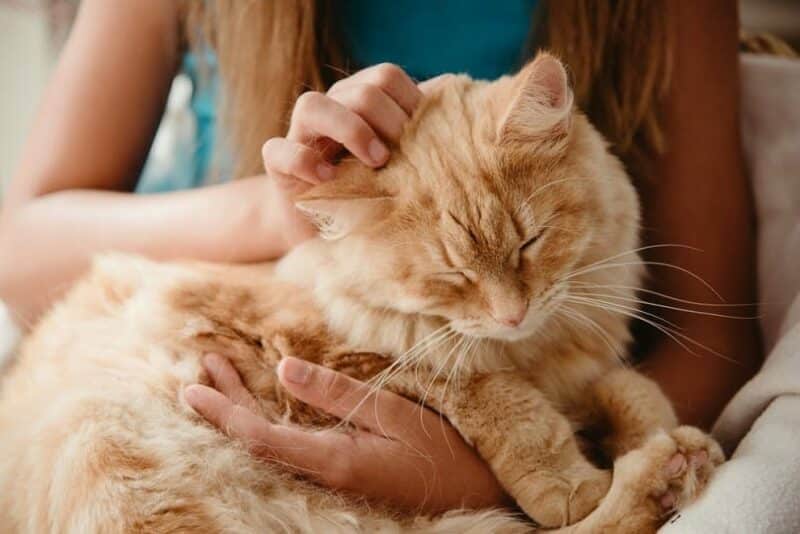
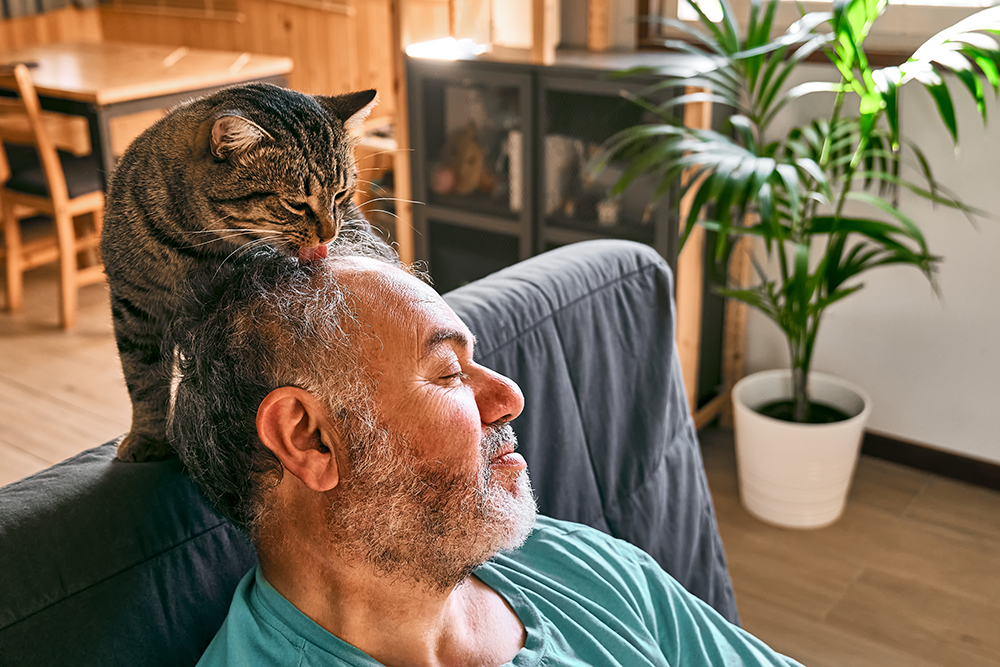
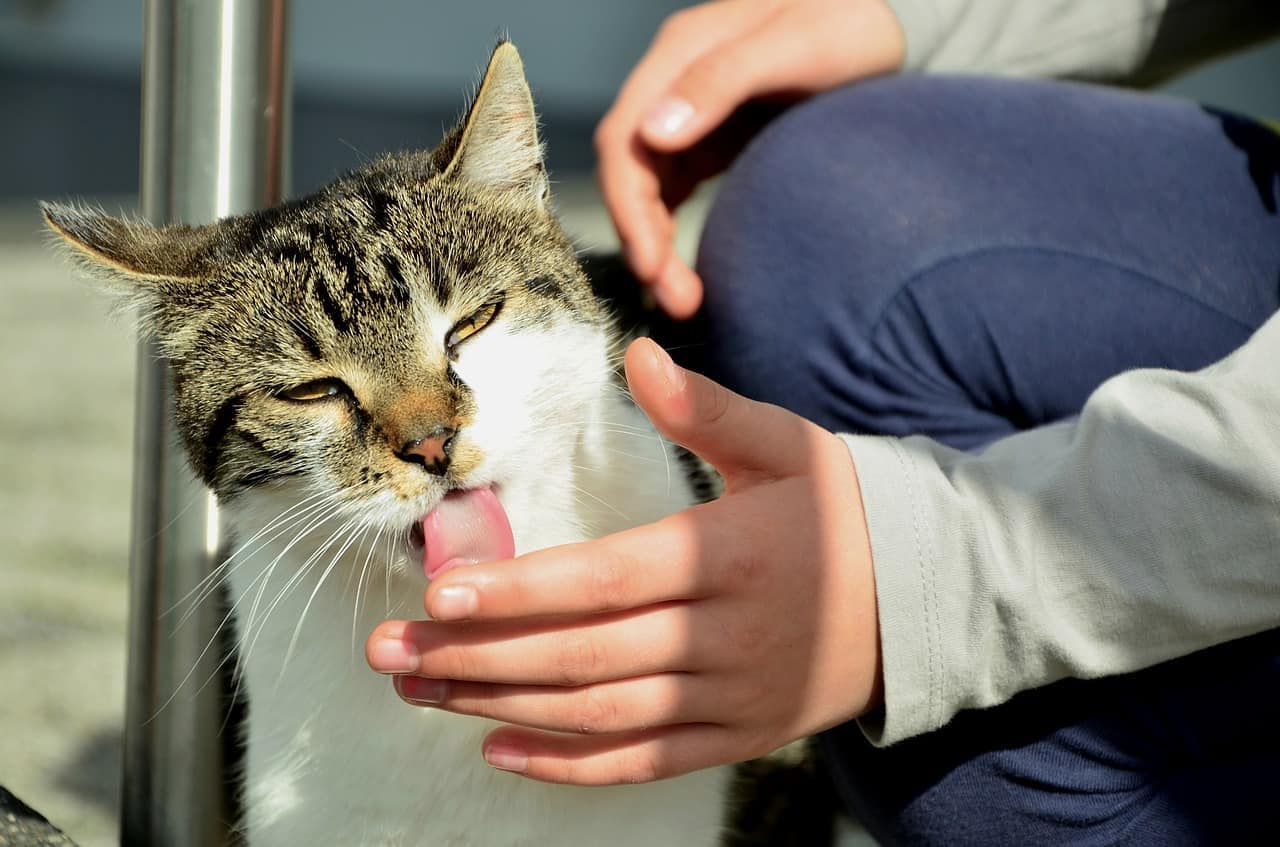
One behavior that often throws cat owners off is licking during or shortly after petting. If your cat tends to lick itself or the air while you pet it or immediately after, you might be worried that your cat doesn’t like your attention or that something else is wrong. In truth, you might not be far off, but it depends on the cat. In reality, there could be several explanations for your cat’s behavior. Once we explore them, you’ll have a better understanding of why your cat is licking when you pet it.

The 4 Reasons Why Cats Lick Themselves When Being Petted
1. They’re Very Particular About Grooming
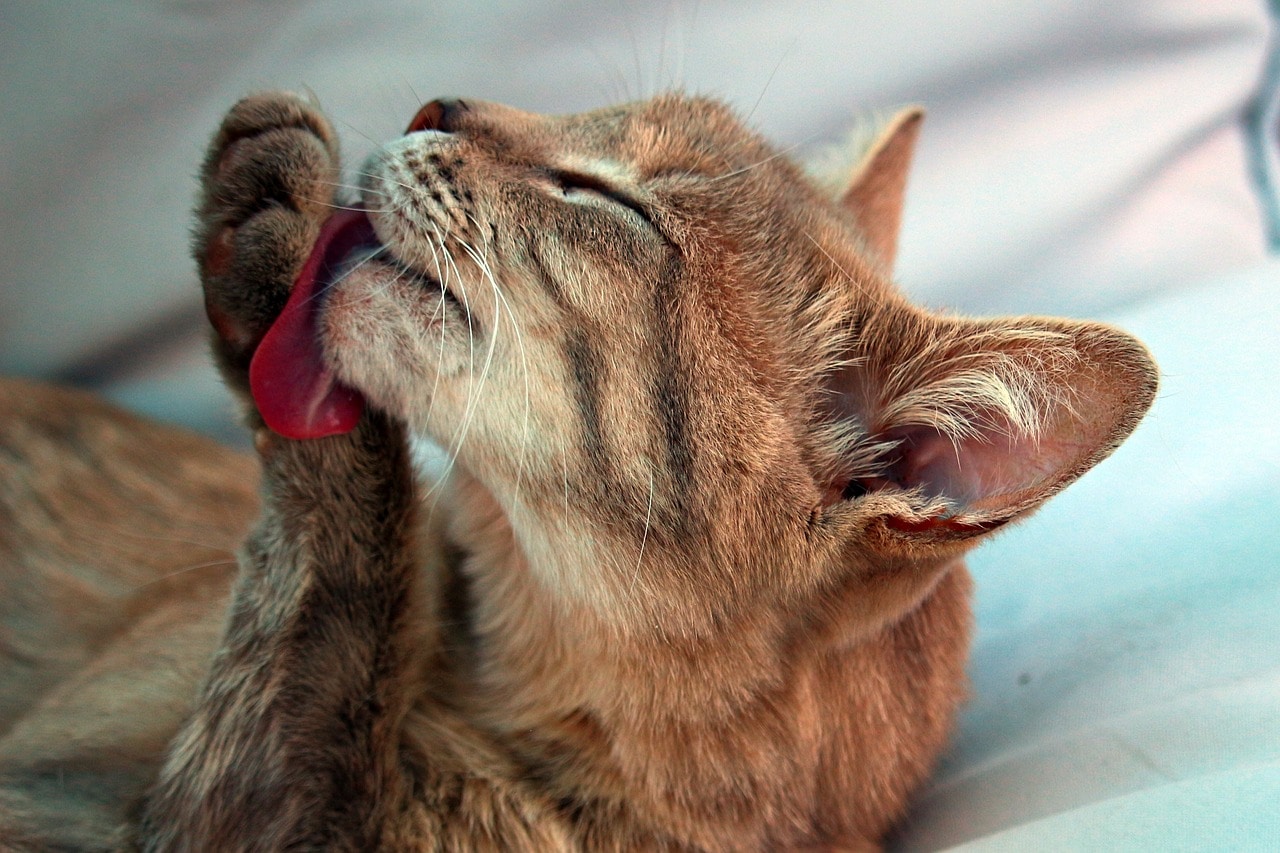
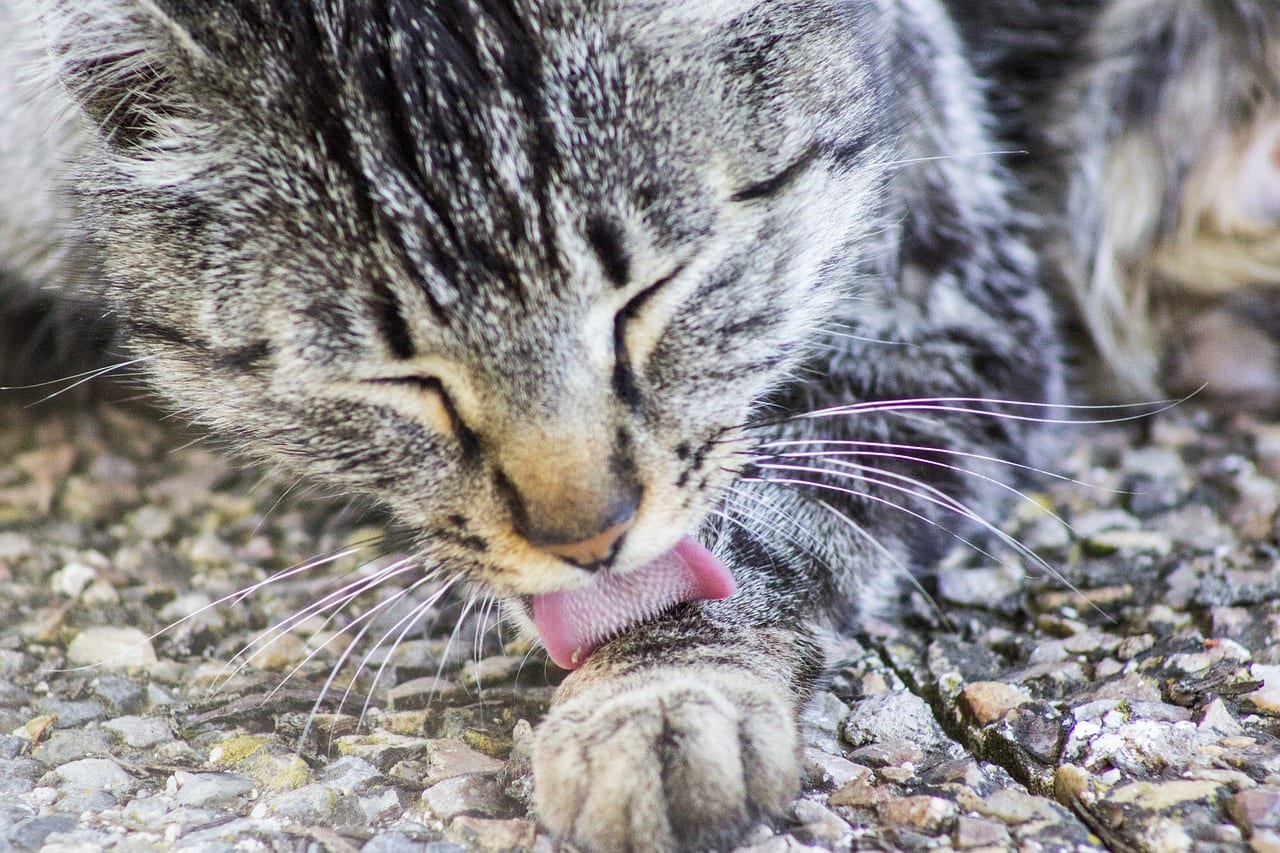
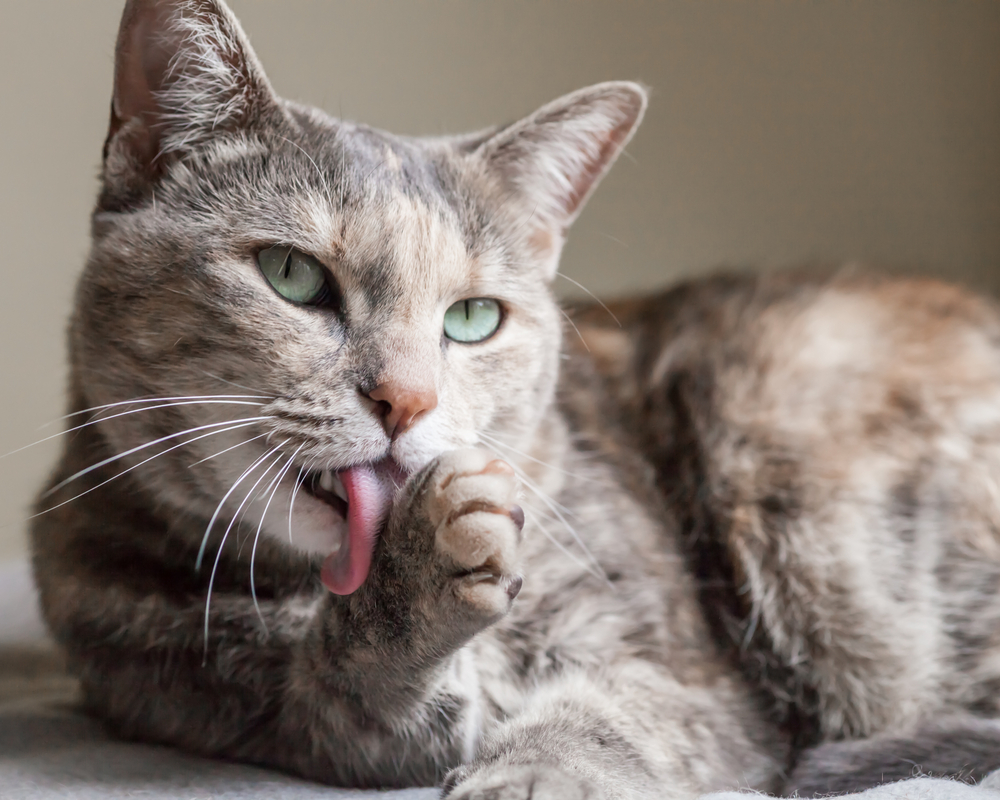
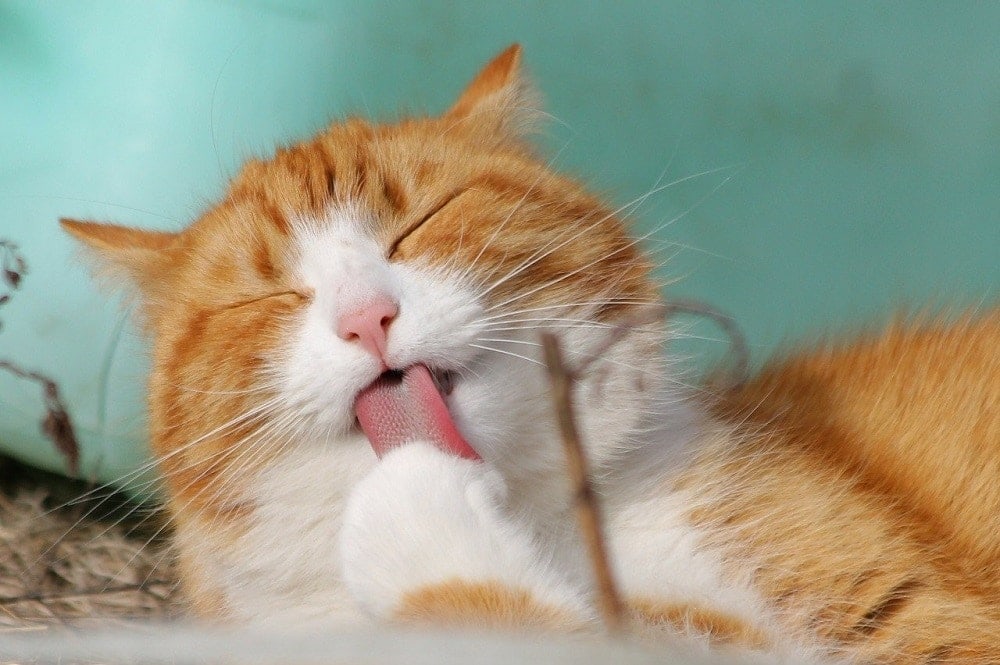
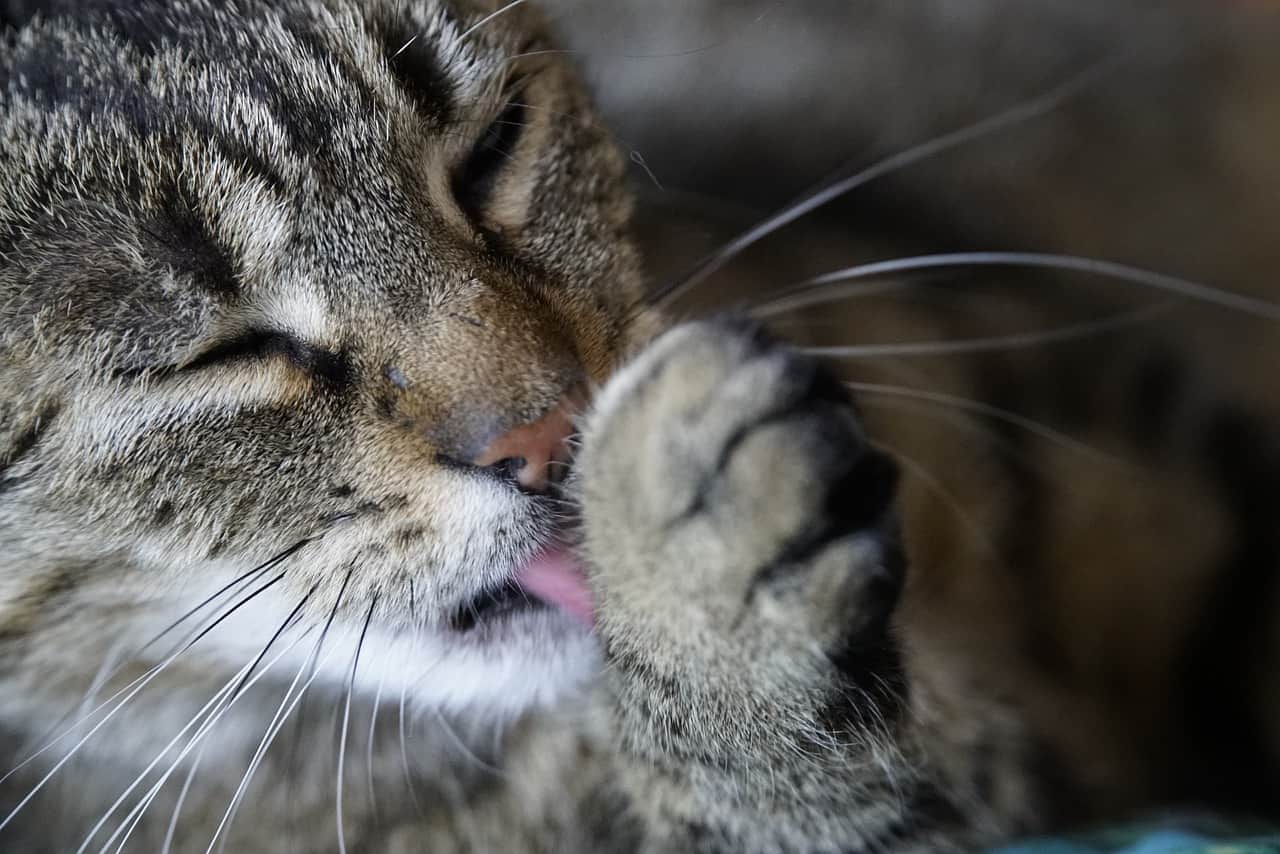
If your cat is always licking themselves after you pet them, there is no need to worry, they might be reorganizing their fur to leave it in the perfect placement after you messed with it. They might also just be redistributing their own scent over their body.

2. An Itch You Can’t Scratch
Another common reason for licking during petting is that you’re triggering a reaction by petting or scratching an area they can’t reach during self-grooming. Your cat has a deep desire to groom all over. Those areas they can’t reach are generally the dirtiest and itchiest areas since they don’t get cleaned regularly. When you touch one of those areas, your cat might simply lick at whatever part of its body can be reached since it can’t get at the part you’re touching.
3. Displacement Grooming
Displacement grooming occurs when a cat starts licking itself as a way to cope with mild stress, confusion, or uncertainty, similar to how humans fidget or scratch their heads when unsure what to do. If a cat enjoys being petted but suddenly seems uncertain about how to respond, it might instinctively begin licking as a self-soothing behavior. Occasional displacement grooming is normal, but frequent occurrences could indicate anxiety or overstimulation. In these cases, it is better to reach out to a veterinarian or animal behaviorist and ask how you can help your cat.
4. They Might No Longer Like Being Petted
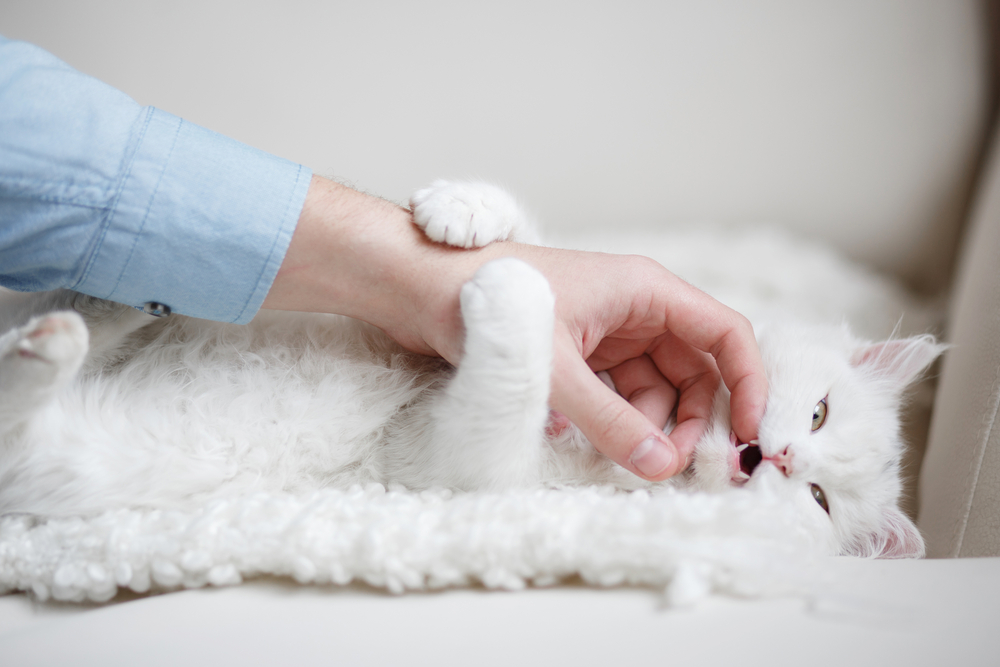
The final option is that your cat is feeling a bit overstimulated and simply doesn’t want you to continue petting them. This is probably not what you want to hear, but it is a possibility. Most cats love to be petted until they don't, and a frantic lick might soon be followed by a snap. Observing their body language can help — if they appear tense or twitchy, it may be a sign that they need a break.
Or, it might also simply be that your cat doesn’t want to be touched in certain places. Petting in other areas might not induce the same response.
If you notice that your cats lick themselves after you pet them, they might simply be self-soothing after a bit of overstimulation. You should know that this is normal cat behavior, there is nothing to worry about, and there is no need to take it personally. Cats will be cats and that is why we love them!

What to Do if Your Cat Licks During or After Petting
It may not be an indicator of anything bad, but you do want to know what it means when your cat displays this type of behavior. So, you need to do some detective work. First, check your cat’s body over gently and ensure there are no signs of any skin conditions that might make them uncomfortable. A veterinarian check-up might be necessary.
Also, try petting your cat in different places and see if the reaction is the same. It might just be the area you’re petting. If your cat leans into while petting in a different area, they probably like it. So, look for the subtle signs that can clue you into what your cat is feeling.
Conclusion
It can be confusing when our pets start showing behaviors we don’t understand or care for. But these behaviors can often offer us clues into how our pets feel about our actions. They can’t speak to us, so it’s up to us to look for these signs and glean what information we can. If your cat is licking you or itself when you pet it, it may not mean anything is wrong and could just be a way of bonding. But it’s worth being observant and learning to understand when your cat had enough to avoid turning a cuddle into overstimulation and potentially ending up with a scratch.
Featured Image Credit: Pixabay

Expert cat care, straight to your inbox
Vet-reviewed advice, behavior tips, and the best of Catster. Free, and you can unsubscribe anytime.
By signing up, you agree to our Terms & Conditions and Privacy & Cookies Policy.
Christian started writing for a local newspaper as a teenager, and he's been involved in the publishing industry for most of his adult life. Combining his love of writing with a passion for animals, he is currently the Director of Editorial at Pangolia and the Editor-in-Chief at Catster.
Christian lives in the Philippines with his wife, son, and four rescue cats: Trixie, Chloe, Sparky, and Chopper.
Join the conversation
Ask a question, share your story, or send private feedback.